For seed, fertiliser, crop-protection and farm-equipment brands, growth means reaching more dealers and more farmers in deep rural India. Here’s how to expand an agri-input dealer network that actually sells.
Quick answer: Agri-input distribution is about getting seed, fertiliser, crop-protection or equipment from the brand to the farmer through a dealer network — across scattered rural markets. Expanding it means mapping and onboarding the right dealers, reaching farmers directly, and verifying it all on the ground.
About Anaxee
40,000+ Digital Runners · 540 districts · 26 states · 11,000+ pincodes of reach
★ Winner, National Startup Award (Govt. of India)Trusted by 350+ brands — incl. Mahindra & ITCIndia’s Reach Engine since 2016
An agri-input brand wants to grow in a new state. The plan looks simple on a slide: appoint dealers, push stock, reach farmers. On the ground it’s anything but — the brand doesn’t know which dealers exist in which taluka, which are genuinely active, or how to get in front of the farmers who’d actually buy. The result is familiar: a few easy urban-edge dealers get appointed, and the deep rural demand the brand came for stays out of reach.
Agri-input growth is a last-mile problem long before it’s a product problem — and it runs on trust.
Why trust decides
35%
of Indian farmers hit a counterfeit agri-input in the past 12 months
In a market where a fake input can cost a whole season, trust in the dealer — and the brand behind him — decides everything.
Source: Crisil Intelligence & ASPA, State of Counterfeiting in India 2025, via Global Agriculture
What makes agri-input distribution hard
Seed, fertiliser, crop-protection and farm equipment all sell through a thin, scattered dealer network serving farmers spread across villages — often with low connectivity, seasonal demand, and strong local trust relationships an outsider brand can’t shortcut. Reaching that market takes feet on the ground, not just a distributor appointment letter.
Brand
appoints a dealer
Dealer
actually stocking & selling? — the blind spot
Village market
Farmer buys
The three gaps brands hit
Dealer mapping. You can’t appoint dealers you don’t know exist. Most brands have no real map of the agri-dealer universe by taluka.
Farmer reach. Dealers alone don’t create demand; farmers need to know and trust the product.
Verification. Is the appointed dealer actually stocking and selling, or just holding the board?
Want a real map of the dealers and farmers in your target districts? Anaxee will build it.
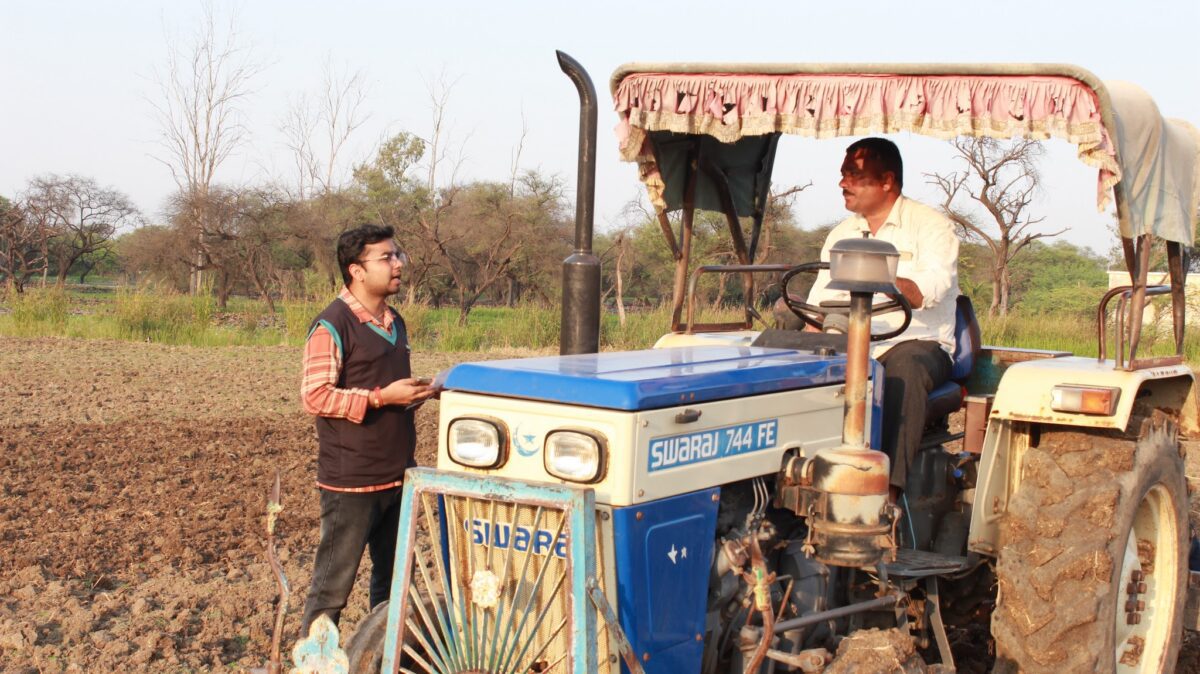
Anaxee Digital Runners run a dealer census, farmer onboarding and activity verification across 540 districts — geo-tagged, village by village.
A field census of agri-input dealers by taluka — who exists, what they stock, how active they are — gives you a real base to appoint from, instead of guessing.
Reach farmers directly
Field teams and trusted local people take the product to farmers — demos, awareness, onboarding — creating the pull that makes dealers want to stock you.
Verify dealer activity
Ongoing field checks confirm which dealers are genuinely stocking and selling, so you invest in the ones that work.
Fun fact: for most farmers the local agri-dealer is the single most trusted source of advice — which is exactly why reaching and verifying that dealer network, not just advertising, decides whether a brand grows in a district.
Where technology and AI change the game
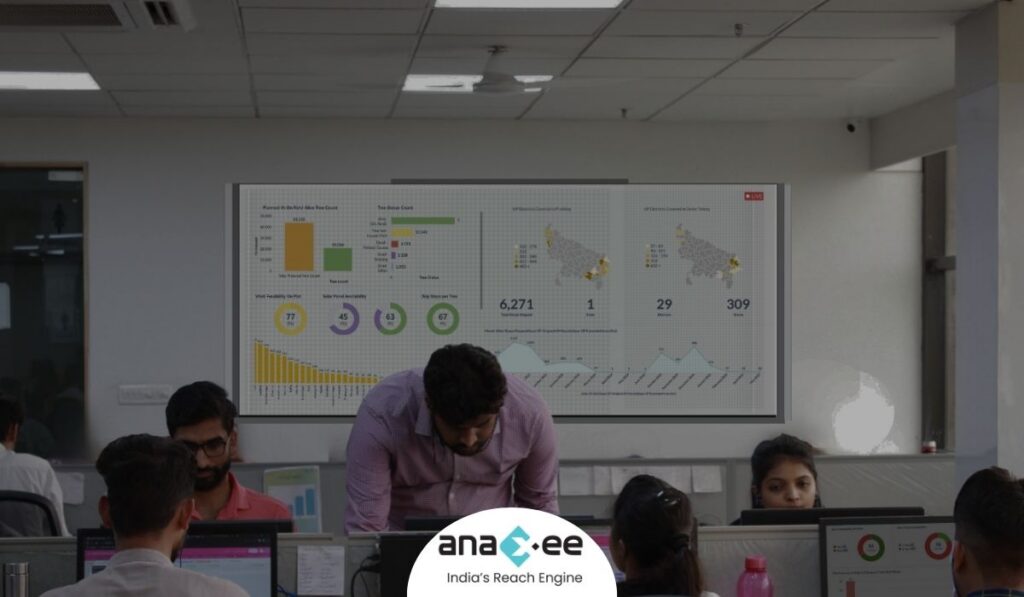
Anaxee runs agri distribution as a tech product. Every dealer and farmer interaction is captured in a field app, geo-tagged and time-stamped, feeding a live dashboard — so a mapped dealer or an onboarded farmer is a real, located record, not a claim. On top sits AI that cleans and de-duplicates dealer and farmer data, matches records, and flags anomalies — turning scattered rural fieldwork into structured, verifiable data a brand can plan on.
How Anaxee helps
Anaxee — India’s Reach Engine, a National Startup Award winner working with 350+ brands — maps dealers, onboards and reaches farmers, and verifies activity – as part of Anaxee’s full agri-tech field services – across 540 districts and 11,000+ pincodes, app-tracked and geo-verified. It’s part of our Go-To-Market work.
A real person calls back — our Indore GTM team, within one working day.
We scope a pilot — pick a few talukas and see a real dealer map and farmer reach, before you commit to scale.
A 150+ person team in Indore and 40,000+ Digital Runners already in villages across India — your enquiry reaches people who do this every day, not an inbox that goes quiet.
Tell us about your markets
Share your target districts and what you’d like mapped or verified — our team will get back within one working day.
Frequently asked questions
What counts as agri-input distribution?
Getting seed, fertiliser, crop-protection, animal-health or farm equipment from the brand, through dealers, to farmers — across rural markets.
How do you find and onboard rural agri dealers?
Through a field census that maps the dealer universe by taluka, then on-ground onboarding and verification of which dealers are genuinely active.
How do you create farmer demand, not just appoint dealers?
Field teams run farmer awareness, demos and onboarding — the pull that makes a new dealer network actually sell.
How do I verify a dealer is actually stocking and selling my product?
Recurring field checks confirm stock on the ground and real activity, geo-tagged and photo-backed, so you invest only in dealers who perform.
How do I protect my brand against counterfeit agri-inputs?
On-ground verification surfaces where fakes or unauthorised stock appear in the market, so you can act — a real risk, with 35% of farmers reporting exposure in a year.
Should I hire my own field team or outsource dealer mapping?
For scattered, seasonal rural coverage, an outsourced pan-India field network is faster and cheaper than staffing it. Many brands keep a core team and outsource the deep-rural reach.
Can you reach deep rural villages, not just mandi towns?
Yes — a last-mile network of 40,000+ Digital Runners living in these districts is built exactly for village-level reach.
How does technology help agri-input distribution?
App-based, geo-tagged capture plus AI that cleans dealer/farmer data and flags anomalies turns scattered fieldwork into a structured, verifiable map a brand can plan on.
What is a dealer census?
A ground-up count and mapping of the agri-input dealers in an area — who exists, what they stock, how active — so you appoint from reality, not guesswork.
What does agri-input field work cost in India?
It depends on the districts, scope and frequency. Anaxee scopes it to your markets — book a short call for a number.
The bottom line
In agri-inputs, distribution is the product’s path to the farmer — and that path runs through villages most brands can’t reach, on trust they can’t fake. A last-mile network that maps dealers, reaches farmers and verifies activity is how you expand a network that actually moves stock.
A distributor’s billing can look healthy while the market quietly slips. Distributor management — backed by independent, on-ground audits — is how brands see what’s really happening and fix it.
Quick answer: Distributor management is how a brand makes sure its distributors actually stock, sell and service its products across the market — not just place the first order. The brands that do it well pair clear performance metrics with independent, tech-enabled field audits of what distributors are really doing, outlet by outlet.
About Anaxee
40,000+ Digital Runners · 540 districts · 26 states · 11,000+ pincodes of reach
★ Winner, National Startup Award (Govt. of India)Trusted by 350+ brands — incl. Mahindra & ITCIndia’s Reach Engine since 2016
Every brand that sells through distributors eventually hits the same quiet problem. The distributor’s monthly billing looks fine — but the market tells a different story. Stock is sitting in the godown, not on shelves. New outlets aren’t being added. A competitor is getting pushed harder at the counter. By the time the numbers finally dip, months have passed, and nobody at head office saw it coming — because the only data they had came from the distributor himself.
That gap — between what a distributor reports and what is actually happening in the market — is what distributor management is really about. And in India, that gap is enormous.
The market reality
90%+
of India’s FMCG sales run through traditional kirana trade
That’s an estimated 12 million small outlets — not modern retail. For most brands, distributionis the market.
Distributor management is the set of processes a brand uses to make sure its distributors perform: stocking the right range, achieving reach and secondary sales, adding new outlets, passing on schemes, and servicing retailers properly. The important half is the one most brands can’t see — secondary movement (distributor to retailer), not just primary billing (brand to distributor).
Brand
primary billing — you see this
Distributor
secondary movement — the blind spot
Retailer
Shopper
Why distributor networks quietly underperform
Self-reported data. You only know what the distributor chooses to show you.
Stock vs sell-out. Healthy primary billing can hide stock that never reached a shelf.
Reach stagnation. A comfortable distributor stops chasing new outlets.
Competitor push. A multi-brand distributor favours whoever gives the better margin that month.
No independent eyes. Without someone neutral in the market, there is no way to check any of it.
Why focus wins
3x faster
India’s focused challenger brands grow 3x faster than their markets
They win by out-executing bigger rivals on the ground, outlet by outlet — which is exactly what good distributor management lets you do.
Source: Bain & Company × DSG Consumer Partners (2026), via IBEF
The lesson for an established brand is uncomfortable: the smaller player eating your shelf isn’t winning on product. It’s winning because it knows its market and services it harder. Distributor management is how you close that gap before it opens.
See what’s really happening in your distributor’s market — Anaxee will show you.
Anaxee Digital Runners runs independent, app-based field audits across 540 districts — stock, reach, schemes and competitor activity, outlet by outlet.
Need new distributors, not just better ones?Anaxee Distributor Connect matches brands with local businessmen who have registered for a distributorship in their category and district, and can map a district’s retailers to show which distributors already supply them. Find distributors for your brand.
What good distributor management looks like
Measure the right things
Primary billing is the vanity metric. The numbers that predict growth are range sold, outlets billed (reach), secondary sales, new-outlet additions, and scheme pass-through. If you can’t see these, you’re managing blind.
Verify on the ground
This is the missing piece. An independent field team visits the distributor’s market and checks the reality: is your stock actually on shelves, are the outlets the distributor claims to service real and active, is the trade scheme reaching the retailer, and what is the competitor doing on the same shelf.
Close the loop
Audit findings feed straight into action — distributor conversations, corrective coverage, re-allocating schemes, or replacing a distributor who isn’t growing the market.
Fun fact: India has an estimated 12 million+ retail outlets — roughly one shop for every ~100 people, one of the densest retail networks on earth. Reaching all of them is less a sales problem than a logistics-and-feet problem.
Where technology and AI change the game
On-ground verification used to mean paper checklists and trust. Anaxee runs it as a tech product instead. Every store visit is captured in a field app, geo-tagged and time-stamped, so a ‘visited’ claim is tied to a real shop at a real moment. Photos of the shelf, the stock and competitor presence flow to a live dashboard the brand can open any day — not a monthly PDF that’s already out of date.
On top of that sits AI. Anaxee is building and deploying AI that reads those field photos and records — flagging a shelf that doesn’t match the planogram, cleaning and de-duplicating messy outlet lists, and spotting the anomalies that hint at a visit that never really happened. It turns thousands of raw store photos into structured, searchable data. The outcome: distributor management that scales across hundreds of districts without the brand losing sight of a single outlet.
Anaxee — India’s Reach Engine, a National Startup Award winner working with 350+ brands — runs independent, app-based distributor and retail audits with reach across 540 districts and 11,000+ pincodes. It is a core part of our go-to-market playbook. We verify stock, reach, schemes and competitor activity outlet by outlet and feed it to a live dashboard, so you manage your distributors on market reality, not their own reports. It’s part of our Go-To-Market work.
A real person calls back — our Indore GTM team, within one working day.
We scope a pilot — verified field data from a district or two, before you scale.
A 150+ person team in Indore and 40,000+ Digital Runners on the ground — your enquiry reaches people who do this every day, not an inbox that goes quiet.
Tell us about your network
Share your markets and what you’d like verified — our team will get back to you within one working day.
Frequently asked questions
What is distributor management?
Distributor management is how a brand ensures its distributors stock the right range, reach enough outlets, grow secondary sales and service retailers properly — measured and independently verified, not simply assumed from billing.
What is the difference between primary and secondary sales?
Primary is brand-to-distributor billing; secondary is distributor-to-retailer movement — the one that actually clears stock and drives growth. Distributor management lives in the secondary.
How do I track secondary sales when the distributor won’t share data?
You verify it independently in the market. A neutral field team audits what is actually on shelves and moving, app-captured and geo-tagged, so you are no longer dependent on the distributor’s own numbers.
How do you audit a distributor independently?
A neutral field team visits the distributor’s market and checks stock on shelves, real active outlets, scheme pass-through and competitor presence — with geo-tagged, photo-backed records on a live dashboard.
What is a retail audit and how often should it run?
A retail audit is an on-ground check of availability, visibility and compliance at the outlet. Run it continuously for key markets — a one-time check tells you little; a regular cadence catches slippage early.
How can I check whether my distributor’s claimed outlets are real?
An outlet-level field verification confirms each claimed shop exists, is active and stocks you — geo-tagged on the map, with AI cleaning and de-duplicating the outlet list so ghost outlets drop out.
How do I expand distributor reach into Tier 2, 3 and 4 towns?
Start with a real outlet map of those markets, then onboard and service the gaps with a last-mile field force already present across 540 districts — rather than hoping a distributor gets there on his own.
How do I monitor competitor activity at the retailer counter?
Field audits capture competitor stock, pricing, schemes and shelf share alongside yours, turning counter-level reality into trackable data instead of anecdotes from the sales team.
Should I hire my own field team or outsource distributor audits?
Hiring works where you have dense, permanent markets. Outsourcing to a pan-India managed network is faster and far cheaper for the scattered Tier 2-4 coverage you can’t justify staffing yourself. Many brands do both — own team in metros, outsourced field force everywhere else.
How do technology and AI improve distributor management?
Every visit is app-captured, geo-tagged and dashboarded in real time, and AI reads the field photos and data to flag planogram mismatches, clean outlet lists and detect fabricated visits — so verification scales across hundreds of districts without losing accuracy.
Can distributor audits work in rural and small-town markets?
Yes — that is exactly where they matter most, and where a last-mile network of 40,000+ Digital Runners has the edge over a thin in-house team.
What does a distributor or retail audit cost in India?
It depends on the number of outlets, the markets and the frequency. Anaxee scopes it to your network rather than a fixed rate — book a short call to get a number for your coverage.
The bottom line
You can’t manage what you can’t see — and a distributor’s own report is not sight. Independent, tech-enabled, on-ground verification is what turns distributor management from trust into measurement.
Go-To-Market & Retail — proven on the ground
350+ consumer & industrial brands reached across Tier 2/3/4 India
★ Winner, National Startup Award (Govt. of India)Trusted by 350+ brands
40,000+ Digital Runners · 540 districts · 26 states · 11,000+ pincodes — ~60% of India
Reached ~3 million Indians during COVID and helped deliver ~2 million vaccinations — Project SwaRAKSHA, last-mile and country-scale.
Our founder, Govind Agrawal, holds a US patent. Govind Agrawal (CEO) · Arti Agrawal (COO) · Nilesh Maheshwari (CTO). Meet the founders →
 About Anaxee