Climate › Carbon Projects › Clean Cooking
Clean Cooking Solutions
Clean cooking carbon projects for net-zero leaders
Roll out high-efficiency cookstoves across rural India — cutting indoor smoke and emissions, improving women’s health, and generating verified carbon credits with Anaxee’s dMRV technology.
High-impact offsets
Why corporates and investors choose cookstoves
Cookstove projects combine fast credit issuance with some of the strongest social co-benefits in the voluntary carbon market.
Fast credit issuance
Typically 12–18 months to market-ready credits — far quicker than land-based projects.
Tier-1 SDG co-benefits
Direct health, gender and clean-energy outcomes that buyers increasingly demand alongside carbon.
Low cost per tonne
An economical route to high-integrity credits, with a clear and auditable emission-reduction basis.
The problem
Traditional stoves mean smoke, disease and emissions
Indoor air pollution from solid-fuel cooking is one of the largest, most overlooked health and climate burdens in the world.
The business case
Embed climate co-benefits into your strategy
For corporates & ESG teams
- Progress towards carbon-neutrality commitments
- Support for BRSR compliance and improved scores
- Stronger CDP and ESG disclosure outcomes
For investors
- Target IRR of 18–22% on credit sales
- A diversified, impact-linked asset class
- A high-integrity addition to an ESG portfolio
Eight-stage framework
How we deliver audit-ready projects
Geographical selection
Choose sites by need, feasibility and eligibility.
Marketing & awareness
Publicise the project and its goals locally.
Baseline survey
Assess current cooking methods and fuel use.
Select beneficiaries
Identify and score eligible households.
Community awareness
Engage and train communities on clean cooking.
Beneficiary agreement
Formalise participation and consent.
Cookstove distribution
Deliver and install efficient cookstoves.
Monitoring (4–5 yrs)
Long-term usage and impact verification.
Built-in dMRV
100% transparency, zero leakage
Every household is captured with GPS-timestamped photos and eligibility scoring, feeding live dashboards that track real-time project insights and impact.
Fool-proof implementation
GPS-timestamped photos and per-household eligibility scoring remove guesswork and double-counting.
24/7 data pipeline
Field data flows continuously into dashboards, so monitoring is live rather than retrospective.
Verified impact, zero leakage
Traceable records give auditors and buyers confidence in every tonne claimed.
More than carbon
Health, environmental and social co-benefits
Health benefits
- Reduced acute lower respiratory infection (ALRI)
- Women’s time saved from fuel collection
- Improved maternal and child health outcomes
Environmental & social
- Deforestation and fuel-wood pressure avoided
- Educational and household spillover benefits
- Enhanced community development
Proven at scale
Real cookstove projects, on the ground
A snapshot of improved-cookstove distribution across Madhya Pradesh and Bihar.
Madhya Pradesh — ICS distribution
Large-scale distribution of energy-efficient cookstoves across rural MP, cutting indoor air pollution and emissions.
Bihar — ICS distribution
A clean-cooking initiative for rural households, delivering health co-benefits alongside verified emission reductions.
Madhya Pradesh — targeted ICS
A focused, high-impact intervention in selected districts with measurable environmental and social outcomes.
Choose your path
Three ways to engage
Assurance
Built to the highest standards
Projects are designed to meet leading international standards for carbon credit verification and sustainable-development impact.
Verra SD VISta
UN SDGs
CCP / ICVCM aligned
Trusted by carbon-market leaders we partner with, including First Climate, Kosher Climate and Schaeffler.
FAQ
Clean cooking, answered
What methodology is used for carbon credit calculation?
Cookstove projects are developed under recognised methodologies such as Gold Standard’s metered and measured approaches for improved cookstoves, with the exact methodology chosen to fit the fuel baseline and stove type. We confirm the methodology during project design.
How frequently is monitoring conducted?
Usage and performance are monitored continuously through our dMRV pipeline, with structured monitoring surveys across the crediting period, typically spanning 4–5 years per project.
What fuel types are considered for the baseline?
Baselines account for the solid fuels a household currently uses — typically fuelwood, along with charcoal, crop residue or other biomass — assessed during the baseline survey.
How are credits priced?
Pricing depends on vintage, standard, co-benefits and volume. We work with you on a structure that reflects the project’s integrity and SDG profile.
What support is provided after distribution?
Each project includes long-term monitoring, community engagement and issue resolution across the crediting period, so impact and usage are sustained, not just recorded at handover.
The carbon logic
How a cookstove becomes a carbon credit
An efficient stove burns far less wood than a traditional chulha. That avoided fuel — and the smoke that comes with it — is measured, third-party verified and issued as credits, roughly 1.75 to 2.25 per stove every year.
Measure the baseline
Kitchen performance tests record how much fuelwood a household burns before the switch.
Replace the chulha
An improved cookstove cuts wood use by about half and cooking smoke by up to 40%.
Verify the reduction
Usage and efficiency are monitored under Gold Standard methodologies with geotagged field evidence.
Issue & reinvest
Verified reductions become credits; revenue funds more stoves and community programmes.
Credit integrity
Beyond distribution — we keep stoves in use
Credits only hold up if families keep cooking on the new stove. Our Kranti Clean Cooking community-engagement programme drives sustained adoption on the ground — and measures it.
Manoranjan Mela & Swasthya Sabha
Lively village workshops with live demos, games and ASHA-led health talks that make the switch stick.
Community Resource Persons
Local people, mostly women, visit homes at cooking time to nudge daily use and clear doubts.
Local entrepreneurs
Bartan Bank and Atta Chakki micro-businesses give ICS households extra income and keep stoves maintained.
WhatsApp ICS community
Weekly videos and reels keep tens of thousands of beneficiaries engaged between field visits.
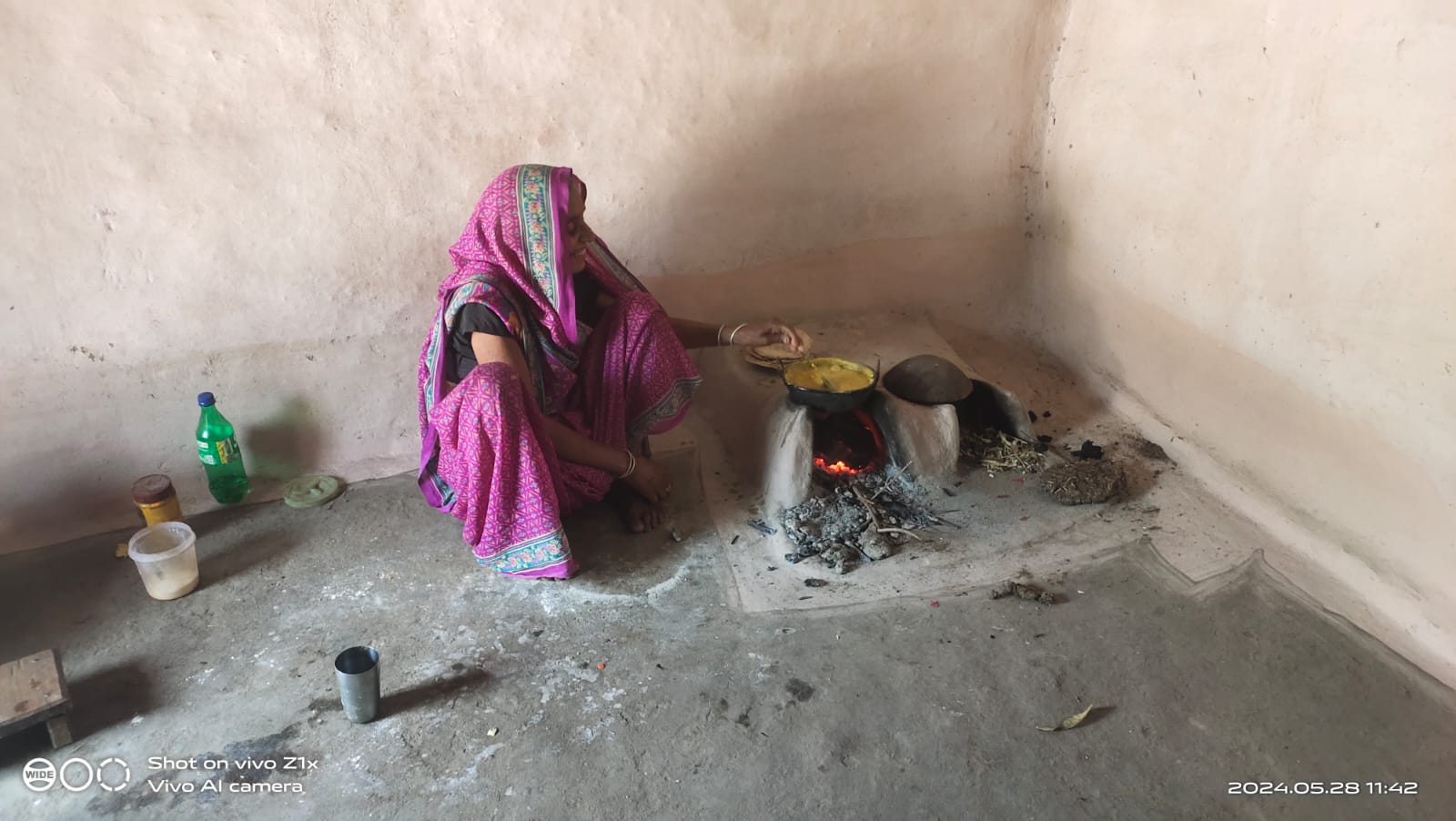
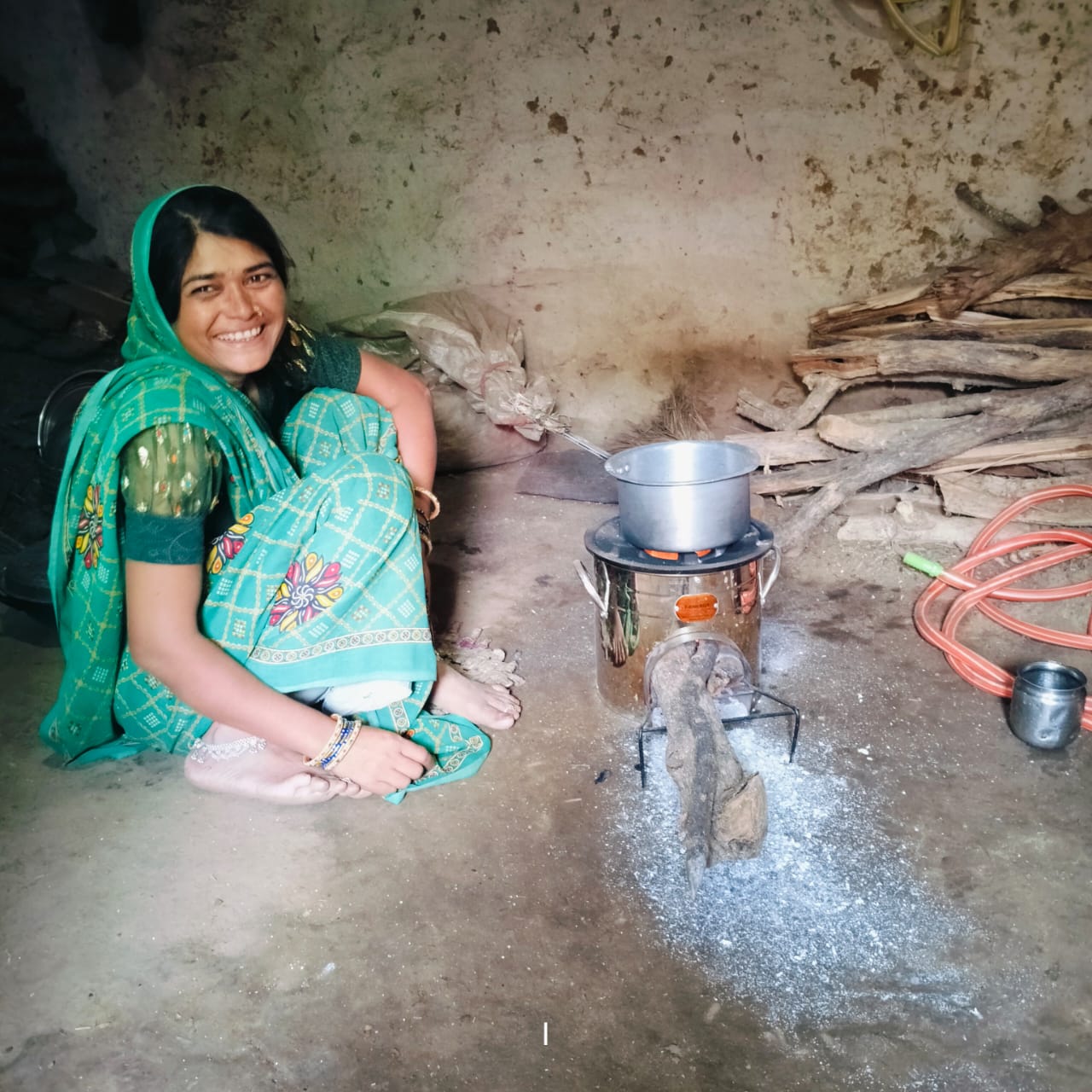
From the field
From smoke-filled kitchens to clean cooking
Every improved cookstove replaces an open mud chulha — cutting firewood use and the indoor smoke a family breathes while cooking, every single day.
Let us talk
Ready to start your clean cooking project?
Request the due-diligence pack — technical sheet, methodology and a sample impact report — and we will set up a call.