BLOG
How to Calculate Carbon Credits: A Step-by-Step Guide for India (2026)
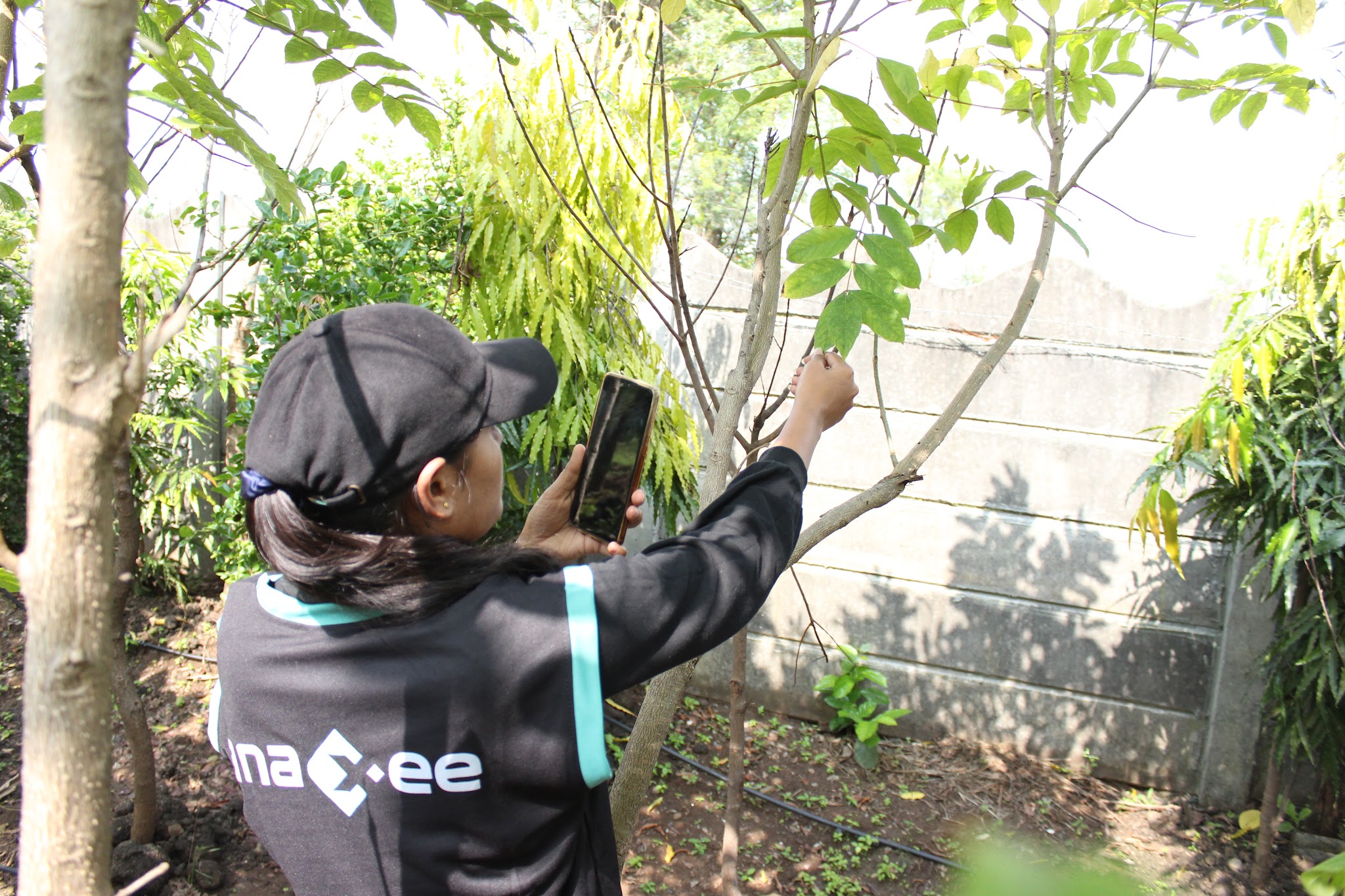
If you have searched for how to calculate carbon credits, you have probably hit one of two kinds of page: a personal carbon-footprint calculator, or a dense registry methodology you need a consultant to read. This guide sits in between — a clear, India-first walk-through of how carbon credits are actually calculated for a real project: the one formula every methodology shares, worked examples for the main project types, how it works under India’s carbon market, and what a credit is worth in 2026. At the end, you can run the numbers for your own project in seconds.
What exactly is a carbon credit?
A carbon credit is a tradable unit that represents one metric tonne — 1,000 kg — of carbon dioxide equivalent (CO₂e) reduced, avoided or removed. The ‘equivalent’ part matters: methane, nitrous oxide and other greenhouse gases are each converted into CO₂ using their Global Warming Potential before any credit is issued, so one tonne from a biogas project and one tonne from a solar project are, in unit terms, the same thing.
And per kilogram? Because one credit is one tonne, the per-kg figure is simply the tonne price divided by 1,000. A credit trading at ₹1,000 works out to about ₹1 per kg of CO₂e. People search for a per-kg rate, but credits are only ever issued and traded by the tonne.
The one formula behind every carbon credit
Strip away the jargon and every methodology rests on the same idea: a credit is the difference between what would have happened without your project and what actually happened with it.
Credits (tCO₂e) = Baseline emissions − Project emissions − Leakage − Buffer
- Baseline — the business-as-usual emissions that would have occurred anyway (the old chulha, the grid power, the cleared land).
- Project emissions / removals — what your project actually emits, or the carbon it actually captures.
- Leakage — emissions that shift elsewhere because of your project (for example, wood collection moving to another patch of forest).
- Buffer / permanence reserve — standards such as Verra and Gold Standard hold back a percentage of credits (often 10–25%) in a risk pool, in case trees burn or storage reverses.
For removal projects such as tree plantation and biochar, the same logic is written as net removals = project removals − baseline removals − leakage, then adjusted for the buffer.
How to calculate carbon credits, in four steps
- Set the baseline. Establish the business-as-usual scenario from historical data — past fuel use, the grid emission factor, or the land’s starting carbon stock — under an approved methodology.
- Measure the project. Quantify the actual emissions avoided or carbon removed, using activity data (metered fuel, MWh generated, tree measurements) × the relevant emission or sequestration factor.
- Subtract leakage and set aside a buffer. Deduct any displaced emissions and reserve the standard’s risk-buffer percentage.
- Verify and issue. An accredited third-party auditor checks the data before a registry — Verra, Gold Standard, or India’s CCTS offset mechanism — issues serial-numbered credits. Until that happens, you have a calculation, not a credit.
Worked examples: how credits are calculated by project type
Trees & agroforestry
Carbon in a tree is roughly 47% of its dry biomass (the IPCC default carbon fraction). To convert that carbon into CO₂e, multiply by 44/12 ≈ 3.67.
tCO₂e = carbon stock (t C) × 3.67, where carbon stock = biomass × 0.47
Real methodologies such as Verra VM0047 (ARR) or Gold Standard afforestation/reforestation add growth curves, below-ground biomass, leakage and a buffer — and because trees sequester carbon as they grow, issuance builds over a long crediting period rather than arriving all at once. As an illustration, 300 hectares of new agroforestry sequestering on the order of 7.5 tCO₂e per hectare per year, over its roughly 20-year crediting period, points to about 38,000 credits before the buffer — the kind of figure the calculator returns in seconds. See our Trees Outside Forests playbook for the Indian context.
Improved cookstoves
An efficient stove burns far less wood than an open chulha. Credits come from the metered or measured fuel savings, verified and issued each year across a crediting period of around five years under Gold Standard methodologies.
Biogas & biomass
Here the credit is the straightforward difference Emission reduction = Baseline emission − Project emission (BE − PE) — the fossil fuel or firewood displaced, minus the project’s own emissions — under CDM / Gold Standard small-scale methodologies.
Solar & other renewables
A clean power plant displaces grid electricity that would otherwise have been generated from fossil fuels. The credit is:
Credits = electricity generated (MWh) × grid emission factor (tCO₂/MWh) − project emissions
India’s grid combined-margin emission factor is about 0.705 tCO₂/MWh for FY2025-26 (Central Electricity Authority CO₂ Baseline Database), under methodology ACM0002.
Biochar
Biochar locks crop residue into a stable form of carbon. You track the dry biomass pyrolysed, its carbon content, convert with the same 44/12 factor, and apply a permanence factor — under Puro.earth or Verra VM0044. Our biochar MRV guide goes deeper.
Calculating carbon credits in India: CCTS and the voluntary market
India now runs two tracks. The compliance market under the Carbon Credit Trading Scheme (CCTS) — administered by the Bureau of Energy Efficiency under the Ministry of Power — sets targets in tonnes of CO₂e per unit of product for energy-intensive sectors: beat your target and you earn Carbon Credit Certificates, miss it and you buy them. Once all nine sectors are notified, the scheme is expected to cover roughly 700 million tonnes of CO₂e a year.
Alongside it, a voluntary offset mechanism and the global voluntary market (Verra, Gold Standard) let non-obligated projects — agroforestry, cookstoves, biogas, biochar, sustainable rice — earn and sell credits for CSR, net-zero and BRSR reporting.
What is one carbon credit worth in India?
There is no single price. The same one tonne can sell for a few hundred rupees or many thousands, because buyers pay for quality — permanence, additionality, verification and co-benefits — not just the tonne. Indicative 2026 ranges:
| Credit type | Indicative price (₹ / tonne) | Market |
|---|---|---|
| CCTS compliance credit (CCC) | ₹800 – ₹1,200 | Indian compliance (early estimates; no CCC trade reported yet, Nov 2026) |
| Agroforestry / afforestation removals | ₹1,500 – ₹4,400 | Voluntary (Verra, Gold Standard) |
| Soil / agricultural carbon | ₹500 – ₹2,500 | Voluntary |
| Avoided deforestation (REDD+) | ₹450 – ₹1,400 | Voluntary |
| Legacy renewable / cookstove (avoidance) | ₹50 – ₹800 | Voluntary |
| Durable removals (biochar, DAC) | ₹12,000 – ₹45,000+ ($136–$516/t) | Voluntary premium |
Figures are market estimates (Ecosystem Marketplace 2024 transaction data; IEEFA; published industry ranges), converted at roughly ₹85–88 per US dollar. Indicative only — not a price quote.
Run the numbers for your own project
Rather than do this by hand, get an indicative calculation in seconds. Pick a project type, set the size, choose whether you want to sell the credits or retire them for CSR / neutrality, and see the credit volume, the UN SDGs it supports and an indicative value.
The hard part is the measurement, not the maths
The arithmetic above is the easy part. What makes a credit real — and valuable — is defensible, on-the-ground data: a conservative baseline, accurate project measurement, and digital MRV that an auditor will accept. That is where most Indian projects win or lose their price.
Anaxee is India’s Reach Engine — a last-mile field network of 40,000+ trained Digital Runners across 540 districts, 11,000+ pincodes and 26 states — pairing on-ground delivery with digital MRV so carbon and CSR impact is measured, verifiable and registry-ready. We plan and execute carbon projects end to end (cookstoves, agroforestry, biogas, biochar and sustainable rice), and have worked with climate and CSR partners including First Climate, Kosher Climate and Schaeffler.
Frequently asked questions
How much is 1 carbon credit?
One credit is one tonne of CO₂e. In India in 2026 it ranges from under ₹800 for legacy avoidance credits to ₹1,500–4,400 for nature-based removals; CCTS compliance credits are estimated around ₹800–1,200.
What is 1 carbon credit in kg?
1,000 kg. The per-kg price is simply the tonne price divided by 1,000.
How do you calculate carbon credits from trees?
Estimate the carbon stock (biomass × 0.47) and multiply by 3.67 to convert to CO₂e; methodologies such as Verra VM0047 then add growth curves, leakage and a buffer.
How are carbon credits calculated for solar?
Multiply the clean electricity generated (MWh) by the grid emission factor (about 0.705 tCO₂/MWh in India) and subtract the project’s own emissions.
How do I earn carbon credits?
Design the project to an approved methodology, measure and verify the reductions through an accredited auditor, and a registry issues the serial-numbered credits — which you can then sell or retire.