Rural Market Research in India: Getting Real Consumer Insight at Village Scale

Most research over-indexes on cities. How to run honest rural market research in India — reaching a representative village sample in the local language, with every interview verified.

Quick answer: Rural market research means getting honest consumer insight from the villages and small towns where most of India actually lives — not extrapolating from metros. It takes a field force that can reach dispersed respondents in their own language, and verification that each interview genuinely happened on the ground.
AnaxeeAbout Anaxee

40,000+ Digital Runners · 540 districts · 26 states · 11,000+ pincodes of reach

★ Winner, National Startup Award (Govt. of India)Trusted by 350+ brands & institutionsIndia’s Reach Engine since 2016

The next phase of India’s consumption growth is being written in its villages and small towns. Yet most market research still over-indexes on the cities, because rural respondents are hard and expensive to reach. The result is a quiet distortion: brands make rural decisions on urban data, or on rural data so thin and unverified that it is barely better than a guess.

Getting it right means doing the hard thing — actually going to the villages, in the local language, and proving the research happened.

The prize
$4.3 trillion
India’s consumer market by 2030 — set to become the world’s second largest, with rural a major engine
India consumer market to $4.3 trillion by 2030Consumer market by 2030
Winning a share of it means understanding the rural consumer — which you cannot do from a metro focus group.
Source: industry report, via IBEF

Why rural market research goes wrong

  • Urban bias. The sample quietly skews to reachable towns, and the genuinely rural voice — the one you needed — is thin or missing.
  • Language and rapport. Honest answers come when the question is asked in the respondent’s language by someone they trust — not through a stilted translation.
  • Fabricated responses. Unsupervised rural fieldwork is where “curbstoning” — invented interviews — creeps in, and it is invisible without verification.
  • Cost and logistics. Sending researchers to scattered villages is slow and expensive, which is exactly why rural samples get cut short.
  • Stale sample frames. Old village and household lists mean you are sampling a reality that has already moved on.
The field reality
640,000+ villages
nearly 69% of India lives rural — a representative read has to physically reach them
India is about 69% ruralRural ~69%Urban ~31%
You cannot represent rural India from the metros. The sample has to reach deep — which is a last-mile problem before it is a research problem.
Source: Census of India 2011 (rural population share and village count).

AnaxeeNeed a real read on the rural consumer?

Anaxee runs rural research across 540 districts — respondents reached in the local language, every interview geo-tagged and verifiable.

Book a meeting

How to run rural research that is actually real

Reach a representative rural sample on the ground

Set quotas across geographies, village sizes and demographics, and enforce them in the field — so the sample reflects rural India as it is, not just the villages closest to a highway.

Interview in the local language, with rapport

Field researchers who are from the region and speak the language get honest, considered answers — the difference between a real insight and a politely empty one.

Verify every response

Each interview carries a GPS location, a timestamp and, where relevant, a photo or audio capture, so a back-office can confirm it genuinely happened — the practical cure for fabricated rural fieldwork.

Turn it around fast

In-app capture flows to a live dashboard as the fieldwork runs, so coverage fills in by district in real time and the dataset is ready days after the last interview.

Fun fact: the single most common flaw in rural research is not a bad question — it is a sample that never actually left the main road. Reaching the village behind the village is where the real insight lives.

Where technology and AI change the game

Anaxee runs rural research as a tech product. Every response is captured in-app, geo-tagged and time-stamped, flowing to a live dashboard the client watches by region and quota. Automated quality-control flags responses collected too fast, duplicates, and locations off the assigned beat — so a rural study comes back representative and verifiable, not a black box of fieldwork you have to take on trust.

For an independent read on how happy your end buyers already are, see our consumer satisfaction survey.

How Anaxee helps

Anaxee — India’s Reach Engine, a National Startup Award winner working with 350+ brands and institutions — runs rural surveys, consumer research and data collection through 40,000+ Digital Runners across 540 districts and 11,000+ pincodes, in local languages, every response verifiable. It is the rural edge behind our large-scale field surveys and farmer data collection. See our field services.

AnaxeeProof on the ground — rural research & data we’ve run

Rural surveys and data collected across all 26 states and 3,600+ villages for research, agri and media clients. See all case studies →
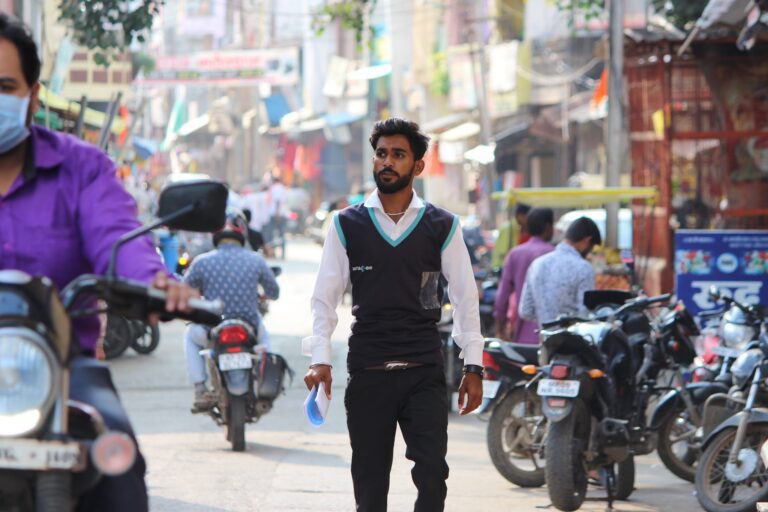
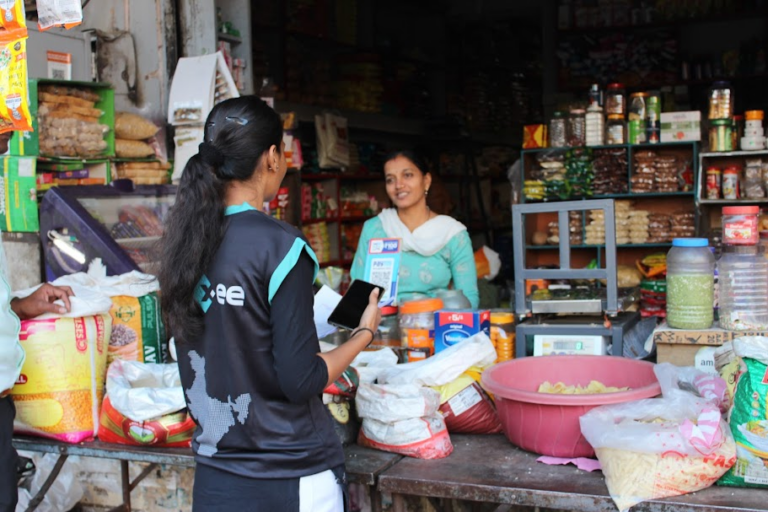
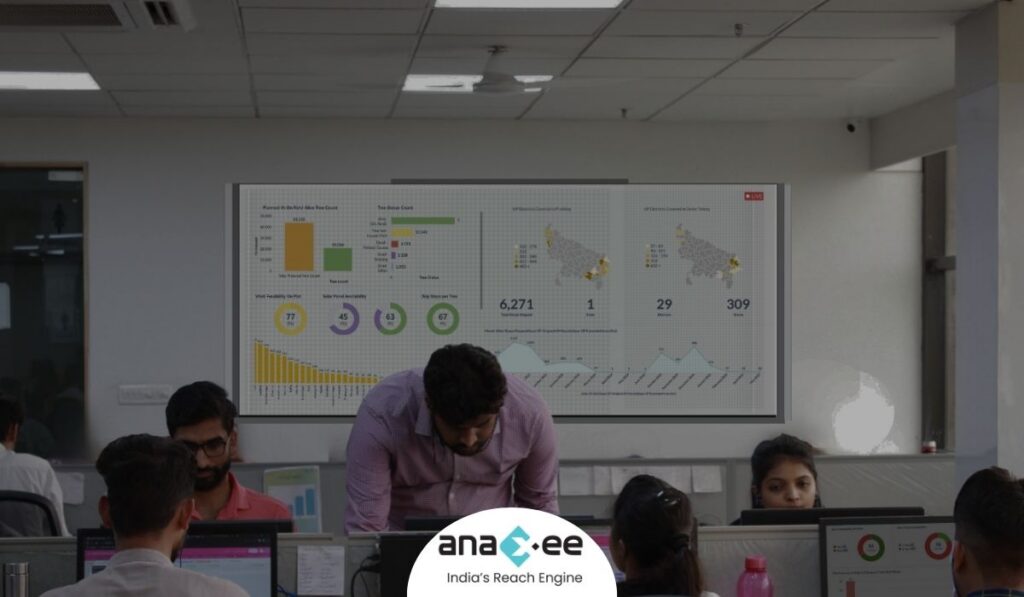
Anaxee team at work in the Indore office

AnaxeeWhat happens when you reach out to Anaxee

  1. Tell us the study — the question, the rural sample and the markets — by form, WhatsApp or a call.
  2. A real person calls back — our Indore team, within one working day.
  3. We scope a pilot — one region surveyed, verifiable data in real time, before you scale.

A 150+ person team in Indore and 40,000+ Digital Runners on the ground — your enquiry reaches people who run rural research every day, not an inbox that goes quiet.

Tell us about your rural study

Share the sample and the markets — our team will get back within one working day.

    Frequently asked questions

    What is rural market research?
    Structured consumer and market research conducted in villages and small towns — surveys, product and concept tests, usage and attitude studies, price research — reaching respondents on the ground in their own language, against a representative rural sample.
    Why can’t I just use urban data for rural decisions?
    Rural consumers differ in income patterns, media, languages, aspirations and buying behaviour. Extrapolating from metros systematically misreads them — which is costly when rural is where your growth is.
    How do you reach rural respondents?
    Through a field network of 40,000+ Digital Runners already present across 540 districts and 11,000+ pincodes, working in local languages — so the sample reaches the deep villages most vendors skip.
    How do you ensure the responses are honest and real?
    Every interview is geo-tagged and time-stamped, with photo or audio capture where relevant, and automated checks flag responses that are too fast, duplicated or off the assigned location — preventing fabricated fieldwork.
    What kinds of rural research can you run?
    Consumer surveys, product and concept testing, usage and attitude studies, price and pack research, brand and media tracking, and beneficiary or programme research — across agri, FMCG-adjacent, durables, development and media clients.
    Which languages can you cover?
    Fieldwork runs in the local language of each region, across 26 states — which is essential to getting honest, considered answers rather than translated approximations.
    How fast and how large can a rural study be?
    From a few hundred respondents in one state to lakhs nationwide — Anaxee has collected data from 2,42,672 farmers across 3,667 villages on a single programme, with fieldwork spinning up in days.
    What does rural market research cost in India?
    It depends on sample size, geography and questionnaire length. Anaxee scopes it to your study — book a short call for a number.

    The bottom line

    Rural India is where the next trillion dollars of consumption will be won — and it is invisible to research that never leaves the main road. Reach a representative rural sample on the ground, interview in the local language, and verify every response. Do that, and you trade a guess about the rural consumer for an insight you can actually bet on.

    AnaxeeTalk to Anaxee — whichever way is easiest
    Book a meetingCallEmail

    Agri-Input Distribution in India: Expanding Your Dealer Network into Rural Markets

    For seed, fertiliser, crop-protection and farm-equipment brands, growth means reaching more dealers and more farmers in deep rural India. Here’s how to expand an agri-input dealer network that actually sells.

    Quick answer: Agri-input distribution is about getting seed, fertiliser, crop-protection or equipment from the brand to the farmer through a dealer network — across scattered rural markets. Expanding it means mapping and onboarding the right dealers, reaching farmers directly, and verifying it all on the ground.
    AnaxeeAbout Anaxee

    40,000+ Digital Runners · 540 districts · 26 states · 11,000+ pincodes of reach

    ★ Winner, National Startup Award (Govt. of India)Trusted by 350+ brands — incl. Mahindra & ITCIndia’s Reach Engine since 2016

    An agri-input brand wants to grow in a new state. The plan looks simple on a slide: appoint dealers, push stock, reach farmers. On the ground it’s anything but — the brand doesn’t know which dealers exist in which taluka, which are genuinely active, or how to get in front of the farmers who’d actually buy. The result is familiar: a few easy urban-edge dealers get appointed, and the deep rural demand the brand came for stays out of reach.

    Agri-input growth is a last-mile problem long before it’s a product problem — and it runs on trust.

    Why trust decides
    35%
    of Indian farmers hit a counterfeit agri-input in the past 12 months
    35% of farmers hit a counterfeit agri-input in a yearHit a fakein the last 12 months
    In a market where a fake input can cost a whole season, trust in the dealer — and the brand behind him — decides everything.
    Source: Crisil Intelligence & ASPA, State of Counterfeiting in India 2025, via Global Agriculture

    What makes agri-input distribution hard

    Seed, fertiliser, crop-protection and farm equipment all sell through a thin, scattered dealer network serving farmers spread across villages — often with low connectivity, seasonal demand, and strong local trust relationships an outsider brand can’t shortcut. Reaching that market takes feet on the ground, not just a distributor appointment letter.

    The three gaps brands hit

    • Dealer mapping. You can’t appoint dealers you don’t know exist. Most brands have no real map of the agri-dealer universe by taluka.
    • Farmer reach. Dealers alone don’t create demand; farmers need to know and trust the product.
    • Verification. Is the appointed dealer actually stocking and selling, or just holding the board?

    AnaxeeWant a real map of the dealers and farmers in your target districts? Anaxee will build it.

    Anaxee Digital Runners run a dealer census, farmer onboarding and activity verification across 540 districts — geo-tagged, village by village.

    Book a meeting

    How to expand an agri-input network that sells

    Map the dealer universe

    A field census of agri-input dealers by taluka — who exists, what they stock, how active they are — gives you a real base to appoint from, instead of guessing.

    Reach farmers directly

    Field teams and trusted local people take the product to farmers — demos, awareness, onboarding — creating the pull that makes dealers want to stock you.

    Verify dealer activity

    Ongoing field checks confirm which dealers are genuinely stocking and selling, so you invest in the ones that work.

    Fun fact: for most farmers the local agri-dealer is the single most trusted source of advice — which is exactly why reaching and verifying that dealer network, not just advertising, decides whether a brand grows in a district.

    Where technology and AI change the game

    Anaxee runs agri distribution as a tech product. Every dealer and farmer interaction is captured in a field app, geo-tagged and time-stamped, feeding a live dashboard — so a mapped dealer or an onboarded farmer is a real, located record, not a claim. On top sits AI that cleans and de-duplicates dealer and farmer data, matches records, and flags anomalies — turning scattered rural fieldwork into structured, verifiable data a brand can plan on.

    How Anaxee helps

    Anaxee — India’s Reach Engine, a National Startup Award winner working with 350+ brands — maps dealers, onboards and reaches farmers, and verifies activity – as part of Anaxee’s full agri-tech field services – across 540 districts and 11,000+ pincodes, app-tracked and geo-verified. It’s part of our Go-To-Market work.

    Anaxee team at work in the Indore office

    AnaxeeWhat happens when you reach out to Anaxee

    1. Tell us your markets — form, WhatsApp, or a call.
    2. A real person calls back — our Indore GTM team, within one working day.
    3. We scope a pilot — pick a few talukas and see a real dealer map and farmer reach, before you commit to scale.

    A 150+ person team in Indore and 40,000+ Digital Runners already in villages across India — your enquiry reaches people who do this every day, not an inbox that goes quiet.

    Tell us about your markets

    Share your target districts and what you’d like mapped or verified — our team will get back within one working day.

      Frequently asked questions

      What counts as agri-input distribution?
      Getting seed, fertiliser, crop-protection, animal-health or farm equipment from the brand, through dealers, to farmers — across rural markets.
      How do you find and onboard rural agri dealers?
      Through a field census that maps the dealer universe by taluka, then on-ground onboarding and verification of which dealers are genuinely active.
      How do you create farmer demand, not just appoint dealers?
      Field teams run farmer awareness, demos and onboarding — the pull that makes a new dealer network actually sell.
      How do I verify a dealer is actually stocking and selling my product?
      Recurring field checks confirm stock on the ground and real activity, geo-tagged and photo-backed, so you invest only in dealers who perform.
      How do I protect my brand against counterfeit agri-inputs?
      On-ground verification surfaces where fakes or unauthorised stock appear in the market, so you can act — a real risk, with 35% of farmers reporting exposure in a year.
      Should I hire my own field team or outsource dealer mapping?
      For scattered, seasonal rural coverage, an outsourced pan-India field network is faster and cheaper than staffing it. Many brands keep a core team and outsource the deep-rural reach.
      Can you reach deep rural villages, not just mandi towns?
      Yes — a last-mile network of 40,000+ Digital Runners living in these districts is built exactly for village-level reach.
      How does technology help agri-input distribution?
      App-based, geo-tagged capture plus AI that cleans dealer/farmer data and flags anomalies turns scattered fieldwork into a structured, verifiable map a brand can plan on.
      What is a dealer census?
      A ground-up count and mapping of the agri-input dealers in an area — who exists, what they stock, how active — so you appoint from reality, not guesswork.
      What does agri-input field work cost in India?
      It depends on the districts, scope and frequency. Anaxee scopes it to your markets — book a short call for a number.

      The bottom line

      In agri-inputs, distribution is the product’s path to the farmer — and that path runs through villages most brands can’t reach, on trust they can’t fake. A last-mile network that maps dealers, reaches farmers and verifies activity is how you expand a network that actually moves stock.

      AnaxeeTalk to Anaxee — whichever way is easiest

      Book a meetingCallEmail

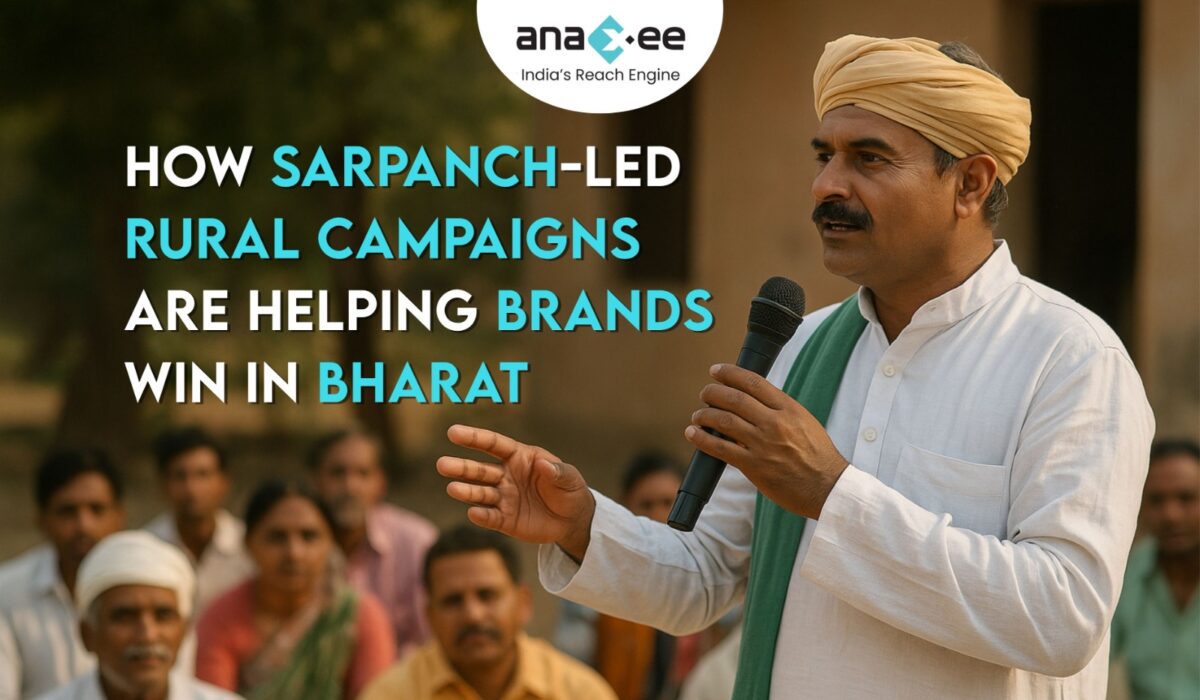
      How Sarpanch-Led Rural Campaigns Are Helping Brands Win in India

      India’s rural market is massive, untapped, and surprisingly aspirational. Yet, marketing to this segment remains one of the toughest challenges for high-value brands- think cement, tractors, financial services, or durable goods. So how do India’s largest brands break through the noise and gain trust in 6,00,000+ villages?

      Enter: The Sarpanch.

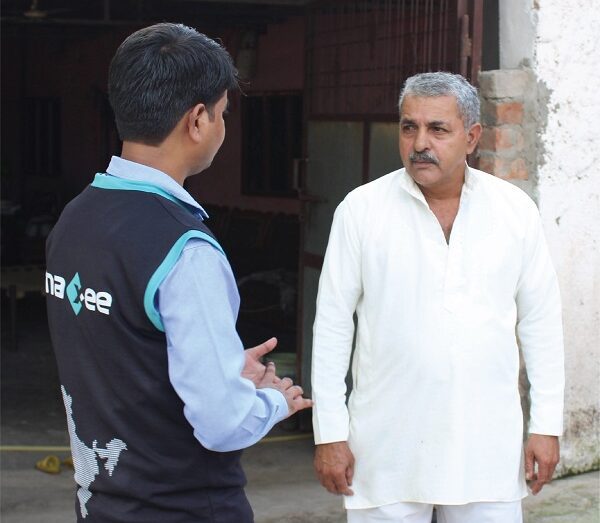
      Anaxee's Field Employee pitching pitching prodcut to a potential customer in rural india

      From cement companies to automotive giants, brands are rediscovering the power of grassroots leadership- starting with the sarpanch (village head)- to drive high-impact rural campaigns. And helping them execute this at scale is Anaxee Digital Runners: India’s largest last-mile outreach engine.


      Why the Sarpanch Is Your Best Marketing Ally

      The sarpanch isn’t just a government-appointed leader; they’re the nucleus of trust, governance, and change in India’s villages. A sarpanch-led endorsement carries more weight than a celebrity commercial. When the sarpanch supports a product or initiative, the entire village listens.

      Brands are recognizing this and deploying village-level programs that center on the sarpanch’s credibility- especially when marketing high-involvement products like cement, tractors, or savings schemes.

      What Makes Sarpanch-Led Campaigns So Effective?

      – Built-in Trust: Villagers look up to their sarpanch as a decision-maker.

      – Community Gatekeeper: They control access to events, land, and community halls.

      – Scalable Word of Mouth: Their endorsement spreads fast across neighboring villages — the essence of rural influencer marketing.

      – Local Organizer: Mobilize groups for events, demonstrations, or installs.


      4 Powerful Case Studies of Sarpanch-Centric Rural Campaigns

      1. UltraTech Cement – “Yashasvi Sarpanch”

      UltraTech’s campaign awarded and celebrated proactive sarpanches across India who implemented sustainable village projects. Over 6,000 villages were reached, impacting 8 million people.

      – Partners: Mindshare India, Rajasthan Patrika

      – Tactics: Awards events, village meetings, content series

      – Impact: Enhanced brand loyalty and positioned UltraTech as a development partner

      2. Ambuja Cement & ACC – “Kaabil Sarpanch”

      In Punjab, Ambuja and ACC ran a contest to identify the most community-focused sarpanches. 13 sarpanches were awarded based on village development.

      – Partners: MyFM, Ambuja Foundation

      – Tactics: Evaluation of 50+ villages, awards, media stories

      – Impact: Created goodwill and triggered positive WOM across districts

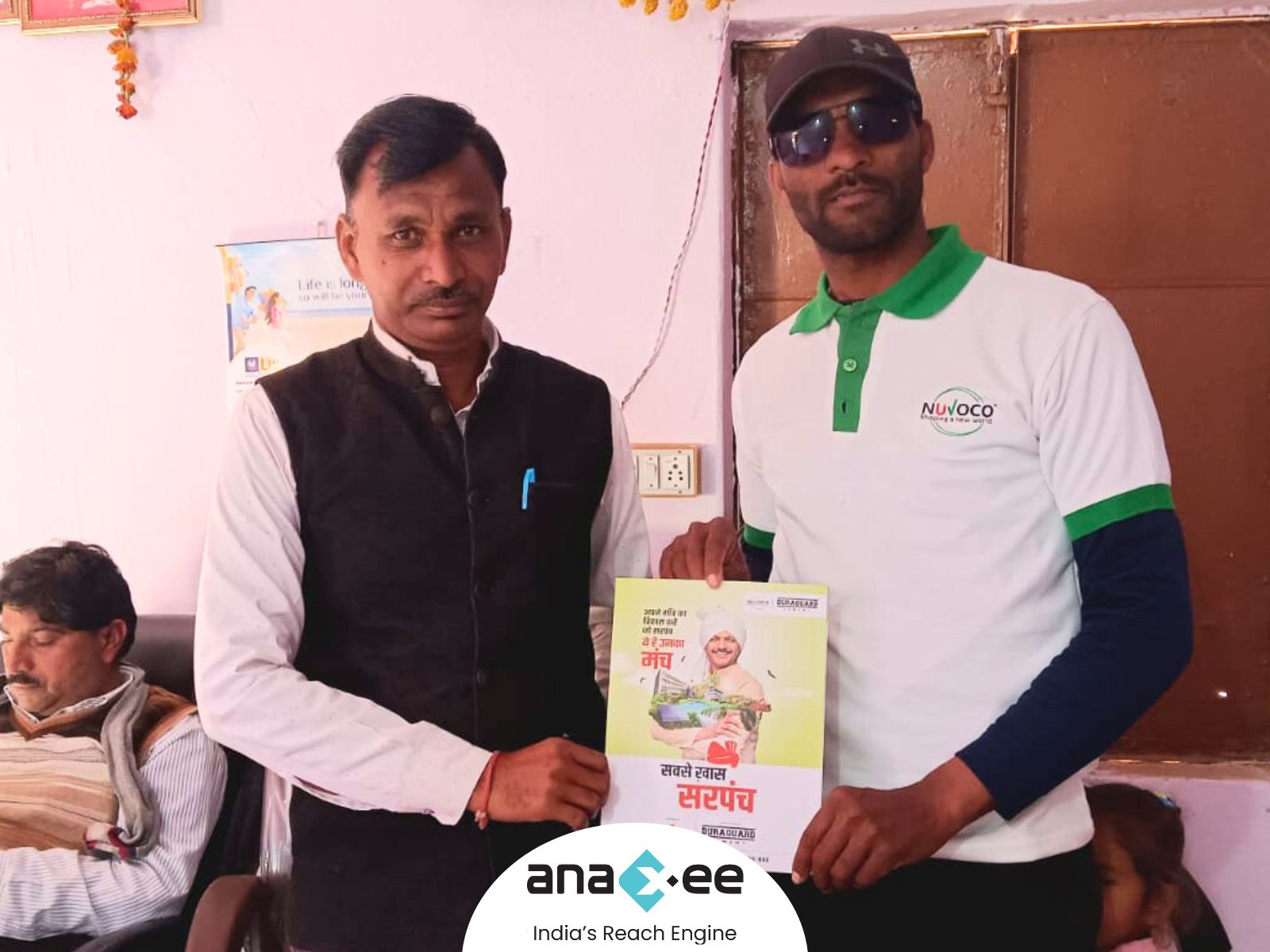
      3. Nuvoco Vistas – “Sabse Khaas Sarpanch”

      Over 2,500 sarpanches across 4,000 villages were engaged through this recognition-driven program that honored good governance.

      – Partners: Internal marketing & outreach teams

      – Tactics: Village meets, nomination campaigns, felicitation events

      – Impact: Strengthened rural perception of Duraguard as a socially responsible brand

      	“Anaxee Digital Runner presenting a ‘Sabse Khaas Sarpanch’ certificate and Nuvoco Duraguard Cement brochure to the village sarpanch inside a rural panchayat office.”


      4. Mahindra Tractors – “Sarpanch Plus”

      Mahindra launched its new tractor lineup endorsed by sarpanches as tech-forward, reliable tools for progressive farmers.

      – Partners: In-house teams & dealership networks

      – Tactics: Demo events, community rides, sarpanch testimonials

      – Impact: Boosted tractor inquiries and sales in low-penetration markets


      What Marketing Teams Can Learn

      Whether you’re in cement, automobiles, agri-inputs, or consumer durables—sarpanch-led campaigns can unlock unmatched rural credibility. But they’re not easy to execute. That’s where Anaxee Digital Runners comes in.


      Anaxee: The Engine Behind Bharat’s Biggest Rural Campaigns

      Anaxee is India’s Reach Engine. With a network of 50,000+ Digital Runners (shared, tech-enabled feet-on-street), Anaxee is redefining how rural outreach is executed in India.

      – Scale: Present in 26 states, 540+ districts, and 11,000+ pin codes

      – Speed: Ability to deploy campaigns in 1000s of villages simultaneously

      – Trust: Local Digital Runners act as the eyes, ears, and face of the campaign

      – Technology: Real-time monitoring, app-based reporting, GPS-tagged evidence


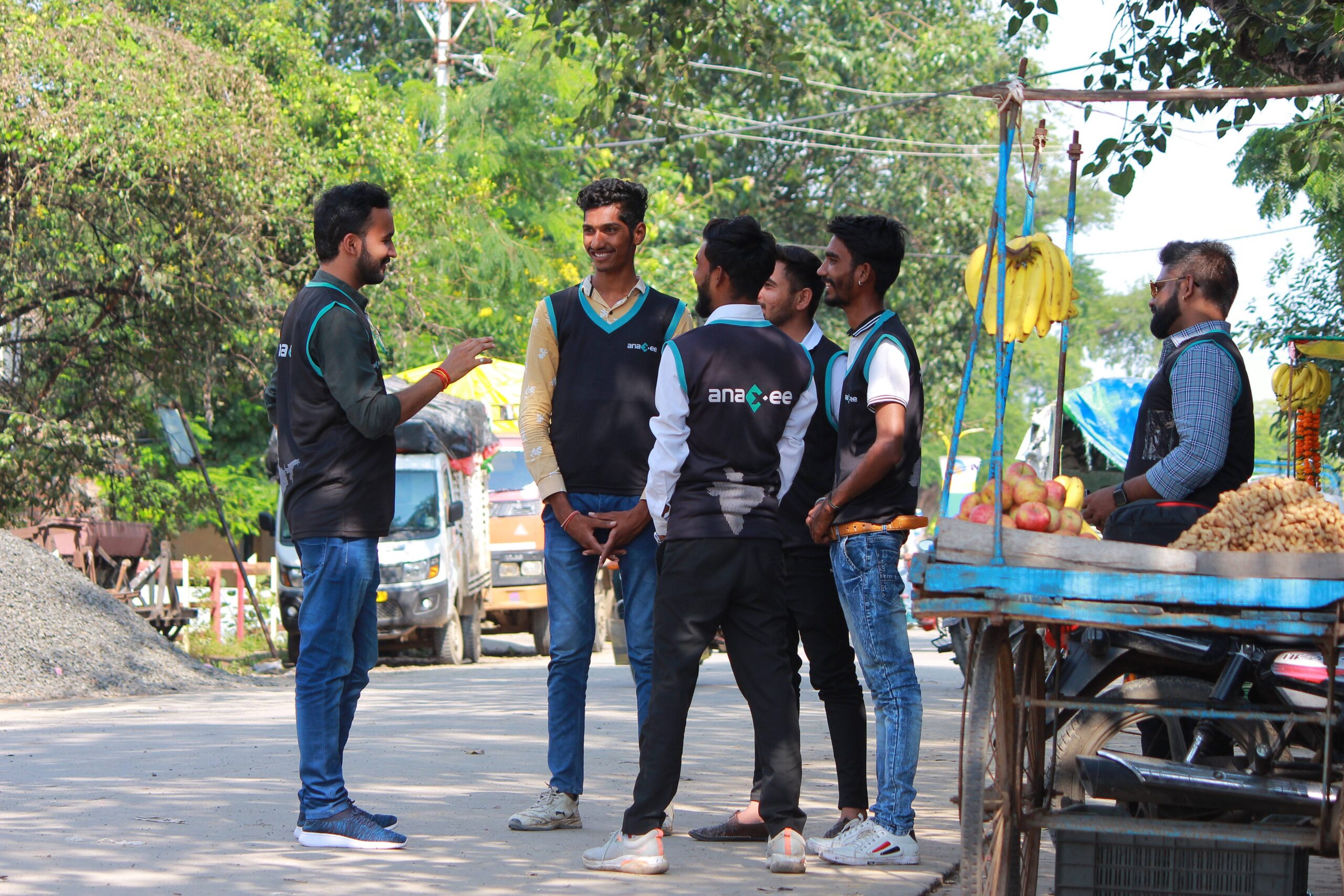
      Anaxee's Field Network of 50000+ Digital Runners

      How Anaxee Adds Value

      – Identify credible sarpanches in your TG geography

      – Organize community meetings, demo sessions, or training programs

      – Build tech-enabled reward campaigns and contests

      – Provide rich campaign data: attendance, feedback, geo-evidence


      Creative Campaign Ideas You Can Launch with Anaxee

      1. Village Champion Awards

      Recognize top-performing sarpanches who promote education, sanitation, or digital literacy. Co-brand the initiative and get visibility in local and regional press.

      2. Gram Sabha Product Demos

      Launch new tractors, solar pumps, or health products during Gram Sabha sessions hosted by the sarpanch.

      3. Door-to-Door by Digital Runners

      Supported by the sarpanch, Digital Runners carry out home visits, product sampling, or survey campaigns.

      4. Panchayat Endorsements

      Roll out co-branded posters or WhatsApp campaigns that feature sarpanch testimonials.
      Anaxee's Digital Runner taking Digital information/Data of Women rural women for Rural Marketing


      Don’t Just Advertise. Be Part of the Village Story.

      Marketing to Bharat is not about shouting louder. It’s about embedding your brand into the social fabric of the village. Sarpanches are your gateway. Anaxee is your bridge.

      When you work with Anaxee, you’re not just selling products- you’re building trust, creating development narratives, and becoming a part of the village’s journey.


      Ready to Launch Your Next Big Rural Campaign?

      Reach out to Anaxee and let’s craft a sarpanch-led campaign that delivers real engagement, real results, and real rural goodwill.

      📩 Write us to: sales@anaxee.com