BLOG
How Many Carbon Credits Does a Cookstove Generate? (India, 2026)
 About Anaxee
40,000+ Digital Runners · 540 districts · 26 states · 11,000+ pincodes of reach
Improved cookstoves are one of India’s fastest and most common carbon project types — but ‘how many credits does a cookstove actually generate?’ rarely gets a straight answer. Here is the honest per-stove maths, and how it scales to a full programme.
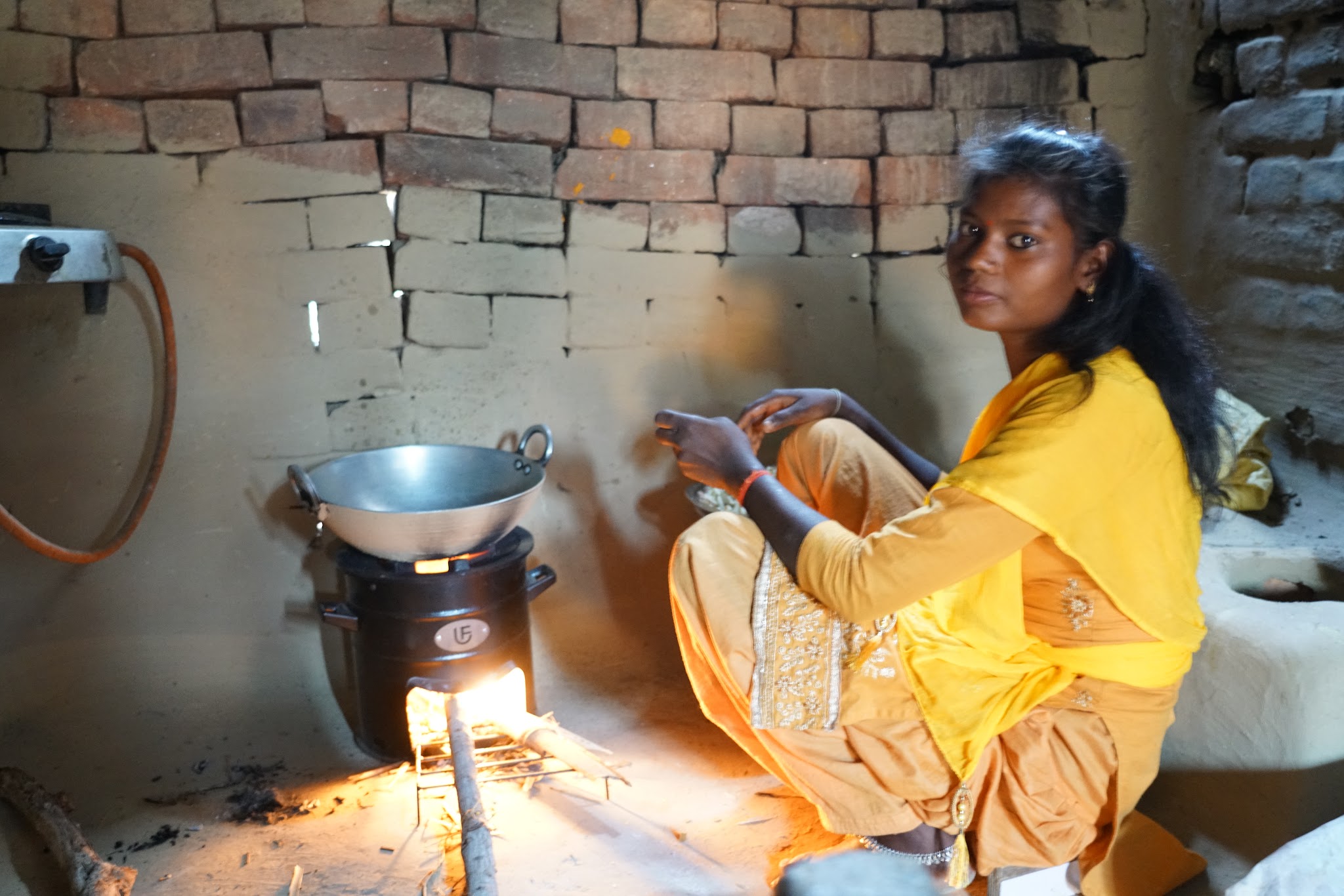
A credit is one tonne of CO₂e avoided. For a cookstove, that avoidance comes from one simple thing: an efficient stove burns far less wood than a traditional open chulha, so less biomass is cut and burned.
The per-stove maths, step by step
A household cooking on an open chulha burns roughly 4 to 6 tonnes of firewood a year. An efficient stove cuts fuel use by about 40–60%, saving 2 to 3 tonnes of wood annually. Each tonne of non-renewable woody biomass avoided converts to a little under one tonne of CO₂e once the standard’s fraction of non-renewable biomass (fNRB) is applied — which nets out to roughly 1.75 to 2.25 credits per stove per year.
The chain is simple: wood saved → emissions avoided → credits. Multiply the per-stove figure by the number of stoves, then by the crediting-period years, and you have the programme total. (For the full methodology behind every carbon project type, see our guide on how to calculate carbon credits.)
Run your own cookstove numbers. Pick ‘Improved Cookstoves’, set how many stoves you plan to distribute, and the calculator shows indicative annual and lifetime credits — plus a one-page report emailed to you.
What changes the number
The 1.75–2.25 range is a starting point. Four things move a real project up or down inside — and sometimes below — it:
What those credits are worth
Cookstove credits sit in the legacy avoidance band — roughly ₹50 to ₹800 per credit in 2026, below nature-based removals. Volume and strong co-benefits (clean indoor air, women’s time saved, better health) are what make a cookstove programme add up commercially. See our full carbon credit price in India breakdown for every segment.
Where technology changes the number
For cookstoves, the single biggest risk to credits is proving the stoves are actually used, year after year. That is where digital MRV earns its keep: geo-tagged, time-stamped distribution and usage checks, AI reading field photos to flag suspect data, and a live dashboard that keeps the whole project audit-ready. Better evidence of real usage does not just protect credits — it moves them toward the top of the range and makes them far easier to sell. See how this fits the wider clean-cooking carbon opportunity.
How Anaxee helps
Anaxee is India’s Reach Engine — 40,000+ Digital Runners across 540 districts, 11,000+ pincodes and 26 states, and a winner of the National Startup Award. We have delivered cookstoves at scale (50,000 across Madhya Pradesh and 44,000 in Bihar) and build the on-ground, audit-ready evidence that turns a clean-cooking project into verified, sellable credits.
- We scope your cookstove programme and give you an indicative credit volume and value range.
- We design it to a credible Gold Standard methodology and build the usage-monitoring MRV.
- Our Digital Runners distribute and verify on the ground; we take it through to issued credits.
With cookstoves, proof of real usage is the whole game — and proof on the ground is what we do.
Frequently asked questions
How many carbon credits does one cookstove generate?
How many credits will my cookstove project generate?
How much is a cookstove carbon credit worth?
How long does a cookstove project issue credits?
Which methodology is used for cookstove credits?
The bottom line
One cookstove is about two credits a year — small on its own, serious at programme scale. The number you actually issue is decided less by the stove and more by whether you can prove people keep using it. Build the usage evidence, and a cookstove programme becomes one of the most dependable carbon projects in India.
Scope your cookstove numbers now. Get an indicative volume and value in seconds, or talk to the team that delivers and verifies stoves on the ground.