BLOG
How to Calculate Carbon Credits from Trees (Per Tree & Per Hectare), India 2026
 About Anaxee
40,000+ Digital Runners · 540 districts · 26 states · 11,000+ pincodes of reach
‘How many carbon credits does a tree make?’ is the first question nearly every farmer, FPO and CSR head asks. The honest answer surprises people: credits are not counted per tree at all. A fast-growing poplar and a young neem are not remotely comparable, so registries calculate credits across a defined project area, over years — from the carbon the trees actually store.
Get that method right and a plantation becomes a bankable, verifiable asset. Get it wrong and you either over-promise credits that never issue, or undersell land that was worth far more. Here is exactly how it is calculated, with a worked example and 2026 prices.
The method, in four steps
Credits (tCO₂e) = (biomass × 0.47 × 3.67) − baseline − leakage − buffer
Why per hectare, not per tree
A single tree’s sequestration varies enormously with species, age, spacing and site. That is why registries calculate credits across a defined project area (per hectare) over a crediting period — not per individual tree. If you want a rough planning figure, our calculator lets you enter either trees or hectares and applies a planting-density assumption you can edit.
Run it for your plantation. Enter trees or hectares, pick agroforestry, and see the indicative credit volume, the UN SDGs it supports and an indicative value — in seconds.
The methodologies
Real projects run under a registry methodology that formalises all of this with growth curves, uncertainty deductions and a buffer pool — most commonly Verra VM0047 (Afforestation, Reforestation and Revegetation) or Gold Standard afforestation/reforestation. See our Trees Outside Forests playbook and the agroforestry process flow for how this runs on farmer land in India.
What are tree-based credits worth in India?
| Credit type | Indicative ₹ / tonne (2026) |
|---|---|
| Agroforestry / afforestation removals | ₹1,500 – ₹4,400 |
| Soil / agricultural carbon | ₹500 – ₹2,500 |
| Avoided deforestation (REDD+) | ₹450 – ₹1,400 |
Market estimates (Ecosystem Marketplace 2024 data; industry ranges); not a quote. Price is driven by verification quality, permanence and co-benefits — see our carbon credit price in India guide.
Where technology and AI change the game
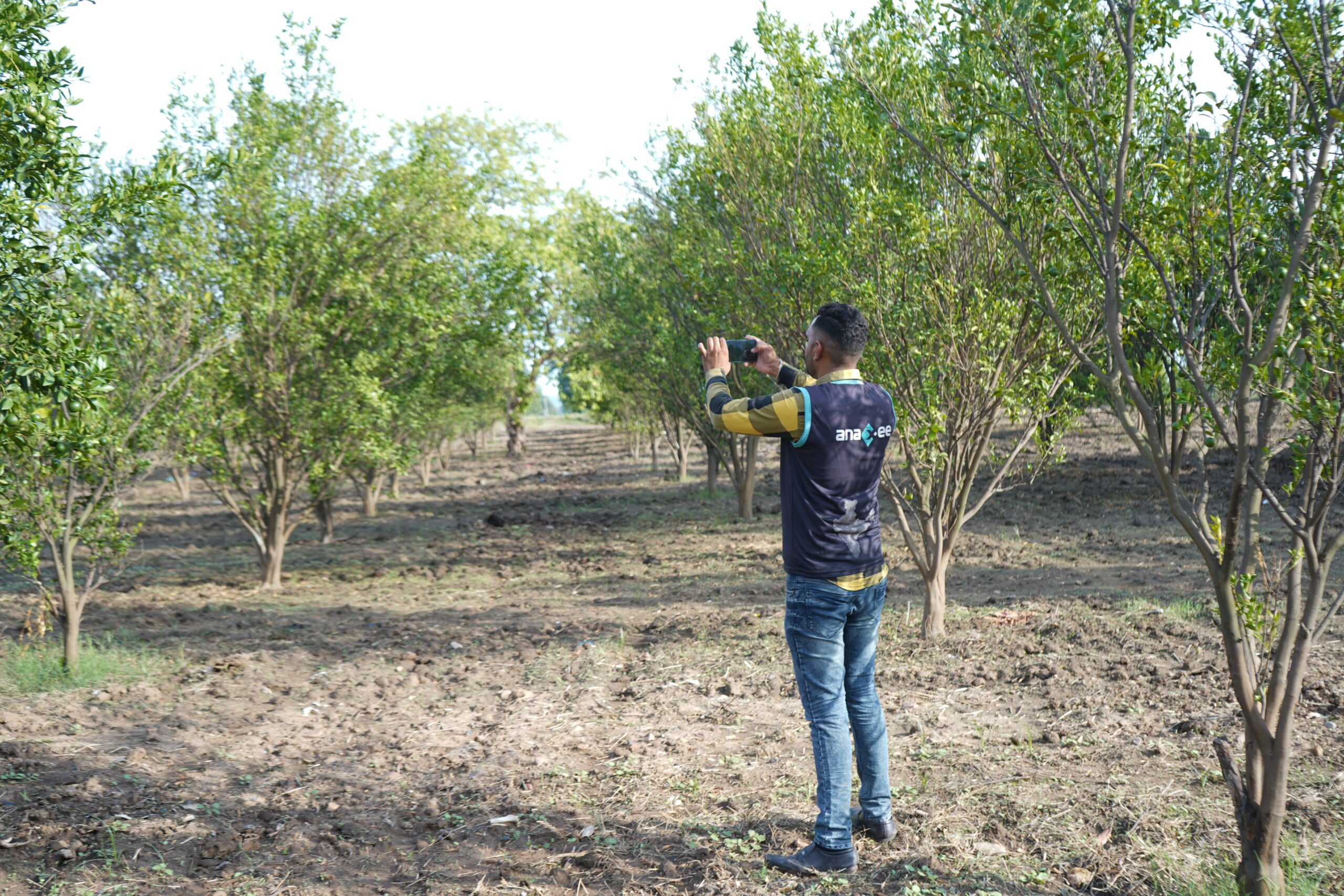
A plantation only earns credits if the measurement is defensible. Modern tree projects run on digital MRV: each plot and sapling is captured in an app, geo-tagged and time-stamped; satellite and drone imagery is cross-checked against field plots; and AI helps count trees, estimate canopy and flag any plot that does not add up — before it reaches an auditor. That is how a plantation becomes registry-ready evidence instead of a claim.
How Anaxee helps
Anaxee is India’s Reach Engine — 40,000+ trained Digital Runners across 540 districts, 11,000+ pincodes and 26 states, and a winner of the National Startup Award. We pair last-mile field measurement with digital MRV so agroforestry and tree-plantation projects are measured, verifiable and registry-ready, end to end — and we have worked with climate and CSR partners including First Climate, Kosher Climate and Schaeffler.
- We scope your land and species and give you an indicative credit volume and value.
- We design the project to a methodology (VM0047 or Gold Standard) and build the baseline and MRV plan.
- Our Digital Runners measure on the ground; we take it through verification to issued, sellable credits.
One partner, from the first tree measured to credits in hand.
Frequently asked questions
How many carbon credits does one tree produce?
How do you calculate carbon credits per hectare?
How much is an agroforestry carbon credit worth?
Which methodology is used for tree carbon credits?
How is the full calculation done end to end?
The bottom line
Credits from trees are not a per-tree lottery — they are a measured, per-hectare asset: biomass to carbon to CO₂e, minus baseline, leakage and buffer. The number on paper is easy; what makes it bankable is measurement an auditor will trust, which is exactly what a country-scale field network with digital MRV delivers.
Thinking of a plantation or agroforestry project? Get an indicative number in seconds, or talk to the team that measures trees on the ground across India.