BLOG
Cotton Sourcing Partner in India: Your On-Ground Command Centre, Back Office & Field Team
You source from India. But you're not on the ground in India.
India is the largest country in the Better Cotton programme and one of the world's biggest cotton and textile suppliers. If you are a brand, retailer or mill sourcing from here, two things are true at once: the sustainability model depends on what happens in Indian fields and factories, and most buyers — particularly those headquartered in Europe, the UK or the US — have no permanent presence to see it.
Under mass balance, the Better Cotton you pay for is tracked by volume and mixed into a complex supply chain — the benefit reaches farmers, but the physical cotton may never be in your end product, so the only thing that makes your claim real is what happens at farm and gin level in India. Under Better Cotton's newer physical traceability (launched end-2023), India is traced back to the ginner — which means someone has to capture clean origin and chain-of-custody data on the ground, every season. That ‘someone on the ground, every season’ is the gap Anaxee fills.
What Anaxee runs for you: a Project Management Unit on the ground
Instead of flying in for an audit twice a year or trusting a supplier's self-declaration, you get a standing operation — run the way a development-sector or government programme runs a Project Management Unit: one accountable unit that plans, executes, verifies and reports, under a long-term contract. Three layers work together:
Central command centre
One coordinating office in India (our Indore HQ) that plans the season, tasks the field, runs the dashboards and is your single point of contact — your India control room.
Back office
Data processing, quality control, document and record management, reconciliation and reporting to your HQ — the administrative engine behind the field work.
Feet on the street
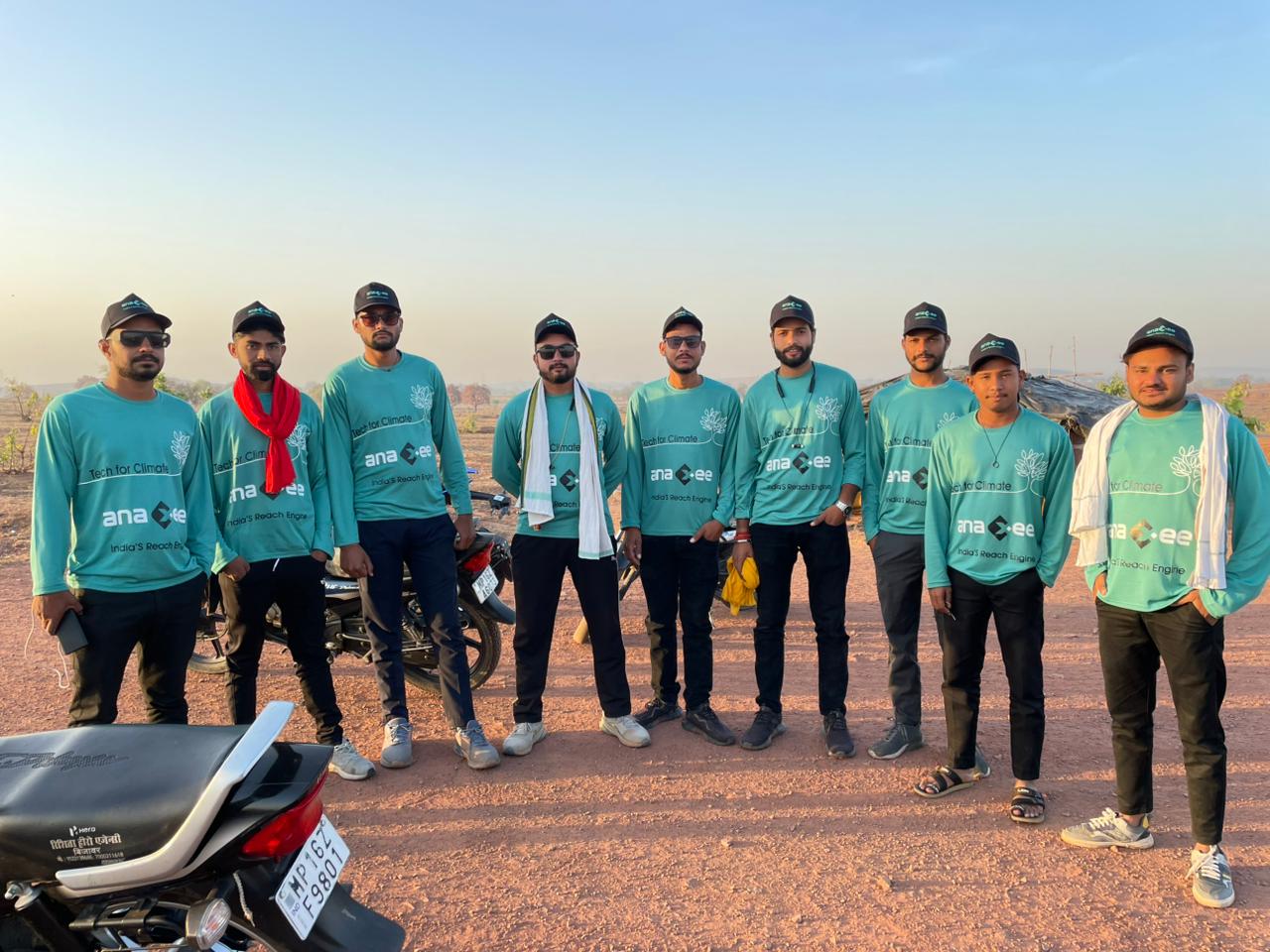
40,000+ trained, app-tracked field runners across 540 districts, 11,000+ pincodes and 26 states — the people who actually reach the farms, gins, mills and suppliers.
What the unit does, season after season
Visit and verify the mills, ginners and suppliers in your chain — existence, capacity, chain-of-custody models and certification status — so your supplier list is real, not a spreadsheet.
Learn more →
Map and organise the farmer base behind your cotton, run training and support visits, and capture farm-level data and improvement plans — the field work the programme actually rewards.
Learn more →
Reconcile what your suppliers buy and sell against what they claim — the volume integrity that mass balance depends on — and flag the gaps before they become your risk.
Learn more →
For physical traceability, register and geo-map farms, capture harvest volumes and the farm-to-gin hand-off, and build the clean origin record India's chain needs.
Learn more →
Independent, geo-tagged, photo-verified field checks you can show a regulator, an auditor or your own board — evidence, not assurances.
Learn more →
Everything flows into one dashboard and a reporting rhythm your HQ can read — farms, visits, volumes, exceptions — in near-real time, not a PDF months later.
Learn more →
Built for companies sourcing from India — especially from overseas
Permanent, not a campaign
Most field work in India is bought as a one-off project — an audit, a survey, a season. Cotton sustainability doesn't work that way: the training, the data and the verification have to repeat every single season to stay true. So this is built as a long-term PMU contract, not a campaign — a standing team that knows your supply chain, improves it year on year, and is accountable for it. You get the control, transparency and continuity of an in-house India operation, with none of the fixed cost of building one.
The honest boundary: we are an independent field-execution and verification partner. We do not buy, sell or trade cotton, we are not a Better Cotton member or a certification body, and we don't issue certificates. We run the operation and provide the ground truth — you and the certifiers keep your roles.
Across programmes, Anaxee has run field mapping, training, data capture and independent verification at a scale very few partners in India can match — the same muscle behind a cotton sourcing PMU.
Tell us where you source from and what you need verified. We'll scope a command centre + field unit for your cotton supply chain.
See also
FAQs
What exactly is the ‘PMU’ model?
A Project Management Unit is a single, accountable team that plans, runs, verifies and reports on a programme under a long-term contract — the model development agencies and governments use to run field programmes. Anaxee runs your India cotton sourcing the same way: one unit, a command centre, a back office and field teams, responsible for the whole on-ground operation.
We're based outside India. Do we need our own office here?
No — that's the point. Anaxee becomes your on-ground presence: your command centre, back office and field force in India, reporting to your HQ. You get the control and transparency of a local operation without registering an entity or hiring a field team.
Does Anaxee buy or sell the cotton for us?
No. We are an independent field-execution and verification partner. We don't trade cotton, we're not a Better Cotton member or a certifier, and we don't issue certificates. We run the field operation and provide verified ground-truth data; buying, selling and certification stay with you and the certification bodies.
Mass balance or physical traceability — which do you support?
Both. For mass balance we focus on farmer impact, training and volume integrity; for physical traceability we capture farm-to-gin origin and chain-of-custody data (India is traced back to the ginner). Many Indian suppliers now operate both models, and we can run the field and data work for either.
How long are the contracts?
This is designed as a permanent, season-after-season partnership — long-term PMU contracts, not one-off campaigns — because cotton sustainability only stays real if the training, data and verification repeat every season.