BLOG
Ground-Truth Data for Business: Why the Boss Is the Last to Know
There is an old joke in management: the CEO is the last person in the company to hear the bad news. It stays funny because it is true. A frontline salesperson knows a product is failing in the market months before it shows up in a board deck. A regional team knows a new process is broken long before head office does. The information exists — it simply does not travel up intact. Each layer it passes through has a small, human incentive to round the corners: to protect a target, a bonus, a reputation, a quiet life.
Multiply that across a large organisation and you get leadership making multi-crore decisions on a version of reality that has been edited, politely, by everyone it touched on the way up. This is the single most expensive problem in large companies, and almost nobody names it.
Why the boss really is the last to know
Three forces turn ground reality into a flattering summary by the time it reaches the top:
The telltale sign of this disease is a company that is always “surprised” — surprised by a competitor, by a market shift, by a scheme that was quietly failing for a year. The ground was never silent. The company just could not hear it.
What an independent channel of ground truth changes
The cure is a source of information that does not run through the chain of command — one the people being measured cannot edit. When leadership has that, four things change:
| Before (filtered reporting) | After (independent ground truth) |
|---|---|
| Decisions made on a narrative assembled to look good upward | Decisions made on what is actually happening in the market |
| Problems surface at the annual review, when they are expensive | Problems surface early, when they are still cheap to fix |
| Accountability stops at whoever writes the report | Claims are verifiable against an independent field check |
| Effort spread evenly out of ignorance | Effort directed surgically to the regions that actually need it |
None of this is about distrusting employees. It is about removing the burden of being the only messenger. When ground truth arrives independently, honest managers are vindicated and the organisation stops punishing people for reporting reality — which, over time, is the only thing that makes a company genuinely data-driven.
Where this gets real: the field
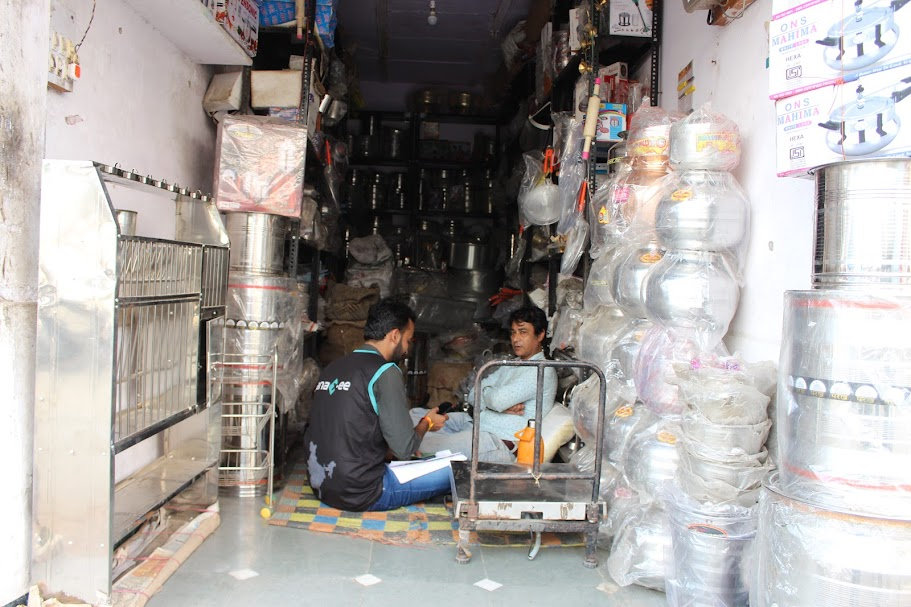
For companies whose business happens on the ground — consumer and durable brands checking retail execution, agri-input and distribution companies verifying their field networks, manufacturers auditing sites and service — ground truth is a physical problem. Someone independent has to actually go to the store, the dealer, the site, the village, and record what is really there: is the product on the shelf, is the branding up, does the dealer the report claims exist actually exist, did the work actually happen?
That is the layer Anaxee provides. A tech-enabled network of on-ground “Digital Runners” across 540 districts and 11,000+ pincodes in India carries out retail audits, field-force and dealer verification, and site checks — geo-tagged, time-stamped, photo-backed, and independent of the local team — and feeds the result into a dashboard leadership can read directly. Consumer and durable brands, agri-input companies and distributors have used exactly this kind of independent field verification to see past their own reporting chain. The point is narrow and deliberate: Anaxee supplies the verified ground data; the business decisions stay with the people accountable for them.
Suspect your reporting chain is sanding the edges off reality? An independent field-verification layer across India is what we run — retail audits, dealer and field-force checks, site verification, straight to a dashboard.
Frequently asked questions
Why is top management often unaware of ground reality?
What is ground-truth data for a business?
How does independent field data reduce waste and office politics?
What does Anaxee actually do here?