BLOG
Household Survey Format & Questionnaire (Free Template + Sample Questions)
 About Anaxee
40,000+ Digital Runners · 540 districts · 26 states · 11,000+ pincodes of reach
A household survey lives or dies on two things: reaching the door, and asking the right questions the right way once you are there. This page is about the second — the format. Get the questionnaire structure right and your data is clean, comparable and usable; get it wrong and no amount of fieldwork saves it.
Below is the exact household survey format Anaxee uses in the field — the one we run for household-solar, CSR, welfare and socio-economic programmes across India. Copy it, adapt it, and when you want it configured as a live mobile form or run across hundreds of districts, that is what we do. For the full picture of how a survey is planned and executed, see our complete guide to household surveys in India.
The household survey questionnaire format
This is a modular format: keep the common core (Sections 1–6 and 8) fixed across every project so your data stays comparable, and swap only Section 7 — the programme module — to fit solar, health, agriculture or WASH.
- Project / survey name & round
- Unique survey ID (auto)
- Date & time of interview (auto)
- Enumerator name & ID
- GPS coordinates of the dwelling (auto geo-tag)
- Photo of the house / front door (auto)
- Language of interview
- Name of head of household
- Full address / landmark
- Village or ward · Gram Panchayat
- Block / Tehsil · District · State
- PIN code
- Household listing number
- Contact mobile number (optional, with consent)
- Name & relationship to head of household
- Sex · Age
- Marital status
- Highest level of education
- Primary occupation / activity
- Currently attending school / working (yes–no)
- House type — kuccha / semi-pucca / pucca
- Ownership — owned / rented
- Number of rooms
- Main source of drinking water
- Toilet facility — type / shared / none
- Primary cooking fuel
- Electricity connection & typical hours/day of supply
- Appliances — TV, fridge, fan, mobile phone, smartphone
- Vehicles — bicycle, two-wheeler, four-wheeler
- Agricultural land — owned / leased, approximate area
- Livestock owned
- Ration card type — APL / BPL / AAY / none
- Primary & secondary household occupation
- Number of earning members
- Approximate monthly household income band
- MGNREGA job card (yes–no)
- Government scheme coverage (as relevant to the programme)
- Energy / household solar: current lighting source, daily energy spend, roof type & area, interest in a solar connection
- Health & welfare: access to care, immunisation, scheme awareness, beneficiary status
- Agriculture: land, crops, irrigation, inputs, advisory needs
- WASH / education: water, sanitation, school enrolment & attendance
Keep Sections 1–6 and 8 fixed across projects; change only Section 7. That is what makes a questionnaire reusable and your data comparable across rounds.
- Respondent consent — purpose, voluntary participation, how the data will be used
- Respondent signature / thumb impression
- Enumerator declaration — “I personally visited and interviewed this household”
- Supervisor / QA check & back-check status
- Geo-tag, timestamp & house photo attached (auto)
Get the household survey format — free
Tell us where to send it and we will email you the ready-to-use questionnaire template, plus a printable PDF. Takes 20 seconds — no cost.
Section by section: what to capture and why
A questionnaire is not just a list of questions — each section earns its place. Here is the reasoning behind the format above, so you can adapt it without breaking it.
1–2. Identification & location
This is what makes a record traceable. A survey ID, GPS, timestamp, house photo and the full administrative hierarchy (state → district → block → panchayat → village) mean every row can be found again, de-duplicated and audited. In a digital survey most of this is captured automatically — which is exactly what stops a ‘surveyed’ home from being a fabricated one.
3. Household roster
One row per member is the heart of the survey. It gives you household size, age-sex structure, education and occupation in a form you can actually analyse. Keep it a grid, not a paragraph — consistent columns per person are what make the data add up later.
4–5. Housing & assets
House type, water, toilet, cooking fuel, electricity and asset ownership are the standard proxies for living standard and welfare eligibility. They are quick to ask, hard to fake, and comparable to national surveys — which is why almost every socio-economic format includes them.
6. Income & livelihood
Ask income as a band, not an exact rupee figure — respondents answer bands honestly and refuse exact numbers. Pair it with occupation and number of earners to sense-check it.
7. Programme module
This is the only part that changes per project. Isolating it in one section is what lets you reuse 80% of the questionnaire across programmes and still keep the data comparable.
8. Consent & verification
Never optional. Explicit, recorded consent protects the respondent and you; the enumerator declaration and supervisor back-check are what make the data defensible.
Sample household survey questions
Concrete beats abstract. Here are example questions in the right form — single-idea, non-leading, with defined answer options (the format that produces clean, codeable data):
Open vs closed questions: designing for clean data
The single biggest quality lever in a questionnaire is how you ask. A few rules the format above follows:
Paper format vs a digital questionnaire
You can run this format on paper, but at any real scale a digital questionnaire wins on every axis: the fields marked auto (GPS, timestamp, photo) are captured without typing, skip-logic hides irrelevant questions, answers are validated as they are entered, and there is no error-prone data-entry step afterwards. Most importantly, a digital form makes each visit verifiable. See how it works on a household survey app.
How Anaxee helps
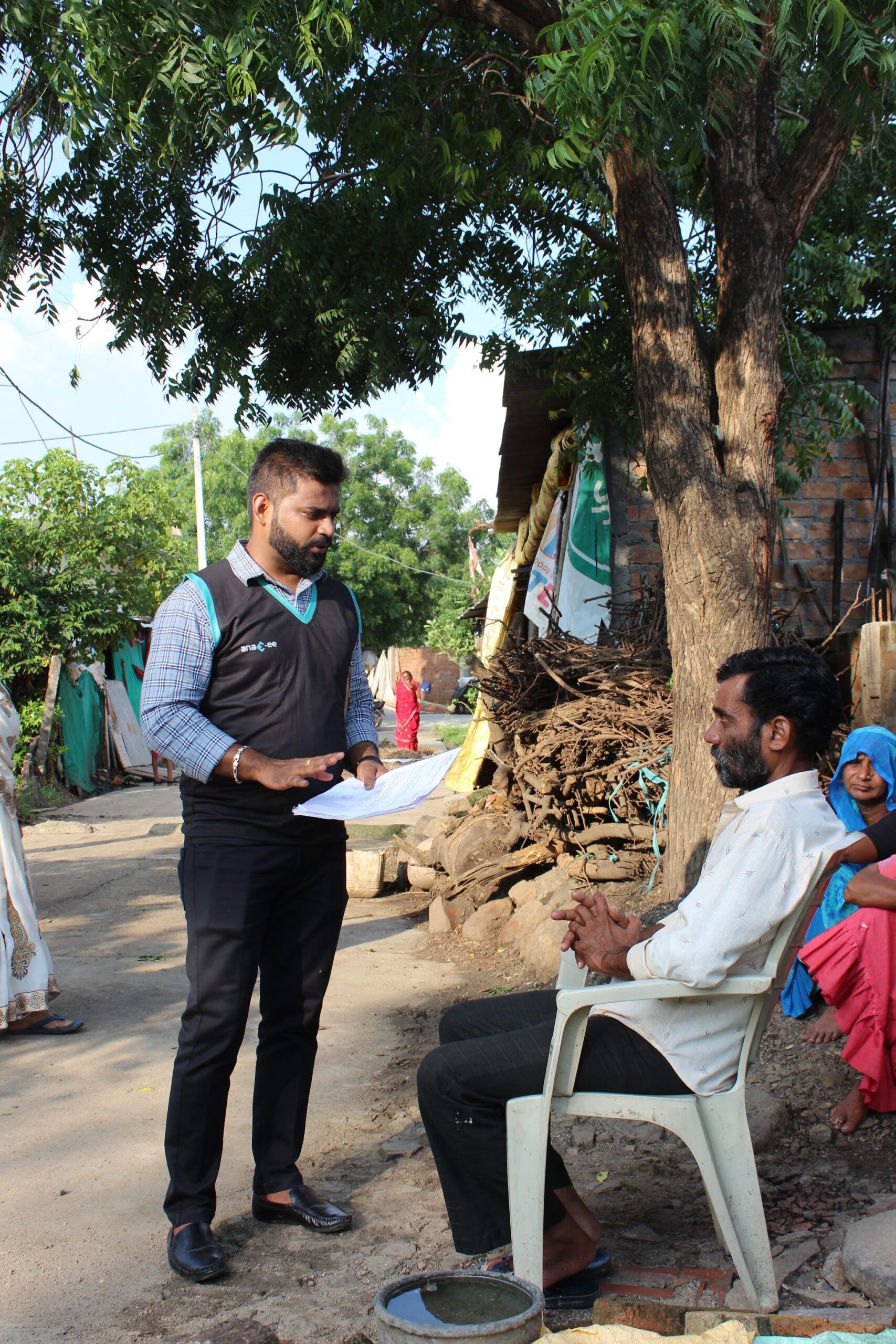
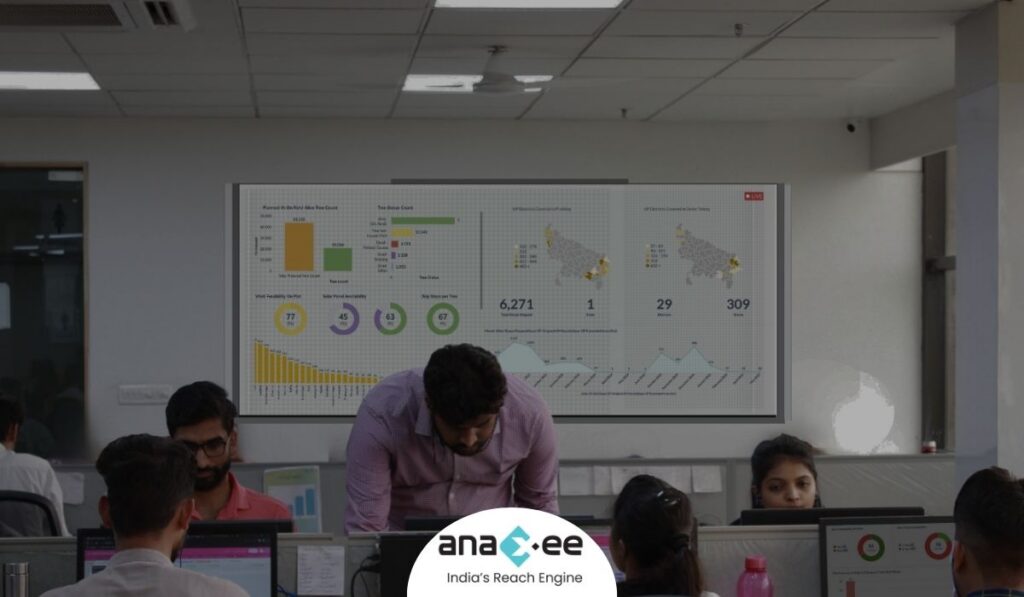
Anaxee — India's Reach Engine, a National Startup Award winner working with 350+ brands and organisations — doesn't just hand you a format; we run the survey end to end across 540 districts and 11,000+ pincodes. We'll configure this exact questionnaire as a mobile form, train local enumerators on it, capture every household door-to-door with geo-tags and photos, run AI quality checks and deliver clean data to a live dashboard. It's part of our field data-collection work — start with the household survey guide or the types of household surveys.
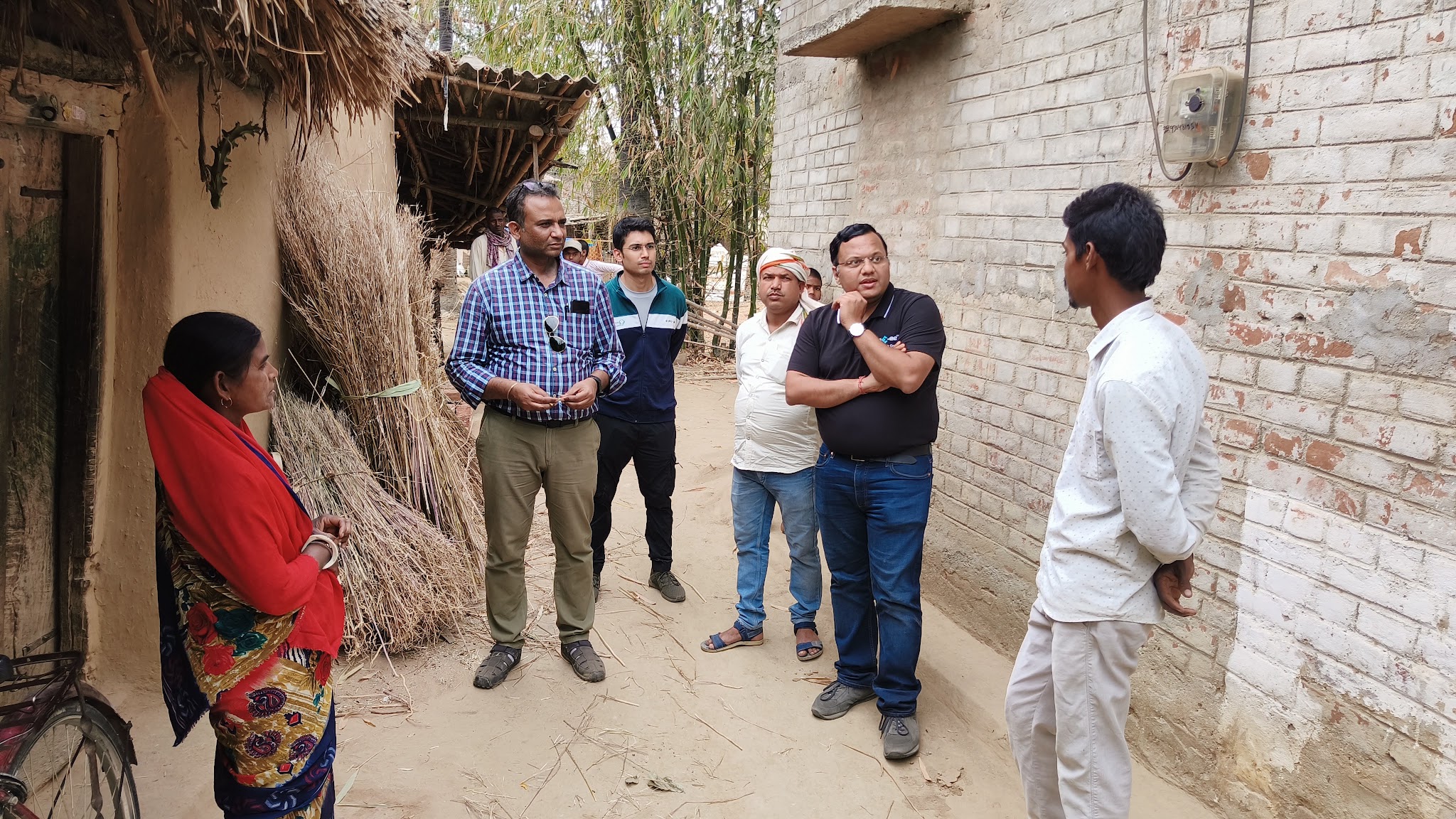
Proof on the ground — household-level fieldwork we've runMillions of household-level visits across social-impact, agri and field programmes. See all case studies →
What happens when you reach out to Anaxee
- Send us your questionnaire — or use the format above as the starting point.
- A real person calls back — our Indore team, within one working day.
- We configure & pilot it — as a mobile form, tested on a verified household sample before you scale.
A 130+ person team in Indore and 40,000+ Digital Runners on the ground — your questionnaire reaches people who run household surveys every day, not an inbox that goes quiet.
Send us your questionnaire or ask for the format
Share what you want to measure and the geography — our team will get back within one working day, and can send you the format above as a file.
Frequently asked questions
What is a household survey format?
Is there a free household survey questionnaire template?
What sections should a household questionnaire have?
What are good sample household survey questions?
Should household survey questions be open or closed?
How many questions should a household survey have?
Can I run this format as a digital form?
Do I need consent in a household survey?
The bottom line
A good household survey format is modular, mostly closed-ended, short enough to finish honestly, and built so every visit is verifiable. Copy the template above, swap Section 7 for your programme, and pilot it before you scale. And when you want it configured and run across India — door to door, geo-tagged and quality-checked — that's exactly what Anaxee does.
Talk to Anaxee — whichever way is easiest