BLOG
Household Survey in India: Types, Format, Questionnaire & How to Run One
 About Anaxee
40,000+ Digital Runners · 540 districts · 26 states · 11,000+ pincodes of reach
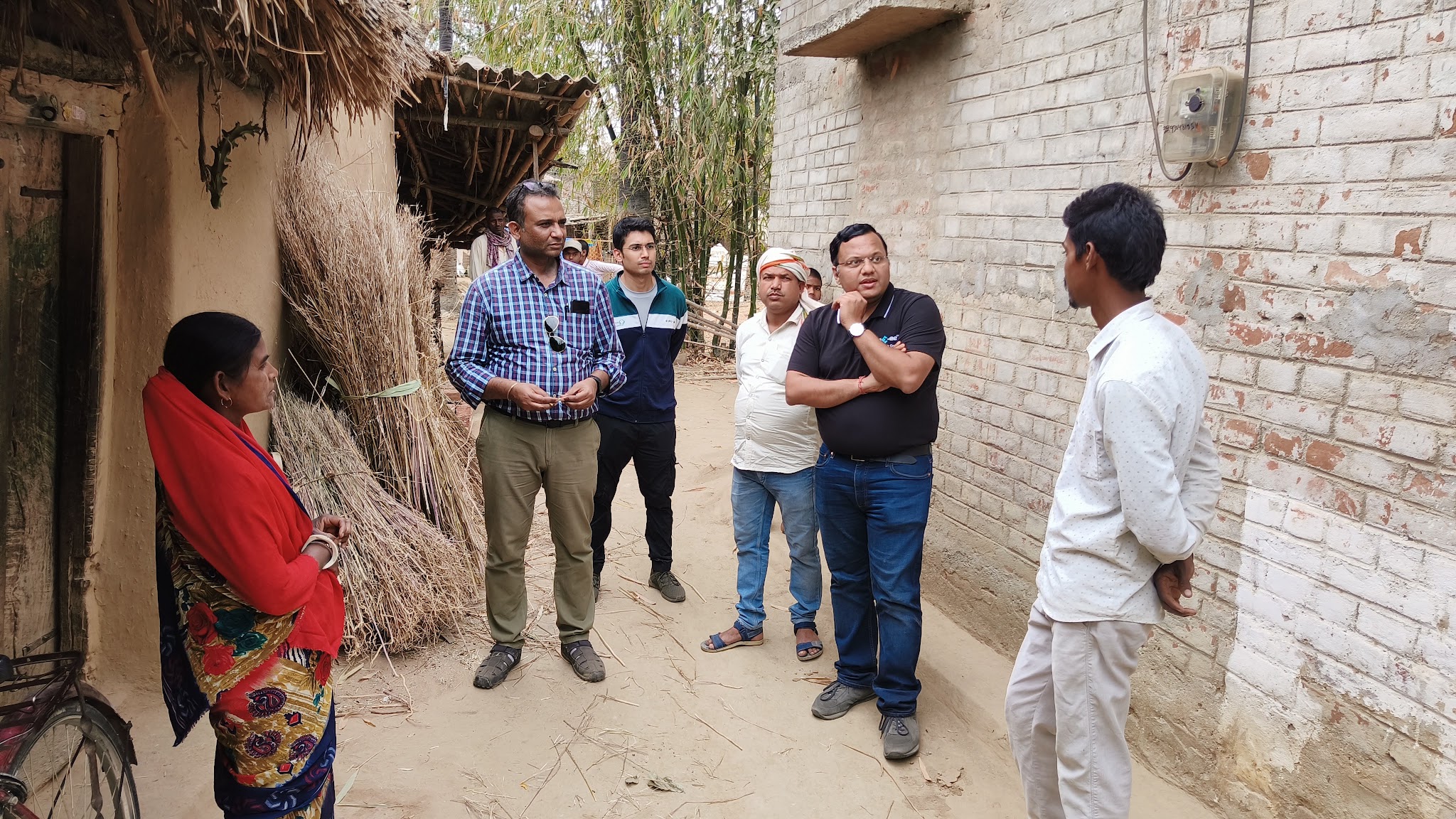
Search ‘household survey’ and you get textbook definitions and government PDFs. All correct, none of them much help if you actually need one done — a trained person at ten thousand front doors across rural India, asking the right questions and sending back data you can trust. Defining a household survey is the easy part. Running one, honestly, at scale, is the hard part, and it is where most programmes quietly struggle.
This guide is the operator's version. What a household survey is, the types used in India, a ready-to-use questionnaire format you can take and adapt, and how it's really executed — from a team that has done it for solar, CSR and social-impact programmes across the country.
What is a household survey?
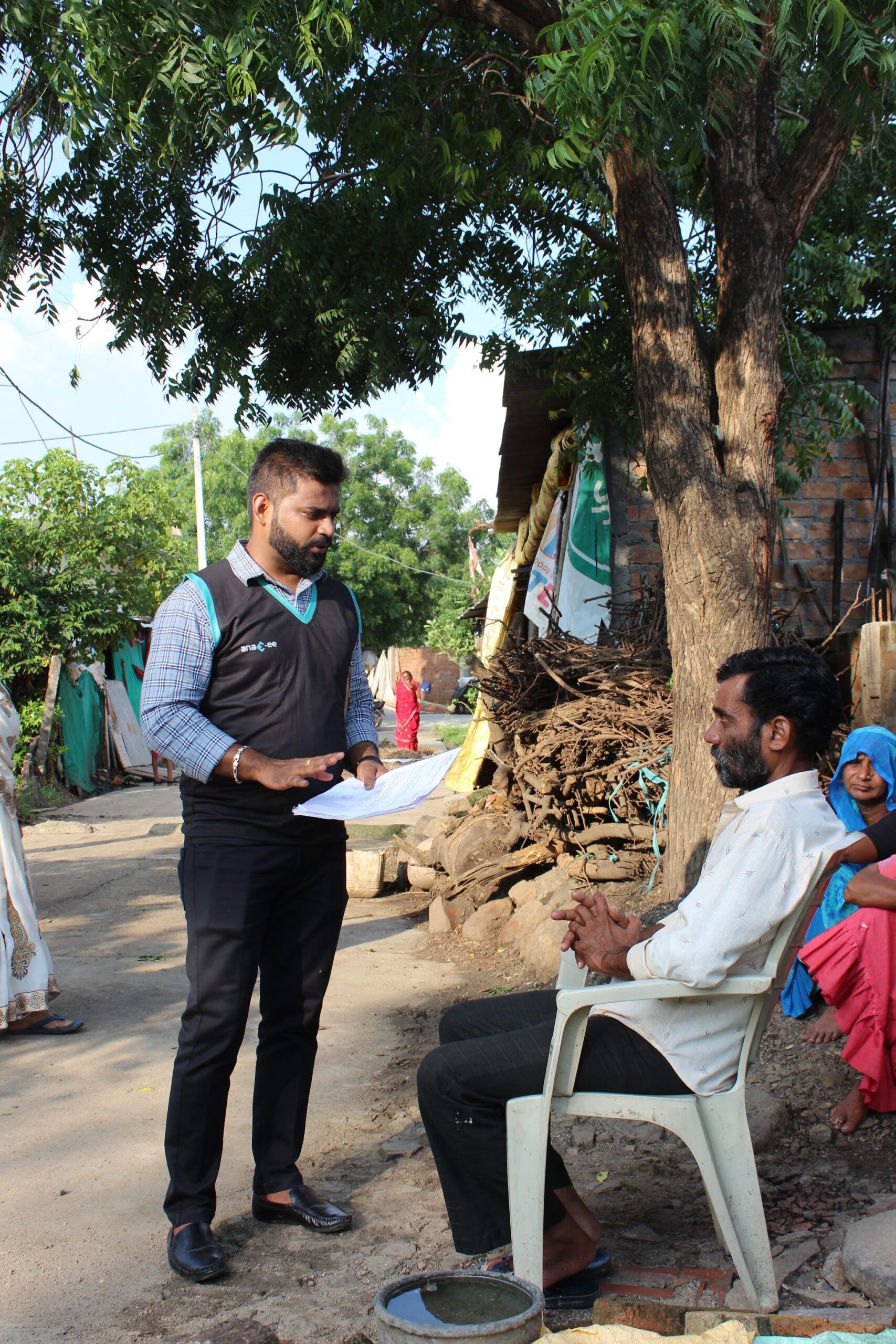
A household survey collects information about a dwelling and the people who live in it — their numbers, ages, education, work, income, assets, living conditions and whatever else a programme needs to know. The unit is the household, not the individual, and the gold standard is a trained enumerator visiting in person, asking a structured questionnaire and recording verified answers.
Types of household surveys in India
‘Household survey’ covers two broad families — the big national statistical surveys, and the applied, programme-level surveys that brands, NGOs and governments commission to run a project.
Need a household survey run across India? Anaxee will do it.
Sampling, trained enumerators, app-based door-to-door capture, AI quality checks and a live dashboard — one partner, 540 districts.
Household survey format & questionnaire (free template)
Here is a practical, field-tested household survey format you can copy and adapt. It is built the way real Indian fieldwork runs — modular, so you keep the common sections and swap the programme-specific module (solar, health, agriculture, WASH) to fit your project.
- Project / survey name & round
- Unique survey ID (auto)
- Date & time of interview (auto)
- Enumerator name & ID
- GPS coordinates of the dwelling (auto geo-tag)
- Photo of the house / front door (auto)
- Language of interview
- Name of head of household
- Full address / landmark
- Village or ward · Gram Panchayat
- Block / Tehsil · District · State
- PIN code
- Household listing number
- Contact mobile number (optional, with consent)
- Name & relationship to head of household
- Sex · Age
- Marital status
- Highest level of education
- Primary occupation / activity
- Currently attending school / working (yes–no)
- House type — kuccha / semi-pucca / pucca
- Ownership — owned / rented
- Number of rooms
- Main source of drinking water
- Toilet facility — type / shared / none
- Primary cooking fuel
- Electricity connection & typical hours/day of supply
- Appliances — TV, fridge, fan, mobile phone, smartphone
- Vehicles — bicycle, two-wheeler, four-wheeler
- Agricultural land — owned / leased, approximate area
- Livestock owned
- Ration card type — APL / BPL / AAY / none
- Primary & secondary household occupation
- Number of earning members
- Approximate monthly household income band
- MGNREGA job card (yes–no)
- Government scheme coverage (as relevant to the programme)
- Energy / household solar: current lighting source, daily energy spend, roof type & area, interest in a solar connection
- Health & welfare: access to care, immunisation, scheme awareness, beneficiary status
- Agriculture: land, crops, irrigation, inputs, advisory needs
- WASH / education: water, sanitation, school enrolment & attendance
Keep Sections 1–6 and 8 fixed across projects; change only Section 7. That is what makes a questionnaire reusable and your data comparable across rounds.
- Respondent consent — purpose, voluntary participation, how the data will be used
- Respondent signature / thumb impression
- Enumerator declaration — “I personally visited and interviewed this household”
- Supervisor / QA check & back-check status
- Geo-tag, timestamp & house photo attached (auto)
Want this as a ready-to-use PDF, printable sheet or a configured mobile form? Message us and we'll send it, or set it up in our app for your exact programme.
How to run a household survey — and who conducts it
A household survey is a project, not a form. Governments run the big statistical ones through the National Sample Office; brands, NGOs, CSR teams and research agencies run programme surveys through a specialised field partner. Either way, four things decide whether the data is any good.
Sampling
Decide who represents the population — usually multi-stage stratified random sampling across rural and urban blocks, or a full census of a defined area for a programme. Get this wrong and no amount of fieldwork saves you.
Enumerators & training
Trained, local people who speak the language and are trusted at the door. The enumerator is the survey; a well-trained local field force is the single biggest quality lever.
Data collection
App-based, offline-capable capture at the door — so interviews happen in villages with no network and sync later — every record geo-tagged, timestamped and photo-backed.
Quality checks
Back-checks, logic validations and AI review of photos and data to catch errors and any visit that didn't really happen, before the data is delivered.
Where technology and AI change the game
On-ground household surveys used to mean paper forms, data-entry operators and trust. Anaxee runs them as a tech product. Every interview is captured in a household survey app — the Anaxee Partner app, with 100,000+ downloads and proven on projects reaching 3 million+ people. It works offline for no-network villages, builds any questionnaire (the format above and far more), carries an inbuilt training module so each enumerator is trained on that exact form, and geo-tags and time-stamps every household so a ‘surveyed’ home is tied to a real place at a real moment.
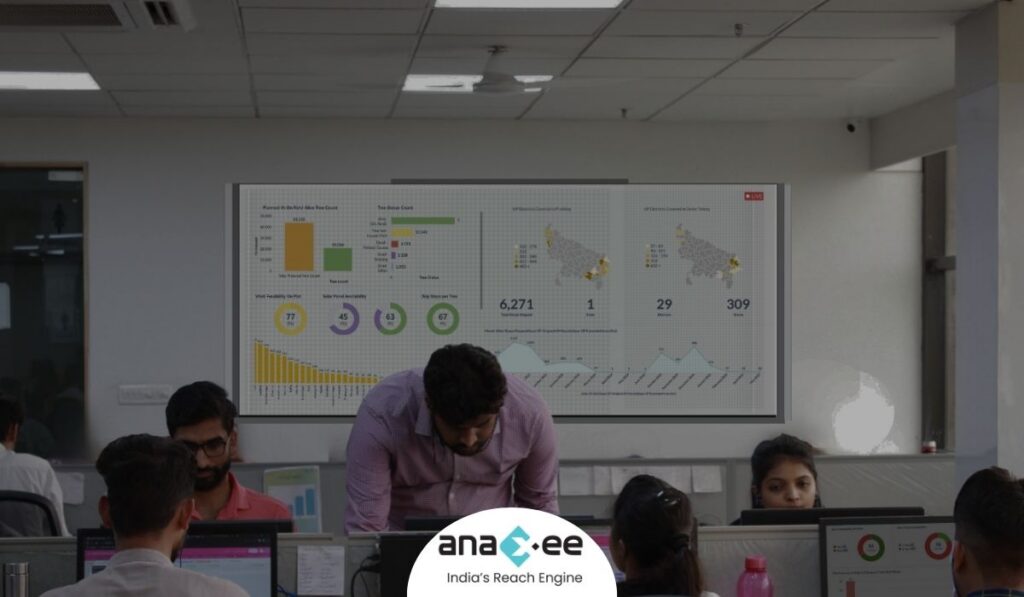
Then AI does the quality layer. Anaxee builds and deploys AI that reads the field photos and data — flagging interviews that don't add up, cleaning and de-duplicating household lists, and detecting the patterns of a visit that never happened. Clean, structured data flows to a live dashboard and API, not a monthly file. The result: a household survey that scales across hundreds of districts without losing a single verifiable record.
How Anaxee helps
Anaxee — India's Reach Engine, a National Startup Award winner working with 350+ brands and organisations — runs household surveys end to end across 540 districts and 11,000+ pincodes: sampling, trained local enumerators, app-based door-to-door capture, AI quality checks and a live dashboard. We've done it for household-solar and energy-access programmes (tens of thousands of homes), CSR and welfare drives, and large social-impact projects. It's part of our field data-collection and Go-To-Market work — see also in-person CAPI surveys, monitoring & evaluation, the survey format & questionnaire, the household survey app, the types of household surveys and household survey services.
Proof on the ground — household-level fieldwork we've runMillions of household-level visits across social-impact, agri and field programmes. See all case studies →
What happens when you reach out to Anaxee
- Tell us your survey — the questions, the geography, the sample.
- A real person calls back — our Indore team, within one working day.
- We scope a pilot — a verified household sample from a district or two, before you scale.
A 130+ person team in Indore and 40,000+ Digital Runners on the ground — your enquiry reaches people who run household surveys every day, not an inbox that goes quiet.
Tell us about your household survey
Share the questions, the geography and the sample size — our team will get back within one working day, and can send you the format above.
Frequently asked questions
What is a household survey?
What are the types of household surveys in India?
Who conducts a household survey?
What is a household survey format or questionnaire?
What are good household survey questions?
Is there a household survey app?
Can a household survey be done offline?
How is the sample for a household survey chosen?
How do you verify an enumerator actually visited the household?
How do you run a household survey in rural and remote areas?
Can you run a household solar or energy-access survey?
What does a household survey cost in India?
How fast can a household survey be done?
How do we get started?
The bottom line
A household survey is simple to define and hard to do well. The questionnaire is the easy 10%; the real work is reaching every door, asking well, and proving each visit was real. Use the format above to build your questionnaire — and when you need it run across India, honestly and at scale, that's exactly what Anaxee does.
Talk to Anaxee — whichever way is easiest