BLOG
Cotton & Textile Greenwashing: How Brands Prove Sustainable-Cotton Claims
For a brand or retailer, ‘sustainable cotton’ has turned from a marketing nice-to-have into a compliance and reputational risk. Regulators, NGOs and consumers are no longer asking whether you say your cotton is responsible — they are asking whether you can prove it. And for cotton specifically, that is harder than most brands realise, because the paperwork and the physical fibre often part ways early in the chain. Here is what counts as greenwashing in textiles, why the rules changed, and how to put real evidence behind a cotton claim.
What greenwashing looks like in cotton & textiles
It is rarely an outright lie. It is usually a claim that is vague, unverified, or more than the evidence supports:
Why the risk just went up: the rules that now apply
The regulatory ground shifted in 2026, and not in the way many expected. The EU’s proposed Green Claims Directive — the detailed ‘prove-it’ law the industry was preparing for — is being withdrawn (confirmed in the European Commission’s 2027 Work Programme, published 4 November 2026). But that does not loosen the rules. The law that actually bites is already in force:
| Framework | What it means for a cotton/textile claim |
|---|---|
| EU — Empowering Consumers for the Green Transition Directive (2024/825) In force across the EU since 27 Sep 2026 |
Bans four claim types: generic environmental claims without proof (‘eco-friendly’, ‘green’); sustainability labels not based on a recognised certification scheme or public authority; climate-neutral claims built on offsetting; and future/aspirational promises with no credible plan. Applies to anyone selling to EU consumers. |
| France — AGEC law Textile disclosure phased in since 2023 |
Requires product-level disclosure of attributes like recycled content, microfibre presence and traceability for key production stages — real data, by company size. |
| UK — CMA Green Claims Code + DMCC Act 2024 | The Competition and Markets Authority can now rule on greenwashing itself and fine up to 10% of global turnover — without going to court. |
| EU — Digital Product Passport (ESPR) Textile delegated act expected ~Q4 2027 |
A per-product data record — materials, origin, sustainability — is coming for apparel. It will reward brands that already hold clean, structured supply-chain evidence, and expose those that do not. |
| India — SEBI BRSR | Listed companies must report on sustainability including value-chain impacts — so Indian suppliers and exporters increasingly have to show, not just assert, what happens upstream. |
Not legal advice: regulations change and apply differently by market and company size — confirm your own obligations with qualified counsel. The point here is the direction of travel, which is unmistakable: claims now need evidence.
The traceability gap behind most cotton greenwashing
Cotton has a structural problem that other products do not. The most widely used sustainability model, Better Cotton’s default mass balance, tracks the volume of certified cotton with claim units — but lets the physical fibre be mixed with conventional cotton after the gin. So a garment labelled ‘made with Better Cotton’ may contain little or none of it. That is legitimate if the claim is worded honestly — but it becomes greenwashing the moment the wording implies the physical cotton is traceable to a sustainable farm when it is not. Only a physical chain-of-custody model, or organic/regenerative segregation, actually traces the fibre. Everywhere else, the credibility of the claim sits upstream, in the field — which is exactly where most brands have no eyes.
How to prove a sustainable-cotton claim
Substantiating a cotton claim is not one document — it is a chain of evidence from the farm to the label. Five things make a claim defensible:
- Name the exact standard and claim. ‘Organic (GOTS)’ or ‘Better Cotton, mass balance’ — not a vague ‘sustainable’. Say what the claim actually covers.
- Know and state your chain-of-custody model. Mass balance, segregation or controlled blending — and never let the wording imply more traceability than the model gives.
- Hold current certificates and transaction records. The licence, the chain-of-custody certificate, the volume reconciliation — live, not expired.
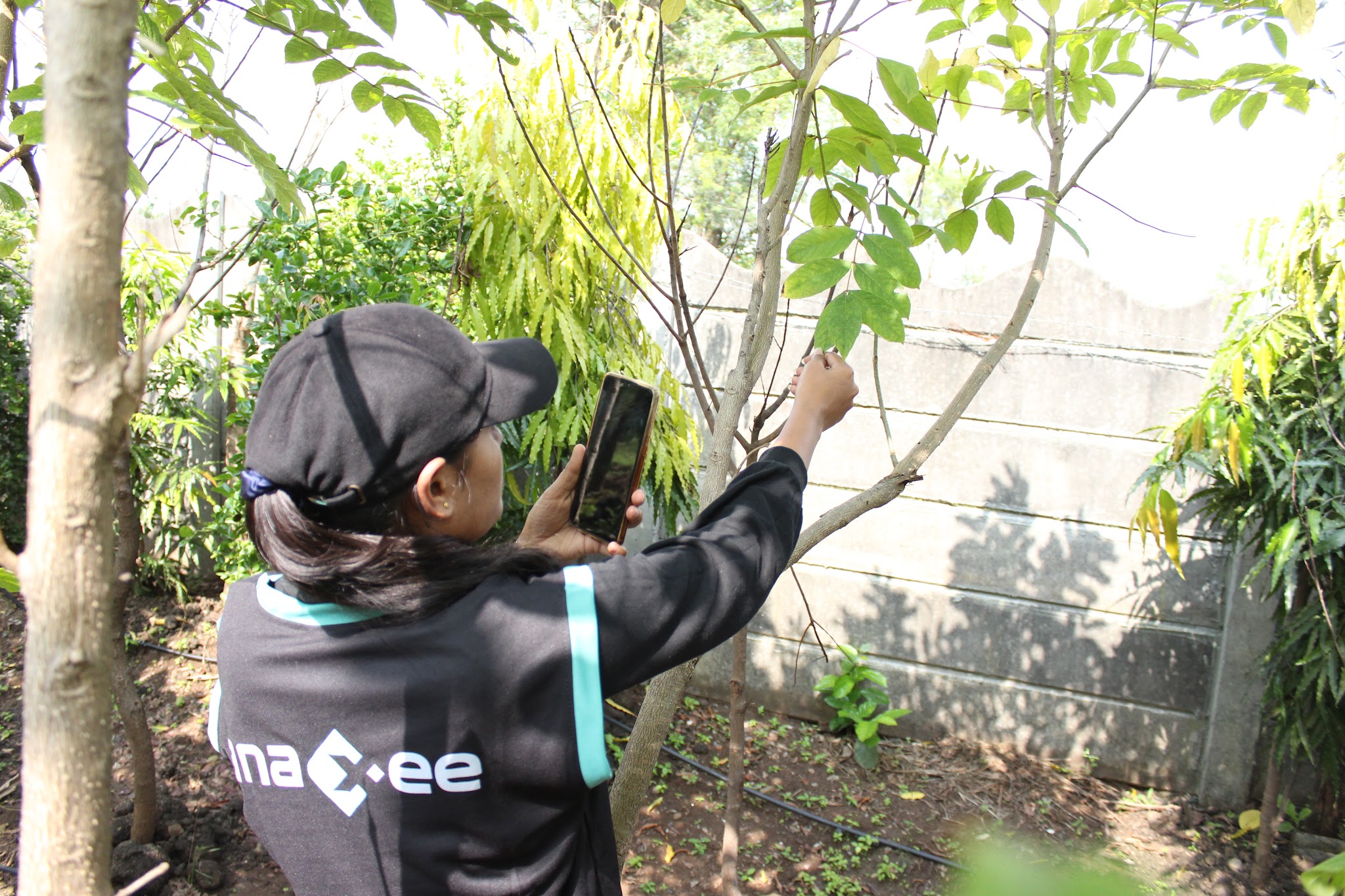
- Get independent farm- and supplier-level evidence. Someone who does not sell the cotton confirming the farms, the practices and the volumes actually exist — geo-tagged and photo-verified.
- Capture origin data where you claim traceability. If you say ‘traceable’, be able to show the farm-to-gin record that backs it.
The weak link in almost every case is #4 and #5 — the on-the-ground evidence. Paperwork can be assembled in an office; ground-truth cannot.
Where Anaxee fits: independent ground-truth
Anaxee is the independent field and verification layer that turns a cotton claim from an assertion into evidence. We do not sell cotton and we do not issue certificates — so our data has nothing to flatter. What we run, across 540 districts, 11,000+ pincodes and 26 states, is the on-ground half of the proof: verifying suppliers and farms, checking that practices are actually adopted, reconciling volumes, and capturing farm-to-gin origin data — all geo-tagged, photo-backed and on a live dashboard a brand, an auditor or a regulator can stand behind. For companies sourcing from India, especially from overseas, we can run this as a permanent on-ground command centre.
Geo-tagged, photo-verified, independently checked field data — the evidence a credible sustainability claim needs underneath it.
Need to prove a sustainable-cotton claim — not just make it? Tell us what you claim and where you source from, and we’ll scope independent field verification and origin-data capture for your India supply chain.
Talk to us about field verification →See the on-ground model
FAQs
Is calling cotton ‘sustainable’ greenwashing?
Is Better Cotton (BCI) greenwashing?
What exactly is banned under the new EU rules?
We’re an Indian exporter — do these EU rules affect us?
How do you actually prove a cotton sustainability claim?
Does Anaxee certify cotton or give legal advice?