BLOG
Organic vs Better Cotton (BCI) vs Regenerative Cotton: The Difference
If you source cotton or sell cotton products, you have almost certainly been asked which ‘sustainable’ cotton you use — and the words get used loosely. Organic, Better Cotton (BCI), regenerative and conventional are not interchangeable. They differ on three things that actually matter: what the farmer is allowed to do, who checks it, and whether the cotton in your product can be traced back to the field. Here is the plain-English comparison, from the ground up, for the India supply chain.
The four systems at a glance
| Conventional | Better Cotton (BCI) | Organic | Regenerative | |
|---|---|---|---|---|
| What it is | The default crop — grown for yield, no sustainability standard. | A training-and-improvement programme at scale; the world’s largest. | A strict input ban certified from farm to finished product. | An outcome-based approach focused on soil, carbon & biodiversity. |
| Farm rules | None beyond law. | Better Cotton Principles & Criteria (v3.2, effective 1 Apr 2026) — IPM, water, decent work, now ‘regenerative at core’. | No synthetic pesticides/fertiliser, no GMO seed; NPOP / USDA NOP / EU Organic rules. | Soil-health & outcome targets (cover crops, no-till, rotations); standard varies by scheme. |
| Synthetic pesticide & fertiliser | Allowed, often heavy. | Reduced & managed (IPM) — not banned. | Banned. | Minimised; banned under organic-based schemes (ROC). |
| GMO / Bt seed | Allowed (dominant in India). | Allowed. | Not allowed. | Usually not, under organic-based schemes. |
| Who certifies the farm | No one. | Better Cotton, via licensed Programme Partners. | Accredited organic certifiers (NPOP/APEDA in India). | Regenagri, Regenerative Organic Certified (ROC), Regenerative Cotton Standard, etc. |
| Traceable to the farm? | No. | Usually no — mass balance tracks volume, not the physical fibre (unless a physical chain-of-custody model is used). | Yes — physically segregated & documented end to end. | Typically yes — most schemes require segregation. |
| Supply-chain standard | — | Better Cotton Chain of Custody (v1.2) + BCCUs on the BCI Platform. | OCS (Organic Content Standard) & GOTS. | Scheme-specific (Regenagri, ROC) + often OCS/GOTS. |
| Share of global cotton | ~75%+ | The largest sustainability programme (about a fifth of global cotton). | ~2–3% (ICAC / Textile Exchange, 2024). | Small but fast-growing. |
| India’s position | The bulk of the crop. | India = the largest Better Cotton country. | India = world’s #1 producer (~38% of global supply). | Early but active — pilots across MP, Gujarat, Maharashtra. |
Sources: bettercotton.org (Principles & Criteria v3.2, Chain of Custody Standard v1.2); Textile Exchange Materials Market Report 2026; ICAC Recorder, June 2026; Textile Exchange Organic Cotton Market Reports.
Conventional cotton — the default
Most of the world’s cotton is conventional: grown for yield, with synthetic fertiliser, chemical pesticides and genetically modified (Bt) seed, and no sustainability standard or third-party assurance. It is cheap and abundant, but it carries the environmental and labour risks that every other system is trying to fix — and it offers a brand nothing to claim. The three systems below are the alternatives, each solving a different part of the problem.
Better Cotton (BCI) — improvement at scale
Better Cotton (formerly the Better Cotton Initiative, BCI) is the world’s largest cotton sustainability programme. It does not ban inputs — instead it trains farmers to use fewer and safer ones (integrated pest management, better water, decent work) under its Principles & Criteria, the current version (v3.2) having become effective on 1 April 2026 with a strengthened regenerative emphasis. The philosophy is progress at scale, not purity: get millions of mainstream farmers moving in the right direction.
The trade-off is traceability. By default, Better Cotton is sold on a mass-balance model: every kilogram of certified lint earns a claim unit (a BCCU) at the gin, but the physical fibre can be mixed with conventional cotton further down the chain, so the cotton in a specific garment usually cannot be traced back to a Better Cotton farm unless a physical chain-of-custody model is used. In Better Cotton’s own words: ‘BCI Cotton is not the same as organic.’
Organic cotton — no synthetic inputs, fully traceable
Organic cotton is the strictest input standard. It is grown without synthetic pesticides, without synthetic fertiliser and without GMO (Bt) seed, certified at the farm to a national organic regulation — in India that is NPOP, administered by APEDA — and then kept physically separate through the supply chain under the Organic Content Standard (OCS) or the Global Organic Textile Standard (GOTS). Because it is segregated and documented end to end, organic cotton is traceable: the fibre in the product really is organic.
It is also the smallest of the three — roughly 2–3% of global cotton (ICAC and Textile Exchange, 2024) — and the most expensive to grow and verify. For India this is a point of pride and of opportunity: India is the world’s largest producer of organic cotton, at around 38% of global supply, with Madhya Pradesh among the leading states. The catch, as the ICAC notes, is that organic certification ‘assures the absence of prohibited inputs but does not necessarily guarantee regenerative outcomes’ such as rising soil carbon — which is exactly the gap the next system targets.
Regenerative cotton — outcomes, not just inputs
Regenerative cotton flips the logic. Instead of a list of banned inputs, it is defined by outcomes on the land — healthier soil, more soil carbon, more biodiversity, better water — achieved through practices like cover crops, no-till, crop rotation and keeping living roots in the ground. It is the newest of the four and the least standardised: there is no single definition. Instead there are several schemes — Regenagri, Regenerative Organic Certified (ROC), the Regenerative Cotton Standard — plus brand-run programmes.
Regenerative often overlaps with the others rather than replacing them: ROC is built on top of organic certification, and Better Cotton’s latest Principles & Criteria are explicitly ‘regenerative at core’. The hard part is not the ambition — it is measuring and verifying the outcome, season after season, on thousands of small farms. That is a field-data problem, not a paperwork one.
Where the lines blur
These are not four tidy boxes. A single farm can carry more than one claim: an organic farm using cover crops and no-till may also be regenerative; a Better Cotton farm adopting the v3.2 regenerative practices is moving the same way; ROC cotton is organic and regenerative at once. What a label on a garment tells you is the claim the brand is making — organic, Better Cotton, regenerative — not automatically what happened in the field. The only way to close that gap is independent, on-the-ground verification.
So which cotton is ‘best’?
There is no single winner — it depends on the claim you actually need:
- You need a premium, fully traceable, no-chemicals story → organic (NPOP + GOTS/OCS). Smallest supply, highest cost, strongest claim.
- You need mainstream volume and a credible improvement story at scale → Better Cotton (BCI). Easiest to source; weakest on physical traceability.
- You need a soil-health / carbon / nature story → regenerative. Highest ambition; hardest to standardise and prove today.
- You need the lowest price and have no sustainability claim to make → conventional — with all the risk that carries.
But notice what every one of these has in common: the claim lives or dies on what actually happens on the farm — whether the inputs were really avoided, whether the practices were really adopted, whether the volumes really add up, whether the origin is really what the paperwork says.
Whatever the standard, the proof is on the ground
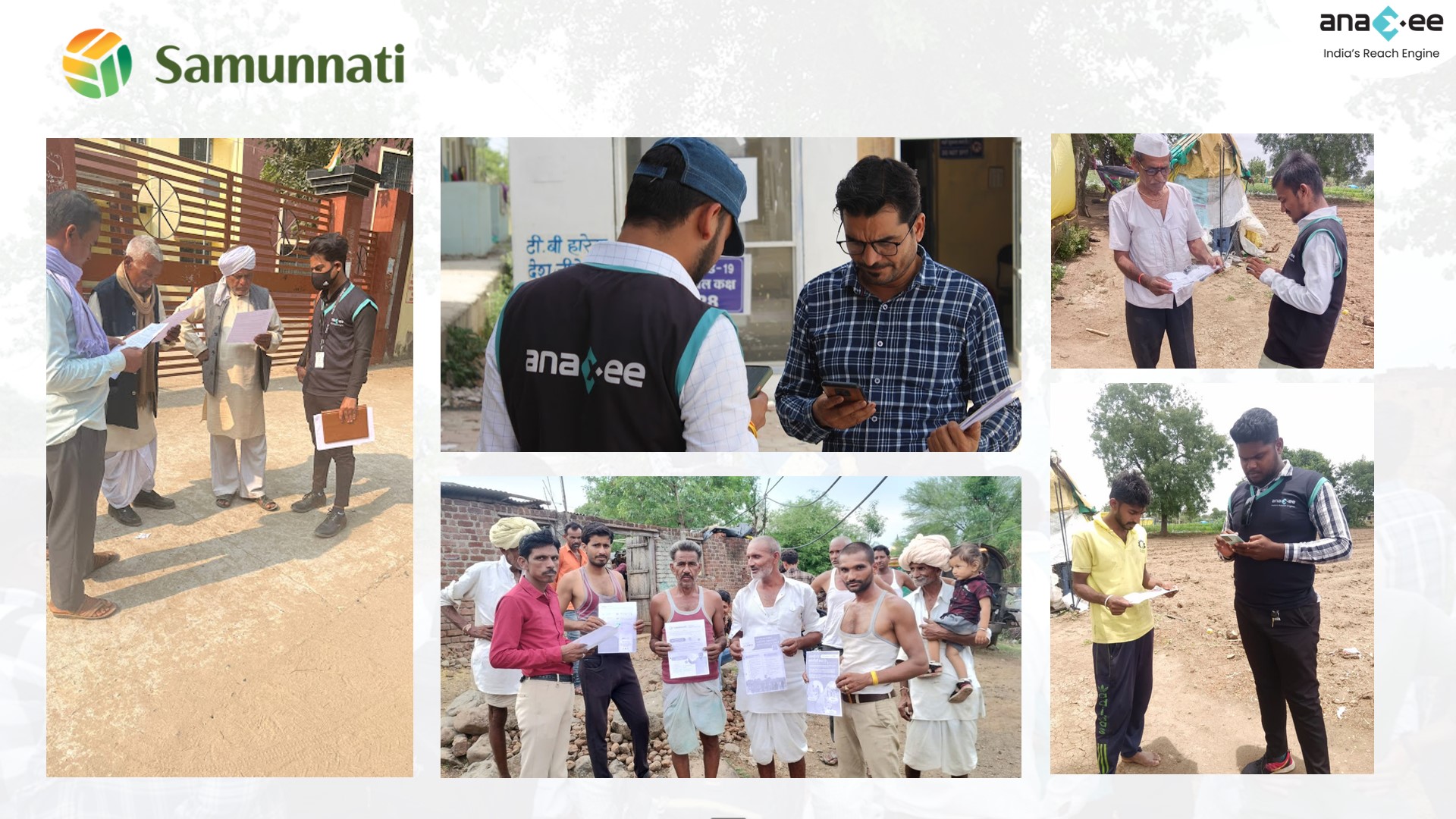
This is where Anaxee fits — not as a certifier and not as a cotton trader, but as the independent field and verification layer behind whichever system a company uses. Mass balance breaks the physical thread, so a Better Cotton claim rests on farm-level training and data. Organic and regenerative claims rest on segregation and on outcomes that have to be measured on the ground, every season. In all three cases, the weak point is the same: someone has to be in the field, verifying it.
Anaxee runs that layer at country scale — mapping and verifying suppliers and farms, capturing farm-level and farm-to-gin origin data, and feeding it back to brands and mills through a live dashboard — across 540 districts, 11,000+ pincodes and 26 states. For companies sourcing from India, especially from overseas, we can run the whole thing as a permanent on-ground command centre and sourcing partner.
Independent, tech-enabled field mapping, data capture and verification — the same muscle a sustainable-cotton programme needs on the ground.
Sourcing organic, Better Cotton or regenerative cotton from India? Tell us what you need verified — suppliers, farms, volumes or origin — and we’ll scope an independent field + verification plan for your supply chain.
Talk to us about field verification →See the on-ground sourcing model
FAQs
Is Better Cotton the same as organic cotton?
Is organic cotton automatically regenerative?
Which cotton is the most sustainable?
Can you trace Better Cotton (BCI) back to the farm?
Does India produce more organic or more Better Cotton?
Does Anaxee certify organic, BCI or regenerative cotton?