CSR Spending on Environment & Climate in India (FY2025 Data)
Nov 14 2026
In short: Of the ₹40,794 crore Indian companies spent on CSR in FY2024-25, the environment got a small share. Environmental sustainability, conservation and agroforestry together came to about ₹3,911 crore – under 10% of all CSR. Education and health alone drew nearly six times as much. Green CSR is also the hardest money to verify, because it lives in plantations, soil and water spread across thousands of remote sites – which is exactly where field evidence matters.
At a glance – environment & climate CSR
FY2024-25: green cluster ≈₹3,911 crore · under 10% of national CSR · agroforestry ₹88 crore (up from ₹75 cr) · source: MCA National CSR Portal
For all the urgency around climate, the environment is still a minority line in India’s CSR. The Ministry of Corporate Affairs data shows companies pouring the bulk of their CSR into education and health, while environmental sustainability, conservation and agroforestry – the heads most directly tied to climate and nature – together stay under a tenth of the total. For a company funding tree-planting, water or regeneration from its CSR budget, or a foundation backing nature-based work, this is the landscape; and it is the corner of CSR where proving the money landed is genuinely difficult. Here is what the National CSR Portal shows for green CSR. For the full sector picture, see our CSR spending by sector analysis.
How much CSR goes to the environment?
The core environmental heads – environmental sustainability, conservation of natural resources and agroforestry – add up to roughly ₹3,911 crore, about 9.6% of national CSR in FY2024-25. By comparison, education and health together took ₹22,408 crore – nearly six times the entire green cluster.
Environment cluster, FY2024-25
≈ ₹3,911 Cr · under 10%
Environmental sustainability + conservation + agroforestry, as a share of the ₹40,794 crore national CSR total.
Here is how the environmental and closely related heads break down:
Development head (FY2024-25)
CSR (₹ Cr)
Environmental Sustainability
3,397
Conservation of Natural Resources
426
Safe Drinking Water
342
Agro Forestry
88
Clean Ganga Fund
19
Agroforestry is tiny in absolute terms, but it is growing – up from ₹75 crore in FY2023-24 to ₹88 crore in FY2024-25, a 17% rise – and it is the head most aligned with nature-based climate work and farmer livelihoods.
Agroforestry CSR
₹75 Cr → ₹88 Cr
Agroforestry CSR expenditure, FY2023-24 vs FY2024-25 (₹ crore).
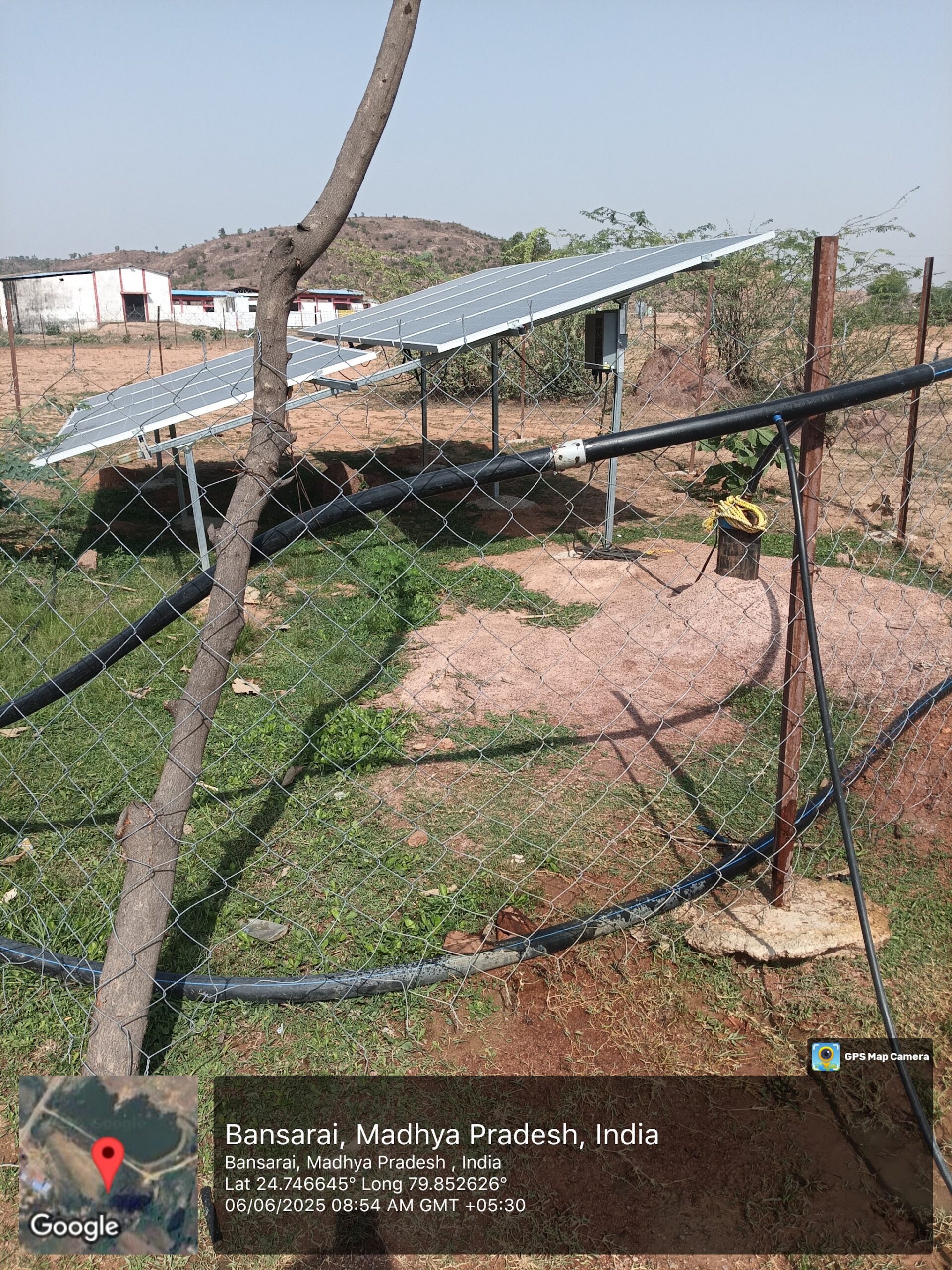
Environmental CSR is not written on a balance sheet – it is planted in the ground. A reforestation grant becomes thousands of saplings across scattered plots; a watershed project becomes check-dams down a valley; a regenerative-agriculture programme becomes practices on hundreds of farms. None of that is visible from a desk, and much of it is in exactly the remote, rural terrain where a reported number is easiest to inflate and hardest to check. Under Rule 8(3) of the CSR Rules, large projects must be independently assessed by an agency that is not the implementer – and for a plantation or nature programme, that assessment only means something if someone actually reaches the sites.
This is Anaxee’s home ground: geo-tagged tree counts, plantation-survival checks, and MRV-grade field data across 540 districts – the ground truth that turns a green CSR number into verifiable evidence of trees that exist and farmers that were reached.
Plantation & tree-count verification – geo-tagged, timestamped survival and census checks on the ground. See our CSR plantation geo-tagging and tree census services.
Independent by design – Anaxee verifies, it does not implement or certify the programmes – exactly what Rule 8(3) requires.
Tech + AI MRV – field capture with AI-assisted checks that make large, scattered environmental programmes measurable and consistent. See our climate & MRV work.
Funding plantation, agroforestry or nature-based CSR? Let’s put geo-tagged, independent field verification behind it – so the trees, the farmers and the outcomes are proven, not just reported.
In FY2024-25, the core environmental heads – environmental sustainability (₹3,397 Cr), conservation of natural resources (₹426 Cr) and agroforestry (₹88 Cr) – came to about ₹3,911 crore, under 10% of the ₹40,794 crore national CSR total. (Source: MCA National CSR Portal.)
Why is environmental CSR so low compared to education and health?
Education and health are long-established, easy-to-deploy CSR heads and together take 55% of all CSR. Environmental and nature-based programmes are harder to run and verify, and have historically drawn a much smaller share – under 10% in FY2024-25.
How much CSR goes to agroforestry?
Agroforestry drew about ₹88 crore in FY2024-25, up from ₹75 crore in FY2023-24 – small in absolute terms but growing, and closely tied to nature-based climate work and farmer livelihoods.
Why is environmental CSR hard to verify?
Green CSR lives in plantations, soil, water and farms spread across thousands of remote sites, not in a document. Confirming that trees survived, structures were built or farmers were reached needs people on the ground – which is why independent field verification matters most here.
Where does the environment CSR data come from?
From the Ministry of Corporate Affairs’ National CSR Portal (csr.gov.in), built from company disclosures under Section 135. Figures are FY2024-25 provisional sector-wise reported CSR expenditure and reconcile to the national total.
Data note. Figures are FY2024-25 provisional sector-wise CSR from the Ministry of Corporate Affairs’ National CSR Portal (csr.gov.in) and reconcile to the national total of ₹40,794 crore. The “environment cluster” here sums environmental sustainability, conservation of natural resources and agroforestry; water, sanitation and Clean Ganga are shown for context and counted under their own heads. All amounts in ₹ crore. Compiled and field-verified by Anaxee Digital Runners.
Govind Agrawal is the Founder & CEO of Anaxee Digital Runners — India’s Reach Engine. He writes on last-mile reach across Bharat, go-to-market, field data and climate-tech execution.