Development Programme Evaluation in India: Independent Field Evidence for Foundations & NGOs
Nov 14 2026
In short: Foundations, philanthropies, CSR foundations and development programmes are increasingly asked to prove not just that activities happened, but that they changed something. A programme evaluation answers that — against a baseline, with independent field evidence, not the implementer’s own count. Anaxee is the independent field layer built for it: a network reaching 540 districts, 11,000+ pincodes and 26 states that runs the baseline, midline and endline data collection and beneficiary verification an evaluation stands on. For grant-makers and programme teams that need credible outcome evidence from the field, this is the ground layer.
At a glance — development programme evaluation
Baseline / midline / endline · outcome & beneficiary verification · independent of the implementer · 540 districts / 11,000+ pincodes / 26 states · geo-tagged, AI-checked field data
FoundationsNGOs & programmesOutcome evidenceIndependent field layer
In the development sector, money increasingly comes with a question attached: what changed because of it? Funders, boards and grant committees want evidence of outcomes — incomes raised, enrolment improved, health or yields moved — not just a tally of activities delivered. A programme evaluation is how that question gets answered credibly, and the credible version rests on real data gathered from the field against a baseline. This page is for the foundation, philanthropy, CSR foundation or programme team that owns that evidence problem, and explains where an independent field layer like Anaxee fits.
What a development programme evaluation is
An evaluation measures a programme against what it set out to achieve — and asks whether the change can be credited to the programme. Done properly it combines a baseline (the starting position), midline and endline measurement, independent verification of who was actually reached, and an honest read of outcomes against the programme’s own goals or theory of change. It is different from routine monitoring, which tracks whether activities are happening as planned. Monitoring tells you the training ran; evaluation tells you whether incomes rose afterwards — and both need data that actually comes from the field.
Who commissions an evaluation
The need shows up across the sector, usually driven by accountability to whoever funds the work:
Foundations & philanthropies — confirming that grant money produced the outcomes a grantee reported.
NGOs & implementing partners — demonstrating results to their funders and renewing grants on the strength of credible evidence.
Development & government-linked programmes — evaluating delivery and outcomes at scale across districts.
Corporate CSR foundations — evaluating the programmes they fund, often alongside the independent impact assessment large CSR projects legally require.
Evaluation, monitoring and TPM — how they differ
These terms get used interchangeably, and keeping them straight decides what you actually need:
What it answers
When
Monitoring (M&E)
Are activities happening as planned?
Continuously, during the programme
Evaluation
Did outcomes actually change, against a baseline?
At milestones / end, for learning & accountability
Third-party monitoring (TPM)
Is a funded programme real, checked by an independent party?
During delivery, commissioned by the funder
Impact assessment (CSR)
Did a large CSR project produce its intended impact?
After, independently, where Rule 8(3) applies
They overlap and often run together, but they are distinct jobs. For the implementer-side data function see monitoring & evaluation data collection; for funder-commissioned checks see third-party monitoring; for the statutory CSR version see CSR impact assessment. What they share is a dependence on trustworthy field data — which is Anaxee’s layer.
What Anaxee brings to an evaluation
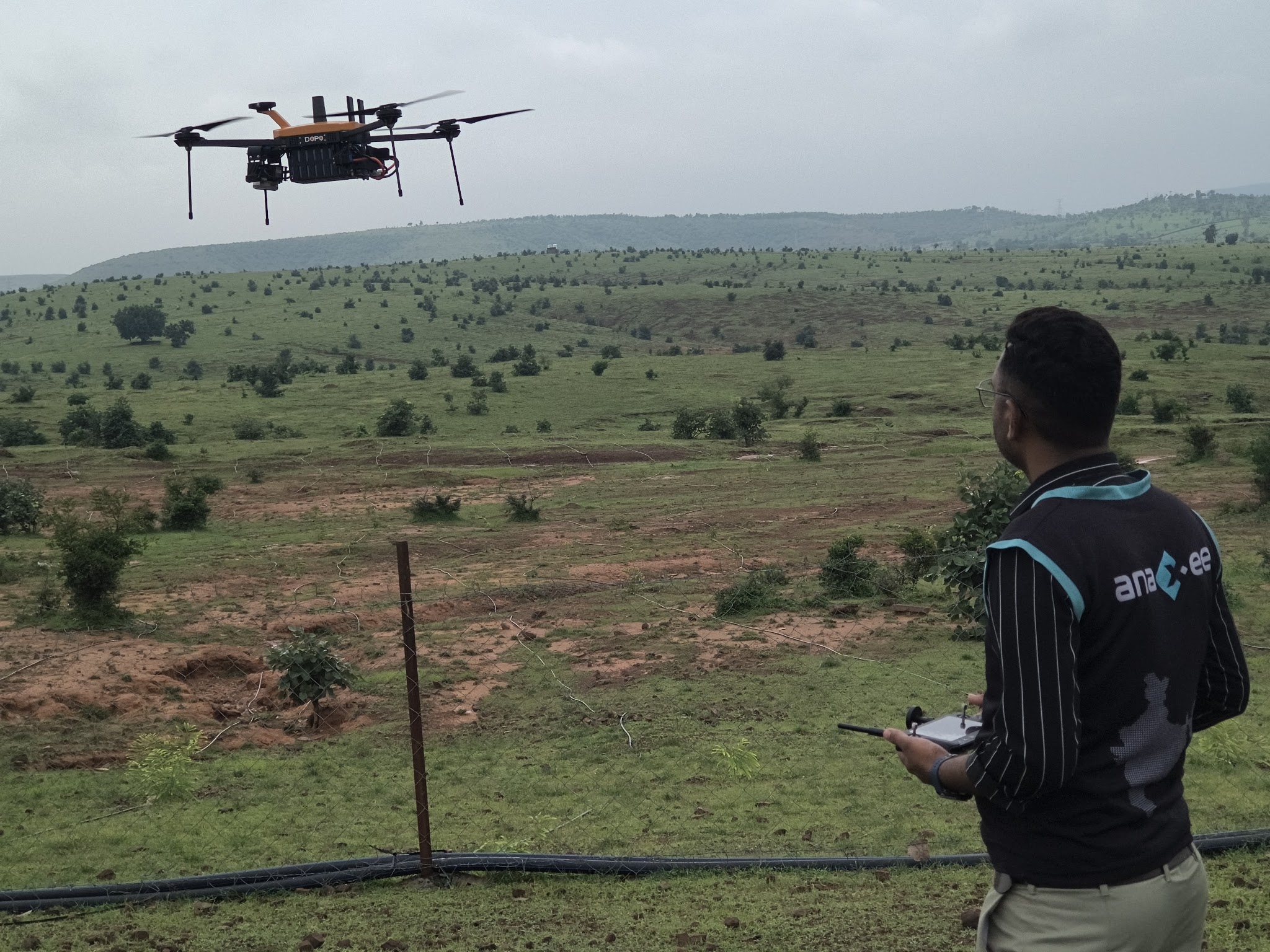
Anaxee runs an independent, tech-enabled field network built to collect and verify data at national scale — the part of an evaluation that is hardest to get right because it happens in scattered villages, not at a desk:
Baseline, midline & endline surveys — structured data collected to a defined protocol, so change is measured against a real starting point, not a guess.
Independent beneficiary verification — confirming the people a programme claims to have reached exist and received the benefit, with evidence that holds up.
Nationwide reach — 540 districts, 11,000+ pincodes and 26 states, so an evaluation covers the whole programme footprint rather than an accessible sample.
Geo-tagged, AI-checked data — every record carries GPS, a timestamp and photos, with AI flags on anything that does not add up, on a live dashboard.
The honest framing: Anaxee’s strength is independent, large-scale field measurement and verification — the primary evidence an evaluation stands on. Where a programme needs specialist evaluation design (a control group, an econometric or academic method), Anaxee provides the field data that work depends on rather than replacing it. The ground truth comes first; the analysis is only as good as it.
Where Anaxee fits
Anaxee is not an NGO implementer and not a desk-based consultancy writing a report from secondary data. It is the independent field-execution and verification layer underneath an evaluation — running the surveys, reaching the beneficiaries, and producing structured, source-tagged data a funder, board or evaluation partner can rely on. Because it does not implement the programmes it evaluates, its evidence has no outcome to flatter, which is exactly what makes it worth commissioning.
Need to evaluate a programme and prove outcomes? Whether it is a foundation grant, an NGO programme or a development initiative, let’s talk about putting independent field evidence behind the results.
What is the difference between monitoring and evaluation?
Monitoring tracks whether activities are happening as planned, during the programme; evaluation measures whether outcomes actually changed, usually against a baseline, for accountability and learning. A complete approach does both — see M&E data collection for the ongoing data function.
Does Anaxee design the evaluation or just collect the data?
Anaxee’s core strength is the independent field layer — baseline/endline surveys, beneficiary verification and outcome data at national scale. It can run the field evaluation end to end, and where a programme needs a specialist evaluation design (control group, econometric method), Anaxee provides the primary field evidence that analysis rests on.
Who uses development programme evaluation?
Foundations and philanthropies, NGOs and implementing partners, development and government-linked programmes, and corporate CSR foundations — anyone who has to show a funder or board that a programme produced real outcomes, not just activities.
How is this different from third-party monitoring?
Third-party monitoring is commissioned by the funder to independently check that a programme is being delivered; evaluation assesses whether it achieved its outcomes, and can be commissioned by the funder or the implementer. See third-party monitoring. Anaxee’s field network serves both.
Can Anaxee evaluate a programme across the whole country?
Yes — the field network reaches 540 districts, 11,000+ pincodes and 26 states, so an evaluation can cover a whole programme footprint rather than a convenient subset. That nationwide reach is the core advantage over desk-based or regional evaluators.
Informational reference. This page describes Anaxee’s independent field data collection, verification and evaluation-support services for the development sector. Figures cited (network reach; documented programme volumes) are from Anaxee’s own programmes and may change. Anaxee Digital Runners is an independent field data and verification provider and does not implement the programmes it evaluates. Nothing here is legal or compliance advice.
Govind Agrawal is the Founder & CEO of Anaxee Digital Runners — India’s Reach Engine. He writes on last-mile reach across Bharat, go-to-market, field data and climate-tech execution.