BLOG
Monitoring & Evaluation (M&E) Data Collection in India: Independent Field Evidence
 About Anaxee
40,000+ Digital Runners · 540 districts · 26 states · 11,000+ pincodes of reach
An evaluation is only as good as the data under it. You can design the sharpest framework, pick the right indicators and write a careful theory of change — and still be undone by fieldwork that was rushed, partial, or quietly invented. For an evaluator, a foundation or a programme team, the hard part is rarely the analysis; it is getting honest numbers back from the field, at the right sample, in the right places.
That is what an independent M&E data-collection partner is for: a neutral party that actually goes to the villages, interviews the real beneficiaries, and brings back evidence you — and your funder — can stand behind.
What M&E data collection covers
Why it has to be independent
Almost everything a funder learns about a programme comes from the people running it, and their report naturally shows the best of it. That is not dishonesty so much as human nature — but it leaves a board, a donor or a regulator asked to take results on trust. An independent, geo-tagged field check closes the gap: a neutral party physically goes, interviews real beneficiaries and brings back dated proof. This is distinct from, but pairs with, CSR project verification — the same field rigour, applied to a programme’s full monitoring-and-evaluation cycle.
Need independent M&E field data you can defend?
Anaxee runs baselines, endlines, monitoring and beneficiary verification across 540 districts — geo-tagged, back-checked, on a dashboard you can open yourself. See our field data collection services.
How Anaxee runs it
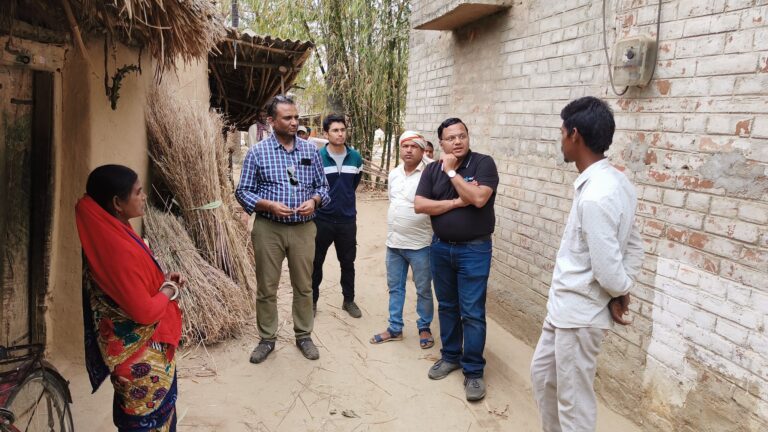
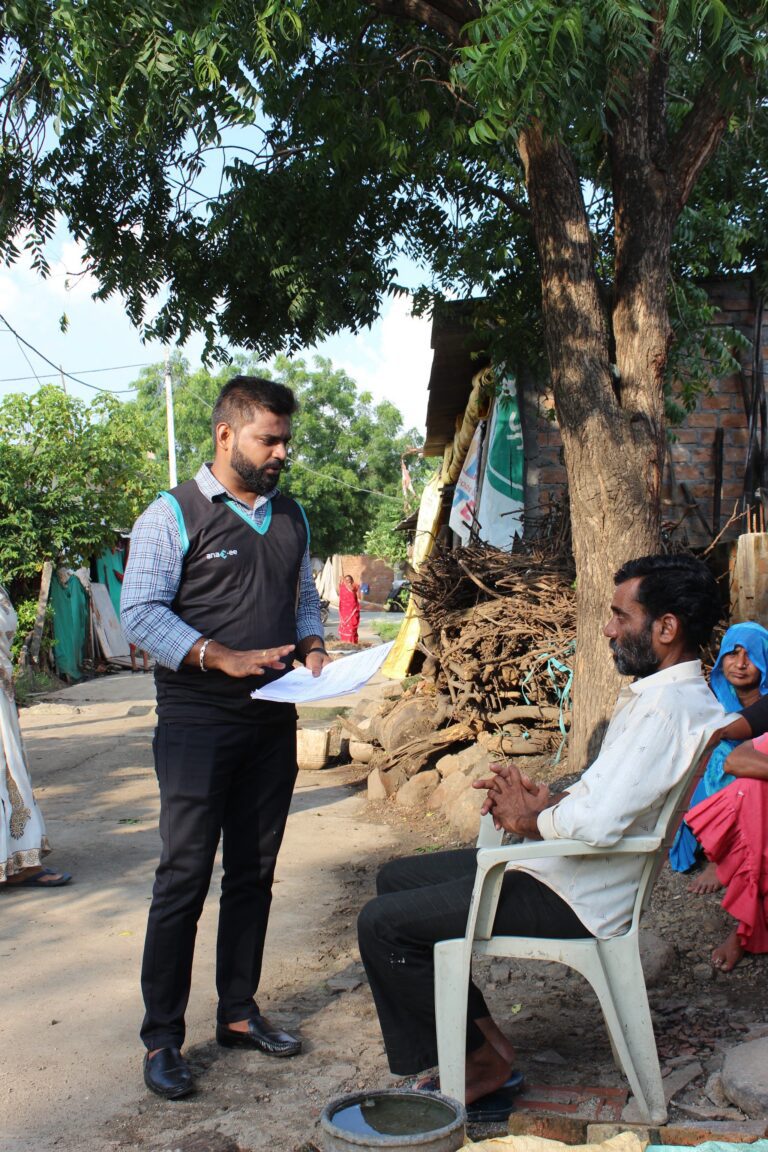
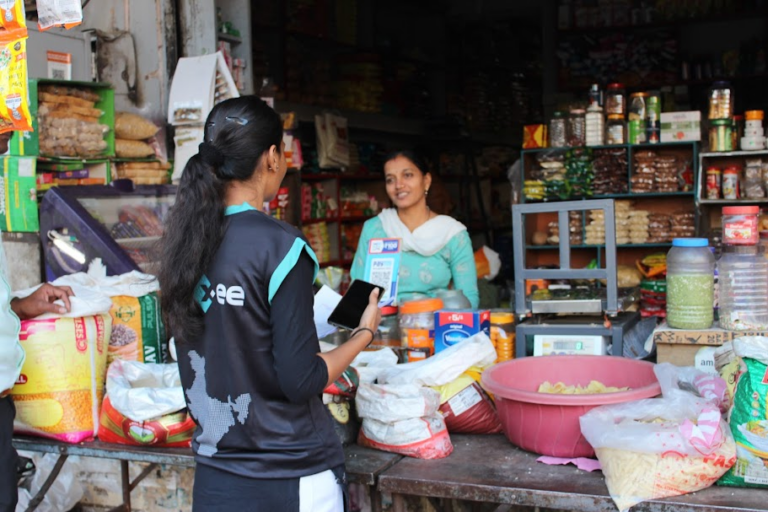
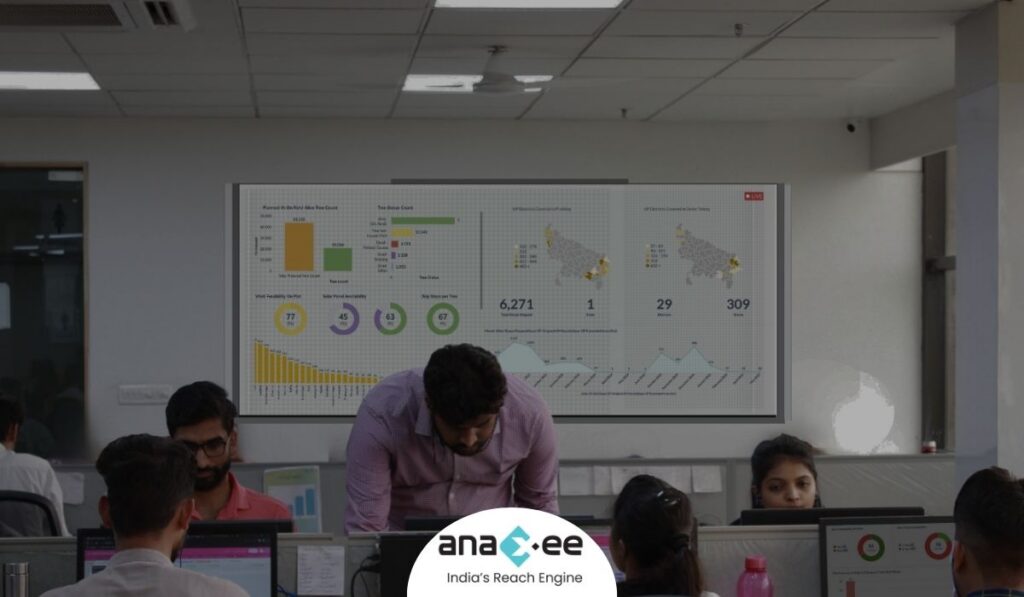
Anaxee was built to reach exactly where development and CSR programmes run — rural and small-town India — so there is already a trained, local Digital Runner near almost every beneficiary, interviewing in the respondent’s own language. Fieldwork runs on an app with skip logic, and each response is geo-tagged, time-stamped and photo-captured; a sample is back-checked and re-verified so the dataset holds up to an auditor. The same project can blend in-person (CAPI) and telephonic (CATI) collection, and everything lands on a live dashboard — maps, photos and data in one place — that your team, your board or a funder abroad can open any time.
Where technology and AI change it
Geo-tag and timestamp turn a claim into evidence — the respondent, the place, the date, all captured. The AI reads the field photos, cleans the data, and flags the suspect records — impossible locations, interviews that ran too fast, duplicate images — so fabrication (“curbstoning”) is caught before it reaches your analysis. And because the dashboard is live, you watch coverage fill in district by district and fix the sample or the tool while fieldwork is still running, instead of discovering a gap in the post-mortem.
How Anaxee helps
Anaxee — India’s Reach Engine, a National Startup Award winner — runs independent field data collection for monitoring and evaluation through 40,000+ Digital Runners across 540 districts and 11,000+ pincodes, every response verifiable and on a live dashboard. See our baseline & endline surveys, large-scale field surveys and CSR project verification.
Proof — independent field verification at national scaleIndependent, geo-tagged field data collection across all 26 states. See all case studies →
What happens when you reach out to Anaxee
- Tell us the study — the indicators, the sample and the geography — by form, WhatsApp or a call.
- A real person calls back — our Indore team, within one working day.
- We scope a pilot — a sample round of field interviews, geo-tagged and QA-checked, delivered as a dashboard you can open yourself.
A 150+ person team in Indore and 40,000+ Digital Runners on the ground — your enquiry reaches people who run field studies every day, not an inbox that goes quiet.
Tell us about your study
Share the indicators and sample — our team will get back within one working day.
Frequently asked questions
What is M&E data collection?
What is third-party monitoring (TPM)?
Why use an independent agency instead of our own team?
Can you do baseline, endline and concurrent monitoring?
How do you prevent fabricated or poor-quality data?
Which languages, and how remote can you reach?
How large can you go, and what does it cost?
The bottom line
An evaluation stands or falls on the data beneath it. Anaxee collects that data independently, in person, across the India where programmes actually run — geo-tagged, back-checked and on a live dashboard — so your results are something you can defend to a board, a donor or a regulator, not just a report you were handed.
Talk to Anaxee — whichever way is easiest