BLOG
Distributor Management in India: How Brands Keep Their Network Honest and Productive

 About Anaxee
40,000+ Digital Runners · 540 districts · 26 states · 11,000+ pincodes of reach
Every brand that sells through distributors eventually hits the same quiet problem. The distributor’s monthly billing looks fine — but the market tells a different story. Stock is sitting in the godown, not on shelves. New outlets aren’t being added. A competitor is getting pushed harder at the counter. By the time the numbers finally dip, months have passed, and nobody at head office saw it coming — because the only data they had came from the distributor himself.
That gap — between what a distributor reports and what is actually happening in the market — is what distributor management is really about. And in India, that gap is enormous.
What is distributor management?
Distributor management is the set of processes a brand uses to make sure its distributors perform: stocking the right range, achieving reach and secondary sales, adding new outlets, passing on schemes, and servicing retailers properly. The important half is the one most brands can’t see — secondary movement (distributor to retailer), not just primary billing (brand to distributor).
Why distributor networks quietly underperform
The lesson for an established brand is uncomfortable: the smaller player eating your shelf isn’t winning on product. It’s winning because it knows its market and services it harder. Distributor management is how you close that gap before it opens.
See what’s really happening in your distributor’s market — Anaxee will show you.
Anaxee Digital Runners runs independent, app-based field audits across 540 districts — stock, reach, schemes and competitor activity, outlet by outlet.
What good distributor management looks like
Measure the right things
Primary billing is the vanity metric. The numbers that predict growth are range sold, outlets billed (reach), secondary sales, new-outlet additions, and scheme pass-through. If you can’t see these, you’re managing blind.
Verify on the ground
This is the missing piece. An independent field team visits the distributor’s market and checks the reality: is your stock actually on shelves, are the outlets the distributor claims to service real and active, is the trade scheme reaching the retailer, and what is the competitor doing on the same shelf.
Close the loop
Audit findings feed straight into action — distributor conversations, corrective coverage, re-allocating schemes, or replacing a distributor who isn’t growing the market.
Where technology and AI change the game
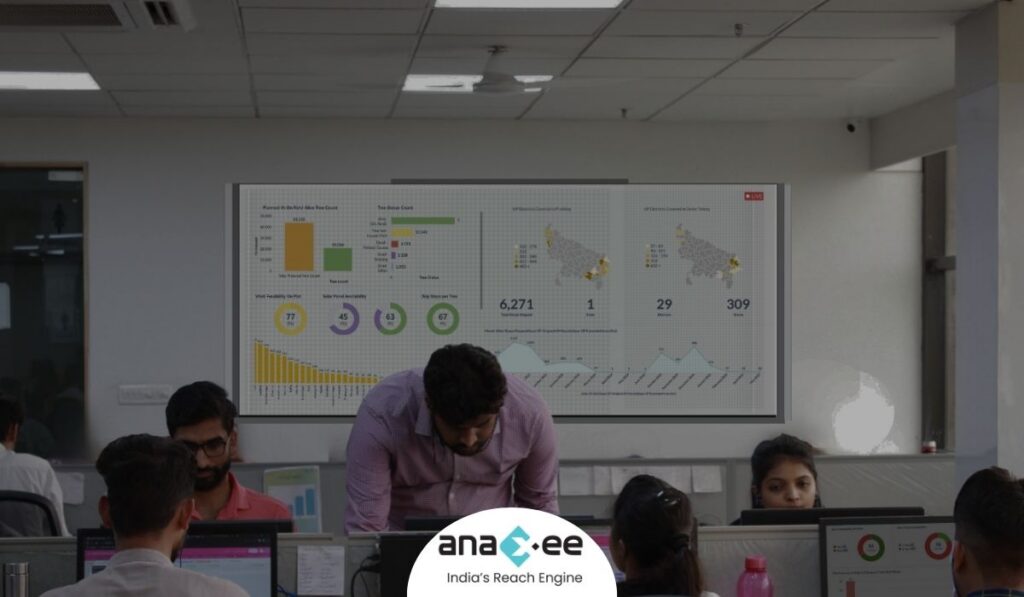
On-ground verification used to mean paper checklists and trust. Anaxee runs it as a tech product instead. Every store visit is captured in a field app, geo-tagged and time-stamped, so a ‘visited’ claim is tied to a real shop at a real moment. Photos of the shelf, the stock and competitor presence flow to a live dashboard the brand can open any day — not a monthly PDF that’s already out of date.
On top of that sits AI. Anaxee is building and deploying AI that reads those field photos and records — flagging a shelf that doesn’t match the planogram, cleaning and de-duplicating messy outlet lists, and spotting the anomalies that hint at a visit that never really happened. It turns thousands of raw store photos into structured, searchable data. The outcome: distributor management that scales across hundreds of districts without the brand losing sight of a single outlet.
How Anaxee helps
Anaxee — India’s Reach Engine, a National Startup Award winner working with 350+ brands — runs independent, app-based distributor and retail audits with reach across 540 districts and 11,000+ pincodes. It is a core part of our go-to-market playbook. We verify stock, reach, schemes and competitor activity outlet by outlet and feed it to a live dashboard, so you manage your distributors on market reality, not their own reports. It’s part of our Go-To-Market work.
Proof on the ground — brands we’ve done this for75,000+ retail outlets activated across GTM projects. See all case studies →
What happens when you reach out to Anaxee
- Tell us your markets — form, WhatsApp, or a call.
- A real person calls back — our Indore GTM team, within one working day.
- We scope a pilot — verified field data from a district or two, before you scale.
A 150+ person team in Indore and 40,000+ Digital Runners on the ground — your enquiry reaches people who do this every day, not an inbox that goes quiet.
Tell us about your network
Share your markets and what you’d like verified — our team will get back to you within one working day.
Frequently asked questions
What is distributor management?
What is the difference between primary and secondary sales?
How do I track secondary sales when the distributor won’t share data?
How do you audit a distributor independently?
What is a retail audit and how often should it run?
How can I check whether my distributor’s claimed outlets are real?
How do I expand distributor reach into Tier 2, 3 and 4 towns?
How do I monitor competitor activity at the retailer counter?
Should I hire my own field team or outsource distributor audits?
How do technology and AI improve distributor management?
Can distributor audits work in rural and small-town markets?
What does a distributor or retail audit cost in India?
The bottom line
You can’t manage what you can’t see — and a distributor’s own report is not sight. Independent, tech-enabled, on-ground verification is what turns distributor management from trust into measurement.
Talk to Anaxee — whichever way is easiest