BLOG
What Is a Distribution Strategy? Channels, Types & Distribution in India
 About Anaxee
40,000+ Digital Runners · 540 districts · 26 states · 11,000+ pincodes of reach
Making a product is the easy part. Getting it onto the right shelves, in the right towns, at the right price — that is distribution, and it is where most brands quietly lose. A distribution strategy is the plan for how your product reaches its customers: which distribution channels you use, how many intermediaries sit in between, and how widely you sell. Get it right and you are everywhere your buyer looks; get it wrong and a great product never makes it to the counter.
This guide explains what a distribution channel and a distribution strategy are, the types and intensities of distribution, and what it actually takes to run one in a market as large and fragmented as India.
What is a distribution channel?
A distribution channel (also called a marketing channel) is the chain of people and organisations a product passes through to get from the producer to the end customer. It can be as short as a brand selling directly from its own website, or as long as manufacturer → distributor → wholesaler → retailer → shopper. A distribution strategy is the decision about which of these channels to use, and how aggressively to sell through them.
The types of distribution channels
By how many intermediaries sit between you and the customer, channels fall into three types:
Indirect channels are described by their number of levels: a zero-level channel is direct; a one-level channel adds a retailer; a two-level channel adds a wholesaler and a retailer; a three-level channel adds an agent too. The more levels, the wider the reach — and the further the brand sits from what is actually happening at the shop.
Distribution strategy by coverage: intensive, selective, exclusive
Once you know your channels, the strategy sets how widely you sell. There are three classic approaches:
| Strategy | How wide | Best for |
|---|---|---|
| Intensive | As many outlets as possible — be everywhere | Low-cost, high-frequency, impulse goods (snacks, soft drinks, everyday items) |
| Selective | A chosen set of outlets in each area | Considered purchases — electronics, appliances, apparel, agri-inputs |
| Exclusive | One or a few outlets per territory | Premium or specialist goods — autos, luxury, high-end equipment |
Most consumer and durable brands run a selective-to-intensive strategy: they want to be in as many of the right shops as possible. The question is never really which strategy on paper — it is whether you can actually get into those shops, and keep them stocked, across a whole country.
Have a distribution strategy — but need it executed across India?
Anaxee maps the market, onboards retailers and runs the beat so your distribution strategy becomes real shelf presence. See the go-to-market playbook for Bharat, or talk to our team.
Distribution in India: a long chain and a last-mile problem
India’s distribution is overwhelmingly indirect and general-trade. A brand typically sells to a distributor, who sells to wholesalers and a chosen set of retailers — the small, independent kirana and category shops that make up the vast majority of the 12 million-plus outlets. Modern trade (large-format and organised retail) and e-commerce are growing fast, but general trade still moves most of the volume, especially outside the metros.
That long chain creates one recurring problem: the brand is blind beyond its distributor. It does not know which shops actually stock the product, what price they charge, whether the competitor owns the shelf, or which towns the distributor never bothers to cover. A distribution strategy that looks complete in a plan can be badly under-executed on the ground — and nobody at head office can see it.
Where technology and AI change the game
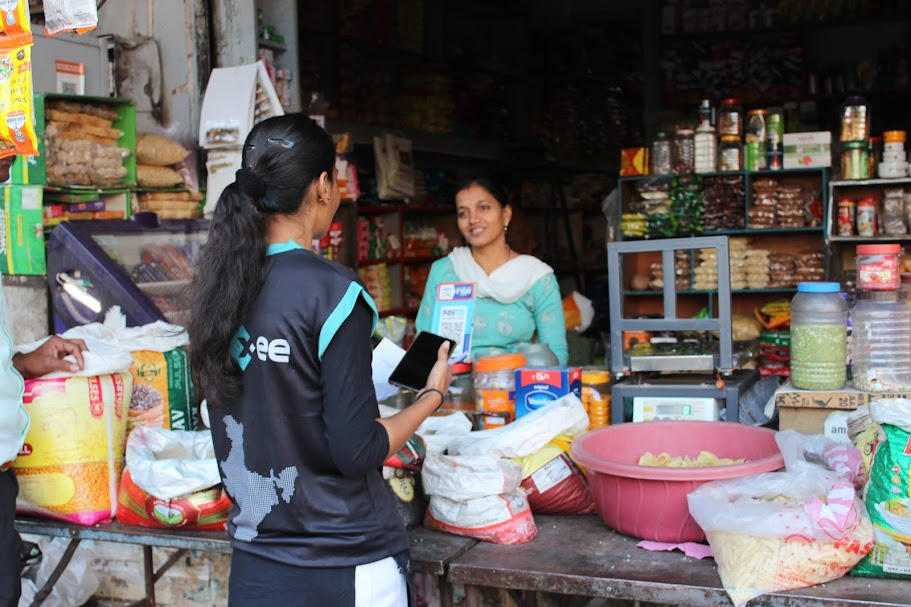
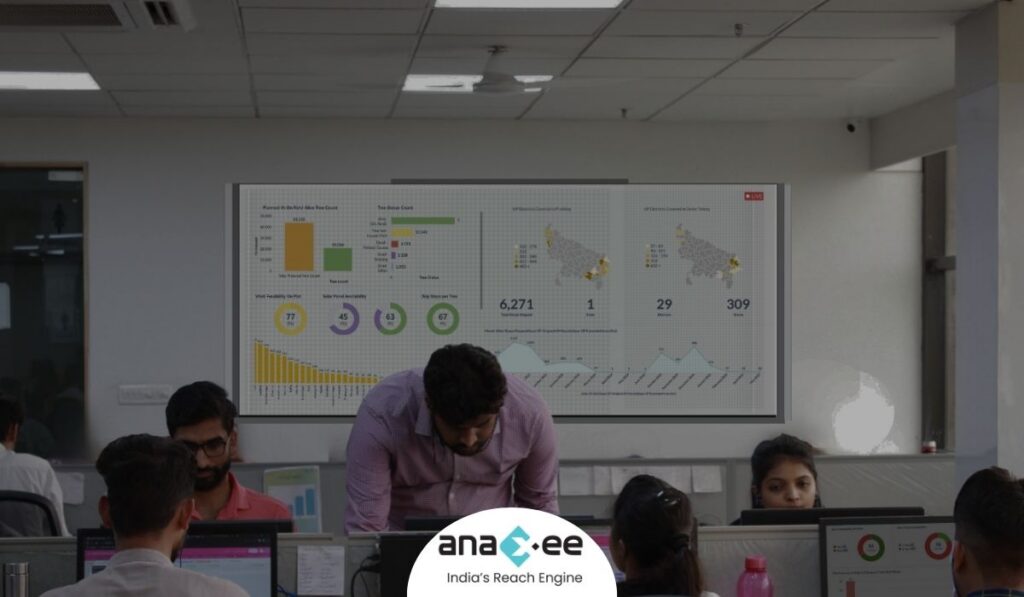
A distribution strategy used to be invisible below the distributor. Now it does not have to be. Field teams map every target shop on an app; each visit — outlet mapped, retailer profiled, order taken, shelf photographed — is geo-tagged and time-stamped, flowing to a live dashboard and API. AI reads the field photos and flags visits that do not add up, so the coverage data is real. For the first time a brand can see its distribution the way it sees its billing — shop by shop, town by town.
How Anaxee helps you execute your distribution strategy
A distribution strategy only earns revenue when someone reaches the shops. Anaxee — India’s Reach Engine, a National Startup Award winner — is the execution layer: 40,000+ Digital Runners across 540 districts and 11,000+ pincodes who map the market down to the shop, onboard and profile retailers, take orders and build a regular beat, and feed it all to a live dashboard — so your distribution reaches the outlets your distributor never did. See how it works in the go-to-market playbook for Bharat, how we strengthen distributor networks, reach rural retailers, and run field sales — the route to market — for consumer, durable, auto, electronics and agri brands.
Proof on the ground — distribution we have runMarket mapping, retailer onboarding and order-taking run across India for consumer, durable, auto and agri brands. See all case studies →
What happens when you reach out to Anaxee
- Tell us the market — the product, the geographies and the channel you want to build — by form, WhatsApp or a call.
- A real person calls back — our Indore team, within one working day.
- We scope a pilot — one market mapped and activated, so you see the coverage and the data quality before you scale nationally.
A 150+ person team in Indore and 40,000+ Digital Runners on the ground — your enquiry reaches people who run distribution every day, not an inbox that goes quiet.
Frequently asked questions
What is a distribution channel?
What is the difference between a distribution channel and a distribution strategy?
What are the types of distribution channels?
What is intensive, selective and exclusive distribution?
What is the difference between a distribution channel and a supply chain?
What is general trade vs modern trade in India?
How does Anaxee help with distribution in India?
The bottom line
A distribution strategy is the plan for how your product reaches its customers — the channels you choose and how widely you sell. The theory is simple; the execution, especially across India’s 12 million scattered shops, is not. The brands that win are the ones that can actually reach the outlets, keep them stocked, and see what is happening on the ground. That last-mile execution is exactly what Anaxee was built for.
Ready to turn your distribution strategy into shelf presence?
