BLOG
How Regenerative Cotton Earns Carbon Credits: Regenagri Insetting Explained
Everyone wants cotton with a carbon story. But ‘carbon credits’ mean very different things, and for regenerative cotton the right one is insetting. Understanding why — and what it demands on the ground — is the difference between a claim that survives scrutiny and one that doesn’t. Regenagri, one of the largest regenerative-agriculture certifications globally (over 1.4 million hectares, heading toward a target of 2 million hectares and 500,000 farms), runs exactly this kind of programme.
Insetting vs offsetting — the distinction that matters
| Carbon offsetting | Carbon insetting | |
|---|---|---|
| Where the reduction happens | Outside your business — an unrelated project you buy credits from | Inside your own supply chain — the farms that grow your cotton |
| What it counts against | Claimed against residual emissions, separately | Reduces your Scope 3 (supply-chain) emissions directly |
| Link to your product | None — the tonne could be anywhere | Traceable to the fibre you actually source |
| Co-benefits | Varies by project | Soil health, biodiversity and farmer income in your own network |
For a fashion or textile company, the vast majority of emissions sit in Scope 3 — upstream, in the supply chain — and a large share of that is at the raw-material and farming stage. Insetting lets a brand reduce those emissions where they actually occur, while paying the farmers who deliver the reduction. That is why Regenagri frames its programme around insetting units, not open-market offsets.
How regenerative cotton earns carbon insetting units
- Farms adopt regenerative practices under Regenagri — cover crops, reduced tillage, better nutrient and residue management — which lower the carbon footprint of production and build soil carbon.
- The carbon reduction is measured and verified — the volume of insetting units a farm generates is confirmed through an annual third-party verification of GHG-emissions and carbon-reduction data.
- Units are issued and registered — ownership and transactions are recorded on the Regenagri insetting registry, so each unit is traceable and can’t be double-counted.
- A supply-chain brand buys the units — reducing its Scope 3 emissions and sending money back to the farmers who did the work.
The programme is designed to align with globally recognised frameworks, including the GHG Protocol Land Sector and Removals Standard (LSRS).
This is an MRV problem before it is a carbon problem
‘MRV’ — measurement, reporting and verification — is the unglamorous foundation under every farm-carbon claim. For cotton it is genuinely hard: thousands of smallholders, scattered plots, practices that have to be evidenced rather than assumed, and a baseline that only means something if the same farms are tracked year after year. Get the field data right and verification is straightforward; get it wrong and the units don’t stand up. This is the same continuity problem that decides whether organic and Better Cotton claims hold — just with a carbon number attached.
Where Anaxee fits
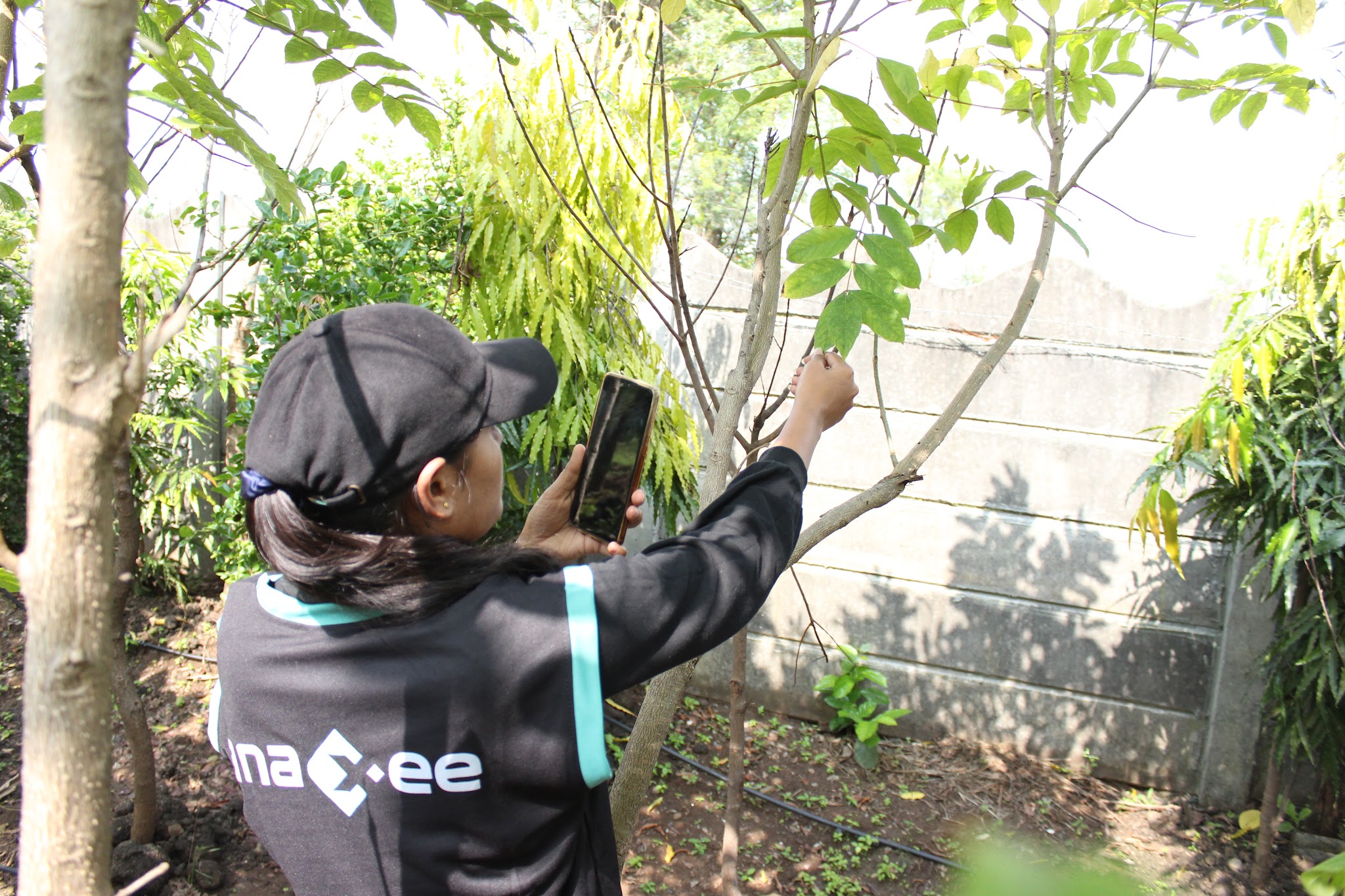
Anaxee is the independent, tech-enabled field layer that produces the ground-truth MRV data a carbon-insetting programme runs on. It is not a certifier, a carbon verifier, or a credit trader — it does the field work underneath them: registering every farmer and plot with geo-tagged boundaries, capturing baseline and practice data, and returning season after season to evidence what actually changed on the ground — across 540 districts, 11,000+ pincodes and 26 states. That is the dataset a third-party GHG verification needs, delivered continuously and independently.
Geo-tagged, timestamped, independent — the ground-truth a carbon-insetting unit is built on.
Building a regenerative-cotton carbon programme in India? Let’s scope the field-MRV layer — farmer and plot registration, baseline and practice capture, and verification-ready records — so your insetting units rest on data that holds up.
FAQ
What is the difference between carbon insetting and offsetting?
How does a regenerative cotton farm actually earn carbon units?
Does Anaxee sell or verify carbon credits?
Why is farm-level data the hard part?