BLOG
What Is Channel Sales? Partners, Channel Conflict & vs Direct Sales
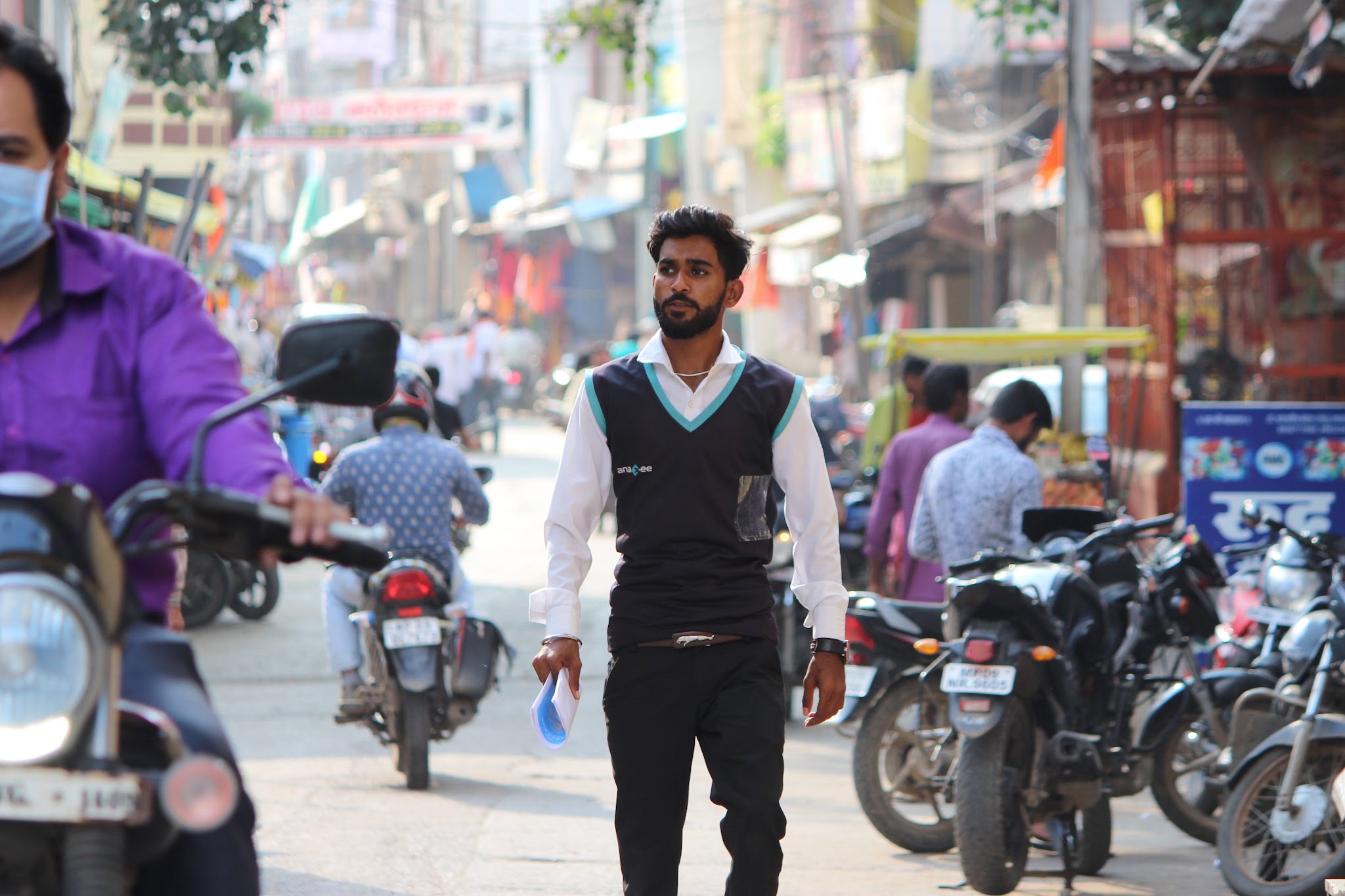
 About Anaxee
40,000+ Digital Runners · 540 districts · 26 states · 11,000+ pincodes of reach
No brand can put its own salespeople in every town. So most sell through other people’s — distributors, dealers, retailers, resellers — and that model has a name: channel sales. Done well, it turns a network of partners into an extended salesforce and multiplies a brand’s reach. Done badly, it becomes a set of partners the brand can neither see nor steer. The difference is almost never the strategy on paper; it is whether the brand can actually enable and track the channel.
This guide explains what channel sales is, how it differs from direct sales, the types of channel partner, the pitfalls like channel conflict, and what running a channel takes in India.
What is channel sales?
Channel sales is a sales model in which a company sells its product through partner organisations — distributors, dealers, wholesalers, retailers, resellers or agents — who sell on to the end customer. Because the brand does not sell directly, it is also called indirect sales. It is the opposite of direct sales, where the brand’s own team owns every deal.
Channel sales vs direct sales
| Direct sales | Channel sales | |
|---|---|---|
| Who sells | The brand’s own team | Third-party partners |
| Reach | Limited by your headcount | As wide as the partner network |
| Control & margin | High — you own the customer and the full margin | Lower — partners take a margin and own the relationship |
| Cost & speed to scale | Slow and expensive to expand | Fast and capital-light |
| Visibility | Full — every deal is yours | Low — the brand is blind past the partner |
Most brands run both motions: direct for the accounts they must own, channel for the markets and segments a direct team could never cover economically. In India, the channel motion carries the bulk of the volume.
Types of channel partner
How channel sales works — and where it breaks
Running a channel is really the discipline of treating partners as customers in their own right: recruit the right ones, enable them (product, pricing, selling know-how), and motivate them so they choose to sell your product over the alternatives on their shelf. Where channel programmes break is usually one of three places:
Channel sales in India: the reach is the point, the visibility is the problem
In India, channel sales is not a choice between direct and indirect — with roughly nine in ten retail rupees flowing through traditional trade, selling means selling through a channel. The strength is reach: a distributor-dealer-retailer network can put a product in towns a direct team would never reach. The weakness is the same as everywhere, only bigger — the brand is blind beyond its distributor, across thousands of outlets, and has no way to know which partners are actually selling and which are coasting. Closing that visibility gap is what separates a channel that grows from one that quietly leaks.
Running a channel you can’t fully see?
Anaxee is the on-ground layer for a channel — onboarding and profiling partners, taking orders, auditing outlets and feeding it to a live dashboard, so you can see and steer the channel past the distributor. See how we manage distributor networks.
Where technology and AI help
Every partner and outlet is mapped on an app; each field visit — order taken, shelf photographed, partner profiled — is geo-tagged and time-stamped to a live dashboard and API, with AI reading the photos to keep the data honest. For the first time a brand can see channel performance partner by partner, town by town — and act on it while it still matters.
How Anaxee helps you run your channel
A channel strategy only earns revenue when someone works the partners on the ground. Anaxee — India’s Reach Engine, a National Startup Award winner — is that execution layer: 40,000+ Digital Runners across 540 districts and 11,000+ pincodes who onboard and profile channel partners, take orders and build a regular beat, and audit outlets, feeding it all to a live dashboard — so the channel you sell through is one you can actually see and manage. It is the execution half of a distribution strategy and the go-to-market playbook. See how we reach rural retailers and run field sales.
Proof on the groundChannel-partner onboarding, order-taking and outlet audits run across India for consumer, durable, auto, electronics and agri brands. See all case studies →
What happens when you reach out to Anaxee
- Tell us the market — the product, the geographies and the channel you want to build — by form, WhatsApp or a call.
- A real person calls back — our Indore team, within one working day.
- We scope a pilot — one market mapped and activated, so you see the coverage and the data quality before you scale nationally.
A 150+ person team in Indore and 40,000+ Digital Runners on the ground — your enquiry reaches people who run field programmes every day, not an inbox that goes quiet.
Frequently asked questions
What is channel sales?
What is the difference between channel sales and direct sales?
What are the types of channel partner?
What is channel conflict?
How is channel sales different from a distribution strategy?
How does Anaxee help with channel sales in India?
The bottom line
Channel sales is how most brands reach most customers — selling through partners instead of a direct team. The reach is the whole point; the risk is losing sight of the channel you depend on. The brands that win the channel are the ones that enable their partners and can actually see what is happening on the ground, partner by partner. That on-ground execution and visibility is exactly what Anaxee provides.
Want a channel you can see and steer?
Tell us the market and we will scope a pilot — one territory where your partners are onboarded, worked and tracked live.