BLOG
Contract Farming in India: How It Works and the Field Partner Behind It
 About Anaxee
40,000+ Digital Runners · 540 districts · 26 states · 11,000+ pincodes of reach
What is contract farming?
Contract farming is a production and sourcing agreement between a company (the buyer or sponsor) and farmers: the farmers grow a specified crop to agreed standards, and the company agrees in advance to buy it, usually at a pre-set or formula price. The company often provides seed, inputs, advice or credit, and in return gets assured supply of the right quality. It is how a lot of India’s processed food, edible oil, spices, seed and commodity supply is increasingly organised — because it gives the buyer control over variety, quality and traceability that the open mandi does not.
Common contract-farming models
Why contract-farming programmes struggle on the ground
Where Anaxee fits — the field layer behind the contract
Anaxee runs the on-ground half of a contract-farming programme, so your team can run the commercial half. We identify and onboard the contracted farmers in the target belt, verify their land, acreage and crop with geo-tagged, photo-backed field visits, and monitor the programme through the season on a live dashboard — all part of the wider farmer network we build for you. We are the verification and reach layer, not the aggregator buying the crop — the contract and the price stay yours.
Where technology and AI change the game
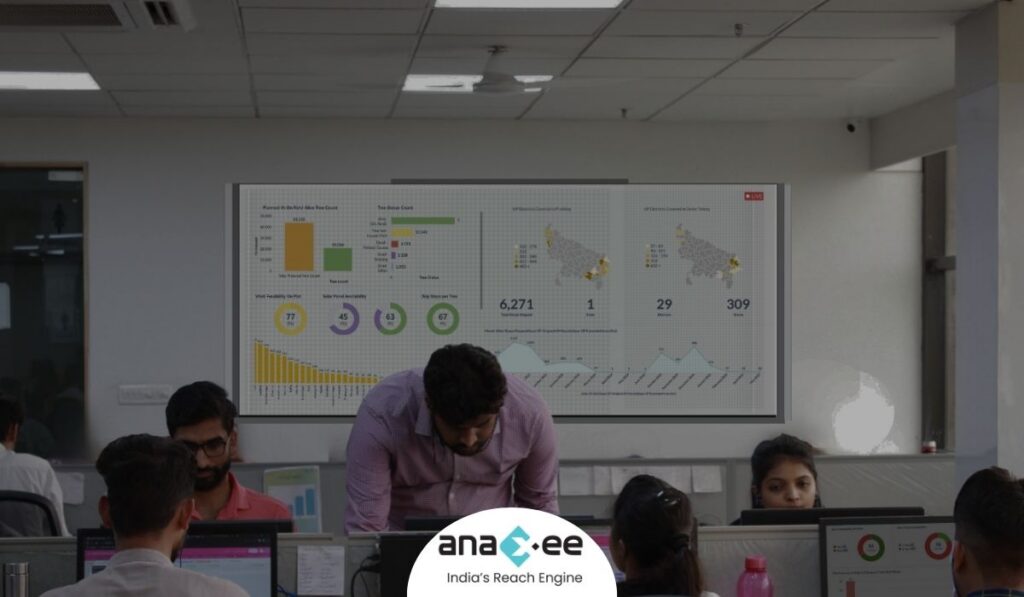
A contract-farming programme you cannot see is a programme you cannot trust. Every farmer, plot and visit is captured on a field app — geo-tagged, time-stamped and photographed to a live dashboard — with AI flagging duplicate farmers, impossible locations and plots that do not match the claim, and crop and acreage reconcilable against satellite data. You see the whole programme, village by village, in real time.
How Anaxee helps with contract farming
Anaxee — India’s Reach Engine, a National Startup Award winner — runs the field layer behind sourcing and contract-farming programmes: 40,000+ Digital Runners across 540 districts who onboard and verify farmers, confirm land and crop, and monitor the season on a live dashboard. It is the same engine behind farmer surveys, farmer onboarding and crop verification — run for DeHaat, Samunnati, AgroStar and Escorts.
Proof on the groundFarmer onboarding, verification and crop surveys delivered across agri-sourcing and development programmes. See all case studies →
What happens when you reach out to Anaxee
- Tell us the programme — the crop, the growing belt and the scale you need — by form, WhatsApp or a call.
- A real person calls back — our Indore team, within one working day.
- We scope a pilot — one district or belt mapped, onboarded and verified, so you see the data quality before you scale.
A 150+ person team in Indore and 40,000+ Digital Runners on the ground — your enquiry reaches people who run farmer field programmes every week, not an inbox that goes quiet.
Frequently asked questions
What is contract farming?
Does Anaxee run contract farming or buy the produce?
What are the main contract-farming models?
How do you prevent side-selling and fake acreage?
Which crops and industries use contract farming?
How do we start a contract-farming field programme?
The bottom line
Contract farming gives a company control over its raw material that the open market never will — but only if the farmers are real, the land is verified and the programme is watched through the season. That on-ground layer, verified and on a live dashboard across 540 districts, is what Anaxee provides, so your team can focus on the crop and the contract.
Running a contract-farming or sourcing programme?
Tell us the crop and the belt and we will scope a pilot — contracted farmers onboarded, land verified and the season monitored on a live dashboard.
See also: Farmer network & sourcing · Farmer sourcing for food companies · What is a farmer survey?
