BLOG
Farmer Network & Sourcing in India: Build a Verified Farmer Supply Base
 About Anaxee
40,000+ Digital Runners · 540 districts · 26 states · 11,000+ pincodes of reach
For a growing set of companies, the farmer is no longer someone else’s problem. A snack brand needs potatoes of the right variety; an edible-oil company needs oilseeds it can trace; a dairy needs reliable milk; an exporter needs a farm-to-fork record. All of them are discovering the same thing: you cannot build that on a bought list of names. You need a real farmer network — verified farmers you can actually reach, in the belts where your crop grows — and most companies have no way to build one.
That is what Anaxee does. We are the last-mile field partner that maps, onboards, verifies and manages the farmers behind your sourcing, contract-farming or engagement programme — and proves every one of them on a live dashboard.
Who needs a farmer network
A farmer list is not a farmer network
Plenty of companies have a spreadsheet of farmer names. It is almost never a network. The numbers are unverified, the land is unconfirmed, half the phone numbers are dead, and nobody has met these people. A real farmer network is reachable, verified and kept current — which takes feet on the ground, not a data purchase.
The farmer-network stack Anaxee builds
Five capabilities, one field network. Use them together to build a network from scratch, or any one on its own.
Find and survey the farmers in your crop’s growing belt — who grows what, where, and how much.
Explore →
Onboard & buildSign up and profile real farmers — identity, land, crop, contact — met in person and de-duplicated into a clean base.
Explore →
Verify plots & cropsConfirm the land, acreage and crop on the ground — geo-tagged and photo-backed, reconcilable with satellite.
Explore →
Contract & sourceRun the field layer behind a contract-farming or sourcing programme — onboarding, monitoring and compliance.
Explore →
Engage & manageKeep the network live — recurring surveys, re-contact, advisory delivery and feedback over the season.
Explore →
We build the farmer layer — not buy your crop
To be clear about where we fit: Anaxee is not a trader or aggregator, and we do not buy your produce. We build and verify the farmer layer that your own sourcing or contract-farming programme runs on — identifying farmers, onboarding them, verifying their land and crop, and keeping the data honest. The commercial relationship with the farmer stays yours; the on-ground reach and proof are ours. See how this works for food, beverage and edible-oil companies.
Where technology and AI change the game
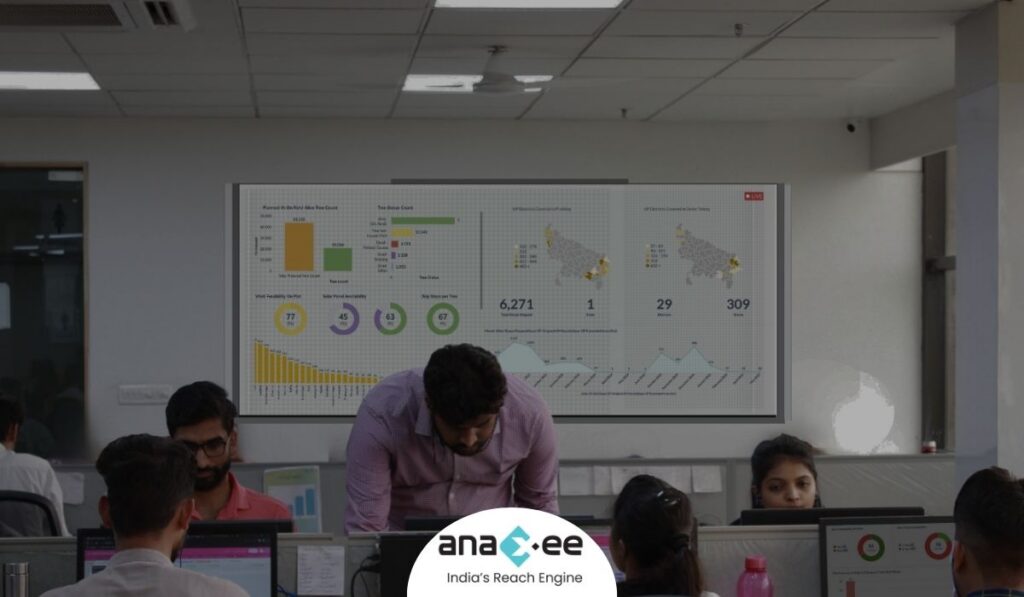
Farmer data is easy to fake and hard to check — which is why most farmer ‘networks’ quietly rot. Anaxee runs every record as a tech product: each farmer is onboarded on a field app, geo-tagged, time-stamped and photographed to a live dashboard and API, with AI reading the field photos and records to de-duplicate farmers, flag plots that do not match, and catch visits that never happened. Crop and acreage can be reconciled against satellite data — so the network you own is verified, not just collected.
How Anaxee helps you build a farmer network
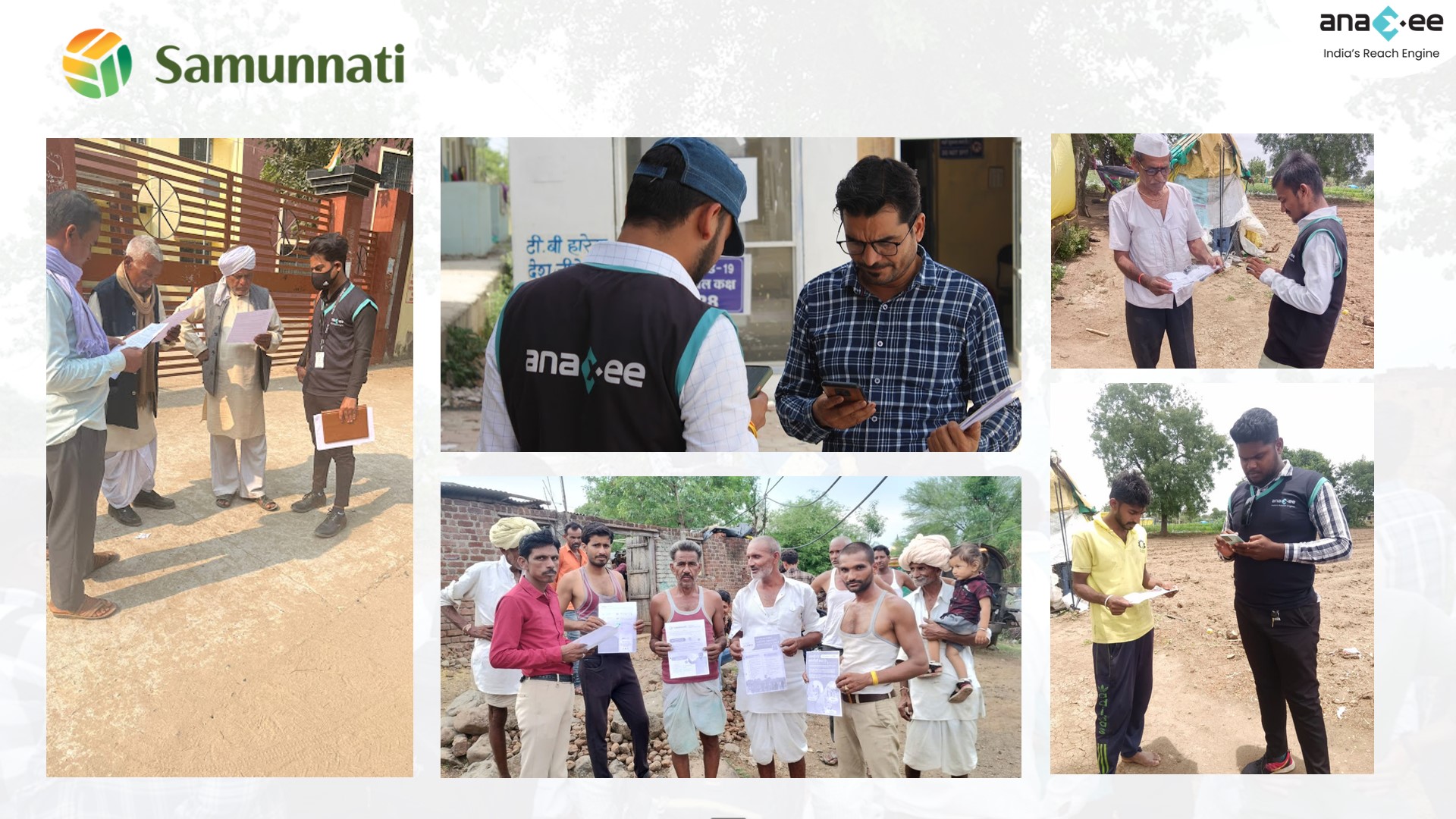
Anaxee — India’s Reach Engine, a National Startup Award winner — is the last-mile partner behind farmer networks: 40,000+ Digital Runners across 540 districts and 11,000+ pincodes who reach farmers in person, onboard and verify them, and deliver a living, verified base on a live dashboard. It is the engine behind farmer surveys, farmer onboarding, crop verification and agri-tech field services — the same work we have run for DeHaat, Samunnati, AgroStar and Escorts.
Proof on the ground3.4 lakh+ farmers onboarded, surveyed and verified across agri programmes nationwide. See all case studies →
What happens when you reach out to Anaxee
- Tell us the goal — the crop, the growing belt and the scale you need — by form, WhatsApp or a call.
- A real person calls back — our Indore team, within one working day.
- We scope a pilot — one district or belt mapped, onboarded and verified, so you see the data quality before you scale.
A 150+ person team in Indore and 40,000+ Digital Runners on the ground — your enquiry reaches people who run farmer field programmes every week, not an inbox that goes quiet.
Frequently asked questions
What is a farmer network?
Does Anaxee buy crops or run the contract itself?
Which companies use a farmer network?
How is this different from farmer onboarding?
Can you build a farmer network for one crop or belt?
How do you prove the farmers and land are real?
The bottom line
The companies that will own their raw material, their traceability and their farmer relationships are the ones building real farmer networks now — not buying lists. The product is yours; the farmer layer underneath it is what most companies are missing. Building it, verified and at scale across 540 districts, is exactly what Anaxee does.
Ready to build your farmer network?
Tell us the crop and the belt and we will scope a pilot — farmers mapped, onboarded and verified in one district before you scale.
See also: Contract farming in India · Farmer sourcing for food companies · What is a farmer survey? · Agri-tech field services