BLOG
What Are Secondary Sales? Primary vs Secondary vs Tertiary Sales Explained
 About Anaxee
40,000+ Digital Runners · 540 districts · 26 states · 11,000+ pincodes of reach
Ask a brand what it sold last month and it can answer to the unit. Ask where those units are now — which shops stock them, what is still sitting in the distributor’s godown — and the answer is usually a guess. That gap has a name: secondary sales, the layer of the channel most brands fly blind through. It is also the layer that tells you whether your business is actually healthy or just looks that way on the primary invoice.
This guide explains what primary, secondary and tertiary sales are, why secondary sales are so hard to see, and how brands capture them on the ground in India.
Primary, secondary and tertiary sales
In any distribution channel, a product changes hands a few times on its way from the factory to the shopper. Each handoff is a different level of sales:
| Primary (sell-in) | Secondary (sell-out) | Tertiary (offtake) | |
|---|---|---|---|
| From → to | Brand → distributor | Distributor → retailer | Retailer → shopper |
| Who records it | The brand | The distributor | Often nobody |
| How easy to see | Easy — own ERP | Medium — needs distributor / field data | Hard — audits, scans, surveys |
| What it tells you | What you shipped | What the market asked for | What the shopper bought |
Why secondary sales are the number brands can’t see
Primary sales are easy to measure — every dispatch triggers an invoice. That is exactly why brands over-rely on them, and why a healthy-looking primary number can lie. A distributor can be pushed to take more stock than the market can absorb (“channel stuffing”); revenue looks great this quarter, and the problem — stock stuck in the godown, nothing moving at retail — only surfaces later. The real health of the business is in the secondary number, and that is the one brands struggle to get:
How brands capture secondary sales in India
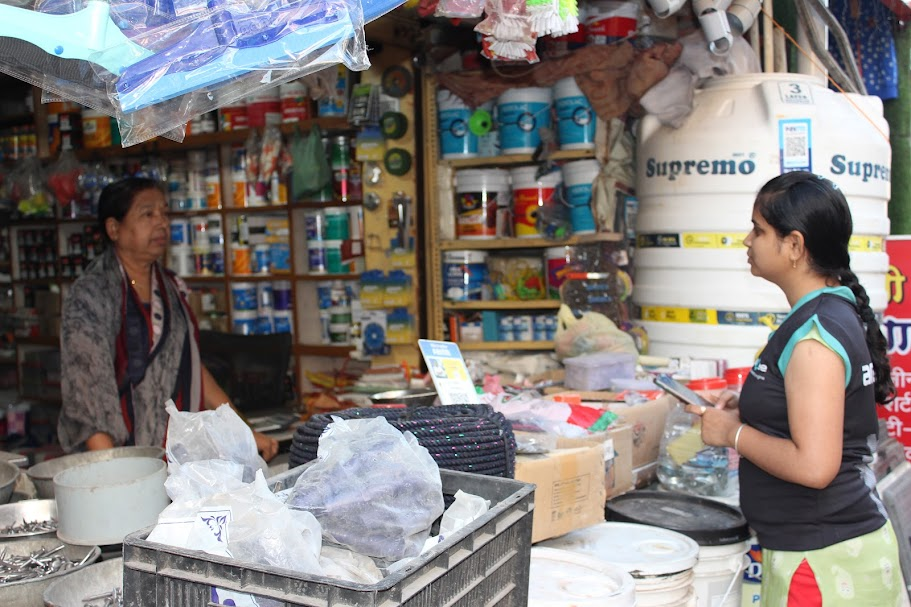
In India’s general trade — the 12 million-plus small independent shops that move most of the volume — there is no till exporting clean data. Secondary sales get captured one way that actually works at scale: a person at the counter. A field rep walks the beat, and as they take each retailer’s order on an app, that order is the secondary-sales record — SKU, quantity, named outlet, geo-tag, timestamp — instead of a monthly Excel file from the distributor. Pair that with periodic retail audits (what is on the shelf, what the competitor holds) and a brand finally sees past its distributor.
Can’t see what moves past your distributor?
Anaxee puts a field force at the counter — taking orders, auditing shelves and capturing secondary and tertiary sales on a live dashboard, shop by shop. See how we keep distribution networks honest and productive.
Where technology and AI help
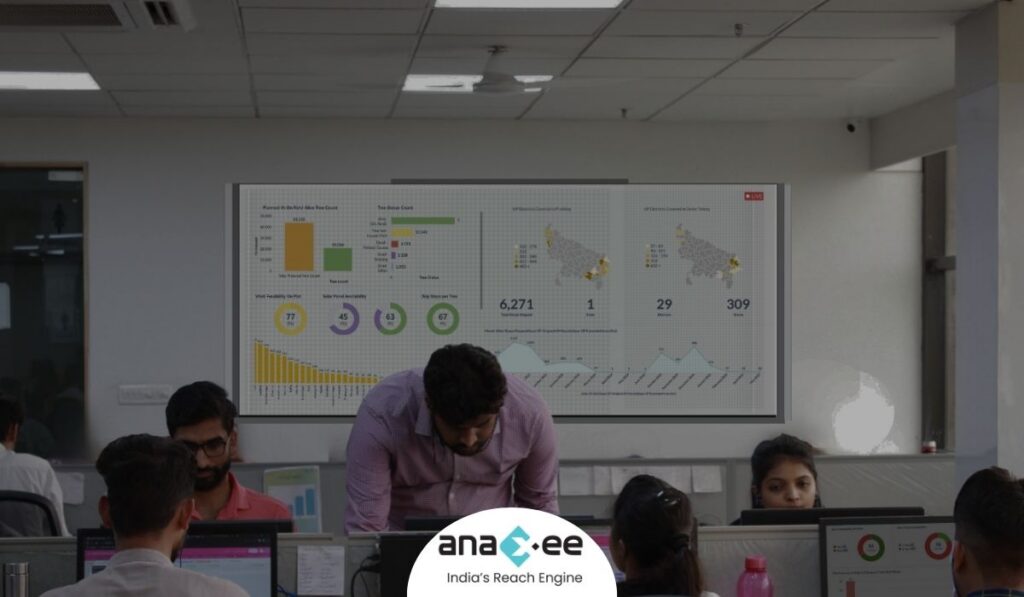
Every counter visit — order taken, shelf photographed, stock counted — is geo-tagged and time-stamped on the Anaxee Partner app and flows to a live dashboard and API. AI reads the field photos and flags visits that do not add up, so the secondary-sales data is real rather than filled in from a tea shop. The brand sees sell-out the way it sees sell-in — live, by outlet, by territory, by SKU.
How Anaxee helps you see your secondary sales
Anaxee — India’s Reach Engine, a National Startup Award winner — is the on-ground layer that captures what happens past the distributor: 40,000+ Digital Runners across 540 districts and 11,000+ pincodes who take retailer orders, audit shelves and stock, and onboard and profile outlets, feeding secondary and tertiary data to a live dashboard. It is the missing half of a distribution strategy — the part that tells you whether the strategy is actually working. See how we run field sales, reach rural retailers and audit retail for consumer, durable, auto and agri brands.
Proof on the groundRetailer order-taking, shelf audits and outlet onboarding run across India — the field layer that turns secondary sales from a guess into data. See all case studies →
What happens when you reach out to Anaxee
- Tell us the market — the product, the geographies and the channel you want to build — by form, WhatsApp or a call.
- A real person calls back — our Indore team, within one working day.
- We scope a pilot — one market mapped and activated, so you see the coverage and the data quality before you scale nationally.
A 150+ person team in Indore and 40,000+ Digital Runners on the ground — your enquiry reaches people who run field programmes every day, not an inbox that goes quiet.
Frequently asked questions
What are secondary sales?
What is the difference between primary, secondary and tertiary sales?
What do sell-in and sell-out mean?
Why are secondary sales hard to track?
Can primary sales grow while secondary sales stay flat?
How does Anaxee help track secondary sales?
The bottom line
Primary sales tell you what you shipped; secondary sales tell you what the market actually asked for. The brands that grow are the ones that stop managing on the invoice and start seeing the sell-out — shop by shop, past the distributor. In India’s general trade that takes a person at the counter, and that on-ground capture is what Anaxee does.
Want to see your sales past the distributor?
Tell us the market and we will scope a pilot — one territory where you see secondary and tertiary sales live, by outlet.