The Challenges of Large-Scale Data Collection in India (and How to Solve Them)
Nov 9 2026
Quick answer: Collecting data at country scale in India – across 650,000+ villages, 20+ languages and mostly offline terrain – breaks in predictable ways: reach, fabrication, sampling bias, logistics, inconsistent quality, slow turnaround, cost and no audit trail. The errors you can ignore at 200 records become fatal at 200,000. The fix is a permanent, tech-enabled field network with geo-tagged verification and a managed back office – which is exactly what Anaxee is built as.
About Anaxee
40,000+ Digital Runners · 540 districts · 26 states · 11,000+ pincodes of reach
★ Winner, National Startup Award (Govt. of India)Millions of verified field data points collectedIndia’s Reach Engine since 2016
Collecting a few hundred data points is a task. Collecting a few hundred thousand, reliably, across a country the size of India is a systems problem – and most of what can go wrong is invisible until the scale makes it fatal. A sampling skew that does not matter in one city quietly ruins a national dataset. One unsupervised enumerator is a rounding error; a thousand of them, unchecked, is a fiction.
This is a field guide to the real challenges of large-scale, country-scale data collection in India – and, for each one, what actually solves it on the ground.
The scale of the problem
650,000+ villages
across 28 states and 20+ major languages – roughly 64% of India lives rural, mostly offline
Country-scale data collection in India is a last-mile and logistics problem before it is a research problem.
The nine challenges of large-scale data collection
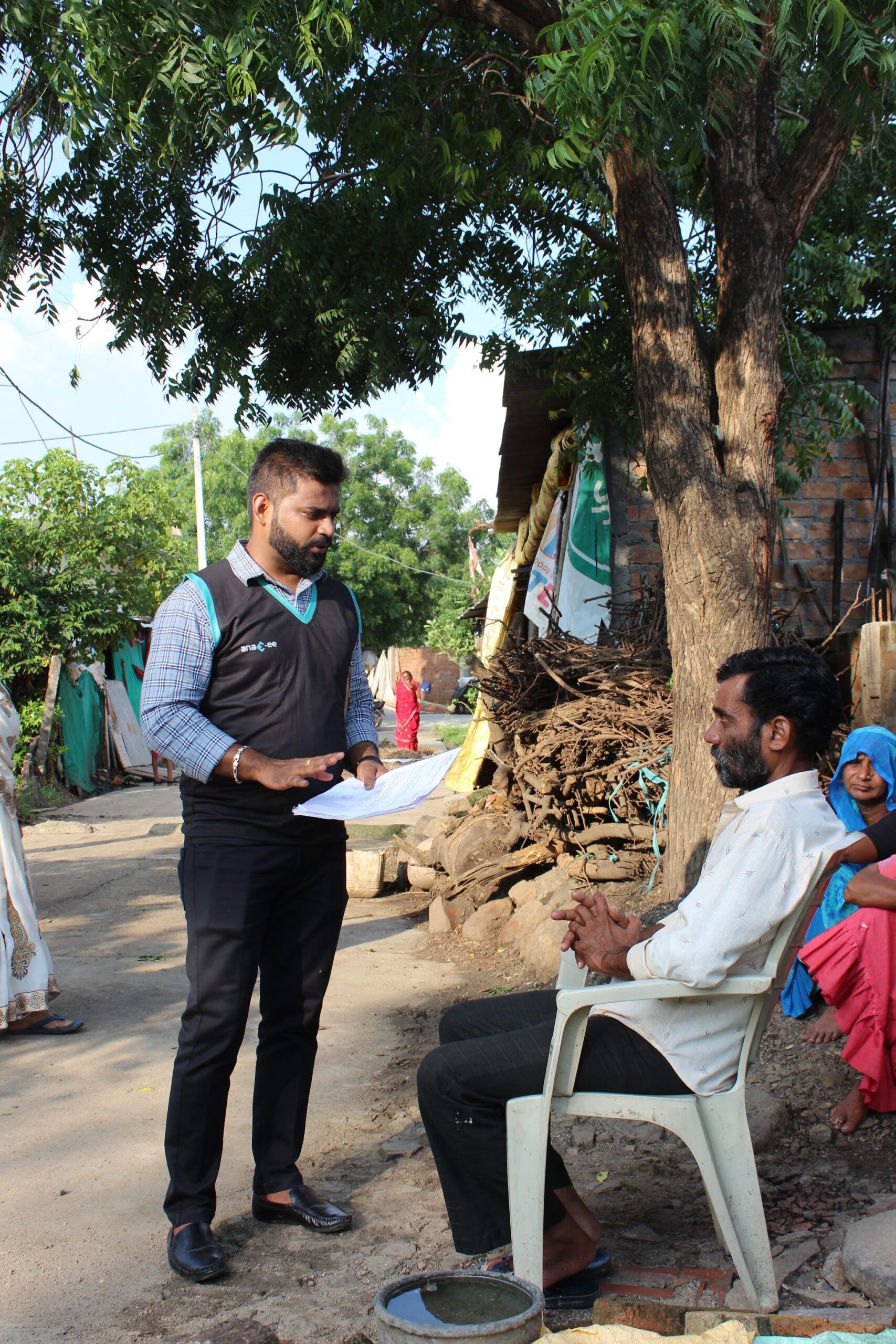
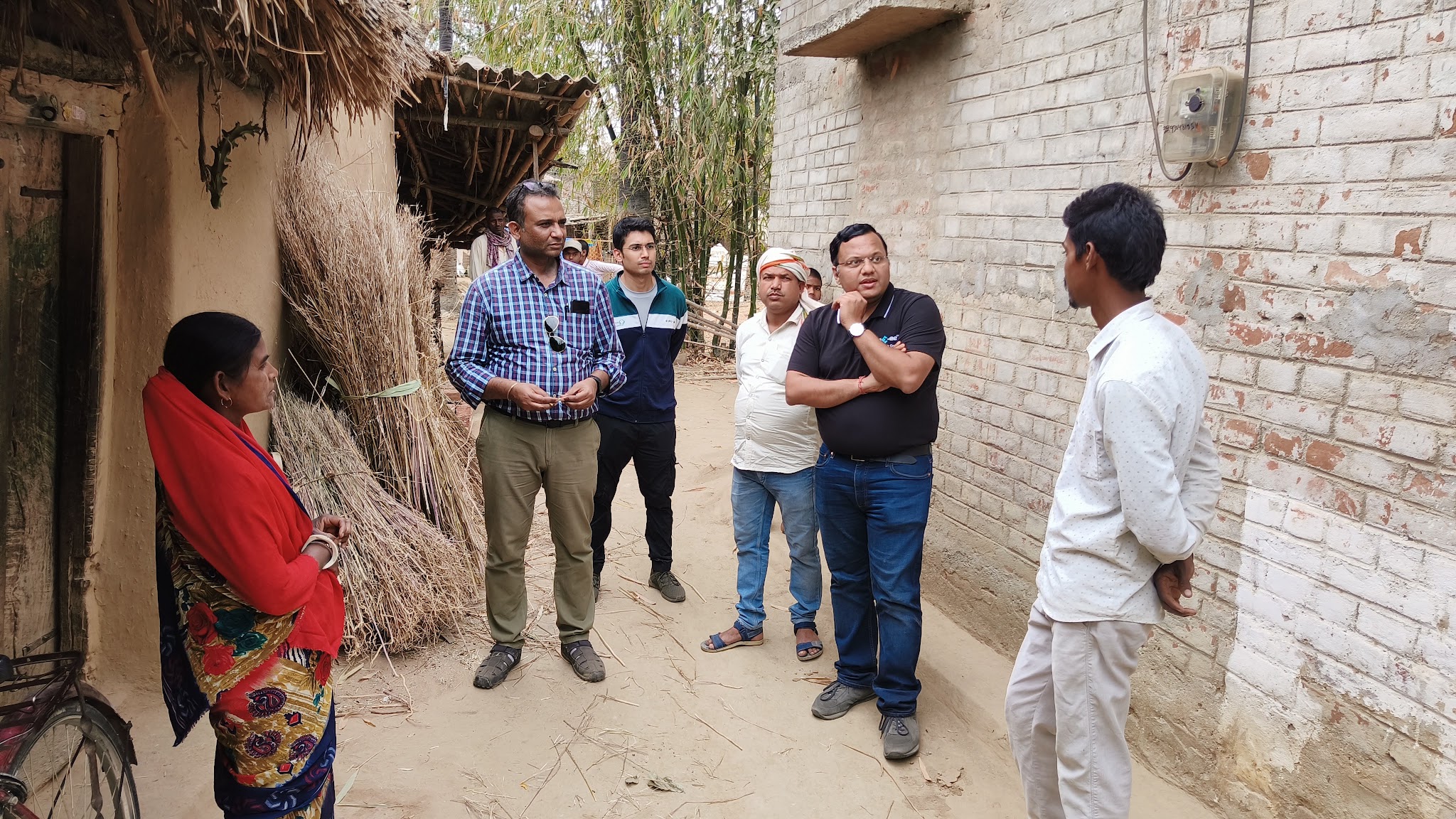
1. Reach & coverage. The Tier 3-4 towns and villages that matter most are the hardest to reach – and the first to be quietly skipped by a team that was flown in for a week.
2. Language & local trust. A respondent opens up to someone who speaks their dialect and belongs to the area – not to a stranger with a clipboard. Twenty-plus languages make this a staffing problem, not a translation one.
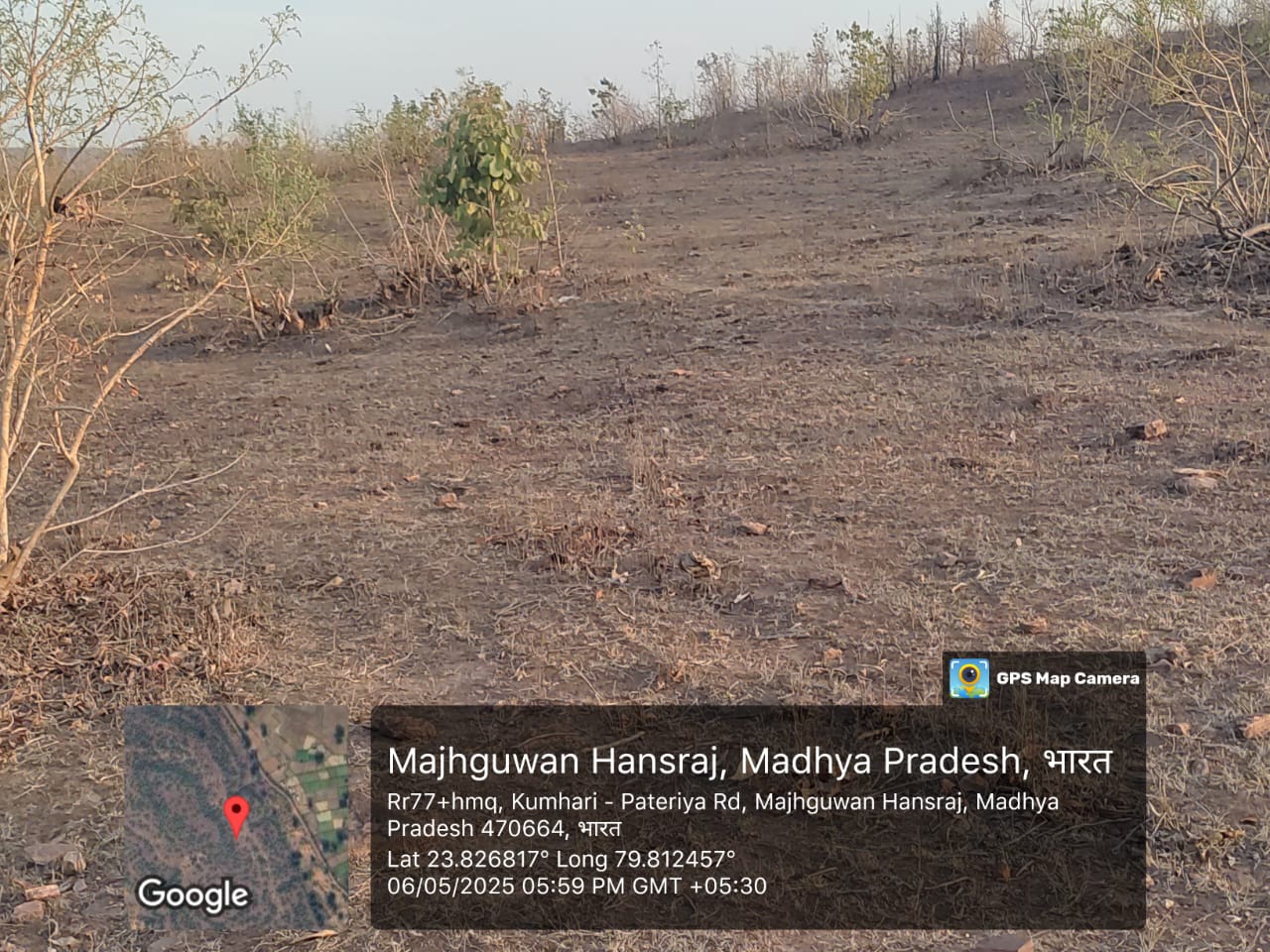
3. Fabrication (“curbstoning”). The single biggest killer of large surveys: unsupervised enumerators filling forms from a tea stall instead of walking the beat. At scale, you cannot watch them – so the data invents itself.
4. Sampling bias. Without quotas enforced in the field, the data over-weights whoever was easiest to find – and a non-representative sample at national scale produces confident, wrong conclusions.
5. Logistics & scheduling. Thousands of people, hundreds of beats, dozens of geographies, all at once – deploying, routing and tracking that is an operations challenge most research vendors are not built for.
6. Inconsistent quality. The same question has to be asked the same way in Assam and Rajasthan. Without standardised instruments and training, every enumerator collects slightly different data, and it will not add up.
7. Slow turnaround. Paper forms and manual entry put weeks between fieldwork and a usable dataset – by which time the decision has already been made without it.
8. Cost & fixed overhead. Building and carrying a national field team for one project is ruinously expensive – and leaves you with idle headcount the moment the project ends.
9. No audit trail. When a surprising number shows up, can you prove where, when and whether each record was collected? Without that, the whole dataset is an act of faith.
How each challenge is actually solved
None of these is solved by a better questionnaire. They are solved by infrastructure – a standing field network, the right technology, and a back office that runs quality:
A permanent local network solves reach, language and trust – people who already live in those 540 districts, speak the language, and are there year-round.
Geo-tagged, time-stamped, photo-backed capture solves fabrication and the audit trail – every record is tied to a real place and moment, so faking it is caught, not trusted.
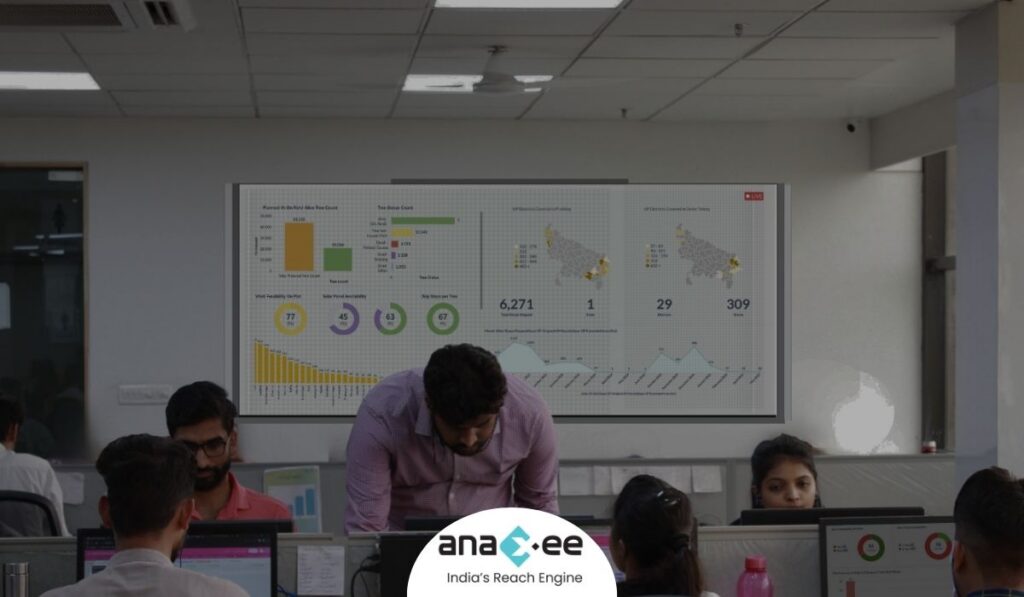
A back-office command centre solves logistics, consistency and bias – planning beats, enforcing quotas, standardising the instrument and re-checking samples as the data comes in.
Digital capture + a live dashboard solves speed – coverage fills in by district in real time and the dataset is ready days, not weeks, after the last visit.
A pay-per-task network + AI quality checks solve cost and scale – no idle headcount, and AI flags suspect records (impossible locations, duplicates, surveys filled too fast) for re-verification.
The scale paradox: the bigger the data collection, the less you can rely on watching people – and the more you must rely on making every record prove itself automatically. At country scale, trust is an engineering problem, not a supervision one.
Planning data collection at national scale?
Anaxee runs it across 540 districts – geo-tagged, quota-enforced, QA-checked and dashboarded – fully managed, or through our app for your own team.
Country-scale data collection is difficult anywhere; India stacks the difficulty. The population is enormous and overwhelmingly rural, spread across more than 650,000 villages. The ground-truth you need sits with people who speak 20+ languages, many offline, reachable only in person. Addresses are informal, terrain varies wildly, and the last mile is genuinely last. This is precisely why desk research and secondary data run out so quickly here – and why a permanent, India-wide field network is worth so much more than a team assembled per project.
How Anaxee helps
Anaxee – India’s Reach Engine, a National Startup Award winner – is the infrastructure that solves large-scale data collection: 40,000+ field executives across 540 districts and 11,000+ pincodes, with geo-tagged capture, a 150+ person back office, standardised in-app instruments and AI quality control – all on a live dashboard. Use it fully managed, or take the Anaxee Partner app as software to run your own field team on the same rails. See how Anaxee delivers and why an app alone isn’t enough.
Tell us the project – the data, the scale and the geography – by form, WhatsApp or a call.
A real person calls back – our Indore team, within one working day.
We scope a pilot – one region collected, verified and dashboarded, before you scale nationally.
A 150+ person team in Indore and 40,000+ field executives on the ground – built for national scale, not a team assembled per project.
Tell us about your data collection project
Share the data, scale and geography – our team will get back within one working day.
Frequently asked questions
What are the main challenges of large-scale data collection?
Reaching scattered and rural respondents, language and local trust, fabricated responses (curbstoning), sampling bias, logistics and scheduling at scale, inconsistent quality, slow turnaround, high fixed cost, and the lack of an audit trail. At country scale, small errors compound into fatal ones.
What is curbstoning in data collection?
Curbstoning is when a field worker fabricates responses instead of actually collecting them – filling forms without visiting. It is the biggest quality risk in large surveys, and geo-tagged, time-stamped, photo-verified capture is the practical cure.
How do you ensure a representative sample at national scale?
By setting quotas (geography, demographic, outlet or farm type) up front and enforcing them in the field through the app and back office, so the dataset mirrors the real population rather than whoever was easiest to reach.
How is data collection faster at scale with technology?
Digital in-app capture flows to a live dashboard as fieldwork happens, so coverage is visible by district in real time and the dataset is ready days after the last visit instead of weeks after.
Is it cheaper to build your own field team or use a network?
For most projects, a ready pay-per-task network is far cheaper – you avoid recruiting, training and carrying idle headcount, and you tap a force that already covers 540 districts. Building your own only pays off for permanent, concentrated collection.
The bottom line
Large-scale data collection fails in predictable ways – and none of them are solved by trying harder with the same setup. They are solved by infrastructure: a permanent, local, tech-enabled field network that makes every record prove itself, run by a back office that holds the quality bar the same from Kashmir to Kanyakumari. Get that right, and country-scale data stops being a gamble and becomes a dependable asset.
Govind Agrawal is the Founder & CEO of Anaxee Digital Runners — India’s Reach Engine. He writes on last-mile reach across Bharat, go-to-market, field data and climate-tech execution.
 About Anaxee