Mafatlal Sustainable Cotton & Textiles — OEKO-TEX, Heritage Mill

In short: Mafatlal Industries is one of India’s oldest textile houses (over 120 years, part of the Arvind Mafatlal Group), making suiting, shirting, uniforms, home furnishing and speciality fabrics. Its published sustainability is manufacturing-focused — renewable power, water and effluent management, cogeneration and emissions reduction — and its textiles are OEKO-TEX certified. It does not publicly break out organic or Better Cotton sourcing, so a sustainable-cotton claim on a Mafatlal product is worth confirming per order. This page is an independent public reference compiled from Mafatlal’s own published disclosures.
At a glance — Mafatlal’s sustainability
120+ year heritage fabric house (Arvind Mafatlal Group) · OEKO-TEX + ISO 9001 certified · renewable power, cogeneration, ETP · ~23,248 t CO2 cut over 5 years (company-reported) · organic/BCI not publicly broken out
OEKO-TEXRenewable powerWater & effluentCogeneration

If you are researching how India’s heritage fabric houses approach sustainability, Mafatlal is a useful case — a century-old textile manufacturer whose published sustainability work sits in the factory (energy, water, emissions) and whose products carry OEKO-TEX certification. On sustainable cotton specifically, Mafatlal does not publish an organic or Better Cotton breakdown, which itself is useful to know. Below is a factual reference — who Mafatlal is, what it publishes, and how to read its cotton position — drawn entirely from Mafatlal’s own disclosures. We also explain, honestly, where an independent field-and-verification partner like Anaxee fits.

Who Mafatlal is in sustainable cotton

Mafatlal Industries Limited, part of the Arvind Mafatlal Group, is one of India’s oldest textile companies, with a legacy of more than 120 years. It makes mens’ and womens’ wear fabrics (suiting, shirting, trousering, voiles, rubia), uniforms, home furnishing (bed linen, towels), ready-to-stitch and speciality fabrics (flame-retardant, anti-static, Teflon-coated, anti-bacterial), sold through 200+ stores.

In sustainable cotton, Mafatlal’s role is that of a fabric manufacturer. Its public disclosures emphasise product quality and manufacturing sustainability rather than a named organic or Better Cotton programme — its textiles are OEKO-TEX certified, but it does not publish an organic-or-Better-Cotton share. So where a sustainable-cotton claim is needed, it is worth confirming at the order level.

What Mafatlal reports on sustainability

Mafatlal’s disclosures are organised by manufacturing area rather than by a cotton certificate. Each is distinct:

Area What it is Mafatlal’s public role
Product certification (OEKO-TEX) Tests finished textiles for harmful substances (a product-safety standard, not a farm standard). Reports OEKO-TEX certified products and ISO 9001 quality standards (Mafatlal disclosure).
Renewable energy & emissions Buying solar/wind power and running cogeneration to cut carbon. Purchases renewable power; runs a 2.75 MW cogeneration plant; reports ~23,248 tonnes CO2 cut over five years (Mafatlal).
Water & effluent Reducing freshwater use and treating wastewater before discharge. Caustic and condensate recovery; ~25% lower wastewater (2021-22); a 5.2 MLD effluent treatment plant (Mafatlal).
Sustainable cotton (organic / BCI) Farm-level certified cotton (organic, Better Cotton) with a published share. Not publicly broken out in Mafatlal’s disclosures — confirm per order.

Area descriptions: OEKO-TEX / general. Mafatlal roles: Mafatlal Industries sustainability & quality disclosures.

What Mafatlal publishes

These are drawn from Mafatlal’s own disclosures, each attributed to its source:

  • OEKO-TEX certified textiles and ISO 9001 quality standards — a product-safety and quality signal (Mafatlal).
  • ~23,248 tonnes of CO2 cut over five years via solar and cogeneration, plus a 2.75 MW cogeneration plant and LED retrofits (Mafatlal).
  • Water and effluent management — caustic/condensate recovery, ~25% lower wastewater (2021-22) and a 5.2 MLD effluent treatment plant (Mafatlal).
  • No public organic / Better Cotton breakdown — Mafatlal’s sustainability reporting is operational, so a specific sustainable-cotton claim should be confirmed at the order level (Mafatlal).
Why this matters: a product-safety certificate like OEKO-TEX confirms the finished fabric is free of harmful substances — it is not a statement about how the cotton was grown. Where a buyer needs an organic or Better Cotton claim, that is a separate, farm-level question, and worth verifying rather than assuming from a quality certificate.

Why Mafatlal is a useful benchmark

Mafatlal shows the heritage fabric house’s position: strong on manufacturing sustainability and product-safety certification, lighter on published farm-level cotton claims. That is a useful reminder that ‘certified’ can mean different things — product safety, quality, or farm-level sustainability — and that the cotton-growing claim is the one most worth checking.

Where an independent field & verification layer fits

Anaxee is not affiliated with Mafatlal, and Mafatlal runs its own operations. But the Mafatlal case makes the point: a sustainable-cotton claim is a farm-level claim, separate from manufacturing or product-safety certificates, and it is only as strong as what can be verified upstream. For fabric houses, mills and brands that want independent assurance of what is actually happening in the field, Anaxee is the independent, tech-enabled field-execution and verification layer — reaching cotton farmers at scale, running the recurring season work, and producing geo-tagged, timestamped, photo-backed ground-truth to stand behind a claim.

Anaxee has no cotton to sell, so its data has nothing to flatter. It is not a Better Cotton member, not a certification body, and does not buy or sell cotton — it is the field and verification partner underneath the programme. Explore the model: cotton supply-chain verification · farm-to-gin traceability · Better Cotton field & verification partner.

Buying or defending a sustainable-cotton claim? If you need independent field execution and on-ground verification across India’s cotton belt — the recurring, season-by-season work behind the claim — let’s talk.
Talk to AnaxeeSee cotton verification

FAQ

Does Mafatlal make sustainable or organic cotton fabric?
Mafatlal’s textiles are OEKO-TEX certified (a product-safety standard), and its published sustainability is operational (energy, water, emissions). It does not publicly break out organic or Better Cotton sourcing, so a sustainable-cotton claim is worth confirming per order. See the full list of Better Cotton members in India.
What does OEKO-TEX certification mean?
OEKO-TEX Standard 100 tests a finished textile for harmful substances. It confirms product safety, not how the cotton was grown — those are different claims. For how organic, Better Cotton and regenerative differ, see organic vs Better Cotton vs regenerative cotton.
What sustainability does Mafatlal report?
Per its disclosures, Mafatlal reports renewable power, a 2.75 MW cogeneration plant, ~23,248 tonnes of CO2 cut over five years, water and effluent management (a 5.2 MLD ETP), and OEKO-TEX / ISO 9001 certification — largely manufacturing-level.
How should a buyer verify Mafatlal’s cotton claim?
Ask for the farm-level certification behind a specific order (organic, Better Cotton, recycled). Default Better Cotton uses a mass-balance model where fibre often can’t be traced to a specific farm — the gap independent field verification is designed to close.
Is Anaxee connected to Mafatlal?
No. This page is an independent public reference compiled from Mafatlal’s own published disclosures. Anaxee is not affiliated with, endorsed by, or a vendor to Mafatlal Industries Limited. Mafatlal is used here only as a well-documented public example of sustainability work in Indian textiles.
Public reference — not affiliated. This profile is compiled from Mafatlal Industries Limited’s own publicly available disclosures (including its sustainability and quality pages), plus OEKO-TEX and general definitions, and is provided for informational reference only. Anaxee Digital Runners is not affiliated with, endorsed by, sponsored by, or a vendor to Mafatlal Industries Limited, and makes no claim of any business relationship. All trademarks and figures belong to their respective owners; figures are as reported by the named sources and may change. Nothing here is investment, legal or compliance advice.

Raymond Sustainable Cotton — Organic, BCI & Recycled (Wool-Led)

In short: Raymond is India’s best-known suiting house — a wool-led textile and lifestyle group whose sustainability story centres on certified wool (it reports 100% certified wool to the IWTO standard). On cotton specifically, Raymond offers certified Organic, Better Cotton (BCI) and GRS (recycled) options and reported a modest recycled-cotton share (2.21% in FY2023-24). So its sustainable-cotton footprint is real but secondary to wool. This page is an independent public reference compiled from Raymond’s own published disclosures.
At a glance — Raymond’s sustainable cotton
India’s leading suiting house (wool-led) · certified Organic / Better Cotton / GRS cotton options · 2.21% recycled cotton (FY23-24) · 100% certified wool (IWTO)
Organic cottonBetter Cotton (BCI)Recycled (GRS)Certified wool (IWTO)

If you are researching how India’s big apparel-and-fabric houses approach sustainable cotton, Raymond is a useful but particular case — it is primarily a wool and worsted-suiting company, so cotton is one fibre among several. Its ESG reporting is strongest on certified wool, with certified cotton as a growing but smaller part of the mix. Below is a factual reference — who Raymond is in sustainable cotton, the schemes it uses, and what it publishes — drawn entirely from Raymond’s own disclosures. We also explain, honestly, where an independent field-and-verification partner like Anaxee fits.

Who Raymond is in sustainable cotton

Raymond is one of India’s largest and best-known textile and lifestyle groups, long synonymous with premium worsted suiting. Its core fibre is wool, and its sustainability reporting reflects that — it reports 100% certified wool to the International Wool Textile Organisation (IWTO) standard. In cotton, its role is that of a buyer and manufacturer of certified sustainable options rather than a grower or a dedicated organic-cotton house.

Per its ESG disclosures, Raymond’s certified materials include Organic, Better Cotton (BCI) and GRS-certified cotton options, with recycled cotton a small share of the mix (reported at 2.21% in FY2023-24). So Raymond offers sustainable cotton, but it is a secondary fibre behind wool.

The sustainable-fibre schemes Raymond uses

Raymond’s disclosures name several sustainable-fibre standards. Each is distinct, with different rules and different claim strength:

Scheme What it is Raymond’s public role
Organic cotton Cotton grown without synthetic fertilisers, pesticides or GMO seed; certified at farm level. Offers certified organic cotton among its material options (Raymond ESG disclosure).
Better Cotton (BCI) A mass-balance farm programme training growers in better practices; volumes are tracked, fibre is not traced to a specific farm. Offers Better Cotton (BCI) certified cotton options (Raymond).
Recycled cotton (GRS) Reclaimed cotton fibre certified under the Global Recycled Standard. Offers GRS-certified recycled cotton; reported ~2.21% recycled cotton in FY2023-24 (Raymond).
Certified wool (IWTO) Wool certified to the International Wool Textile Organisation standard (Raymond’s primary fibre, shown for context). Reports 100% certified wool (Raymond).

Scheme descriptions: Better Cotton / Textile Exchange / IWTO. Raymond roles: Raymond ESG Data Book FY2023-24.

What Raymond publishes

These are drawn from Raymond’s own disclosures, each attributed to its source:

  • Certified Organic, Better Cotton (BCI) and GRS cotton options among its materials, per its ESG disclosures (Raymond FY2023-24).
  • ~2.21% recycled cotton in FY2023-24 — a small but reported share, indicating cotton is a secondary fibre for Raymond (Raymond).
  • 100% certified wool (IWTO) — the centre of Raymond’s sustainable-fibre story and a reminder that it is wool-led, not cotton-led (Raymond).
  • A lifestyle + textile group spanning suiting fabric, apparel and more — so sustainable-cotton exposure sits mostly in its shirting and cotton-blend lines (Raymond).
Why figures vary: Raymond reports across several fibres, and cotton is a minority of its mix. A low recycled-cotton percentage reflects a wool-led portfolio, not a weak programme — so read Raymond’s cotton numbers in the context of a company whose flagship fibre is wool, and check the certification behind a specific cotton order.

Why Raymond is a useful benchmark

Raymond shows the wool-led house’s approach to sustainable cotton: it offers certified organic, Better Cotton and recycled cotton options, but these sit alongside a much larger certified-wool story. For buyers, the point is to look past the headline ‘sustainable’ label and check which fibre and which certification a specific product actually carries.

Where an independent field & verification layer fits

Anaxee is not affiliated with Raymond, and Raymond runs its own sourcing. But Raymond makes the point: wherever a company offers organic or Better Cotton, the claim depends on what happened upstream on the farm — and default programmes often track volume, not origin. For houses, mills and brands that want independent assurance of what is actually happening in the field, Anaxee is the independent, tech-enabled field-execution and verification layer — reaching cotton farmers at scale, running the recurring season work, and producing geo-tagged, timestamped, photo-backed ground-truth to stand behind a claim.

Anaxee has no cotton to sell, so its data has nothing to flatter. It is not a Better Cotton member, not a certification body, and does not buy or sell cotton — it is the field and verification partner underneath the programme. Explore the model: cotton supply-chain verification · farm-to-gin traceability · Better Cotton field & verification partner.

Buying or defending a sustainable-cotton claim? If you need independent field execution and on-ground verification across India’s cotton belt — the recurring, season-by-season work behind the claim — let’s talk.
Talk to AnaxeeSee cotton verification

FAQ

Does Raymond use sustainable cotton?
Yes, as one of several fibres. Per its ESG disclosures, Raymond offers certified Organic, Better Cotton (BCI) and GRS (recycled) cotton options, with recycled cotton a small reported share (2.21% in FY2023-24). Raymond is wool-led, so cotton is secondary. See the full list of Better Cotton members in India.
Is Raymond a cotton or a wool company?
Primarily wool — Raymond is best known for worsted suiting and reports 100% certified wool (IWTO). Cotton features in its shirting and cotton-blend lines, where it offers organic, Better Cotton and recycled options.
What cotton certifications does Raymond offer?
Per its disclosures, Organic, Better Cotton (BCI) and GRS (recycled). Each covers a different claim — check the standard behind a specific product. For how organic, Better Cotton and regenerative differ, see organic vs Better Cotton vs regenerative cotton.
Can a Better Cotton claim be traced to the farm?
Default Better Cotton uses a mass-balance model where fibre usually can’t be traced to a specific farm, so firm ‘traceable to farm’ claims are worth verifying in the field.
Is Anaxee connected to Raymond?
No. This page is an independent public reference compiled from Raymond’s own published disclosures. Anaxee is not affiliated with, endorsed by, or a vendor to Raymond. Raymond is used here only as a well-documented public example of sustainable-fibre work in India.
Public reference — not affiliated. This profile is compiled from Raymond’s own publicly available disclosures (including its ESG Data Book FY2023-24), plus Better Cotton, Textile Exchange and IWTO definitions, and is provided for informational reference only. Anaxee Digital Runners is not affiliated with, endorsed by, sponsored by, or a vendor to Raymond, and makes no claim of any business relationship. All trademarks and figures belong to their respective owners; figures are as reported by the named sources and may change. Nothing here is investment, legal or compliance advice.

Shahi Exports Sustainable Cotton — India’s Largest Apparel Maker

In short: Shahi Exports is India’s largest apparel manufacturer and exporter. Its published sustainability is strongest on the factory side — 68% renewable electricity (targeting 100% by FY2026-27), Zero Discharge of Hazardous Chemicals (ZDHC) leadership since 2012, improved water intensity, and a high Higg vFEM score — with ‘sustainable materials’ and ‘responsible sourcing & traceability’ named as priorities. As a garment maker, the specific sustainable cotton it uses (organic, Better Cotton, recycled) is set by each brand customer’s programme. This page is an independent public reference compiled from Shahi’s own published disclosures.
At a glance — Shahi Exports’ sustainability
India’s largest apparel manufacturer/exporter · 68% renewable electricity (target 100% by FY26-27) · ZDHC leader since 2012 · ~135 MW solar + wind · sustainable materials & traceability (company-reported)
Renewable electricityZDHC chemical managementWater efficiencyHigg vFEMSustainable materials

If you are researching how India’s largest garment manufacturers approach sustainability, Shahi Exports is the clearest example on the make side — the country’s biggest apparel exporter, producing for global brands. Its public sustainability reporting is strongest on factory operations (energy, water, chemicals, worker wellbeing); the sustainable cotton in any given order is defined by the brand programme it is produced for. Below is a factual reference — who Shahi is, what it publishes, and how to read its cotton position — drawn entirely from Shahi’s own disclosures. We also explain, honestly, where an independent field-and-verification partner like Anaxee fits.

Who Shahi Exports is in sustainable cotton

Shahi Exports Pvt Ltd is India’s largest apparel manufacturer and exporter, with a large network of garment factories supplying global brands. In sustainable cotton its role is that of a garment manufacturer rather than a cotton grower or spinner: it makes finished garments from fabric, and the sustainable-cotton standard behind a given order — organic, Better Cotton or recycled — is typically specified by the brand customer’s own programme.

What Shahi itself reports and controls is largely the manufacturing footprint: renewable energy, chemical management, water, worker wellbeing and materials traceability. It lists ‘sustainable materials’ and ‘responsible sourcing & traceability’ among its environmental priorities, without publishing an organic-or-Better-Cotton percentage of its own.

What Shahi reports on sustainability

Shahi’s disclosures are organised by area rather than by a single cotton certificate. Each is distinct:

Area What it is Shahi’s public role
Sustainable materials & sourcing Using lower-impact materials and tracing them through the supply chain. Names ‘sustainable materials’ and ‘responsible sourcing & traceability’ as priorities; specific cotton certifications are set per brand programme (Shahi disclosure).
Chemical management (ZDHC) Eliminating hazardous chemicals from textile processing (Zero Discharge of Hazardous Chemicals). A ZDHC leader since 2012-13; reports dyes and auxiliaries that are ZDHC MRSL compliant (Shahi).
Renewable energy Powering production from solar and wind instead of fossil fuels. 68% renewable electricity, ~135 MW of solar and wind, ~130 million kWh/yr; target 100% renewable electricity by FY2026-27 (Shahi).
Water & circularity Cutting freshwater use and keeping materials in use longer. ~15% improved water intensity since FY2023-24 via waterless washing (eFlow, Ozone), RO reuse and recovery; digital sampling and upcycling (Shahi).

Area descriptions: general / ZDHC / Cascale (Higg). Shahi roles: Shahi Exports sustainability & ‘Responsible For’ disclosures.

What Shahi publishes

These are drawn from Shahi’s own disclosures, each attributed to its source:

  • 68% renewable electricity from ~135 MW of solar and wind (~130 million kWh/yr), with a target of 100% renewable electricity by FY2026-27 (Shahi).
  • ZDHC leadership since 2012-13 — among the first to pass Zero Discharge of Hazardous Chemicals audits — with ZDHC MRSL-compliant dyes and auxiliaries (Shahi).
  • ~15% improved water intensity since FY2023-24 via waterless washing and water recovery; a high Higg vFEM score (74.04) (Shahi).
  • ‘Sustainable materials’ and ‘responsible sourcing & traceability’ named as priorities; the specific organic / Better Cotton / recycled cotton in an order follows the brand customer’s programme (Shahi).
Why this matters: a garment manufacturer like Shahi sits downstream of the farm. Its own sustainability levers are real and measurable (energy, chemicals, water), but the sustainable-cotton claim on a finished garment usually belongs to the brand’s cotton programme — and that claim is only as strong as what can be verified back at the farm.

Why Shahi is a useful benchmark

Shahi shows the manufacturer’s side of sustainable cotton: it can run clean, efficient, well-audited factories, but the cotton standard behind a garment is set upstream by the brand. That makes it a clear case for why farm-level verification matters — the make side can be verified in the factory; the grow side has to be verified in the field.

Where an independent field & verification layer fits

Anaxee is not affiliated with Shahi, and Shahi runs its own operations. But Shahi makes the point: a garment produced to an organic or Better Cotton claim depends on what happened upstream on the farm — and default programmes often track volume, not origin. For manufacturers and the brands they serve that want independent assurance of what is actually happening in the field, Anaxee is the independent, tech-enabled field-execution and verification layer — reaching cotton farmers at scale, running the recurring season work, and producing geo-tagged, timestamped, photo-backed ground-truth to stand behind a claim.

Anaxee has no cotton to sell, so its data has nothing to flatter. It is not a Better Cotton member, not a certification body, and does not buy or sell cotton — it is the field and verification partner underneath the programme. Explore the model: cotton supply-chain verification · farm-to-gin traceability · Better Cotton field & verification partner.

Buying or defending a sustainable-cotton claim? If you need independent field execution and on-ground verification across India’s cotton belt — the recurring, season-by-season work behind the claim — let’s talk.

Talk to AnaxeeSee cotton verification

FAQ

Does Shahi Exports use sustainable cotton?
As India’s largest garment manufacturer, Shahi produces garments in whatever sustainable cotton the brand customer specifies — organic, Better Cotton or recycled — and names ‘sustainable materials’ and traceability among its priorities, without publishing an organic-or-Better-Cotton percentage of its own. See the full list of Better Cotton members in India.
What does Shahi report on sustainability?
Per its disclosures, Shahi reports 68% renewable electricity (target 100% by FY2026-27), ZDHC chemical-management leadership since 2012, improved water intensity, and a high Higg vFEM score — largely factory-level metrics.
Does Shahi grow or spin cotton?
No — Shahi is a garment manufacturer, downstream of farming and spinning, so the sustainable-cotton standard behind an order is set by the brand programme it is made for. For how organic, Better Cotton and regenerative differ, see organic vs Better Cotton vs regenerative cotton.
How is a garment’s cotton claim verified?
Factory practices are verified in the factory; the cotton claim is verified upstream. Default Better Cotton uses a mass-balance model where fibre often can’t be traced to a specific farm — the gap independent field verification is designed to close.
Is Anaxee connected to Shahi Exports?
No. This page is an independent public reference compiled from Shahi’s own published disclosures. Anaxee is not affiliated with, endorsed by, or a vendor to Shahi Exports Pvt Ltd. Shahi is used here only as a well-documented public example of sustainability work in Indian apparel manufacturing.
Public reference — not affiliated. This profile is compiled from Shahi Exports Pvt Ltd’s own publicly available disclosures (including its sustainability and ‘Responsible For’ pages), plus general, ZDHC and Cascale (Higg) definitions, and is provided for informational reference only. Anaxee Digital Runners is not affiliated with, endorsed by, sponsored by, or a vendor to Shahi Exports Pvt Ltd, and makes no claim of any business relationship. All trademarks and figures belong to their respective owners; figures are as reported by the named sources and may change. Nothing here is investment, legal or compliance advice.

Sangam India Sustainable Cotton — Organic (GOTS), Recycled & OEKO-TEX

In short: Sangam (India) Limited is a Bhilwara-based, listed textile manufacturer — one of India’s larger producers of PV-dyed yarn, cotton and open-end yarn, plus ready-to-stitch fabric and denim. In sustainable cotton and fibre it certifies to GOTS (organic), the Global Recycled Standard (GRS) and OEKO-TEX, has commissioned a recycled-polyester fibre plant (PET bottles to fibre), and in its BRSR reports 100% of inputs sourced sustainably. This page is an independent public reference compiled from Sangam’s own published disclosures.
At a glance — Sangam India’s sustainable cotton & fibre
Listed Bhilwara yarn + fabric maker · organic (GOTS), recycled (GRS), OEKO-TEX · new recycled-polyester fibre plant (16,020 MTPA) · 100% inputs sustainably sourced (BRSR FY25-26)
Organic (GOTS)Recycled (GRS)OEKO-TEXRecycled-polyester plant

If you are researching how India’s large yarn and fabric manufacturers approach sustainable cotton and fibre, Sangam India is a useful example — a diversified, listed producer of dyed yarn, cotton and open-end yarn and fabric that certifies to organic and recycled standards and has invested in its own recycled-fibre capacity. Below is a factual reference — who Sangam is in sustainable cotton and fibre, the schemes it uses, and what it publishes — drawn entirely from Sangam’s own disclosures. We also explain, honestly, where an independent field-and-verification partner like Anaxee fits.

Who Sangam India is in sustainable cotton

Sangam (India) Limited is a Bhilwara (Rajasthan) headquartered, listed textile company — among India’s foremost producers of PV-dyed yarn, cotton and open-end (OE) yarn, with ready-to-stitch fabric, denim and a seamless-garment business, exporting to many countries. Its sustainable-cotton and fibre model is that of a buyer and manufacturer: it sources certified sustainable cotton and fibre and manufactures yarn and fabric, rather than running its own named farmer programme.

Alongside organic cotton, a large part of Sangam’s sustainability story is recycled fibre and circularity: it has commissioned a recycled-polyester fibre (RPF) plant at Lambia Kalan, Bhilwara, with an installed capacity of 16,020 tonnes a year, converting recycled PET-bottle flakes into fibre.

The sustainable-cotton & fibre schemes Sangam uses

Sangam’s disclosures name several sustainable-cotton and fibre standards it certifies against. Each is distinct, with different rules and different claim strength:

Scheme What it is Sangam’s public role
Organic cotton (GOTS) Cotton grown without synthetic fertilisers, pesticides or GMO seed; certified at farm level and traceable through the supply chain. Holds Global Organic Textile Standard (GOTS) certification (Sangam BRSR disclosure).
Recycled (GRS) Recycled fibre (cotton or polyester) certified under the Global Recycled Standard. Holds Global Recycled Standard (GRS) certification; runs a recycled-polyester fibre plant from PET flakes (Sangam).
OEKO-TEX Standard 100 Tests finished textiles for harmful substances (a product-safety standard, not a farm standard). Holds OEKO-TEX certification for its textiles (Sangam).
Recycled-polyester fibre (RPF) In-house conversion of waste PET bottles into spun fibre, cutting virgin-polyester use. Operates a 16,020 MTPA (45 TPD) RPF plant at Bhilwara (Sangam).

Scheme descriptions: Textile Exchange / OEKO-TEX. Sangam roles: Sangam (India) Limited BRSR & sustainability disclosures.

What Sangam publishes

These are drawn from Sangam’s own disclosures, each attributed to its source:

  • GOTS (organic), GRS (recycled) and OEKO-TEX certifications across its cotton, yarn and fabric (Sangam BRSR).
  • A recycled-polyester fibre plant of 16,020 tonnes a year (45 TPD) converting PET-bottle flakes into fibre, cutting dependence on virgin polyester (Sangam).
  • In its BRSR (FY2025-26), Sangam reports 100% of inputs sourced sustainably — a self-declared figure whose scope and definition sit in the BRSR itself (Sangam).
  • Diversified product base — PV-dyed yarn, cotton and OE yarn, fabric, denim and seamless garments — so the sustainability claim differs by product line (Sangam).
Why figures vary: a BRSR ‘100% sustainably sourced’ figure is a self-declaration whose definition is set by the company, and Sangam’s range mixes cotton with PV and recycled polyester under different standards. When comparing companies, separate the cotton claim from the broader ‘sustainable input’ claim, and check the certification behind each.

Why Sangam is a useful benchmark

Sangam shows the diversified yarn-and-fabric model with a strong circularity tilt: organic cotton and recycled fibre certified against recognised standards, backed by its own recycled-fibre plant. That breadth and investment are real — but each cotton claim still rests on the certification upstream, and on what can actually be verified about where the fibre came from.

Where an independent field & verification layer fits

Anaxee is not affiliated with Sangam, and Sangam runs its own sourcing. But Sangam makes the point: a manufacturer offering organic or sustainable cotton depends on what happened upstream on the farm — and default programmes often track volume, not origin. For manufacturers, mills and brands that want independent assurance of what is actually happening in the field, Anaxee is the independent, tech-enabled field-execution and verification layer — reaching cotton farmers at scale, running the recurring season work, and producing geo-tagged, timestamped, photo-backed ground-truth to stand behind a claim.

Anaxee has no cotton to sell, so its data has nothing to flatter. It is not a Better Cotton member, not a certification body, and does not buy or sell cotton — it is the field and verification partner underneath the programme. Explore the model: cotton supply-chain verification · farm-to-gin traceability · Better Cotton field & verification partner.

Buying or defending a sustainable-cotton claim? If you need independent field execution and on-ground verification across India’s cotton belt — the recurring, season-by-season work behind the claim — let’s talk.

Talk to AnaxeeSee cotton verification

FAQ

Does Sangam India make organic or recycled cotton?
Per its disclosures, Sangam holds GOTS (organic) and GRS (recycled) certification and OEKO-TEX, and runs a recycled-polyester fibre plant. See the full list of Better Cotton members in India and the GOTS organic-cotton certified companies list.
What is Sangam’s recycled-polyester fibre plant?
Sangam reports a recycled-polyester fibre (RPF) plant at Lambia Kalan, Bhilwara, with ~16,020 tonnes a year (45 TPD) capacity, converting recycled PET-bottle flakes into fibre to reduce virgin-polyester use.
What does Sangam’s ‘100% sustainably sourced’ figure mean?
It is a self-declared answer in Sangam’s BRSR (FY2025-26); the scope and definition of ‘sustainable’ are set within that report. For how organic, Better Cotton and regenerative differ, see organic vs Better Cotton vs regenerative cotton.
Can Sangam trace its cotton to the farm?
Sangam buys certified cotton and fibre rather than running its own farmer programme, so traceability depends on the scheme and chain of custody upstream. Default Better Cotton uses a mass-balance model where fibre usually can’t be traced to origin — so firm ‘traceable to farm’ claims are worth verifying in the field.
Is Anaxee connected to Sangam India?
No. This page is an independent public reference compiled from Sangam’s own published disclosures. Anaxee is not affiliated with, endorsed by, or a vendor to Sangam (India) Limited. Sangam is used here only as a well-documented public example of sustainable-cotton and fibre work in India.
Public reference — not affiliated. This profile is compiled from Sangam (India) Limited’s own publicly available disclosures (including its BRSR and sustainability communications), plus Textile Exchange and OEKO-TEX definitions, and is provided for informational reference only. Anaxee Digital Runners is not affiliated with, endorsed by, sponsored by, or a vendor to Sangam (India) Limited, and makes no claim of any business relationship. All trademarks and figures belong to their respective owners; figures are as reported by the named sources and may change. Nothing here is investment, legal or compliance advice.

Why GTM Fails – and How to Build It Like a House

GTM fails for the same reason a rushed building does – built out of order, finishing before the foundation can hold it. The sequence that keeps a market standing, and why rushing it cracks.

Quick answer: GTM fails for the same reason a rushed building does — the structure was built out of order, and the finishing was done before the foundation could hold it. You do not move in after laying bricks; you move in after the systems hold. Here is the sequence that keeps a market standing.
AnaxeeAbout Anaxee

40,000+ Digital Runners · 540 districts · 26 states · 11,000+ pincodes of reach

★ Winner, National Startup Award (Govt. of India)Tech-tracked field executionTrusted by 350+ brands

Most go-to-market failures are not failures of effort. They are failures of sequence. A brand pours spend into schemes and visibility — the plaster and paint — on top of a distributor structure and a sales routine that were never built to hold it. It looks finished for a quarter, then cracks appear exactly where no one was looking.

The real reasons GTM fails

  • Skipping the foundation. Launching hard before the distributor, credit and coverage basics are sound — building on sand.
  • Finishing before structure. Spending on schemes and branding before a steady sales routine exists to carry them.
  • Ignoring the hidden work. Deliveries, service and fulfilment are the plumbing — invisible until they fail, then they take the whole system with them.
  • No inspection. Trusting distributor reports instead of load-testing with real retail-level data — so you find the crack only when it is a collapse.
  • No maintenance. Treating GTM as a project that ends, not a structure that needs upkeep — so it quietly decays after handover.

Build it in the right order

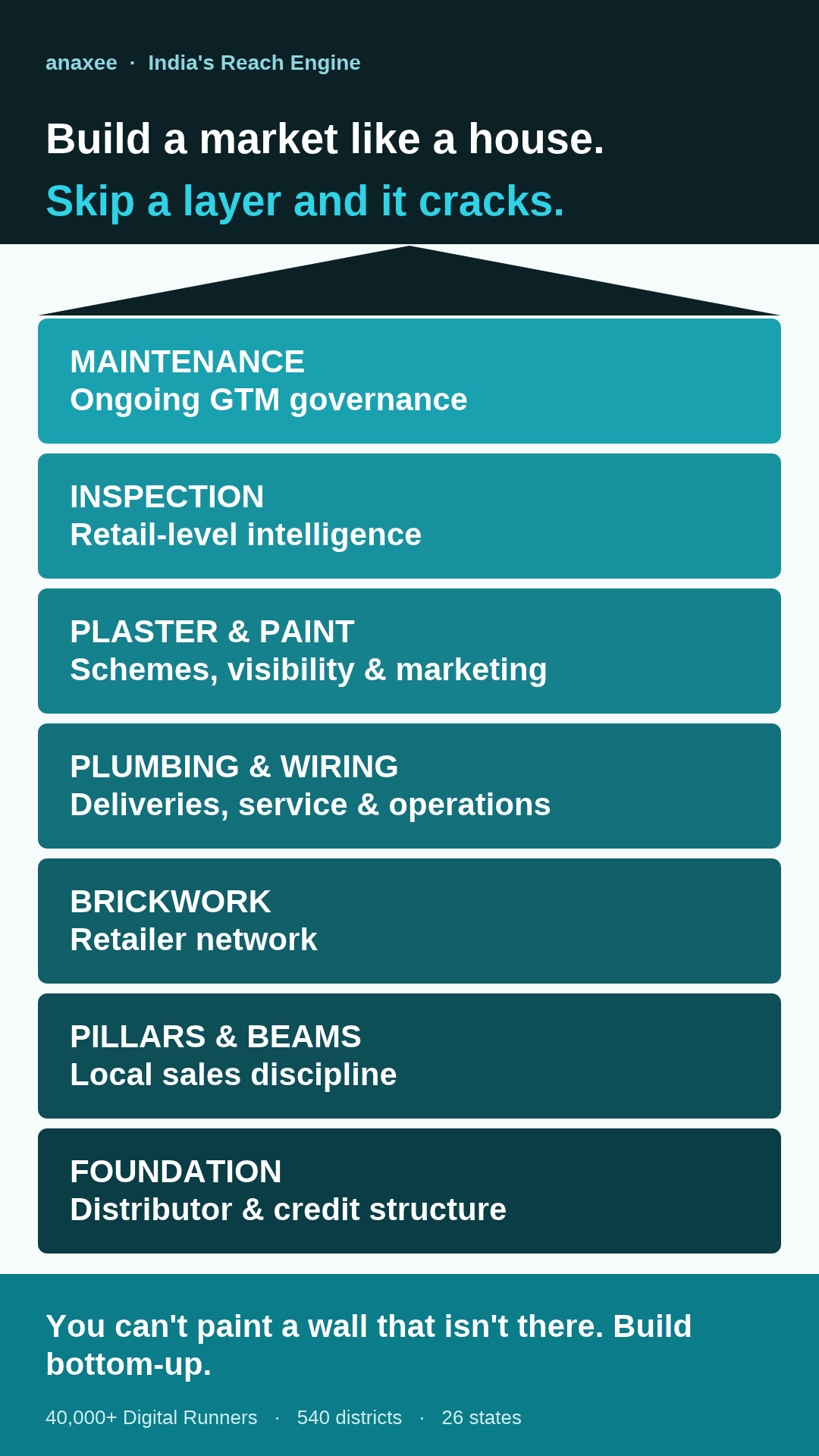
A market, like a house, is built bottom-up, and the order is not optional. Each layer depends on the one below it:

Anaxee infographic: build a market like a house, bottom-up. Foundation is distributor and credit structure; pillars and beams are local sales discipline; brickwork is the retailer network; plumbing and wiring are deliveries, service and operations; plaster and paint are schemes, visibility and marketing; inspection is retail-level intelligence; maintenance is ongoing GTM governance.
Build bottom-up. Each layer carries the one above it — skip one and it cracks where no one is looking.

You cannot paint a wall that is not there, and you cannot fix a cracked foundation by adding another coat of paint. When GTM fails, the fix is almost never more finishing — it is going back down to the layer that was skipped.

Campaign = a temporary shed. Managed = load-bearing.

A campaign can throw up something that looks like a building in a few weeks — a temporary shed. It photographs well and it does not survive the first real pressure. Managed GTM is the load-bearing version: built in sequence, inspected as it goes, and maintained after. One is quick and fragile; the other is slower and stands.

How Anaxee is the site supervisor

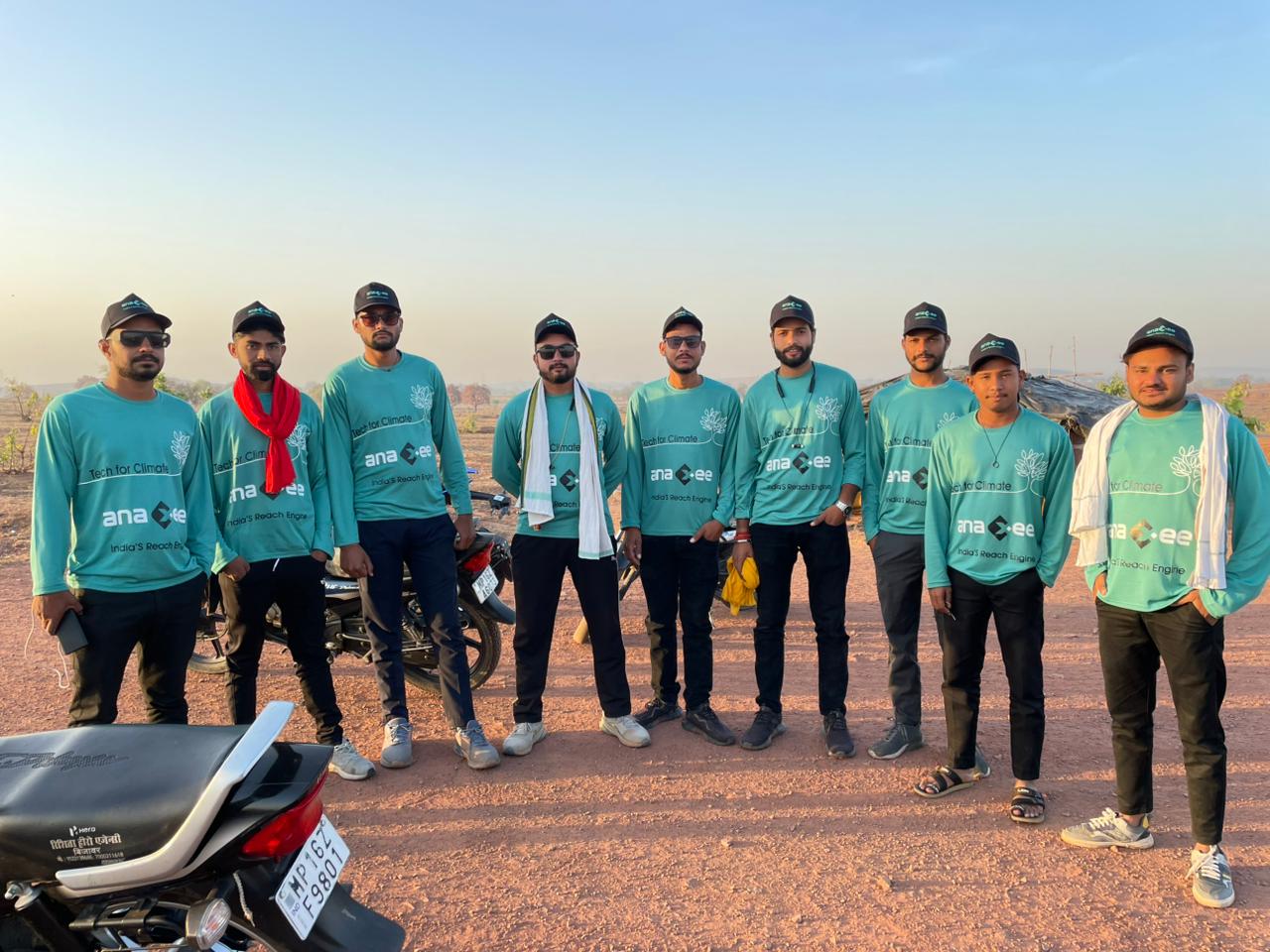
A building does not cheat physics because a supervisor enforces the sequence, catches the shortcuts and checks the hidden work. That is Anaxee’s role in GTM. India’s Reach Engine, a National Startup Award winner working with 350+ brands, maps the market and builds the beat in order, runs the field work across 540 districts, and — the inspection layer — verifies every visit with geo-tag, timestamp and AI photo-checks on a live dashboard, so the structure you are paying for is the structure you actually have.

AnaxeeWant a market that holds under pressure?

Anaxee runs consistent, tech-tracked GTM across 540 districts — and shows you the progress every week.

Book a meeting

Frequently asked questions

Why do go-to-market plans fail in India?
Most fail on sequence, not effort — brands spend on schemes, branding and visibility (the finishing) before the distributor structure, sales routine and fulfilment (the foundation and frame) are sound. It looks finished for a quarter, then cracks where no one is watching. Build bottom-up.
What is the right order of GTM steps?
Foundation first: distributor and credit structure, then local sales discipline, then the retailer network, then deliveries and service, then schemes and visibility, with retail-level inspection and ongoing governance throughout. Each layer depends on the one below it, so the order is not optional.
Our GTM looked fine then collapsed – what happened?
Usually a skipped layer failing under pressure — often the hidden work (deliveries, service, credit) or a distributor structure that was never load-tested with real retail data. The fix is rarely more marketing; it is going back to the layer that was rushed and rebuilding it.
How does Anaxee stop GTM from failing?
By acting as the site supervisor: mapping and building the beat in the right order, running verified field execution across 540 districts, and inspecting with geo-tag, timestamp and AI photo-checks on a live dashboard — so shortcuts and hidden failures are caught before they become a collapse. See managed GTM.

Campaign GTM vs Managed GTM: Why One-Time Pushes Don’t Compound

A campaign is a crash diet; managed GTM is training. Why one-time pushes spike and fade while continuous, tracked execution compounds – the honest comparison, and when a campaign still makes sense.

Quick answer: A campaign is a crash diet; managed GTM is training. A one-time push spikes and fades because retailer trust, data and routine do not compound in a burst — they compound only when execution is continuous and tracked. Here is the honest comparison, and when a campaign still makes sense.
AnaxeeAbout Anaxee

40,000+ Digital Runners · 540 districts · 26 states · 11,000+ pincodes of reach

★ Winner, National Startup Award (Govt. of India)Tech-tracked field executionTrusted by 350+ brands

Every brand has run the campaign version of go-to-market: a loud launch, a blitz of visits, a quarter of spend, and a graph that climbs and then quietly slides back. It is not that the effort was wrong. It is that a campaign and managed GTM are two different things, and most brands pay for the first while hoping for the results of the second.

The two ways brands go to market

Put them side by side and the difference stops being a matter of budget and becomes a matter of shape.

  Campaign GTM Managed GTM
Shape A spike that fades A line that compounds
Time horizon A few weeks to a quarter Ongoing, district by district
What you buy A burst of activity An owned execution loop
Retailer trust Resets every time you pause Builds visit on visit
Your data A one-time snapshot A live picture that keeps sharpening
Cost logic Looks cheaper, keeps re-earning lost ground Steady spend that holds the gains
Outcome Looks good on a slide Shows up in the numbers

The campaign is not cheaper; it only looks cheaper, because its cost is hidden in the ground it keeps losing and re-buying. The managed approach spends steadily and keeps what it builds.

Why the campaign feels right — and fails

A campaign is satisfying. It is visible, it has a start and an end, and it produces a spike you can put in a review. But a market compounds like a body: the moment the push stops, retailers forget the runner, shelf space drifts, and the distributor’s attention moves to whoever is still showing up. The next campaign then spends its first weeks re-earning ground the last one already paid for. That is the treadmill — motion without progress, and it is exactly why 90-day sales schemes keep failing.

Why managed GTM compounds

Managed GTM wins for one reason: it never gives the ground back. The same beats run every cycle, so trust stacks, data sharpens and routine turns a territory into a machine. None of it is dramatic in any single week. All of it is decisive by month twelve. Consistency is the whole mechanism — and it is exactly the thing a campaign, by definition, interrupts.

When a campaign is actually the right tool

To be fair: a burst has its place. A new-product launch, a festival push, a competitor response — these are real jobs a campaign does well. The mistake is treating the campaign as the whole GTM, instead of a spike layered on top of a steady base. Run the launch, by all means; just do not pull the base out from under it the following quarter. A spike on top of a rising line compounds. A spike on top of nothing is just noise.

How Anaxee runs the managed version

Anaxee — India’s Reach Engine, a National Startup Award winner working with 350+ brands — runs the steady base so your campaigns land on something solid: on-demand runners keeping a fixed beat across 540 districts, every visit geo-tagged and AI-checked, all of it on a live dashboard — on a pay-per-task model, so continuous no longer means a standing payroll.

AnaxeeWant a base worth launching on top of?

Anaxee runs consistent, tech-tracked GTM across 540 districts — and shows you the progress every week.

Book a meeting

Frequently asked questions

What is the difference between campaign GTM and managed GTM?
A campaign is a short, one-time push that spikes and fades. Managed GTM is a continuous, owned execution loop — planning, field work, measurement and weekly course-correction — that compounds retailer trust, data and routine district by district. One is a crash diet; the other is training.
Is a one-time GTM campaign ever worth it?
Yes, for a specific job — a launch, a festival push, a competitor response. The error is treating a campaign as your whole GTM. A spike layered on a steady base compounds; a spike on nothing just fades. Run the burst, but keep the base.
Isn’t continuous execution more expensive?
It looks more expensive and usually is not. A campaign hides its cost in the ground it loses and re-buys each cycle. Managed execution spends steadily and keeps the gains — and on a pay-per-task model you fund the beat you need without a fixed field payroll.
How do I move from campaigns to managed GTM?
Start with a steady beat in your priority districts, tracked on a dashboard, and layer campaigns on top of it rather than instead of it. Anaxee runs the base on-demand so you can start in one market and scale by evidence. See managed GTM.

Managed GTM: Your Sales Needs a Coach, Not Just Effort

Managed GTM is the difference between a gym membership and a coach with a programme – owned planning, verified execution, a live dashboard and weekly course-correction. What managed GTM really means in India.

Quick answer: Managed GTM is the difference between a gym membership and a coach with a programme. It is not just field manpower — it is owned planning, verified execution, a live dashboard and weekly course-correction, so your last-mile go-to-market actually compounds instead of stalling. Here is what managed really means, and where it starts and stops.
AnaxeeAbout Anaxee

40,000+ Digital Runners · 540 districts · 26 states · 11,000+ pincodes of reach

★ Winner, National Startup Award (Govt. of India)Tech-tracked field executionTrusted by 350+ brands

Most brands that say they have a GTM partner actually have a manpower vendor: bodies in the field, an activity report at month end, and no one owning the outcome. That is a gym membership. It gives you access to effort. It does not give you a programme, a coach, or progress you can measure. Getting a market fit needs the coach too.

Effort is not a programme

A field team you simply rent gives you reps with no plan behind them — and reps without a programme plateau. Managed GTM is the programme: someone owns what gets done, checks whether it worked, and changes the plan next week based on the evidence. The test is simple. If your head office still decides which districts, which retailers and which SKUs every week, you have assisted execution. If a partner owns that loop and you review outcomes, you have managed GTM.

You own

The strategy & the review

Which markets, which SKUs, the targets, the budget — and a weekly look at reach, execution gaps, velocity signals and distributor effectiveness. You steer; you do not firefight.

Anaxee owns

The execution loop

Route and coverage planning, field deployment, execution tracking, ground-level data validation, and the course-correction — run on our platform and network, so the day-to-day is off your plate.

What managed actually covers

Managed means the full loop runs on the outside — not a one-off project, but a cycle that repeats:

repeated every weekPlanmap & routeExecuterunners on groundMeasureverified dataCourse-correctre-route effort

Managed GTM is a loop, not a launch — and the loop runs whether or not you are watching.

  • Plan. Map every target outlet, class it, and build the beat — phased by market share so the biggest opportunity goes first.
  • Execute. On-demand runners cover the beat across 540 districts, taking orders, fixing issues, building distributor and retailer relationships.
  • Measure. Every visit verified — geo-tag, timestamp, photo, AI photo-checks — flowing to a live dashboard, not a monthly PDF.
  • Course-correct. Re-route effort, shift incentives, change the message — weekly, on evidence, before the numbers slip.

The coaching staff behind the programme

A coach is not one person — it is a team. Anaxee does not sell a fat-loss pill; it runs the whole ecosystem that keeps a market in shape:

The trainer

Feet-on-street discipline

Local Digital Runners imposing daily route discipline and a rigorous sales routine, market after market.

The nutritionist

Operations & delivery hygiene

The ops layer that keeps execution clean — deliveries, fulfilment and service discipline that every bit of selling effort depends on.

The health tracker

Tech platform & visibility

Ground-truth market data on a live dashboard — the AI-checked record of what is actually happening on the shelf.

The accountability partner

A no-excuses loop

Discipline enforced across distributors, sales teams and retailers — so the programme holds when head office is not watching.

Where managed GTM starts and stops

Being precise here builds trust. Managed GTM is an outsourced revenue-execution layer — it owns reach, coverage and the data loop. It is not a distributor replacement, not a DMS, not a consulting deck, and not manpower outsourcing. Anaxee does not take over your pricing, trade margins or distributor contracts; it makes the market visible and keeps the execution honest, so those decisions finally rest on retail truth instead of distributor narratives.

The tech and AI layer that makes it managed

Manpower alone cannot be managed at scale — you cannot course-correct what you cannot see. Anaxee — India’s Reach Engine, a National Startup Award winner working with 350+ brands — runs the loop on a platform built for it: every visit logged and verified, AI reading field photos to catch what does not add up, and a live dashboard that turns last-mile reality into something you can act on this week. That is the difference between hiring effort and buying a managed outcome.

AnaxeeWant the coach, not just the gym?

Anaxee runs consistent, tech-tracked GTM across 540 districts — and shows you the progress every week.

Book a meeting

The real question

Is your GTM a programme someone owns, or a pile of effort you keep having to supervise? Consistency is what builds a strong market; managed GTM is what makes consistency someone’s job instead of your headache. You set the direction and review the outcomes — Anaxee runs the reps.

Frequently asked questions

What is managed GTM?
Managed GTM is an outsourced revenue-execution layer: a partner owns the planning, field execution, measurement and weekly course-correction of your last-mile go-to-market, while you set strategy and review outcomes. It is a continuous loop, not a one-time campaign or a 90-day scheme, and it is tracked on a live dashboard.
How is managed GTM different from field sales outsourcing?
Field sales outsourcing gives you the runners — the effort. Managed GTM wraps that effort in a programme: owned route and coverage planning, verified execution, a dashboard and weekly course-correction. One is a gym membership; the other is a coach with a tracked programme. See field sales outsourcing.
What does managed GTM NOT include?
It is not a distributor replacement, not a DMS, not a consulting deck, and not plain manpower outsourcing. Anaxee does not control your pricing, trade margins or distributor contracts — it owns reach, coverage and the data loop, so your own decisions rest on retail truth.
How do we stay in control if a partner runs it?
You own strategy, targets and budget, and you get a live dashboard plus a weekly review of reach, execution gaps, velocity and distributor effectiveness. You steer with better information than you had before — you just stop managing the day-to-day field work.

Why Consistent Field Execution Beats One-Time Campaigns

One-time campaigns spike and fade. Consistent field execution – the same runners, the same beats, week after week – compounds into retailer trust, shelf presence and predictable secondary sales. Why always-on wins.

Quick answer: One-time campaigns spike and fade. Consistent field execution — the same runners, the same beats, week after week — is what compounds into retailer trust, shelf presence and predictable secondary sales. Here is why always-on beats one-time pushes, and how a tech-tracked network keeps the reps honest.
AnaxeeAbout Anaxee

40,000+ Digital Runners · 540 districts · 26 states · 11,000+ pincodes of reach

★ Winner, National Startup Award (Govt. of India)Tech-tracked field executionTrusted by 350+ brands

Ask any strong brand in Bharat how it got there and the honest answer is boring: it kept showing up. Not a louder launch, not a bigger quarter — the same runner walking into the same shops, week after week, for years. Go-to-market is a fitness journey, and consistency is the training. This is the piece brands keep underfunding, and it is the piece that actually compounds.

The stop-start brands lose to the always-on ones

Picture two brands in the same district. One runs a three-month blitz, then goes quiet to save budget, then blitzes again. The other just keeps a steady beat. On a slide the blitz looks more impressive. On the ground, it loses.

Market strengthTime →Consistent executionStop-start campaigns

Every pause is a reset. The brand that never stops pulls away.

Each time the stop-start brand pauses, retailers forget the runner, shelf space drifts to whoever is present, and the next push has to re-earn ground it already paid for. The always-on brand never gives that ground back, so every visit builds on the last instead of restarting. That gap is the whole story of who wins a market.

What consistent actually means on the ground

Consistency is not a slogan; it is a set of unglamorous habits, repeated:

  • A fixed beat, not random visits. The same outlets, on a planned cycle, so coverage is predictable and no shop is forgotten for months.
  • A familiar local face. A son or daughter of the soil the retailer recognises — trust transfers to the brand behind them.
  • Every issue closed. A wrong SKU, a pricing doubt, a pending replacement — followed up until done, because one broken promise undoes ten good visits.
  • Show up when the order is small. The visit that matters most is the one that does not pay off today. That is what tells a retailer you are staying.

Why one more visit compounds

Repeated execution stacks three things that a campaign cannot buy in a burst. Trust grows every time a promise is kept, and trust is what moves a product from stocked to recommended. Data gets sharper with every logged visit, so routes, SKUs and incentives get smarter instead of staying a guess. And routine turns a chaotic territory into a machine — the beat runs, the orders flow, secondary sales become something you forecast rather than hope for. None of these arrive on day thirty. All of them compound by month twelve.

How Anaxee keeps the reps honest

Consistency is hard to sustain and easy to fake — which is why it needs to be tracked, not trusted. Anaxee — India’s Reach Engine, a National Startup Award winner working with 350+ brands — runs an always-on field engine where every rep is verifiable:

  • On-demand runners, everywhere. 40,000+ across 540 districts and 11,000+ pincodes — keep a steady beat in one district or a thousand, without a standing payroll.
  • Proof on every visit. Geo-tag, timestamp and photos in the app, and AI reads the field photos to flag impossible locations, duplicates or too-fast visits — so a reported visit is a real one.
  • A live dashboard. Watch coverage, order flow and SKU presence as they happen; spot a district going quiet before it shows up in the numbers.
  • Pay per task. Fund the steady beat you actually need, scale it up or down by market, zero fixed cost.

AnaxeeWant a beat that never goes quiet?

Anaxee runs consistent, tech-tracked GTM across 540 districts — and shows you the progress every week.

Book a meeting

The takeaway

Campaigns feel like progress because they are loud. Consistency feels like nothing — until it is everything. The brands that own Bharat are not the ones that pushed hardest for a quarter; they are the ones that never stopped. If you want that, you need managed GTM: a tracked programme that keeps showing up whether or not head office is watching.

Frequently asked questions

Why is consistent field execution better than a big campaign?
A campaign spikes awareness and fades; consistent execution compounds trust, data and routine that a burst cannot buy. Each pause in a stop-start approach resets retailer memory and shelf space, so the next push re-earns old ground. Always-on never gives that ground back. It is the same reason 90-day sales schemes keep failing.
How often should field visits happen?
On a fixed beat suited to the channel — the point is predictability, not frequency for its own sake. The same outlets on a planned cycle, so no shop is forgotten for months and coverage is forecastable. Anaxee sets and tracks the beat per market.
How do you know the visits actually happened?
Every visit is geo-tagged, time-stamped and photographed in the app, and AI reads the photos to flag impossible locations, duplicates or too-fast visits for re-check. You see it all on a live dashboard — execution is verified, not reported.
Can we do this without a permanent field team?
Yes. Anaxee’s 40,000+ on-demand Digital Runners let you keep a steady beat on a pay-per-task model — the consistency of an in-house team without the fixed payroll. See field sales outsourcing.

GTM Is Not a Campaign – It’s a Fitness Journey

Go-to-market is not a campaign – it is a fitness journey. Why GTM is a slow, compounding, district-by-district process, why consistency beats one-time pushes, and why the gains reverse the moment you stop.

Quick answer: Go-to-market is not a launch or a quarterly push — it is a fitness journey. Like building strength, it compounds slowly through consistent, tracked effort: distributor health, sales discipline and retailer trust, built district by district. Stop showing up and the gains reverse. That is why GTM needs a managed, always-on field engine, not a campaign.
AnaxeeAbout Anaxee

40,000+ Digital Runners · 540 districts · 26 states · 11,000+ pincodes of reach

★ Winner, National Startup Award (Govt. of India)Tech-tracked field executionTrusted by 350+ brands

If someone sold you a pill for instant six-pack abs, you already know how that ends. Go-to-market works exactly the same way. Brands keep treating GTM like a campaign — a big launch, a burst of visits, a quarter of spend — and then wonder why the numbers sag the moment the push stops. GTM is not a campaign. It is a body you build, district by district, and it only gets strong with consistent training.

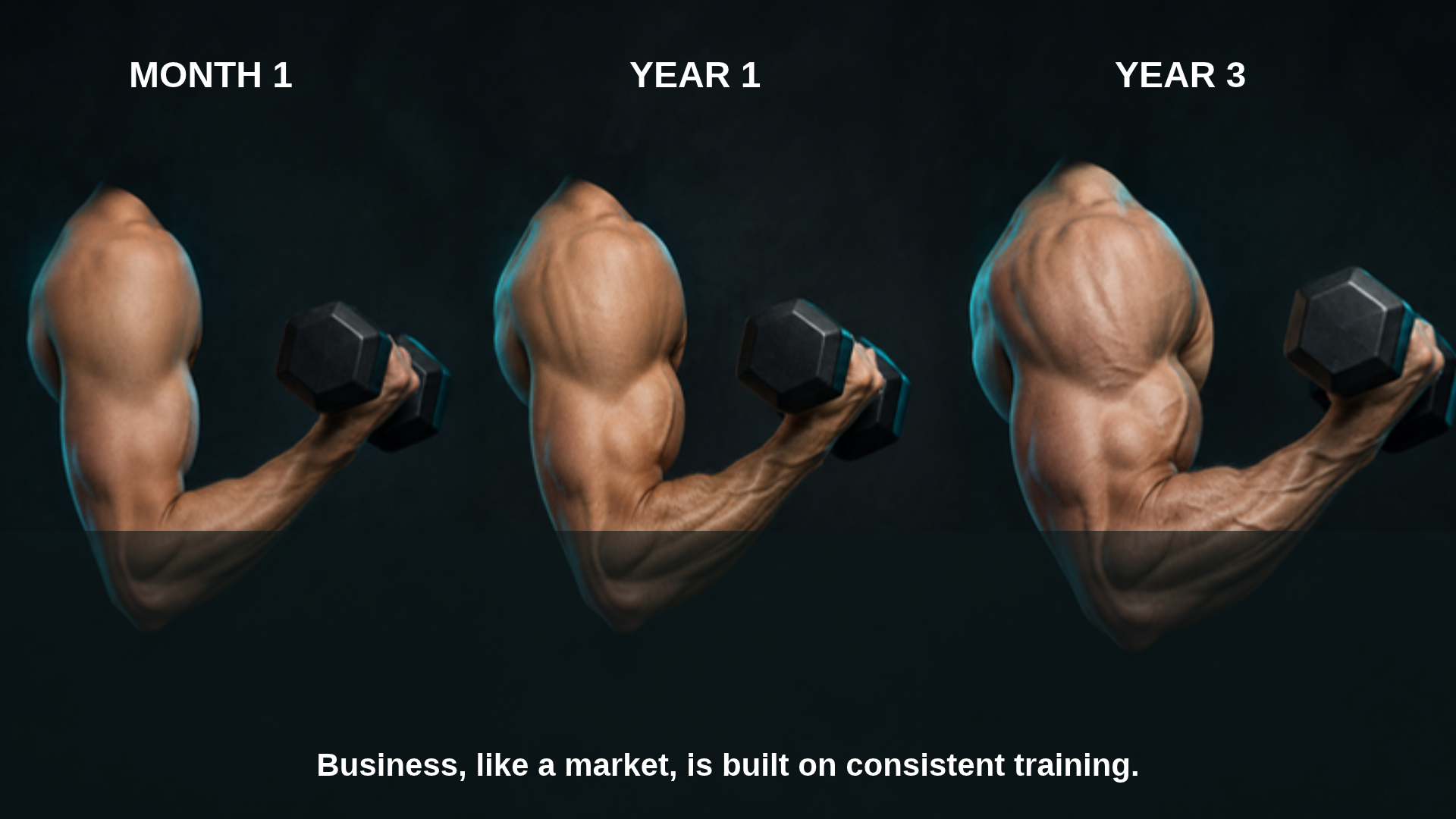
Three real muscular arms gripping dumbbells, growing progressively stronger from left to right - business, like muscle, is built through consistent training over time
Month 1, Year 1, Year 3 — muscle, like a market, is built by showing up. No shortcut, no quick fix.

Muscle is not built in a month

Nobody expects to walk into a gym and leave stronger that evening. Strength is the sum of hundreds of ordinary sessions, most of which feel like nothing is happening. Then one day the results are undeniable. A market behaves the same way: the first month of field work looks like very little, the first year builds real momentum, and by year three you are the brand the retailer reaches for first.

barely visiblemomentummarket leaderMonth 1Year 1Year 3

Same market, same effort — compounding returns, if you keep showing up.

The effort in month one and the effort in year three can look identical from the outside — a runner walking into a shop, taking an order, checking stock. What changes is everything underneath: the retailer now trusts you, the distributor now rotates your stock, the route now runs like clockwork. That is compounding, and it is the whole game.

The five systems that have to work together

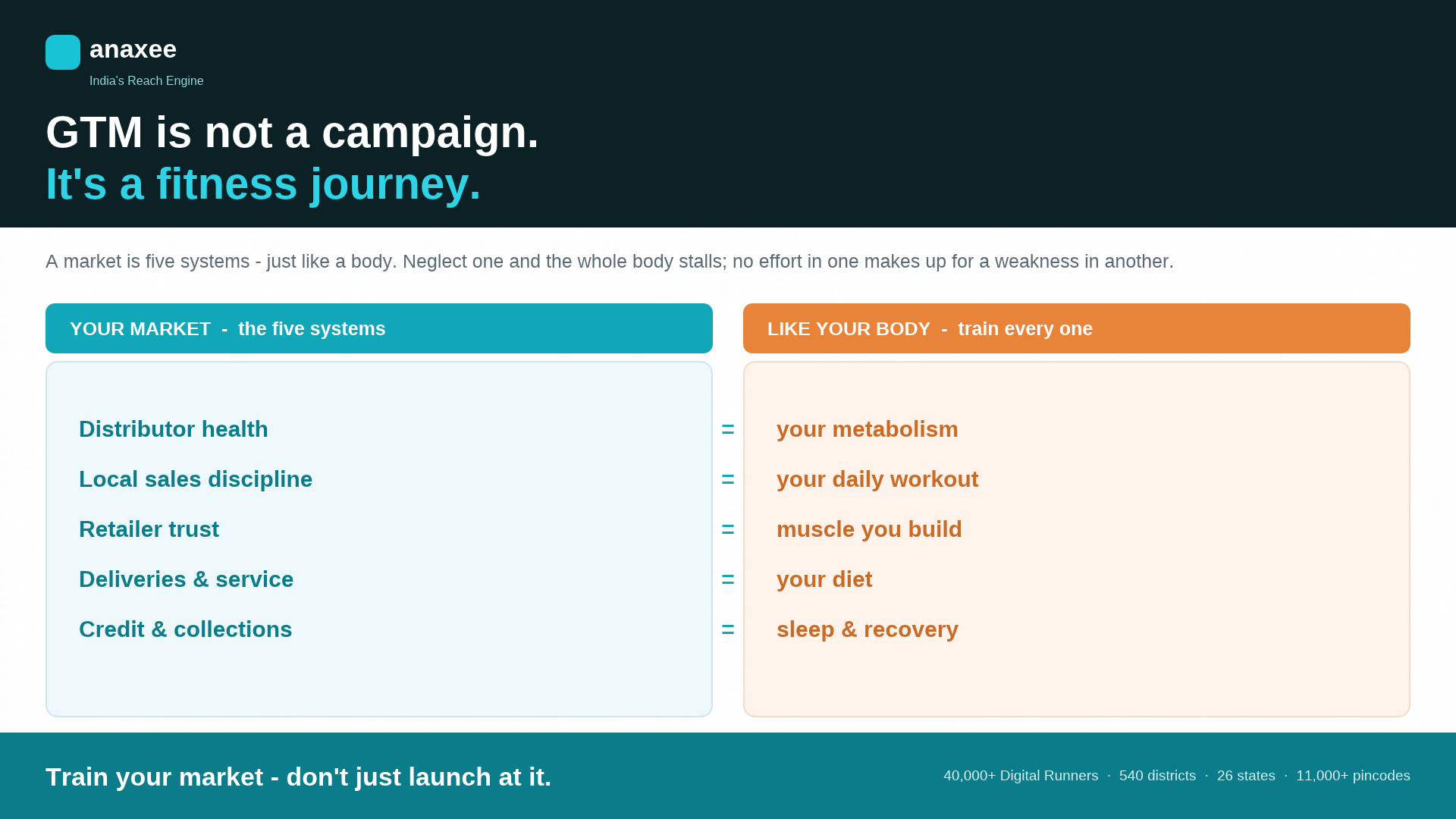
Here is why GTM cannot be rushed: like the body, a market is not one thing. It is five systems that each take time, and no amount of effort in one makes up for neglect in another.

Metabolism

Distributor health

Wrong incentives, credit misuse or slow stock rotation block everything downstream. Add a sales team on top of a broken distributor and results still will not show.

Daily workout

Local sales discipline

Beat plans, route discipline, retailer follow-ups, issue resolution. One intense push changes nothing; consistency does. Miss two or three weeks in a district and progress slides back.

Muscle building

Retailer trust

Built slowly, lost fast. Trust grows only when promises are kept repeatedly, problems are solved locally, and someone shows up even when the order is small.

Diet discipline

Deliveries and service

Late deliveries, partial fulfilment, wrong SKUs and inconsistent pricing quietly undo every bit of selling effort. You cannot out-train a bad diet.

Sleep and recovery

Credit and collections

Poor credit hygiene creates fragile growth and hidden defaults. Expansion without healthy recovery is how a strong-looking market quietly breaks down.

The point

They only work together

Fix one and ignore the rest and the body still does not change. A market gets strong only when all five improve, district by district, month after month.

Deliveries, logistics and fulfilment are the plumbing of a market — invisible while they work, and the moment they break, nothing else you built matters.

Anaxee infographic mapping a market’s five systems to the body: distributor health is metabolism, local sales discipline is the daily workout, retailer trust is muscle, deliveries and service is diet, credit and collections is sleep and recovery. Train your market, do not just launch at it.
A market is five systems — just like a body. Train all five, district by district.

The district-by-district timeline

Every district is its own training programme. You cannot copy-paste month twelve of one market onto day one of the next — each starts from its own baseline. But the shape of the journey is consistent:

Stabilise0–90 daysTrust builds3–6 monthsPredictable6–12 monthsCompounding12 months+
  • First 60–90 days — stabilise. Map every shop, fix the obvious distributor and credit leaks, get the beat running. Expect noise, not numbers.
  • 3–6 months — trust and visibility. Retailers start recognising your runner, orders get more regular, the dashboard starts telling the truth.
  • 6–12 months — predictable growth. Width and depth both climb; you can forecast a district instead of hoping.
  • 12 months+ — compounding advantage. Trust, data and routine stack up into a lead competitors cannot buy with a campaign.

Stop training, and the gains reverse

This is the part most brands get wrong. Pausing GTM to save cost is not saving — it is detraining. Skip the gym for three months and the muscle softens; pull your field team out of a district for a quarter and retailer trust cools, shelves empty, and the distributor quietly shifts attention to a brand that is still showing up. The worst part: you usually stop right when the compounding was about to show. Quitting early does not bank the savings; it forfeits the returns on everything you already spent. A 90-day sales scheme fails for the same reason — a quick fix cannot replace consistent training.

How Anaxee makes the training consistent

Consistency is hard precisely because it is boring and relentless. That is where a managed, tech-tracked field engine earns its place. Anaxee — India’s Reach Engine, a National Startup Award winner working with 350+ brands — runs the daily reps so your market keeps getting stronger whether or not head office is watching:

  • Runners who show up. 40,000+ on-demand Digital Runners across 540 districts and 11,000+ pincodes — a local face in each market, visit after visit.
  • Every rep logged. Each visit is geo-tagged, time-stamped and photographed in the app, and AI reads the field photos to flag visits that do not add up — so the training is real, not reported.
  • A live dashboard, not a monthly PDF. See coverage, order flow, SKU presence and distributor effectiveness as they happen, and re-route effort mid-month.
  • Pay per task, zero fixed cost. The platform and the network already exist — you get the discipline of an in-house field army without the standing payroll.
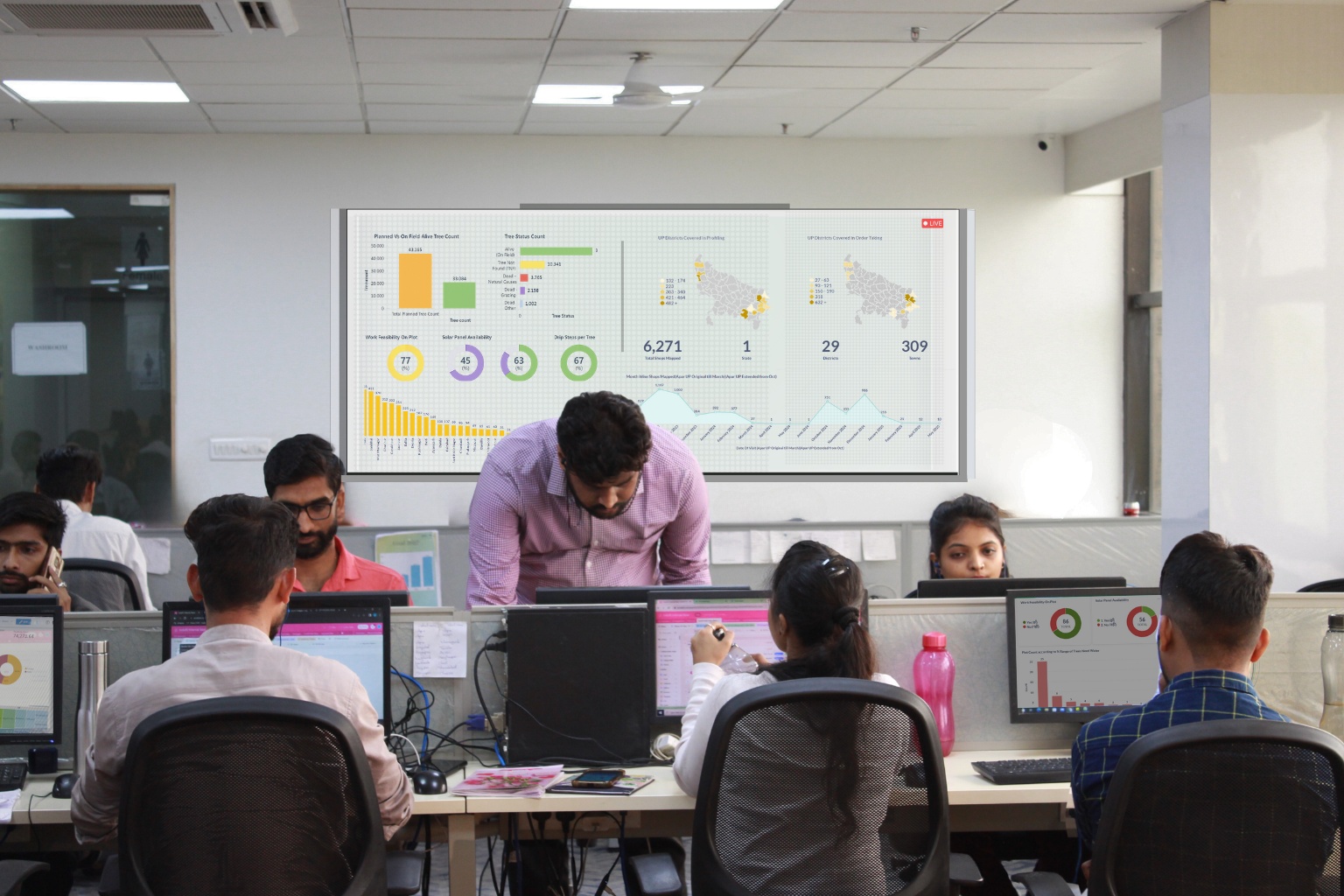
Anaxee command centre - a wall of live dashboards tracking field execution across India in real time
The Anaxee command centre — every visit, order and coverage gap on a live wall, not a month-end PDF.

AnaxeeReady to train your market, not just launch at it?

Anaxee runs consistent, tech-tracked GTM across 540 districts — and shows you the progress every week.

Book a meeting

The real question

Are your numbers limited by what the market can give — or by the fact that no one is in the gym when head office stops watching? Campaign GTM looks good on a slide and fades on the ground. Managed GTM is the load-bearing version: built in sequence, trained consistently, measured honestly. That is how a market gets strong and stays strong.

Frequently asked questions

How long does go-to-market really take in India?
Plan in quarters, not weeks. A single district typically needs 60–90 days to stabilise, 3–6 months to build retailer trust, and 6–12 months before growth is predictable. Compounding advantage shows after a year of consistent execution. Multi-state rollouts are phased district by district by market share.
Why is GTM a slow, long-term process and not a one-time project?
Because a market is five systems — distributor health, sales discipline, retailer trust, fulfilment and collections — that each take time and only compound when worked together. Like fitness, there is no shortcut that skips the reps, and the results arrive after the effort, not during it.
What happens if we pause GTM to cut costs?
The gains reverse, the same way muscle softens when you stop training. Retailer trust cools, shelf presence drops and distributors shift focus to brands still showing up — usually right when the compounding was about to pay off. Pausing forfeits the return on what you already invested.
How is this different from just hiring a field sales team?
A gym membership is not a coach. A raw field team gives you effort; managed GTM gives you a tracked programme — planning, verified execution, a live dashboard and weekly course-correction — on a pay-per-task model with no standing payroll. See also field sales outsourcing.
How much does managed GTM cost in India?
There is no standing payroll to carry. Anaxee runs on a pay-per-task model — the 40,000+ Runner network, the app and the dashboard already exist, so you pay for visits and outcomes, not for idle field headcount. Cost scales with the districts and the depth of coverage you want; book a call for a plan against your footprint.
Which industries does Anaxee’s managed GTM work for?
Non-FMCG brands that sell through distribution and retail — agritech and farm inputs, automotive and after-market, electronics, and home and consumer-durable brands. Anaxee has run field execution for names like Udaan, Escorts, APAR Industries, AgroStar and DeHaat across semi-urban and rural India.
How do you prove the field work actually happened?
Every visit is geo-tagged, time-stamped and photographed in the Runner app, and AI reads the field photos to flag anything that does not add up. You watch coverage, orders and gaps on a live dashboard — so execution is verified, not just reported.

Loyal Textiles Sustainable Cotton — Organic (GOTS), BCI & Fairtrade

In short: Loyal Textile Mills is a Tamil Nadu-based, fully vertically integrated composite textile group (spinning, weaving, knitting, dyeing and garments) and one of India’s largest cotton-fabric exporters. In sustainable cotton it holds one of the deepest certification stacks of any Indian mill — GOTS and OCS (organic), Better Cotton (BCI), Fairtrade (FLOCERT), Cotton made in Africa (CmiA) and GRS (recycled) — across cotton, yarn, dyed fabric and garments. This page is an independent public reference compiled from Loyal’s own published disclosures.
At a glance — Loyal Textiles’ sustainable cotton
Vertically integrated composite mill (Tamil Nadu) · India’s largest cotton-fabric exporter · organic (GOTS/OCS), BCI, Fairtrade, CmiA, recycled (GRS) · OEKO-TEX / SA-8000
Organic (GOTS / OCS)Better Cotton (BCI)Fairtrade (FLOCERT)CmiARecycled (GRS)

If you are researching how India’s large vertically integrated mills approach sustainable cotton, Loyal Textiles is a leading example — a composite group that spins, weaves, knits, dyes and garments under one roof, and certifies that chain against an unusually broad set of sustainable-cotton standards. Below is a factual reference — who Loyal is in sustainable cotton, the schemes it uses, and what it publishes — drawn entirely from Loyal’s own disclosures. We also explain, honestly, where an independent field-and-verification partner like Anaxee fits.

Who Loyal Textiles is in sustainable cotton

Loyal Textile Mills Limited (the Loyal Group) is one of India’s largest composite textile mills, headquartered in Tamil Nadu, with four spinning mills, two weaving units, a knitting unit, a dyeing house and seven garment units, plus trading arms including a joint venture in Italy. It exports to 40+ countries, with the large majority of revenue from exports, and states it is India’s largest exporter of cotton fabrics (Texprocil Gold Trophy thirteen years running from 2006-07).

Its sustainable-cotton model is that of a vertically integrated buyer and manufacturer: it selects and buys cotton (from India, Egypt, the USA and Israel), then spins, weaves, dyes and garments it, certifying the output against sustainable-cotton standards — rather than running its own named farmer programme. Its stated vision is to support “sustainable environment-friendly processes right from cotton cultivation to product distribution.”

The sustainable-cotton schemes Loyal uses

Loyal’s certification disclosures name several sustainable-cotton standards it certifies against. Each is distinct, with different rules and different claim strength:

Scheme What it is Loyal’s public role
Organic cotton (GOTS / OCS) Cotton grown without synthetic fertilisers, pesticides or GMO seed; certified at farm level and traceable through the supply chain. GOTS-certified across cotton, yarn, dyed fabrics and garments, plus the Organic Content Standard (OCS) (Loyal disclosure).
Better Cotton (BCI) A mass-balance farm programme training growers in better practices; volumes are tracked, fibre is not traced to a specific farm. A Better Cotton (BCI) certified manufacturer (Loyal).
Fairtrade cotton (FLOCERT) Cotton bought on Fairtrade terms (a minimum price plus a premium to farmer organisations), audited by FLOCERT. Holds Fairtrade / FLOCERT certification (Loyal).
Recycled (GRS) & CmiA Recycled fibre under the Global Recycled Standard; Cotton made in Africa supports African smallholder cotton. Holds GRS and CmiA certification among its credentials (Loyal).

Scheme descriptions: Better Cotton / Textile Exchange / Fairtrade / Aid by Trade Foundation. Loyal roles: Loyal Textiles certification disclosures.

What Loyal publishes

These are drawn from Loyal’s own disclosures, each attributed to its source:

  • One of the deepest sustainable-cotton cert stacks of any Indian mill — GOTS, OCS, BCI, Fairtrade (FLOCERT), CmiA and GRS — plus OEKO-TEX and SA-8000 (Loyal).
  • Fully vertically integrated — spinning, weaving, knitting, dyeing and garments under one group — so a single order can be certified end to end (Loyal).
  • India’s largest cotton-fabric exporter (Texprocil Gold Trophy 13 years running), exporting to 40+ countries (Loyal).
  • Environmental management: first vertically integrated mill in Asia certified to an Integrated Management System (ISO 9001/14001/45001), plus ISO 14064 (GHG), carbon-footprint certification and an IGBC green building; future focus on recycled polyester and water-frugal dyeing (Loyal).
Why figures vary: Loyal certifies cotton against many standards at once (organic, BCI, Fairtrade, CmiA, recycled). Each is a different claim with different rules, so when comparing companies, check which certification sits behind a specific order rather than reading the full certificate wall as a single guarantee.

Why Loyal is a useful benchmark

Loyal shows the vertically integrated composite-mill model: by owning every stage from spinning to garments, it can certify a sustainable-cotton order end to end, which is exactly what large export buyers ask for. That integration is a real strength — but it also means each cotton claim still rests on the certification upstream, and on what can actually be verified about where the fibre came from.

Where an independent field & verification layer fits

Anaxee is not affiliated with Loyal Textiles, and Loyal runs its own sourcing. But Loyal makes the point: a mill offering organic, BCI or Fairtrade cotton depends on what happened upstream on the farm — and default programmes often track volume, not origin. For mills, spinners and brands that want independent assurance of what is actually happening in the field, Anaxee is the independent, tech-enabled field-execution and verification layer — reaching cotton farmers at scale, running the recurring season work, and producing geo-tagged, timestamped, photo-backed ground-truth to stand behind a claim.

Anaxee has no cotton to sell, so its data has nothing to flatter. It is not a Better Cotton member, not a certification body, and does not buy or sell cotton — it is the field and verification partner underneath the programme. Explore the model: cotton supply-chain verification · farm-to-gin traceability · Better Cotton field & verification partner.

Buying or defending a sustainable-cotton claim? If you need independent field execution and on-ground verification across India’s cotton belt — the recurring, season-by-season work behind the claim — let’s talk.

Talk to AnaxeeSee cotton verification

FAQ

Does Loyal Textiles make organic cotton?
Yes. Loyal is GOTS- and OCS-certified for organic cotton across cotton, yarn, dyed fabrics and garments, and also holds Better Cotton (BCI), Fairtrade, CmiA and GRS certification. See the full list of Better Cotton members in India.
What sustainable-cotton certifications does Loyal hold?
Per its disclosures, Loyal holds GOTS, OCS, Better Cotton (BCI), Fairtrade (FLOCERT), CmiA, GRS, OEKO-TEX and SA-8000. Each covers a different claim — check the standard before treating them as equivalent. For how organic, Better Cotton and regenerative differ, see organic vs Better Cotton vs regenerative cotton.
Is Loyal vertically integrated?
Yes. Loyal operates spinning, weaving, knitting, dyeing and garment units within one group, so a sustainable-cotton order can be certified and produced end to end. It describes itself as India’s largest cotton-fabric exporter.
Can Loyal trace its cotton to the farm?
Loyal selects and buys certified cotton rather than running its own farmer programme, so traceability depends on the scheme and chain of custody upstream. Default Better Cotton uses a mass-balance model where fibre usually can’t be traced to origin — so firm ‘traceable to farm’ claims are worth verifying in the field.
Is Anaxee connected to Loyal Textiles?
No. This page is an independent public reference compiled from Loyal’s own published disclosures. Anaxee is not affiliated with, endorsed by, or a vendor to Loyal Textile Mills Limited. Loyal is used here only as a well-documented public example of sustainable-cotton work in India.
Public reference — not affiliated. This profile is compiled from Loyal Textile Mills Limited’s own publicly available disclosures (including its certification and overview pages), plus Better Cotton, Textile Exchange, Fairtrade and Aid by Trade Foundation definitions, and is provided for informational reference only. Anaxee Digital Runners is not affiliated with, endorsed by, sponsored by, or a vendor to Loyal Textile Mills Limited, and makes no claim of any business relationship. All trademarks and figures belong to their respective owners; figures are as reported by the named sources and may change. Nothing here is investment, legal or compliance advice.