In short: Two Indian regimes decide when a company must produce independent, field-level social and environmental evidence. CSR under Section 135 of the Companies Act requires qualifying companies to spend 2% of average net profit and, once large, to get big projects independently impact-assessed (Rule 8(3)). SEBI’s BRSR Core requires reasonable assurance on key ESG KPIs, phasing from the top 150 listed companies to the top 1,000 by FY2026-27, with value-chain partners coming into scope. This page lays out who is covered and when — and where the field-data burden actually falls. Confirm the current thresholds against MCA and SEBI, which revise them.
At a glance — the compliance timeline
CSR: 2% of avg net profit (Section 135) · independent impact assessment for large projects (Rule 8(3)) · BRSR Core assurance: top 150 (FY24) → 250 → 500 → top 1,000 (FY27) · value chain in scope FY26-27
Section 135 CSRRule 8(3)SEBI BRSR CoreValue chain
If you sit in a CSR, sustainability, ESG or company-secretary role, two separate rulebooks increasingly ask the same thing of you: independent, verifiable evidence from the field, not a self-reported number. One is the CSR regime under the Companies Act; the other is SEBI’s ESG-disclosure regime for listed companies. They have different triggers and timelines, and it helps to see them side by side. This is a plain-language reference — who is covered, what is required, and by when — followed by the part most teams underestimate: where the data actually has to come from.
CSR under Section 135 of the Companies Act
A company is covered by the CSR provisions if, in the immediately preceding financial year, it meets any one of these tests:
Trigger test (any one)
Threshold
Net worth
₹500 crore or more
Turnover
₹1,000 crore or more
Net profit
₹5 crore or more (a 2026 amendment to raise this has been proposed — confirm the current figure with MCA)
A covered company must spend 2% of the average net profit (computed under Section 198) of the three preceding financial years on CSR activities drawn from Schedule VII, govern it through a CSR committee and policy, and report it in the Board’s Report and Form CSR-2. Permitted activities include education, health, environmental sustainability, rural development, livelihoods and agroforestry — which is why so many farmer and agriculture programmes are run as CSR.
The independent impact-assessment trigger (Rule 8(3))
Beyond spending, large CSR has to be independently evaluated. Under Rule 8(3) of the CSR Rules, a company whose CSR obligation is ₹10 crore or more must have its large projects (outlay of ₹1 crore or more, completed not less than a year earlier) assessed for impact by an independent agency — one that is not the agency implementing the project. The assessment is annexed to the Board’s Report. The independence requirement is the key point: a programme cannot credibly grade its own homework.
SEBI BRSR & BRSR Core — the assurance glide path
Separately, SEBI requires the Business Responsibility and Sustainability Report (BRSR) from the top 1,000 listed companies by market capitalisation. On top of the full report, a focused set of KPIs — the BRSR Core — must carry independent reasonable assurance, phasing in by company size:
Financial year
BRSR Core reasonable assurance applies to
FY2023-24
Top 150 listed companies by market cap
FY2024-25
Top 250
FY2025-26
Top 500
FY2026-27
Top 1,000
From FY2026-27, the framework also brings the value chain into scope — ESG data for upstream and downstream partners that each account for 2% or more of purchases or sales, on the BRSR Core attributes. SEBI sets and has revised these timelines and the exact basis (assessment vs assurance), so confirm the current position for your company against SEBI’s latest circulars.
Where the burden actually falls
Put the two regimes together and a pattern appears: the hardest requirements are the ones that need primary evidence from places a head office cannot reach. A CSR impact assessment of a farmer programme means visiting the farms. A BRSR value-chain KPI means getting real data out of a supplier with no ESG system. These are not desk tasks:
CSR impact assessment — independent beneficiary, asset and outcome verification across the project footprint (Rule 8(3)).
BRSR value-chain & social KPIs — primary data from suppliers, farms and communities that no ERP holds.
Both — evidence that is geo-tagged, timestamped and auditable, so it survives an assessor’s or assurer’s scrutiny.
The honest distinction: Anaxee is the independent field-data and verification layer that produces this ground truth. It is not your BRSR assurance provider, not your CSR implementing agency, and not a substitute for your auditor — it is the layer underneath them, so what they sign off rests on real evidence rather than an unsupported number.
Where Anaxee fits
Anaxee runs an independent, tech-enabled field network across 540 districts, 11,000+ pincodes and 26 states — built to collect and verify exactly the data these rules now demand: geo-tagged, photo-backed, AI-checked, on a live dashboard. Whether the trigger is a Rule 8(3) impact assessment, a BRSR value-chain KPI, or a funder’s third-party monitoring, the field evidence is the same, and it is what Anaxee produces.
Working out what you have to evidence this year? If a CSR impact assessment or a BRSR value-chain KPI needs independent field data, let’s talk about putting it in place before the deadline.
Which companies have to do a CSR impact assessment?
Under Rule 8(3), a company with a CSR obligation of ₹10 crore or more must have its large projects (outlay of ₹1 crore or more, completed at least a year earlier) independently assessed for impact by an agency other than the implementer. See our CSR impact assessment page for detail.
When does BRSR Core assurance apply to my company?
Reasonable assurance on the BRSR Core phases in by market capitalisation — top 150 listed companies from FY2023-24, then top 250, top 500, and the top 1,000 by FY2026-27. Confirm current applicability with SEBI’s latest circulars. See BRSR value-chain verification.
What is the CSR applicability threshold?
A company is covered if, in the preceding financial year, it had a net worth of ₹500 crore or more, turnover of ₹1,000 crore or more, or net profit of ₹5 crore or more (a 2026 amendment to raise the profit figure has been proposed — confirm the current threshold with MCA). Covered companies spend 2% of average net profit on CSR.
Is BRSR the same as CSR?
No. CSR (Section 135, Companies Act / MCA) is about spending 2% on social activities and assessing impact. BRSR (SEBI) is an ESG disclosure for listed companies, with assurance on the BRSR Core KPIs. They are different regimes that increasingly demand the same thing: independent field evidence.
Does Anaxee handle the compliance filing or assurance itself?
No — Anaxee provides the independent field data and verification that sits underneath compliance. Your assurance provider, auditor and company-secretary team handle the filings and sign-offs; Anaxee gives them real, geo-tagged ground truth to work from. This is not legal or compliance advice.
Where Anaxee fits. Anaxee implements CSR and social projects on the ground, end to end, with 40,000+ trained local field executives across 540 districts. In Project Swaraksha the same network counselled 29.8 lakh rural citizens door to door across 19 states. Where a funder asks, Anaxee also checks on the ground that work done by others was executed. Anaxee does not do impact assessment.
Informational reference — not legal or compliance advice. This page summarises the direction of India’s CSR (Companies Act Section 135 and the CSR Rules, including Rule 8(3)) and SEBI BRSR / BRSR Core frameworks for general information. Thresholds, timelines and the basis of assurance or assessment are set by the Ministry of Corporate Affairs and SEBI and have been revised over time — some changes are proposed but not yet in force. Confirm the current applicability for your company against the latest MCA and SEBI notifications and your own advisors. Anaxee Digital Runners provides independent field data collection and verification; it is not a regulated assurance provider and does not issue compliance opinions.
Which companies spend the most on CSR in India? The biggest spenders – HDFC Bank, Reliance, TCS – the top-10 share of national CSR, and the PSU vs private split, from government data.
In short: India’s CSR is as concentrated by company as it is by geography. In FY2023-24, HDFC Bank (₹907 Cr) and Reliance Industries (₹899 Cr) led, and the top 10 companies accounted for about 16% of all CSR. Private (non-PSU) firms outspend public-sector units 6.4 to 1. Provisional FY2024-25 data puts Reliance first at around ₹1,310 crore. Here are the biggest CSR spenders – and what their scale means for how their programmes get verified.
At a glance – top CSR spenders
FY23-24 leaders: HDFC Bank ₹907 Cr, Reliance ₹899 Cr, TCS ₹813 Cr · top 10 ≈ 16% of national CSR · Non-PSU vs PSU = 6.4x · source: MCA / PRIME Database
A handful of banks, energy majors and IT firms carry a large share of India’s CSR. The concentration matters for more than a league table: the biggest spenders run the biggest, most dispersed programmes – across hundreds of districts and lakhs of beneficiaries – which are precisely the programmes that are hardest to verify and most exposed under the independent-assessment rules. Here is who spends the most, from the government data. For the full national picture by state and sector, see our CSR spending in India hub.
Which companies spend the most on CSR?
In FY2023-24 – the latest year with the full all-company breakdown from the National CSR Portal – the top 10 spenders were:
Rank
Company (FY2023-24)
CSR spent (₹ Cr)
1
HDFC Bank
907
2
Reliance Industries
899
3
Tata Consultancy Services
813
4
ONGC
612
5
Tata Steel
573
6
Infosys
451
7
Indian Oil Corporation
436
8
ITC
380
9
ICICI Bank
368
10
Power Grid Corporation
338
Together these ten companies spent about ₹5,777 crore – roughly 16% of all CSR in the country – concentrated in banking, energy and technology.
The FY2024-25 picture
Provisional FY2024-25 figures for NSE main-board companies show the same names, with the gap at the very top widening as Reliance pulls ahead.
Company (FY2024-25, provisional)
CSR spent (₹ Cr)
Reliance Industries
1,310
HDFC Bank
1,068
Tata Consultancy Services
960
ONGC
929
ICICI Bank
801
Tata Steel
585
Indian Oil Corporation
583
Infosys
526
These FY2024-25 figures are on an NSE-listed basis and are not directly comparable with the all-company totals above, but the direction is clear: the largest programmes are getting larger.
PSU versus private CSR
Despite high-profile public-sector spenders like ONGC, Indian Oil and Power Grid, private companies dominate. In FY2023-24, non-PSU companies spent ₹31,092 crore against ₹4,826 crore for PSUs – a ratio of about 6.4 to 1. The private sector is now the primary engine of CSR-funded development in India.
Why this matters for verification: a ₹900-crore CSR programme is not one project – it is hundreds, scattered across the country. For a board signing off on that spend, and for the independent assessor the law now requires, the hard part is not the report – it is confirming that each of those projects exists and performed, on the ground.
Big CSR programmes need independent field verification
Under Rule 8(3) of the CSR Rules, a company with a CSR obligation of ₹10 crore or more must have its large projects independently assessed – by an agency that is not the implementer. Every company in the tables above clears that bar many times over. The larger and more dispersed the programme, the more it needs a verification partner that can actually reach every site.
Scale to match – a field network across 540 districts, 11,000+ pincodes and 26 states, built for nationwide programmes. See field coverage.
Independent and conflict-free – Anaxee does not implement the programmes it verifies, as Rule 8(3) requires.
Board- and auditor-ready – geo-tagged, timestamped evidence and structured data for BRSR and impact reporting.
Running a large, multi-state CSR programme? Let’s put independent, geo-tagged field verification behind it – for Rule 8(3) impact assessment, project verification or ESG field data.
What do top CSR companies actually fund? CSR Atlas profiles each company from its own filings: five years of spend, projects, partners and impact results. See Infosys, Mahindra and UltraTech Cement.
Frequently asked questions
Which company spends the most on CSR in India?
In FY2023-24, HDFC Bank led at ₹907 crore, just ahead of Reliance Industries at ₹899 crore, with TCS third. Provisional FY2024-25 data puts Reliance first at around ₹1,310 crore.
How much do the top companies spend on CSR?
The top 10 companies together spent about ₹5,777 crore in FY2023-24 – roughly 16% of all CSR in India – led by banking, energy and IT firms.
Do PSUs or private companies spend more on CSR?
Private (non-PSU) companies spend far more – ₹31,092 crore versus ₹4,826 crore for PSUs in FY2023-24, a ratio of about 6.4 to 1 – though PSUs like ONGC and Indian Oil are among the largest individual spenders.
How much are companies required to spend on CSR?
Under Section 135 of the Companies Act 2013, qualifying companies must spend at least 2% of their average net profit of the preceding three financial years on CSR.
Where does company-wise CSR data come from?
FY2023-24 all-company figures are from the Ministry of Corporate Affairs’ National CSR Portal (Section-135 / AOC-4 disclosures). The provisional FY2024-25 NSE-listed figures are from PRIME Database and are on a different basis.
Where Anaxee fits. Anaxee implements CSR and social projects on the ground, end to end, with 40,000+ trained local field executives across 540 districts. In Project Swaraksha the same network counselled 29.8 lakh rural citizens door to door across 19 states. Where a funder asks, Anaxee also checks on the ground that work done by others was executed. Anaxee does not do impact assessment.
Data note. FY2023-24 company and PSU figures are from the Ministry of Corporate Affairs’ National CSR Portal (csr.gov.in), all-company Section-135 basis. FY2024-25 company figures are provisional, on an NSE main-board basis (PRIME Database), and are not directly comparable to the all-company totals. All amounts in ₹ crore. Compiled by Anaxee Digital Runners.
Where does India’s CSR money actually go? Sector-wise FY2024-25 data from the National CSR Portal – Education and Health take 55%, the whole climate cluster under 10%. The full breakdown.
In short: India’s CSR money is far narrower than Schedule VII allows. In FY2024-25, Education (₹13,877 Cr) and Health Care (₹8,531 Cr) together took 55% of all CSR. The entire climate-and-environment cluster came to under 10%, and genuinely future-facing heads – technology incubators, slum development, orphanages – drew next to nothing. This is the full sector-wise breakdown from the National CSR Portal, and why the biggest verification gap sits in the hardest-to-reach sectors.
At a glance – CSR by sector
Education + Health = 55% (₹22,408 Cr) · Environment cluster < 10% · Technology incubators ≈ ₹0 · FY2024-25, reconciles to ₹40,794 Cr · source: MCA National CSR Portal
Schedule VII of the Companies Act lists everything CSR is allowed to fund – education, health, poverty, gender, environment, rural development, sports, technology incubation and more. In practice, companies cluster around a few safe, high-visibility causes. The result is a development portfolio that is heavy on social infrastructure and strikingly light on climate, innovation and the hardest social problems. Here is where every CSR rupee actually went in FY2024-25. For the national picture across states and companies, see our CSR spending in India hub.
What does CSR money fund? The sector breakdown
Education and Health Care alone absorb 55% of all CSR. After them, spending drops off sharply into environment, livelihoods and rural development, then into a long tail of smaller heads.
The tail of the table is as telling as the top. In FY2024-25, technology incubators received effectively nothing, slum-area development drew about ₹38 crore, and setting up homes, hostels and orphanages a few crore each. The whole climate-and-environment cluster – environmental sustainability, conservation of natural resources and agro-forestry combined – came to roughly ₹3,911 crore, under 10% of all CSR, even as climate risk rises up every corporate agenda. For companies routing environmental work through CSR, this is open space: agro-forestry, plantation and nature-based programmes are under-funded and, when funded, notoriously hard to verify. That is where Anaxee’s climate and plantation geo-tagging work sits.
Why the sector mix is a verification problem
The sectors that are easiest to photograph – a classroom, a hospital wing – are also the easiest to verify. The sectors with the widest footprint – rural development, livelihoods, agriculture, environment – are spread across thousands of farms and villages, which makes them the hardest to check and the most exposed to leakage and over-reporting. These are exactly the programmes Rule 8(3) requires to be independently assessed once a project crosses ₹1 crore, and exactly where a desk-based assessor cannot go.
The honest framing: a school audit is straightforward. Verifying that 40,000 farmers were trained, or that a plantation across 300 villages actually survived, is a field problem at national scale – and that is precisely what Anaxee’s Digital Runner network is built to do.
Sector-agnostic field reach – education, health, livelihood, plantation or rural programmes verified across 540 districts and 11,000+ pincodes.
Geo-tagged, AI-checked evidence – timestamped, location-stamped capture that stands up to an auditor or a board.
Funding a programme in a hard-to-verify sector? Agriculture, livelihoods, plantation or rural development – let’s put independent, geo-tagged field evidence behind it.
See the projects, not just the sector totals. CSR Atlas lists what companies funded in each theme, with place, partner and result. Start with water conservation or climate and environment.
Frequently asked questions
What sectors does CSR money go to in India?
Education and Health Care dominate, together taking 55% of all CSR (₹13,877 Cr and ₹8,531 Cr in FY2024-25). Environmental sustainability, livelihood enhancement, rural development and vocational skills follow at a distance.
How much CSR goes to the environment and climate?
The whole climate-and-environment cluster – environmental sustainability, conservation and agro-forestry – was about ₹3,911 crore in FY2024-25, under 10% of all CSR, despite rising climate risk.
How much CSR is spent on education?
Education is the single largest CSR sector – ₹13,877 crore in FY2024-25, about 34% of all CSR on its own.
Which sectors get the least CSR?
Technology incubators received effectively nothing in FY2024-25, and slum development, orphanages and homes/hostels for women drew only a few crore each – a long tail of under-funded heads.
What is Schedule VII of the Companies Act?
Schedule VII lists the activities companies are permitted to fund as CSR – education, health, poverty, gender equality, environment, rural development, sports, technology incubators, national funds and more. Spending must fall within these heads.
Where does sector-wise CSR data come from?
From the Ministry of Corporate Affairs’ National CSR Portal, built from company Section-135 disclosures. The FY2024-25 sector figures on this page reconcile to the national total of ₹40,794 crore.
Where Anaxee fits. Anaxee implements CSR and social projects on the ground, end to end, with 40,000+ trained local field executives across 540 districts. In Project Swaraksha the same network counselled 29.8 lakh rural citizens door to door across 19 states. Where a funder asks, Anaxee also checks on the ground that work done by others was executed. Anaxee does not do impact assessment.
Data note. Sector-wise figures are FY2024-25 provisional data from the Ministry of Corporate Affairs’ National CSR Portal (csr.gov.in) and reconcile to the national total of ₹40,794 crore. All amounts in ₹ crore. Regulatory thresholds (Section 135, Schedule VII, Rule 8(3)) should be confirmed against current MCA rules. Compiled and field-verified by Anaxee Digital Runners.
Which Indian states get the most CSR funding? Full state-wise data for FY2024-25 – Maharashtra leads at 8,631 crore, the top 5 states take 54% – with rankings, growth and the geographic gaps.
In short: In FY2024-25, Maharashtra received the most CSR in India – ₹8,631 crore, about 21% of the national total. Gujarat (₹4,549 Cr) and Karnataka (₹3,395 Cr) follow. CSR is heavily concentrated: the top 5 states take 54% and the top 10 take 74%, while the North-East, hill states and most UTs together get a sliver. The fastest growth, though, is in states like Uttar Pradesh (up ~15x in a decade) – and a measurable slice of CSR never maps to any state at all.
At a glance – CSR by state
Maharashtra ₹8,631 Cr (21%) · top 5 states = 54% · top 10 = 74% · Pan India unmapped = ₹1,606 Cr · 37 states/UTs · source: MCA National CSR Portal
Corporate social responsibility is now one of India’s largest private development funds – ₹40,794 crore in FY2024-25. But where it lands is a different question from how much is spent. Read state by state, the National CSR Portal shows a map shaped by corporate geography, not by need: the money pools where big companies are headquartered, and thins out exactly where development indicators are weakest. This is the full state-wise picture, and what it means for anyone trying to deploy – or verify – CSR across India. For the national overview across sectors and companies, see our CSR spending in India hub.
Which states get the most CSR funding?
Maharashtra alone takes more than a fifth of all CSR, roughly as much as the next two states combined. Here are the top 15 states and UTs by CSR spend in FY2024-25.
Rank
State / UT
CSR FY2024-25 (₹ Cr)
Share
1
Maharashtra
8,631
21.2%
2
Gujarat
4,549
11.2%
3
Karnataka
3,395
8.3%
4
Delhi
2,753
6.7%
5
Tamil Nadu
2,738
6.7%
6
Uttar Pradesh
2,213
5.4%
7
Rajasthan
1,620
4.0%
8
Odisha
1,575
3.9%
9
Telangana
1,446
3.5%
10
Haryana
1,386
3.4%
11
Andhra Pradesh
1,384
3.4%
12
Madhya Pradesh
1,195
2.9%
13
West Bengal
1,075
2.6%
14
Jharkhand
842
2.1%
15
Kerala
617
1.5%
How concentrated is CSR geographically?
Very. The top 5 states account for 54% of all CSR, the top 10 for 74%. The entire North-East, Jammu & Kashmir, Ladakh, Himachal and most Union Territories together receive low single-digit percentages. CSR follows where companies book their head-office spend, which is why industrial and metro states dominate and why some of the states with the greatest development need sit near the bottom of the table.
A revealing line in the data: ₹1,606 crore (3.9%) is classified as Pan India – CSR reported against national funds or more than one state, with no single location attached. It is money that is reported, but cannot be tied to a place on the ground – which is exactly the kind of spend that most needs independent field verification.
Which states are growing fastest?
The headline ranking hides the real movement. Several states have grown their CSR inflow more than tenfold in a decade – often faster than the metros – as companies widen their footprint beyond the traditional hubs.
State
FY2014-15 (₹ Cr)
FY2024-25 (₹ Cr)
Growth
Uttar Pradesh
149
2,213
14.9x
Gujarat
313
4,549
14.5x
Telangana
102
1,446
14.2x
Delhi
237
2,753
11.6x
Jharkhand
79
842
10.6x
Madhya Pradesh
142
1,195
8.4x
For an industrialising state like Madhya Pradesh – up 8.4x to ₹1,195 crore but still only 12th nationally – the growth is real but the on-ground delivery footprint is thin, which is where a verification partner with field reach across the state matters most.
Why state-level CSR data only tells half the story
A state total tells you where money was reported spent – not where a programme was actually delivered, or whether it reached the district and village it claims. The gap is widest exactly where CSR is hardest to see: rural and tribal blocks far from the state capital, spread across hundreds of sites. Under Rule 8(3) of the CSR Rules, large projects must be independently assessed by an agency that is not the implementer – and at state and district scale, that means boots on the ground.
Reach into every district – a field network across 540 districts, 11,000+ pincodes and 26 states, so a programme is verified across its whole state footprint, not just near the city. See field coverage.
Geo-tagged proof – every visit timestamped and location-stamped, so state and district claims can be checked, not just trusted.
Independent of delivery – Anaxee does not run the programmes it verifies, which is what Rule 8(3) requires.
Running a CSR programme across multiple states? Anaxee can implement them on the ground, district by district, with every visit recorded on our app. Where the work is already done by others, we can check that it was executed.
Maharashtra, by a wide margin – ₹8,631 crore in FY2024-25, about 21% of the national total. Gujarat (₹4,549 Cr) and Karnataka (₹3,395 Cr) are next.
What share of CSR goes to the top states?
The top 5 states take 54% of all CSR and the top 10 take 74%. The remaining 27 states and UTs share about a quarter of the total between them.
Which states are growing their CSR fastest?
Uttar Pradesh (14.9x), Gujarat (14.5x) and Telangana (14.2x) have grown fastest over the decade from a meaningful base, followed by Delhi, Jharkhand and Madhya Pradesh.
How much CSR does Madhya Pradesh / Uttar Pradesh / Bihar receive?
In FY2024-25, Madhya Pradesh received ₹1,195 crore, Uttar Pradesh ₹2,213 crore and Bihar about ₹456 crore. UP and MP are both among the faster-growing states.
Why is CSR concentrated in so few states?
Companies report CSR against the location of their operations or head-office projects, so spending pools in industrial and metro states (Maharashtra, Gujarat, Karnataka, Delhi) rather than tracking development need. This is a structural feature of how the data is reported.
What is Pan India CSR spending?
Pan India is the National CSR Portal’s category for CSR routed through national funds or spread across more than one state, with no single state attached. It was ₹1,606 crore – about 3.9% – in FY2024-25, and is not geographically verifiable from the data alone.
Where does state-wise CSR data come from?
From the Ministry of Corporate Affairs’ National CSR Portal (csr.gov.in), built from company disclosures under Section 135. Grand Total, Pan India and NEC rows are reported separately and excluded from per-state figures.
Where Anaxee fits. Anaxee implements CSR and social projects on the ground, end to end, with 40,000+ trained local field executives across 540 districts. In Project Swaraksha the same network counselled 29.8 lakh rural citizens door to door across 19 states. Where a funder asks, Anaxee also checks on the ground that work done by others was executed. Anaxee does not do impact assessment.
Data note. State-wise figures (FY2014-15 to FY2024-25) are from the Ministry of Corporate Affairs’ National CSR Portal (csr.gov.in). Grand Total, Pan India and NEC / Not Mentioned rows are reported separately per MCA definitions and excluded from the per-state rankings. All amounts in ₹ crore. Compiled and field-verified by Anaxee Digital Runners.
How much CSR does India spend, and where does it go? The full picture from the Government’s National CSR Portal – 40,794 crore in FY2024-25, by state, sector and company, and whether it lands on the ground.
In short: India’s companies spent a record ₹40,794 crore on CSR in FY2024-25 – more than four times the FY2014-15 figure, and over ₹2.6 lakh crore since the mandate began. But the money is highly concentrated: the top 5 states take 54%, and Education and Health alone take 55% of every CSR rupee. This page is the full picture from the Government’s National CSR Portal – by state, sector and company – and the question the data can’t answer on its own: did it actually land on the ground?
At a glance – India CSR data
FY2024-25 national CSR: ₹40,794 crore · 4.05x in a decade · top 5 states = 54% · Education + Health = 55% · source: MCA National CSR Portal · compiled & field-verified by Anaxee
Corporate social responsibility in India stopped being a rounding error a long time ago. What began in FY2014-15 as a new legal duty is now one of the country’s largest pools of private development money – tens of thousands of crores flowing every year into education, health, water, livelihoods and the environment. The Ministry of Corporate Affairs publishes all of it, company by company, on its National CSR Portal. Read together, the numbers tell a clear and slightly uncomfortable story: CSR is growing fast, but it clusters in a handful of states, a handful of sectors and a handful of companies – and reported spend is not the same thing as verified impact on the ground.
CSR in India, FY2024-25 at a glance – national total, top states, top sectors and the Pan India gap. Source: MCA National CSR Portal (csr.gov.in).
How much CSR does India spend?
National CSR expenditure has more than quadrupled in a decade, rising from ₹10,066 crore in FY2014-15 to ₹40,794 crore in FY2024-25 – a compound growth of roughly 15% a year, and a single-year jump of almost ₹4,900 crore over FY2023-24. Across the eleven years, companies have deployed more than ₹2.6 lakh crore through CSR.
National CSR spend
₹10,066 Cr → ₹40,794 Cr
Annual CSR expenditure, FY2014-15 to FY2024-25 (₹ crore).
CSR money follows corporate head-offices, not need. In FY2024-25 the top 5 states absorbed 54% of all CSR and the top 10 took 74% – while the entire North-East, the hill states and most Union Territories together received a sliver. Maharashtra alone accounts for more than a fifth of the national total.
State / UT
CSR FY2024-25 (₹ Cr)
Share
Maharashtra
8,631
21.2%
Gujarat
4,549
11.2%
Karnataka
3,395
8.3%
Delhi
2,753
6.7%
Tamil Nadu
2,738
6.7%
Uttar Pradesh
2,213
5.4%
Rajasthan
1,620
4.0%
Odisha
1,575
3.9%
Telangana
1,446
3.5%
Haryana
1,386
3.4%
One line in the data deserves attention: ₹1,606 crore (3.9%) is classified as Pan India – money reported against national funds or more than one state, with no single location attached. It is CSR that is reported, but not geographically verifiable. For the full state-by-state breakdown and the fastest-growing states, see our CSR spending by state analysis.
What does CSR actually fund?
For all the breadth Schedule VII allows, CSR spending is strikingly narrow. In FY2024-25, Education (₹13,877 Cr) and Health Care (₹8,531 Cr) together took 55% of every rupee. The entire climate-and-environment cluster – environmental sustainability, conservation and agro-forestry – came to under 10%, and genuinely future-facing heads such as technology incubators drew effectively nothing.
Development sector
CSR FY2024-25 (₹ Cr)
Education
13,877
Health Care
8,531
Environmental Sustainability
3,397
Livelihood Enhancement
2,548
Rural Development
2,477
Vocational Skills
1,945
Poverty, Hunger & Malnutrition
1,647
Training to Promote Sports
1,130
The sector split is where the independent-verification gap is widest: rural, livelihood, agriculture and environment programmes are spread across thousands of sites, which makes them the hardest to check and the most exposed to leakage. See the full breakdown in our sector-wise CSR analysis.
Who spends the most on CSR?
CSR is as concentrated by contributor as it is by geography. In FY2023-24 – the latest year with the full all-company breakdown – the top 10 companies alone accounted for about ₹5,777 crore, roughly 16% of national CSR, led by HDFC Bank and Reliance at close to ₹900 crore each. Private (non-PSU) companies outspent public-sector units by 6.4 to 1 (₹31,092 Cr vs ₹4,826 Cr).
Company (FY2023-24)
CSR spent (₹ Cr)
HDFC Bank
907
Reliance Industries
899
Tata Consultancy Services
813
ONGC
612
Tata Steel
573
Infosys
451
Indian Oil Corporation
436
ITC
380
ICICI Bank
368
Power Grid Corporation
338
Provisional FY2024-25 figures for NSE-listed firms show the concentration only tightening – Reliance at roughly ₹1,310 crore, HDFC Bank ₹1,068 crore and TCS ₹960 crore. The full ranking and the PSU split are in our top CSR companies analysis.
The gap the data hides: did the money land?
Here is what the National CSR Portal cannot tell you. Every figure above is money reported as spent – disbursed from a CSR budget. None of it confirms that a school was built, a plantation survived, a farmer was trained, or a beneficiary exists. CSR data captures spend, not delivery. And for large programmes, independent verification is no longer optional: under Rule 8(3) of the CSR Rules, a company with a CSR obligation of ₹10 crore or more must have big projects (outlay of ₹1 crore or more) independently assessed – by an agency that is not the implementer.
The honest framing: the hardest CSR to verify is exactly the kind that matters most – farmer, livelihood, plantation and rural programmes scattered across hundreds of districts. That is the ground truth a desk cannot reach, and it is precisely what Anaxee’s field network exists to produce.
Nationwide reach – a field force across 540 districts, 11,000+ pincodes and 26 states, so verification covers a whole programme footprint, not a convenient sample. See our field coverage.
Independent by design – Anaxee does not run the programmes it checks, which is exactly what Rule 8(3) requires.
Tech + AI evidence – geo-tagged, timestamped, photo-backed capture with AI-assisted checks that make large-scale field data consistent and hard to fake.
Deploying CSR and need to prove it landed? Whether it is Rule 8(3) impact assessment, plantation or farmer-programme verification, or ESG field data, let’s put verified ground truth behind the numbers.
New: CSR Atlas. See the projects behind these totals: what Infosys, Mahindra and UltraTech funded, where, with which partners and what changed, from their own filings. Open CSR Atlas
Frequently asked questions
How much does India spend on CSR?
In FY2024-25, Indian companies spent a record ₹40,794 crore on CSR – up from ₹10,066 crore in FY2014-15, a 4.05x rise in a decade. Cumulative CSR spending since the mandate began exceeds ₹2.6 lakh crore. (Source: MCA National CSR Portal.)
Which state gets the most CSR funding in India?
Maharashtra, by a wide margin – ₹8,631 crore in FY2024-25, about 21% of the national total. Gujarat and Karnataka follow. The top 5 states together take 54% of all CSR. See our CSR by state breakdown.
What sectors does CSR money go to?
Education and Health Care dominate, together taking 55% of all CSR (₹13,877 Cr and ₹8,531 Cr respectively in FY2024-25). Environmental sustainability, livelihoods and rural development follow at a distance; the whole climate cluster is under 10%.
Which company spends the most on CSR in India?
In FY2023-24, HDFC Bank (₹907 Cr) and Reliance Industries (₹899 Cr) led, with TCS third. Provisional FY2024-25 data shows Reliance first at around ₹1,310 crore. The top 10 companies account for roughly 16% of all CSR.
Is CSR mandatory in India?
Yes, for qualifying companies. Under Section 135 of the Companies Act 2013, companies above defined thresholds of net worth, turnover or net profit must spend at least 2% of their average net profit of the preceding three years on CSR. Confirm current applicability against the MCA rules.
How much CSR do PSUs spend versus private companies?
Private (non-PSU) companies dominate – ₹31,092 crore versus ₹4,826 crore for PSUs in FY2023-24, a ratio of about 6.4 to 1.
What does Pan India CSR mean?
Pan India is the portal’s category for CSR reported against national funds (such as PM National Relief Fund, Swachh Bharat Kosh or Clean Ganga Fund) or spread across more than one state, with no single state attached. It was ₹1,606 crore – about 3.9% – in FY2024-25.
Where does India’s CSR data come from?
From the Ministry of Corporate Affairs’ National CSR Portal (csr.gov.in), built from company disclosures in Segment III of e-form AOC-4 under Section 135. The figures on this page reconcile to those official totals.
How much CSR does Madhya Pradesh receive?
Madhya Pradesh received ₹1,195 crore in FY2024-25, up 8.4x from ₹142 crore in FY2014-15 – one of the faster-growing states, though still only 12th nationally.
Does reported CSR spend mean the money reached the ground?
No. CSR data records money disbursed, not outcomes delivered. That is why large projects need independent impact assessment under Rule 8(3), and why field verification matters. Anaxee provides the independent field verification that turns reported spend into evidence.
Where Anaxee fits. Anaxee implements CSR and social projects on the ground, end to end, with 40,000+ trained local field executives across 540 districts. In Project Swaraksha the same network counselled 29.8 lakh rural citizens door to door across 19 states. Where a funder asks, Anaxee also checks on the ground that work done by others was executed. Anaxee does not do impact assessment.
Data note. National and state figures (FY2014-15 to FY2024-25) are from the Ministry of Corporate Affairs’ National CSR Portal (csr.gov.in). Grand Total, Pan India and NEC rows are reported separately per MCA definitions and excluded from per-state figures. Sector-wise figures are FY2024-25 provisional MCA data and reconcile to the national total of ₹40,794 crore; company-wise and PSU figures are FY2023-24 (the latest year with the full all-company breakdown), with FY2024-25 company figures shown as provisional NSE-listed data. All amounts in ₹ crore. Regulatory thresholds (Section 135, Rule 8(3), BRSR) should be confirmed against current MCA and SEBI rules. Compiled and field-verified by Anaxee Digital Runners.
In short: Third-party monitoring (TPM) is when a funder hires an independent agency to verify a programme it pays for but cannot physically watch — used by multilaterals, government schemes, foundations and large CSR funders. The whole value is independence plus reach: someone with no stake in the result, who can actually get to every site. Anaxee is built for exactly this — an independent field network across 540 districts, 11,000+ pincodes and 26 states, producing geo-tagged, timestamped, photo-backed evidence a funder can trust.
At a glance — third-party monitoring
Independent of the implementer · nationwide field reach (540 districts / 11,000+ pincodes / 26 states) · geo-tagged, AI-checked evidence on a live dashboard · proven at scale (227-district counselling programme; 1,60,000+ beneficiaries verified)
When a donor, a ministry or a foundation funds a programme it cannot physically visit, it faces a trust gap: the only reports it receives come from the people being paid to deliver the work. Third-party monitoring closes that gap. An independent agency — with no stake in the programme’s success — goes to the field and verifies what is actually happening. This page explains what TPM is, who uses it, how it differs from a programme’s own monitoring, and why independent reach is the whole game — which is where Anaxee fits.
What third-party monitoring is, and who hires it
Third-party monitoring (TPM) is independent verification commissioned by the funder, not the implementer. The funder pays an outside agency to check that activities happened, assets exist, beneficiaries are real, and the numbers in the progress report hold up on the ground. It is standard practice wherever money travels a long way from the people spending it:
Multilateral and bilateral donors — development funders monitoring programmes they finance but do not run.
Government schemes — ministries and departments verifying delivery of welfare, infrastructure and subsidy programmes across districts they cannot each inspect.
Foundations and philanthropies — grant-makers confirming that funded outcomes actually reached people.
Corporate CSR funders — companies verifying the programmes their implementing partners deliver on their behalf.
TPM vs a programme’s own monitoring (M&E)
These are different jobs done by different people, and confusing them is how blind spots form:
Programme M&E
Third-party monitoring (TPM)
Who runs it
The implementer’s own team
An independent agency hired by the funder
Reports to
Programme management
The funder directly
Main purpose
Run the programme better
Give the funder independent assurance it is real
The conflict it removes
— (self-reported)
Removes the implementer’s stake in the answer
A good programme needs both. But only TPM answers the funder’s specific question — can I believe this report from someone who did not produce it? For the implementer-side function, see our page on monitoring & evaluation data collection.
What Anaxee monitors in the field
Anaxee runs an independent, tech-enabled field network built to verify programmes at national scale — the two things TPM demands most: independence and reach. A typical engagement covers:
Activity & asset verification — confirming the work happened and the asset exists, where it should, in working condition — geo-tagged and photographed.
Beneficiary verification — independent field checks that the people a programme claims to have reached exist and received the benefit.
Process & spot checks — recurring, sampled visits across the programme footprint, with back-checks and AI flags on anything that does not add up.
Live dashboard reporting — every record carries GPS, a timestamp and photos; the funder watches coverage build and can open any single record rather than wait for a PDF.
Why independence is the whole point: a monitor hired or paid by the implementer is not a third party — it is the implementer’s own extension. TPM only works when the agency has no stake in whether the programme looks good. On a monitoring job Anaxee has none: it never monitors a programme it implemented, so its only job is to report what is actually there.
Proven at scale
Anaxee already runs independent field verification of this kind across India. Documented examples include a public-interest counselling programme reaching 29.8 lakh people across 227 districts (Project Swaraksha), and CSR and relief verification covering 1,60,000+ beneficiaries and 2,500+ assets — independent, geo-tagged, delivered on a live dashboard. The reach that makes this possible — 40,000+ Digital Runners across 540 districts and 11,000+ pincodes — is exactly what a national TPM mandate needs and what most monitoring agencies have to assemble from scratch for every assignment.
Funding a programme you cannot physically monitor? If you need an independent third party to verify delivery across districts — at scale, with evidence you can audit — let’s talk.
TPM is independent verification of a programme, commissioned by the funder rather than the implementer. An outside agency goes to the field to confirm activities, assets, beneficiaries and reported numbers — giving the funder assurance that does not depend on the implementer’s self-report.
How is TPM different from monitoring & evaluation?
M&E is usually run by the implementer to manage the programme and reports to programme management; TPM is run by an independent agency for the funder, to give assurance the programme is real. They are complementary — see M&E data collection for the implementer-side function.
Who uses third-party monitoring?
Multilateral and bilateral donors, government schemes, foundations and philanthropies, and corporate CSR funders — any funder whose money is delivered by someone else across places they cannot each visit.
Can Anaxee monitor a programme across the whole country?
Yes — that is the core strength. With 40,000+ Digital Runners across 540 districts and 11,000+ pincodes, Anaxee reaches the remote sites where delivery actually happens, without building a field team from scratch for each assignment.
How do you keep the monitoring itself trustworthy?
Every record carries GPS, a timestamp and photos tied to the site; a sample is back-checked; and AI flags anything suspect (impossible locations, duplicates, interviews that ran too fast) for re-verification. That audit trail is what makes an independent monitor’s report defensible.
Where Anaxee fits. Anaxee implements CSR and social projects on the ground, end to end, with 40,000+ trained local field executives across 540 districts. In Project Swaraksha the same network counselled 29.8 lakh rural citizens door to door across 19 states. Where a funder asks, Anaxee also checks on the ground that work done by others was executed. Anaxee does not do impact assessment.
Informational reference. This page describes Anaxee’s independent third-party monitoring and field-verification services. Figures cited (Project Swaraksha reach; CSR and relief verification volumes; network reach) are from Anaxee’s own documented programmes and may change. Anaxee Digital Runners implements social and CSR projects and, separately, monitors and verifies work done by others. It never monitors a project it implemented and does not carry out impact assessments. Nothing here is legal or compliance advice.
In short: An impact assessment agency studies what a social programme changed, against a baseline, and reports it independently. Large CSR projects in India must have one under Rule 8(3). Anaxee is not an impact assessment agency. Anaxee implements social and CSR projects on the ground and, when a funder asks, checks that work done by others was executed. This page explains what an assessment agency does, who needs one, and where a field partner fits around it.
At a glance: impact assessment
A study of what changed · done by an independent evaluation firm · required for large CSR projects · not a service Anaxee offers · Anaxee implements projects and verifies execution across 540 districts
ExplainerCSR Rule 8(3)Anaxee: implementation and verification
Every social programme eventually faces the same question: did it actually work, and can you prove it? For corporate CSR, the answer is now a legal requirement for large projects. For foundations, philanthropies and development programmes, it is what funders and boards demand before the next cheque. An impact assessment answers that question — but only if it is independent and built on real evidence from the field, not a report assembled from the implementer’s own numbers. That is the job of an impact assessment agency. It is a different job from running the programme, and a different job from checking that the work was done.
What an independent impact assessment agency does
An impact assessment measures what a programme achieved against what it set out to do — and whether the change can be credited to the programme at all. Done properly it combines a baseline (the starting position), midline and endline measurement, independent verification of outputs and beneficiaries, and an honest read of outcomes. The word that matters is independent: the assessor must not be the organisation that ran the programme, because an implementer measuring its own success has every incentive to round up. That independence is both good practice and, for large Indian CSR projects, the law.
Who needs an independent impact assessment
The need shows up across very different organisations, for related reasons:
Who
Why they need it
Who does it
Companies (CSR)
Rule 8(3) requires independent impact assessment of large CSR projects; boards want proof of spend
An independent evaluation firm. Before the study, Anaxee can verify execution, if it did not implement the project
Foundations & philanthropies
Grant-makers need credible evidence their funding produced outcomes
An evaluation or research partner chosen by the funder
Development programmes
Multilateral and government-linked programmes need monitoring & evaluation at scale
An evaluation agency. Field data collection can be given to a survey partner such as Anaxee
Companies (ESG / BRSR)
Value-chain and social KPIs now need assurable primary data
The company and its assurance provider, using field data collected for them
Different reports, one underlying problem: credible, independent evidence from places a desk cannot reach.
What Anaxee does around an impact assessment
A real field network — reach across 540 districts, 11,000+ pincodes and 26 states, so an assessment covers the whole programme footprint rather than a convenient sample near a city.
Implementation — Anaxee’s main work is running social and CSR projects on the ground, end to end. See CSR project implementation.
Technology and AI — geo-tagged, timestamped, photo-backed capture through a mobile app, with AI-assisted checks that make large-scale field data consistent and hard to fake.
Execution verification and survey data — a field check that assets and beneficiaries exist, and data collection to an assessor’s own design. Never on a project Anaxee implemented.
The plain position: Anaxee does not design, run or sign impact assessments. Its work comes before the study. It implements projects, and for projects run by others it can confirm on the ground that the work was executed. The assessment itself belongs to an evaluation firm.
How an impact assessment runs
A typical assessment runs in three moves. First, the evaluation firm designs the study: indicators, sample and method. Second, field data is collected to that design, by the firm’s own team or a survey partner. Third, the firm analyses the data and writes the report. Anaxee can be the survey partner in the second step. It does not do the first or the third.
Need a project run on the ground, or a check that work was executed? That is what Anaxee does. For the impact study itself, appoint an evaluation firm.
The assessor must not be the organisation that implemented the programme. An implementer assessing its own work has an inherent conflict of interest. That is why the CSR Rules ask for an independent agency for large projects.
Is an impact assessment mandatory in India?
For companies, yes in defined cases: under Rule 8(3) of the CSR Rules, companies with a large CSR obligation must have big projects (outlay of ₹1 crore or more) independently assessed. Foundations and development programmes are not legally required to, but funders and boards increasingly expect it. See CSR impact assessment for the rule detail.
Does Anaxee do impact assessments?
No. Anaxee implements social and CSR projects and, separately, verifies execution of work done by others. Impact assessment is done by evaluation firms. The difference is set out in implementation, verification and impact assessment.
What can Anaxee verify on the ground?
CSR projects, farmer and agriculture / livelihood programmes, plantation and environment projects, skilling and community programmes, and ESG / BRSR value-chain field data. In each case the check is whether the work was executed, not what it changed.
Does Anaxee replace our auditor or evaluation partner?
No — it strengthens them. Anaxee provides the independent primary field data and verification that an auditor, assurance provider or academic evaluator builds on. The ground truth is the part that is hardest to get and easiest to get wrong, and that is what Anaxee owns.
Informational reference — not legal or compliance advice. This page explains impact assessment and summarises relevant Indian CSR rules for general information. Statutory applicability, thresholds and procedure are set by the Ministry of Corporate Affairs and SEBI and should be confirmed for your organisation against the current rules and your own advisors. Anaxee Digital Runners implements social and CSR projects and verifies execution of work done by others. It does not carry out impact assessments. Nothing here is legal, audit or compliance advice.
In short: A large share of corporate agriculture work in India — better-cotton and regenerative-farming programmes, farmer-livelihood and FPO support, plantation and water projects — is funded from the CSR budget and run by the CSR or sustainability team (all permitted under Schedule VII of the Companies Act). Those are exactly the programmes that (a) need independent impact assessment once they get large, and (b) are hardest to measure, because they happen across thousands of scattered farms. For programmes run by others, Anaxee is the field verification team that confirms on the ground what was reported. It does not do the impact assessment, and it also implements such programmes as a separate service.
At a glance — CSR agriculture & livelihood verification
Schedule VII covers agriculture, rural livelihoods & environment · independent impact assessment required for large CSR projects (Rule 8(3)) · Anaxee field reach: 540 districts, 11,000+ pincodes, 26 states · geo-tagged, photo-backed, independent
Schedule VII programmesIndependent agencyFarm-level evidenceFPO & livelihood
If you run a corporate agriculture or farmer programme in India, there is a good chance it lives in the CSR budget. Better-cotton and regenerative-farming pilots, farmer-livelihood and income programmes, FPO strengthening, agroforestry, plantation and water projects — all of these are permissible CSR activities under Schedule VII, and many companies route them through CSR because that is where the mandated spend and the social mandate sit. That has a consequence most teams discover late: these are the programmes a company must get independently assessed once they cross the size threshold, and they are the hardest of all to measure — because the work is spread across thousands of smallholder farms, not inside a factory. This page is for the CSR and sustainability lead who owns that problem.
Why agriculture and livelihood work sits in the CSR budget
Schedule VII of the Companies Act lists the activities a company may fund as CSR. Several of them map directly onto agriculture and rural work: promoting rural development and livelihood enhancement, measures for environmental sustainability and agroforestry, conservation of natural resources, and women’s empowerment. So when a consumer, textile or agri-input company wants to support the farmers in its orbit — improve cotton practices, lift farm incomes, build an FPO, plant trees — the CSR budget is the natural, compliant home for it, and the CSR team becomes the owner.
The upside is real: mandated CSR spend funds genuine field programmes. The catch is accountability. CSR spend has to be reported in the Board’s Report and Form CSR-2, and once a company’s CSR obligation is large, Rule 8(3) requires that big projects be put through an independent impact assessment — done by an agency that is not the one implementing the programme.
The measurement gap in CSR-funded agriculture
A factory CSR project — a school block, a clinic, a solar install — can be inspected at one location. An agriculture programme cannot. Its claims are distributed across the farms themselves, and that is where measurement quietly breaks down:
Programme type
What it typically claims
What independent field verification confirms
Better-cotton / regenerative farming
X farmers trained, practices adopted, acres covered
Which farmers exist, which plots, what was actually adopted — geo-tagged and sampled on the ground
Independent beneficiary verification and before/after evidence, not self-report
FPO / collective strengthening
FPOs formed, members enrolled, services delivered
Real members, active participation, services that reached them
Plantation / agroforestry
Trees planted, survival rate, area greened
Geo-tagged plantation and survival audit (drone where it fits), not a planting-day photo
The failure mode is familiar: the implementing partner reports the activity it was paid to deliver, and there is no independent evidence underneath the number. That is precisely the gap Rule 8(3)’s independence requirement is meant to close — and the gap a buyer, a board or an auditor will probe.
What Anaxee verifies on the ground
Anaxee runs a nationwide, tech-enabled field network — 540 districts, 11,000+ pincodes, 26 states — purpose-built to reach farmers at scale and produce independent, geo-tagged, timestamped, photo-backed evidence. For CSR-funded agriculture and livelihood programmes, that means:
Farmer and plot verification — confirming enrolled farmers exist, mapping their plots, and checking which practices were actually adopted, across the full programme footprint.
Beneficiary and livelihood verification — independent confirmation of who received what, with evidence that stands up to an impact assessment rather than a self-reported count.
Plantation & asset verification — geo-tagged plantation, survival and asset audits, with drone tree-counting and carbon MRV support where the project warrants it.
Baseline, midline and endline data — the structured field data an independent impact assessment needs, collected to a defined protocol season after season.
Why independence matters: under Rule 8(3), the impact assessment of a large CSR project must be carried out by an agency that is not the one implementing it. An implementer grading its own homework is the exact conflict the rule removes. On a verification job Anaxee has no part in the delivery and no outcome to flatter — it only collects and verifies what is actually in the field, which is what makes the evidence worth something.
Where Anaxee fits
Anaxee is not an NGO implementer and not a consulting firm writing a report from a desk. It is the independent field-execution and verification layer that sits underneath a CSR agriculture programme — whether you need the recurring season data to run the programme well, or the independent verification and impact-assessment evidence to report it credibly. Because the same field engine already runs cotton, carbon and rural work across India, a CSR team gets one partner for the ground truth behind every agri programme in its portfolio.
Running a CSR-funded farmer or cotton programme? If it needs independent measurement, beneficiary verification or an impact assessment that will hold up, let’s talk about putting verified field evidence behind it.
Can agriculture and cotton programmes be funded from the CSR budget?
Yes. Schedule VII of the Companies Act permits CSR spend on rural development, livelihood enhancement, environmental sustainability, agroforestry and conservation of natural resources — which is why many corporate farmer, better-cotton and plantation programmes are run as CSR. The activity must meet the Schedule VII criteria and be reported accordingly.
Does a CSR agriculture programme need an independent impact assessment?
Under Rule 8(3) of the CSR Rules, companies with a large CSR obligation must have big projects (outlay of ₹1 crore or more) independently assessed for impact, by an agency other than the implementer. Even below the threshold, independent verification is increasingly expected by boards and buyers. See our CSR impact assessment page for the rule detail.
Why is agriculture harder to verify than other CSR projects?
Because the claims are spread across thousands of individual farms rather than at one site. You cannot confirm a farmer-training or regenerative-practice claim by visiting a building — it requires reaching the farms themselves, which is what Anaxee’s field network is built to do.
Is this the same as Anaxee’s cotton verification work?
It is the same field capability, framed for the CSR owner. If your better-cotton or regenerative programme is CSR-funded, this is the page for you; if you are approaching it from sourcing, see cotton supply-chain verification and regenerative cotton farming.
Does Anaxee implement the programme too?
Yes, as a separate engagement. Anaxee implements social and CSR projects on the ground, including farmer programmes. It never verifies a programme it implemented, because a check is only credible when the checker had no part in the delivery. Anaxee does not do impact assessment.
Where Anaxee fits. Anaxee implements CSR and social projects on the ground, end to end, with 40,000+ trained local field executives across 540 districts. In Project Swaraksha the same network counselled 29.8 lakh rural citizens door to door across 19 states. Where a funder asks, Anaxee also checks on the ground that work done by others was executed. Anaxee does not do impact assessment.
Informational reference — not legal or compliance advice. This page summarises how Indian CSR rules (the Companies Act, Schedule VII and the CSR Rules, including Rule 8(3)) relate to agriculture and livelihood programmes, for general information. Applicability, thresholds and procedure are set by the Ministry of Corporate Affairs and should be confirmed for your company against the current rules and your own advisors. Anaxee Digital Runners implements social and CSR projects and, separately, verifies work done by others; it never verifies a programme it implemented and does not carry out impact assessments. Nothing here is legal, audit or compliance advice.
In short: Under SEBI’s BRSR framework, reasonable assurance on the BRSR Core KPIs reaches the top 1,000 listed companies by FY2026-27, and value-chain ESG disclosure for partners that each make up 2% or more of purchases or sales comes into scope. The numbers hardest to assure are the ones that live in the field — supplier and farmer conditions, wages at source, community and inclusion data. Anaxee is the independent, tech-enabled field-data and verification layer that collects and ground-truths those value-chain and social metrics so they stand up to assurance. Anaxee is not an assurance provider — it supplies the verified primary data the assurance rests on.
At a glance — BRSR value-chain field data
BRSR Core reasonable assurance: top 150 (FY24) → 250 → 500 → top 1,000 (FY27) · value-chain partners ≥2% of purchases/sales in scope · Anaxee field reach: 540 districts, 11,000+ pincodes, 26 states
Primary field dataGeo-tagged evidenceValue-chain reachAssurance-ready
Sustainability disclosure in India has moved from a narrative to an audited number. Under SEBI’s Business Responsibility and Sustainability Report (BRSR) framework, a defined set of KPIs — the BRSR Core — now requires independent reasonable assurance, and that obligation is widening each year to the largest listed companies. The part that is hardest to get right is not the data inside your own ERP. It is the value-chain and social data that sits outside it: in your suppliers’ factories, on the farms that grow your raw material, and in the communities your programmes touch. This page explains what the rules now ask for, why field data is the weak point, and where an independent field-and-verification layer like Anaxee fits — honestly, without overstating its role.
What BRSR Core and value-chain disclosure now require
BRSR itself is mandatory for the top 1,000 listed companies by market capitalisation. On top of the full report, SEBI defined the BRSR Core — a focused set of ESG KPIs (greenhouse gas intensity, energy and water use, waste, wages and inclusive development, among others) that must carry reasonable assurance from an independent provider. That assurance obligation phases in by company size (per SEBI’s framework):
Financial year
Companies in scope for BRSR Core reasonable assurance
FY2023-24
Top 150 listed companies by market capitalisation
FY2024-25
Top 250
FY2025-26
Top 500
FY2026-27
Top 1,000
From FY2026-27, the framework also brings the value chain into scope: ESG disclosures for upstream and downstream partners that each account for 2% or more of a company’s purchases or sales, on the BRSR Core attributes. Timelines and the exact basis (assessment or assurance) are set by SEBI and have been revised before, so confirm the current applicability for your company — but the direction is settled: your suppliers’ and your raw-material chain’s ESG data is now your reporting problem, not just theirs.
Why value-chain and social metrics are the hard part
Your own emissions and energy numbers can be pulled from meters, invoices and an ERP. The BRSR Core attributes that break an assurance engagement are the ones with no system of record — they only exist where the work happens:
Metric type
Where the data actually lives
How it gets verified
Own operations (energy, GHG, water, waste)
Meters, utility bills, ERP — inside the company
Document review and reconciliation
Supplier / value-chain ESG
At the supplier site, often an MSME with no ESG system
On-site primary collection and checks
Raw-material / farm conditions
On thousands of farms and plots, often smallholder
Field visits, geo-tagged sampling, farmer survey
Social & inclusive-development KPIs
In communities and among workers, not in a database
Independent beneficiary and community verification
This is exactly where disclosure quietly fails — a number is entered because it has to be reported, but there is no primary evidence underneath it that an assurance provider can test. When the value chain comes into scope, that gap scales from your four walls to your entire supplier and sourcing base.
What Anaxee verifies in the field
Anaxee runs a nationwide, tech-enabled field network — reaching 540 districts, 11,000+ pincodes and 26 states — built to collect and verify exactly the data that has no system of record. For BRSR and value-chain reporting, that means producing the geo-tagged, timestamped, photo-backed primary evidence behind the soft metrics:
Supplier and value-chain field data — on-site collection at suppliers that have no ESG system of their own, so a 2%-plus partner’s numbers are actually measured, not estimated.
Raw-material and farm-level evidence — plot-level, geo-tagged sampling across the sourcing base (cotton and other agri inputs), with farmer-level survey where the chain reaches the farm.
Social and inclusive-development KPIs — independent beneficiary, wage and community verification for the people-facing BRSR attributes, gathered on the ground rather than self-reported.
Audit-ready data packs — structured, source-tagged evidence your internal ESG team and your assurance provider can both work from, built to survive a reasonable-assurance test.
The honest line: Anaxee does not sign your assurance statement, and it is not a substitute for your assurance provider. Reasonable assurance under BRSR Core is a regulated engagement performed by an independent assurance firm. What Anaxee provides is the layer underneath that engagement — the verified primary data from the field — so the assurance provider has real evidence to test instead of an unsupported number.
Where Anaxee fits in your BRSR workflow
Think of three layers. Your internal ESG team owns the report. Your assurance provider tests and signs the BRSR Core KPIs. Between them sits the data-collection problem — getting trustworthy numbers out of suppliers, farms and communities that have no system to pull from. Anaxee is built for that middle layer: an independent, repeatable field engine that turns up season after season, collects the evidence to a defined protocol, and hands back structured data both your team and your assurer can rely on. Because Anaxee has nothing to sell in your supply chain — no cotton, no offsets, no certificate — its data has no claim to flatter.
Facing BRSR Core assurance or value-chain disclosure? If your hard numbers live in suppliers, farms and communities, let’s talk about putting verified field data underneath them — before your assurance provider asks for it.
Does Anaxee provide BRSR Core reasonable assurance?
No. Reasonable assurance on the BRSR Core is a regulated engagement performed by an independent assurance provider. Anaxee supplies the verified primary field data that sits underneath that engagement — the supplier, farm and community evidence an assurer needs to test. The two roles are complementary, not interchangeable.
Which companies have to get BRSR Core assured?
Per SEBI’s framework, reasonable assurance on the BRSR Core phases in by market capitalisation — top 150 listed companies from FY2023-24, widening to top 250, top 500, and the top 1,000 by FY2026-27. BRSR reporting itself already applies to the top 1,000. Confirm current applicability with SEBI’s latest circulars, as timelines have been revised before.
What is value-chain ESG disclosure under BRSR?
From FY2026-27, the framework brings ESG data for value-chain partners that each make up 2% or more of a company’s purchases or sales into scope on the BRSR Core attributes. For companies with agri or manufacturing supply chains, that means getting real ESG numbers out of suppliers and raw-material sources — the field-data problem this page is about.
Why can’t value-chain data just be self-reported by suppliers?
It can be, but self-reported numbers from suppliers with no ESG system rarely survive assurance — there is no primary evidence underneath them. Independent, geo-tagged field collection produces data that can actually be tested, which is the difference between a number that passes assurance and one that gets flagged.
How does this relate to Anaxee’s CSR and cotton work?
It is the same field engine pointed at a different report. The verification Anaxee runs for CSR impact assessment and cotton supply-chain verification produces exactly the primary, ground-truthed evidence BRSR value-chain and social KPIs now require.
Where Anaxee fits. Anaxee implements CSR and social projects on the ground, end to end, with 40,000+ trained local field executives across 540 districts. In Project Swaraksha the same network counselled 29.8 lakh rural citizens door to door across 19 states. Where a funder asks, Anaxee also checks on the ground that work done by others was executed. Anaxee does not do impact assessment.
Informational reference — not legal or compliance advice. This page summarises the direction of SEBI’s BRSR and BRSR Core framework for general information. Thresholds, timelines and the basis of assurance or assessment are set by SEBI and have been revised over time — confirm the current applicability for your company against SEBI’s latest circulars and your own advisors. Anaxee Digital Runners provides independent field data collection and verification; it is not a regulated assurance provider and does not issue BRSR assurance statements. Nothing here is legal, audit or compliance advice.
Quick answer: A 90-day sales scheme is a painkiller, not a cure. It numbs the symptom — sales jump while the scheme runs — then the pain returns the moment it ends. A market gets well the way a patient does: diagnosis, a consistent treatment plan, and regular follow-ups. That is why go-to-market needs an always-on field engine, not another quarterly push.
About Anaxee
40,000+ Digital Runners · 540 districts · 26 states · 11,000+ pincodes of reach
★ Winner, National Startup Award (Govt. of India)Tech-tracked field executionTrusted by 350+ brands
One doctor visit does not make you healthy. One 90-day GTM campaign does not win you the market. Both feel like action, and both fail for the same reason: you treated a long-term condition with a one-time fix.
You know the pattern. A scheme launches and the numbers jump — distributors load up, a few retailers stock, the dashboard looks healthy. Then, around day 90, the scheme ends and the symptoms come straight back. Sales flatten, the shelf cools, and the distributor quietly shifts attention to whoever is still showing up. That is not a marketing failure. It is what a painkiller always does.
Two ways to treat a weak market — a 90-day painkiller, or ongoing care that compounds.
Why the 90-day quick fix always relapses
A scheme treats the symptom — slow sales — without touching the cause. The cause is usually a weak market system underneath: a distributor pushing competing brands, a beat that is not run consistently, retailers who do not yet trust you, deliveries that slip. A discount papers over all of that for a quarter. When the discount stops, nothing underneath has actually changed, so the market relapses to exactly where it was — minus the margin you just spent.
The spike is secondary, not real demand. Distributors stock up to claim the scheme; it looks like growth, but the stock has only moved one step down the pipe, not into consumers’ hands.
Retailers do not trust one-time visits. A rep who appears only when there is a scheme is a salesman; a rep who shows up every week is a relationship. Trust is built on the boring visits, not the loud ones.
Skipped discipline behaves like skipped medication. Miss the beat for a few weeks and the problem does not announce itself — it quietly returns, and you only notice when a competitor is on the shelf.
A scheme numbs the symptom and wears off. A market gets well the way a patient does — diagnosis, a steady treatment plan, and follow-ups that never really stop.
Treat the market like a patient, not a campaign
A good doctor does not hand you a strip of tablets and disappear. They diagnose before they prescribe, they set a plan you follow consistently, and they bring you back for follow-ups to see whether it is actually working. Go-to-market that lasts works exactly the same way:
Diagnose first. Map every shop in the market, profile the retailers, and find the real leaks — distributor gaps, credit issues, dead routes — before spending a rupee on a scheme.
Treat consistently. Run the beat every week, keep the promises, solve problems locally. The treatment is repetition, not intensity.
Follow up with real data. Check the market with ground-truth evidence — geo-tagged visits, retailer-level numbers — not a distributor’s word, so you catch a relapse early instead of at the next review.
The market doctor’s method
This is how managed GTM runs on the ground — a repeatable diagnosis-to-treatment loop, tracked end to end:
Step 1 · Diagnose
Market mapping
Discover and map every target shop in a district onto one dashboard — the full market, not just the distributor’s favourites.
Step 2 · Profile
Know Your Retailer
Profile each outlet with ground-truth detail — type, location, owner, stock — so decisions rest on real data, not guesswork.
Step 3 · Treat
Order taking & beat
Acquire outlets, promote the range and run the route consistently — every visit geo-tagged, time-stamped and verified.
The difference from a scheme is that none of this switches off at day 90. The platform and the 40,000+ Runner network already exist, so the market keeps getting treated — and keeps getting stronger — whether or not head office is watching.
Because a scheme treats the symptom, not the cause. The discount lifts secondary sales while it runs, but the underlying market — distributor focus, retailer trust, beat discipline — is unchanged, so the numbers relapse the moment the scheme ends. Lasting growth comes from consistent execution, not a quarterly push.
Is a three-month GTM campaign enough to win a market?
No. A single district typically needs 60–90 days just to stabilise, 3–6 months to build retailer trust, and 6–12 months before growth is predictable. Three months is barely the diagnosis and the first course of treatment — not a cure. Plan GTM in quarters of consistent effort, not one campaign.
What should we do instead of running another scheme?
Diagnose before you prescribe: map the market, profile the retailers, and fix the real leaks — then run the beat consistently and verify execution with ground-truth data. A scheme can still be a useful booster, but only on top of a healthy system, never as a substitute for one. See why GTM fails and managed GTM.
How is this different from hiring a field team or running a campaign?
A raw field team gives you effort; a campaign gives you a burst. Managed GTM gives you a tracked treatment programme — diagnosis, consistent execution, a live dashboard and weekly course-correction — on a pay-per-task model with no standing payroll.
How long before managed GTM shows results?
Expect noise, not numbers, in the first 60–90 days while the market stabilises; more regular orders and honest data by 3–6 months; predictable, forecastable growth by 6–12 months; and a compounding lead after a year of consistent execution.
To provide the best experiences, we use technologies like cookies to store and/or access device information. Consenting to these technologies will allow us to process data such as browsing behaviour or unique IDs on this site. Not consenting or withdrawing consent, may adversely affect certain features and functions.
Functional
Always active
The technical storage or access is strictly necessary for the legitimate purpose of enabling the use of a specific service explicitly requested by the subscriber or user, or for the sole purpose of carrying out the transmission of a communication over an electronic communications network.
Preferences
The technical storage or access is necessary for the legitimate purpose of storing preferences that are not requested by the subscriber or user.
Statistics
The technical storage or access that is used exclusively for statistical purposes.The technical storage or access that is used exclusively for anonymous statistical purposes. Without a subpoena, voluntary compliance on the part of your Internet Service Provider, or additional records from a third party, information stored or retrieved for this purpose alone cannot usually be used to identify you.
Marketing
The technical storage or access is required to create user profiles to send advertising, or to track the user on a website or across several websites for similar marketing purposes.
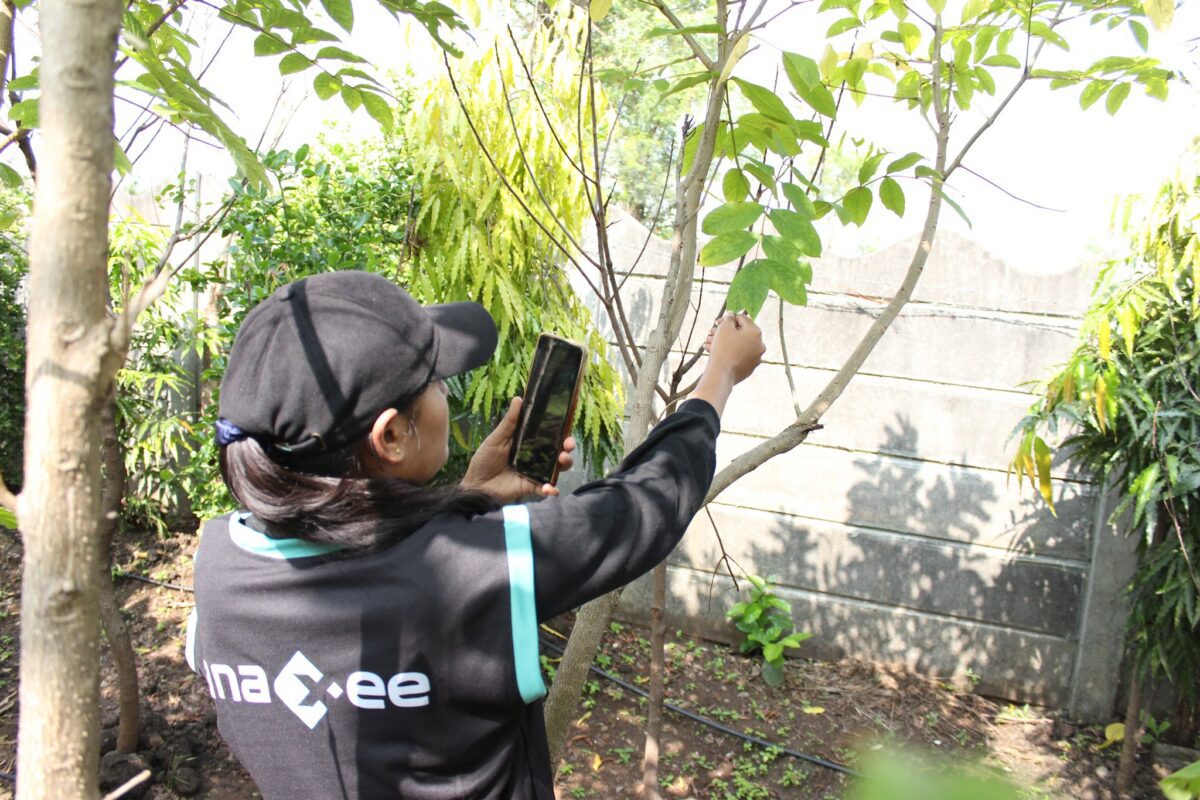
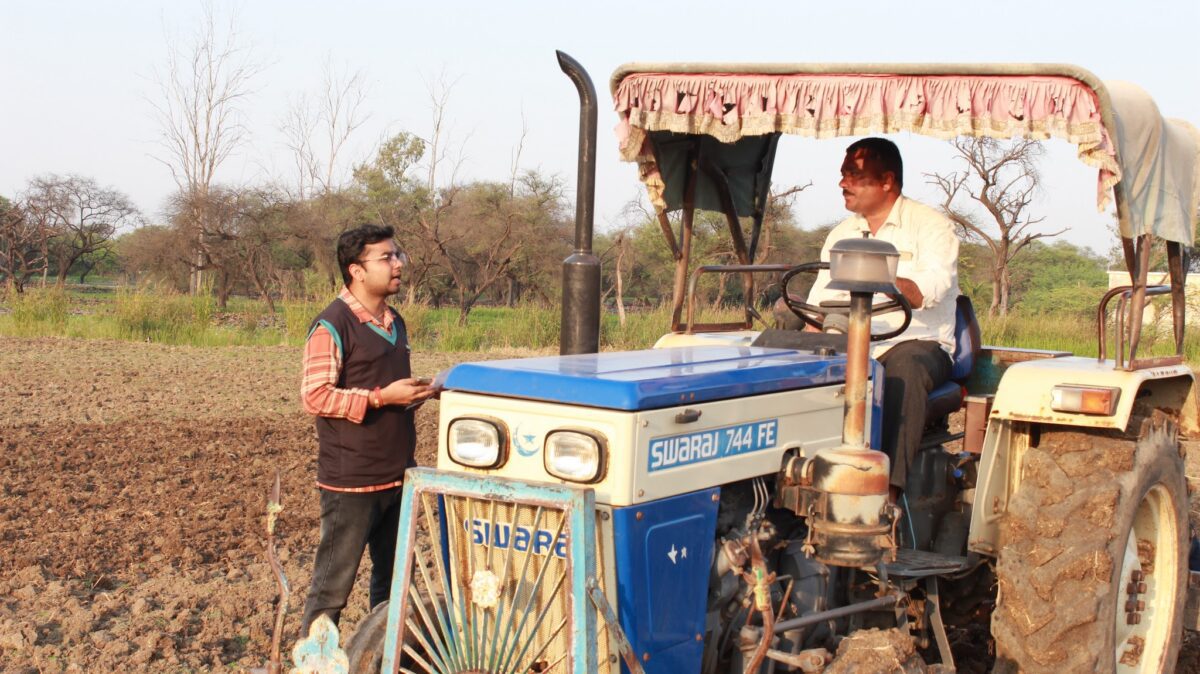





 About Anaxee