BLOG
What Is a Survey? Types, Methods & How to Run One in India
 About Anaxee
40,000+ Digital Runners · 540 districts · 26 states · 11,000+ pincodes of reach
A survey turns a question you cannot answer from a desk – what do people think, do, or have? – into data you can act on. Businesses use surveys to understand customers and markets; governments and NGOs use them to measure programmes and reach; researchers use them to test ideas. Whatever the purpose, a survey is only as good as the way it is designed and the way the data is actually collected.
This guide explains what a survey is, the main types and methods, how to run one well, and – the part that decides everything in a country like India – how to collect survey data you can trust at scale.
What is a survey?
A survey is a systematic way of collecting information from people by asking them questions, in a consistent format, so the answers can be compared and analysed. The group you ask is usually a sample chosen to represent a larger population, and the questions make up the questionnaire. Done well, a survey lets you learn about thousands or millions of people by carefully asking a representative few.
Types of surveys
Surveys are classified a few different ways – and most real surveys are a combination. For the full breakdown with real examples, see the guide to the types of surveys.
How a survey works, step by step
- Define the objective. The one decision the survey must inform – this sets every question.
- Design the questionnaire. Clear, unbiased questions, mostly closed-ended, with skip-logic and validation – see how to design survey questions.
- Choose the sample. Who to ask and how many, with quotas so the sample represents the population.
- Collect the data. Run the fieldwork or calls, geo-tagged and time-stamped so every response is traceable.
- Quality-check. Back-check a sample, flag anomalies, re-verify what does not add up.
- Analyse. Clean, weight and turn the responses into findings and decisions.
Survey vs questionnaire – what is the difference?
They are often confused. A questionnaire is the set of questions; a survey is the whole exercise – defining the objective, sampling, collecting, verifying and analysing. The questionnaire is one part of the survey, not the survey itself.
Where surveys get hard in India
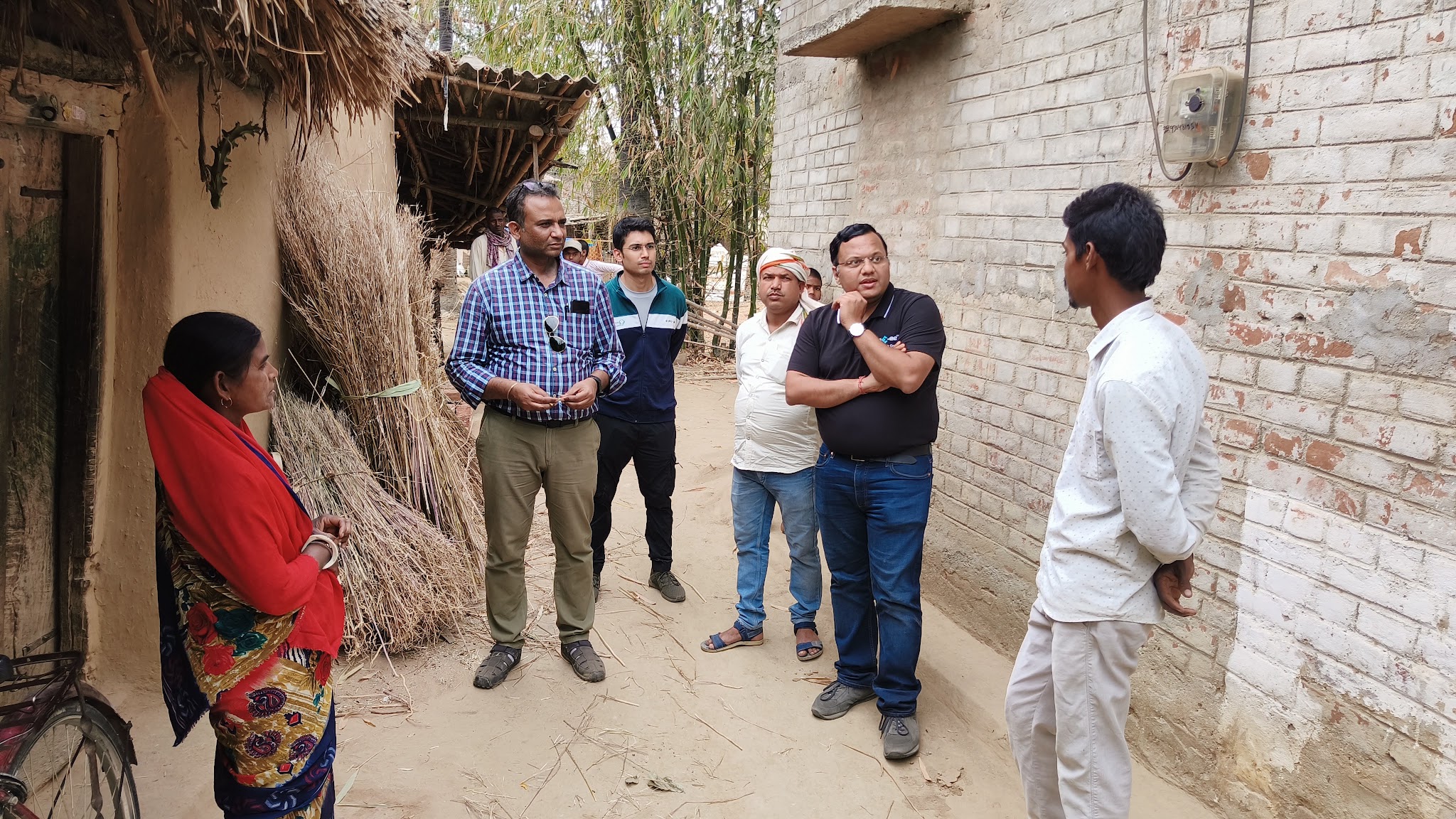
Designing a good survey is the easy half. The hard half is collecting the data – reaching a representative sample across a country of 650,000+ villages and 20+ languages, mostly offline, and making sure every response was genuinely collected in the field rather than invented at a desk. That is a last-mile and verification problem before it is a research one, and it is exactly where large surveys quietly break.
Need a survey run across India – and proof it was actually done?
Anaxee collects survey data across 540 districts – in person or by phone – every response geo-tagged, verified and on a live dashboard. Fully managed, or on our app for your own team.
Where technology and AI change surveys
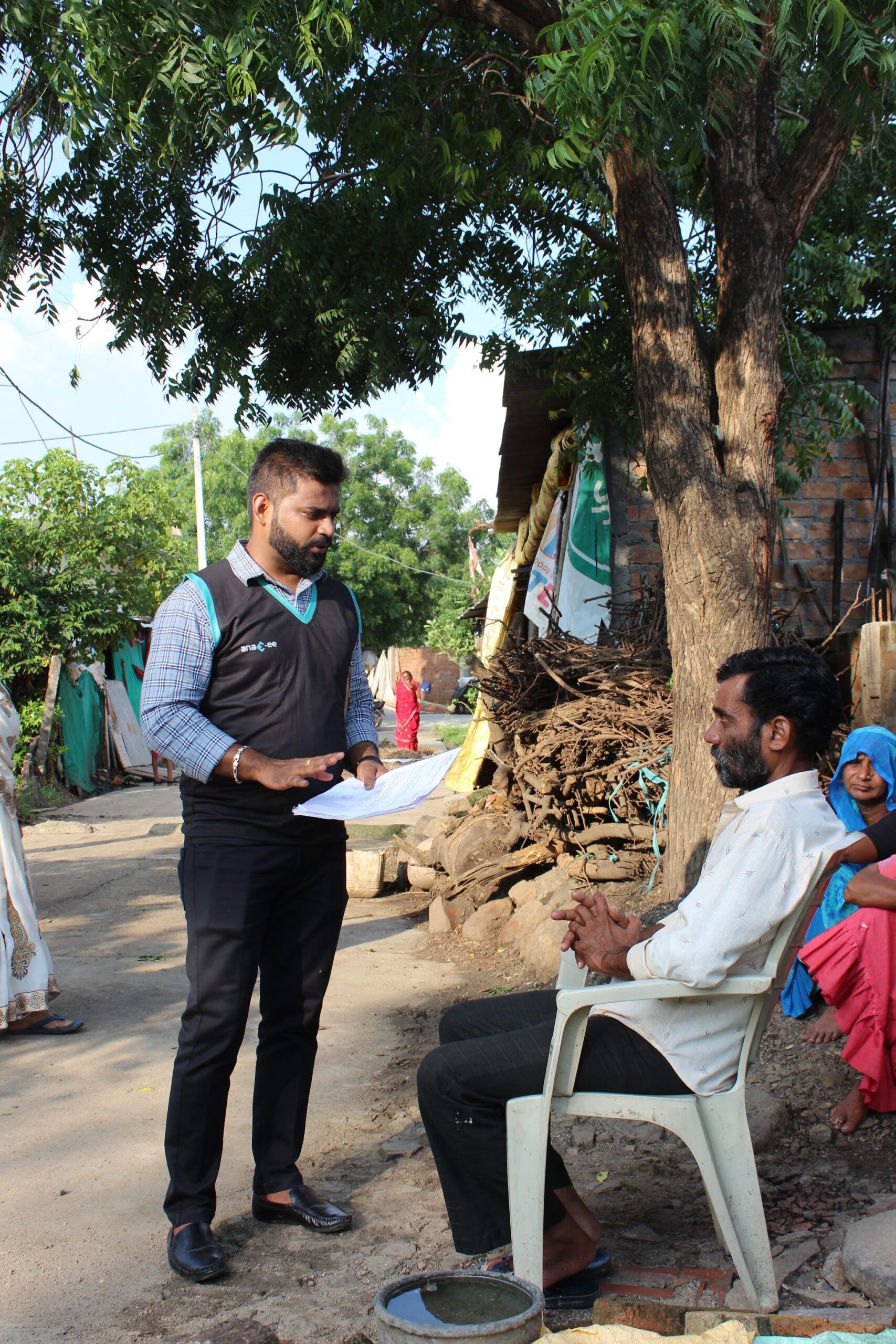
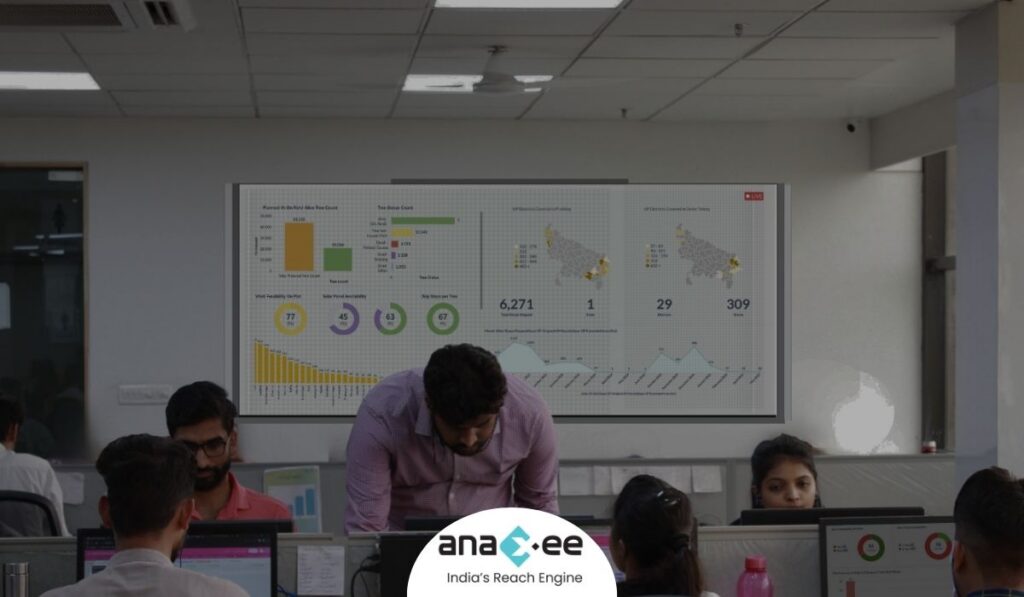
A survey used to be only as honest as its least-supervised enumerator. Technology changes that. Anaxee runs surveys on an app: every response is geo-tagged, time-stamped and photo-backed, flowing to a live dashboard you can watch fill in by district and quota. AI flags responses collected too fast to be real, duplicates, and locations off the assigned beat – so fabricated or weak data is caught during the survey, not after the report ships. That is the difference between a survey you hope is right and one you can prove is.
How Anaxee helps
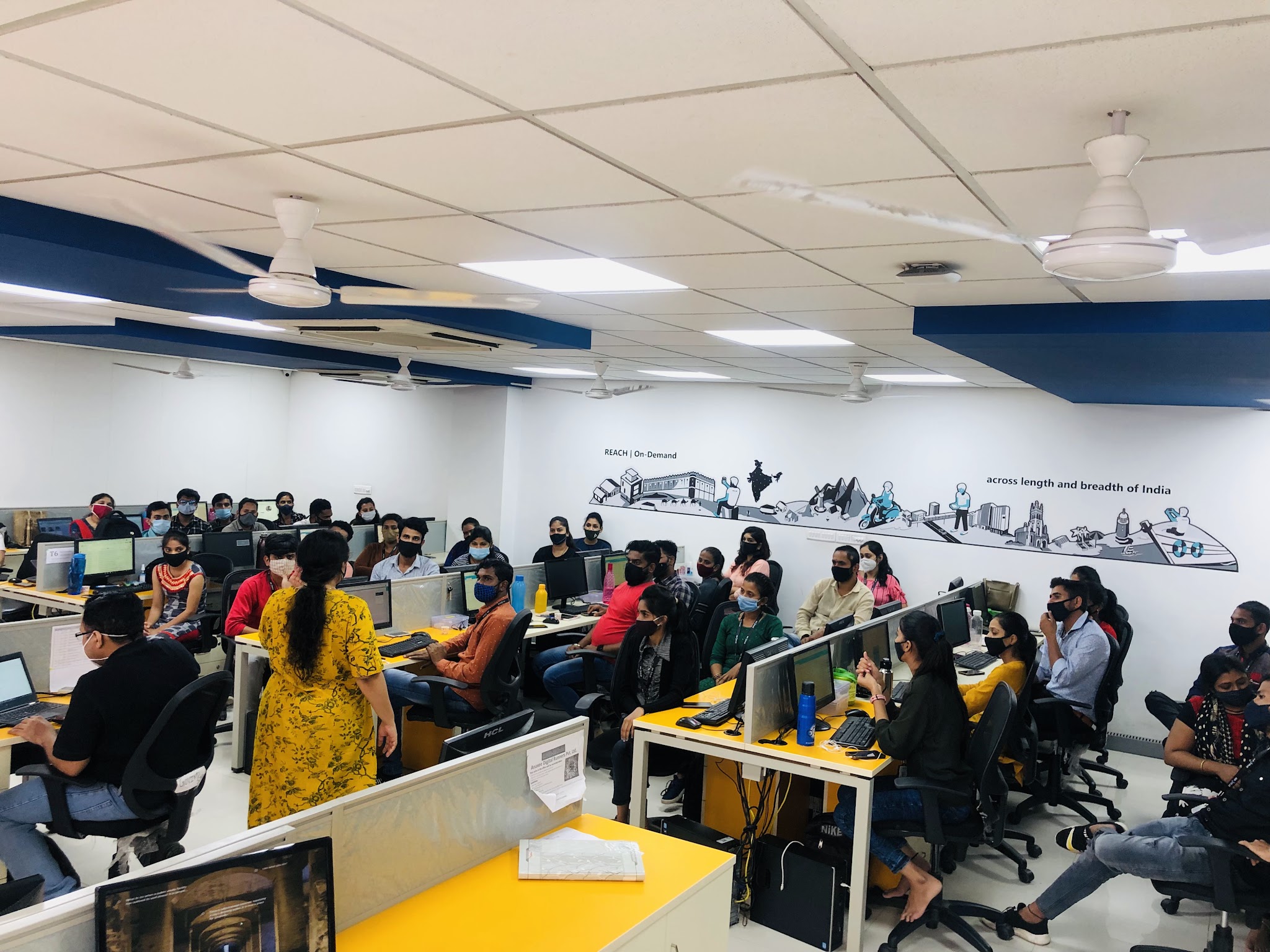
Anaxee – India’s Reach Engine, a National Startup Award winner – runs large-scale field surveys and data collection through 40,000+ field executives across 540 districts: in-person (CAPI) and telephonic (CATI) surveys, household, retail, agri and M&E surveys – every response verified, on a live dashboard. Run it fully managed, or on the Anaxee Partner app for your own team.
Proof – surveys run at scaleSurveys run for research, agri, utility and development clients across all 26 states. See all case studies →
What happens when you reach out to Anaxee
- Tell us the survey – the question, the sample and the markets – by form, WhatsApp or a call.
- A real person calls back – our Indore team, within one working day.
- We run a pilot – verified survey data from a region, on a dashboard you can open yourself, before you scale.
A 150+ person team in Indore, a telecalling command centre and 40,000+ field executives – a team that runs surveys every day, not an inbox that goes quiet.
Tell us about your survey
Share the question, the sample and the markets – our team will get back within one working day.
Frequently asked questions
What do you mean by a survey?
What is the main objective of a survey?
What are the types of surveys?
How do surveys work?
What is the difference between a survey and a questionnaire?
Who conducts surveys in India?
The bottom line
A survey is how you turn a question about many people into data you can trust – but only if the sample represents the population and the data was genuinely collected, not invented. Know the types, follow the process, and for surveys at scale in India, use a field network that verifies every response. Define the question; we will bring the answers.
Talk to Anaxee – whichever way is easiest