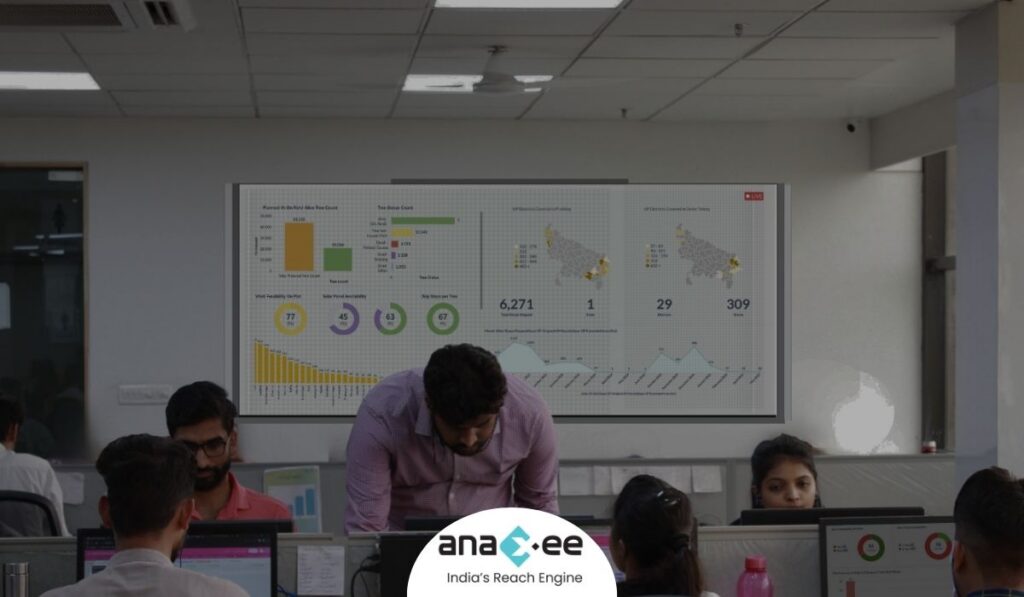
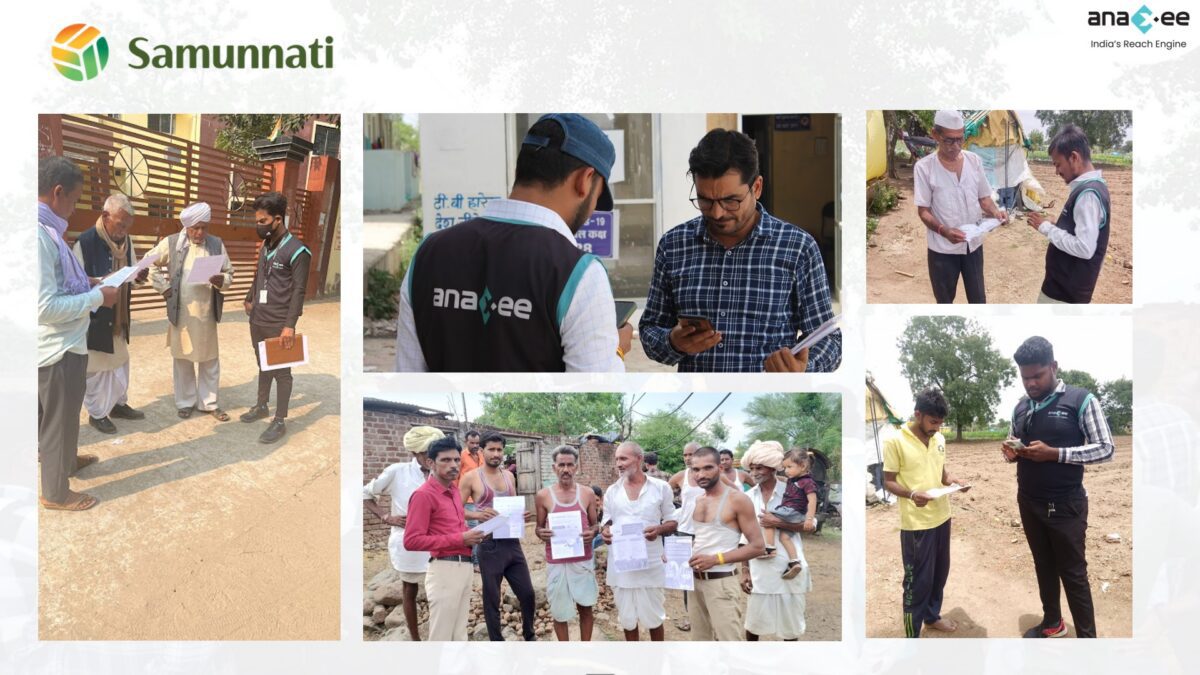
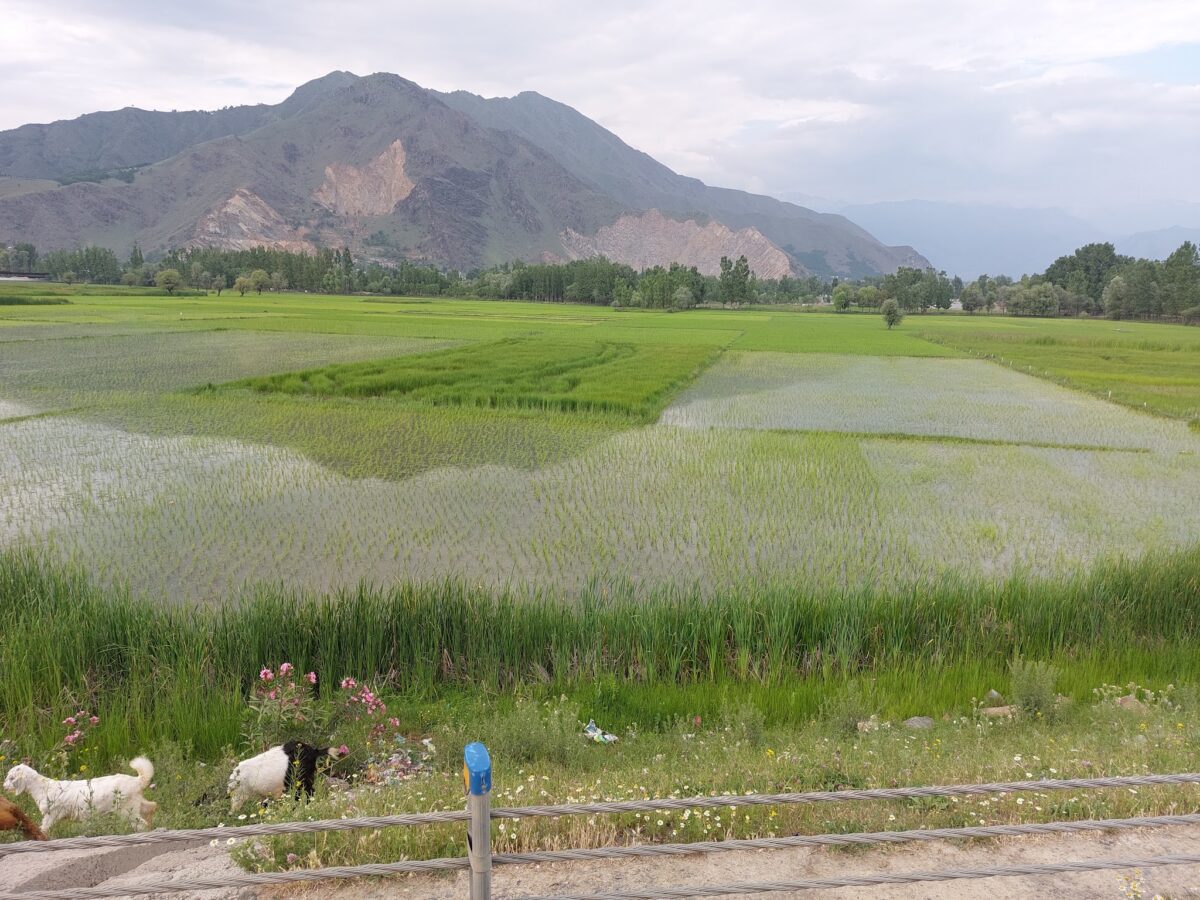
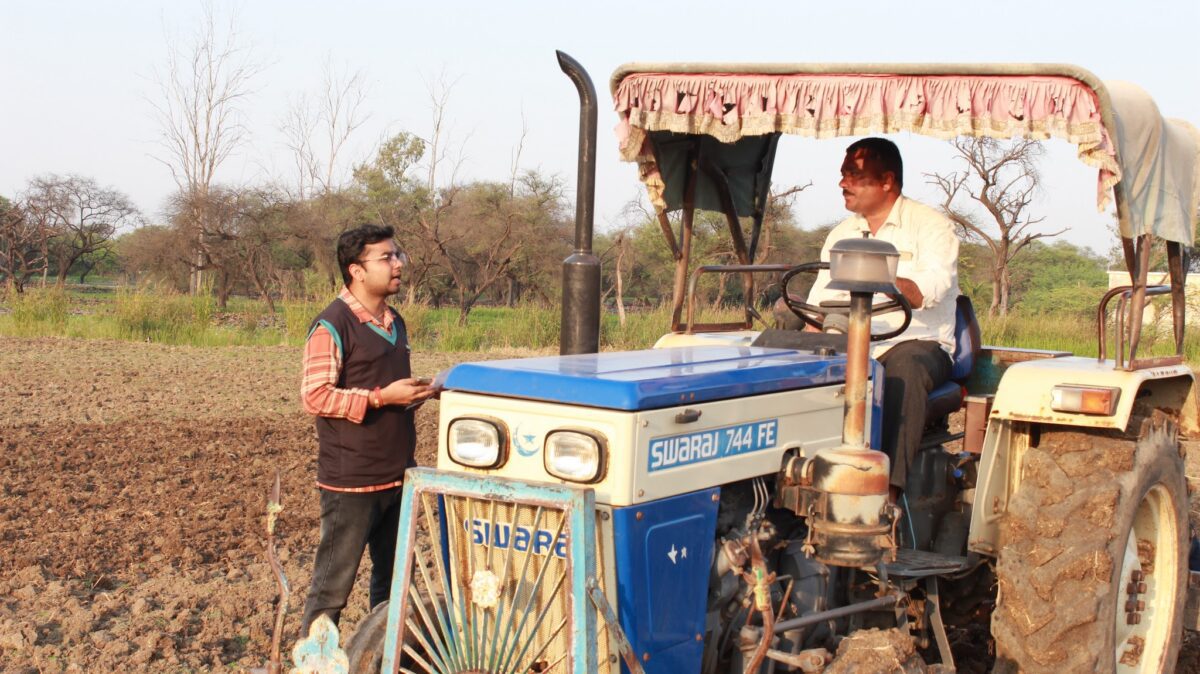
Quick answer: A brand’s sustainable-cotton claim is only as good as what actually happens at the farm and the gin. As regulation on green claims and supply-chain due diligence tightens, brands and retailers increasingly need independent, on-ground proof — not just a certificate. Anaxee gives them that: tech-enabled field verification across India’s cotton belt that checks the farmers, practices, acreage and volumes behind a sustainable-cotton claim are real.
About Anaxee
40,000+ Digital Runners · 540 districts · 26 states · 11,000+ pincodes of reach
★ Winner, National Startup Award (Govt. of India)Trusted by 350+ brands & institutionsIndia’s Reach Engine since 2016
Textile is one of the most scrutinised supply chains in the world. Brands make claims — Better Cotton, organic, regenerative, traceable, fair — but those claims are generated thousands of kilometres from head office, on smallholder farms and in gins the brand has never seen. When a claim is challenged, or a regulator asks for evidence, a certificate on its own is thin. What holds up is independent field evidence: someone neutral who went to the farm, geo-tagged it, photographed it, and recorded what was actually there.
Why on-ground verification matters now
Greenwashing risk is real reputational risk. “Sustainable cotton” claims draw NGO, media and consumer scrutiny — and, since 2026, EU rules against unsubstantiated green claims. The defence is evidence from the field, not a logo.
Regulation is tightening. Green-claims rules, supply-chain due-diligence and forced-labour regulations increasingly expect brands to know — and prove — what happens upstream, to the farm.
Traceability demand is rising. Buyers increasingly want cotton traced to its origin; that origin data has to be captured on the ground, at the farm and the gin.
Distance hides the truth. The further a brand is from the field, the easier it is for claims, volumes and practices to drift from reality.
What Anaxee verifies on the ground
Farmers and plots are real. That the farmers behind a programme or claim exist, on real land, growing the crop — geo-tagged and photo-backed, de-duplicated.
Practices and regenerative adoption. Whether the sustainable or regenerative practices a claim rests on are actually being followed in the field.
Acreage and volumes add up. That the area and output behind a sourcing or certification claim are consistent with what is on the ground — reconcilable with satellite.
Supplier and gin-level checks. Independent field checks at the supplier and gin level, so what your supply chain reports matches what is happening.
Independent, and tech-backed
The value of verification is independence. Anaxee has no cotton to sell and no certificate to protect — so the data has nothing to flatter. Every check is captured on a field app, geo-tagged, time-stamped and photographed to a live dashboard and API, with AI flagging anomalies and reconciling crop and acreage against satellite. You get an audit trail you can show a regulator, an NGO or a board — not a claim you have to take on trust.
Who it is for
Brands & retailers who want to cross-check what their suppliers and farms actually do, before they make a claim or after one is challenged.
Programme Partners & mills who want independent assurance-readiness and clean field data behind their cotton programmes.
International brands sourcing from India — from global retailers to houses showing at the Paris and Milan shows — who need eyes on the Indian cotton field they cannot send their own team to.
How Anaxee helps
Anaxee — India’s Reach Engine, a National Startup Award winner — is the independent field-verification partner for cotton and textile supply chains: 40,000+ Digital Runners across 540 districts who check farmers, plots, practices and volumes on the ground and deliver the evidence on a live dashboard. It is the same verification engine behind our CSR & project verification and carbon-project verification work — and the assurance side of the Better Cotton field partner offering.
Independent, geo-tagged, photo-backed verification delivered across CSR, climate and agri programmes — the same discipline applied to cotton and textile supply chains. See all case studies →
What happens when you reach out to Anaxee
Tell us what you need verified — the crop, the growing belt and the scale — by form, WhatsApp or a call.
A real person calls back — our Indore team, within one working day.
We scope a pilot season — one belt mapped, trained and verified, so you see the data quality before you scale.
A 150+ person team in Indore and 40,000+ Digital Runners on the ground — your enquiry reaches people who run farmer field programmes every week, not an inbox that goes quiet.
Frequently asked questions
Why do brands need independent on-ground cotton verification?
Because a sustainable-cotton claim is generated at the farm and the gin, far from head office, and certificates alone are increasingly thin against NGO scrutiny and tightening regulation. Independent field evidence — geo-tagged, photo-backed checks of farmers, practices and volumes — is what holds up.
What exactly does Anaxee verify?
That the farmers and plots behind a claim are real, that the sustainable or regenerative practices are actually followed, that acreage and volumes are consistent with the ground, and supplier- and gin-level checks — all captured independently on a live dashboard.
Is Anaxee independent of the brand and the certifier?
Yes. Anaxee has no cotton to sell and issues no certificates, so its field data has nothing to flatter. That independence is the point of verification.
Can you verify cotton supply for an international brand sourcing from India?
Yes. Anaxee is the on-ground eyes an overseas brand cannot send — verifying the Indian cotton farms and suppliers behind their claims, across 540 districts, on a dashboard they can open from anywhere.
How is this different from certification?
Certification is a formal decision by an accredited third-party body. Anaxee provides independent field verification and evidence — the on-ground data that supports assurance-readiness and lets a brand cross-check and defend its claims. The two are complementary.
How do we start?
With a pilot — one belt or supplier verified on the ground, delivered on a live dashboard — before scaling. Book a short call to scope it.
One more reason this matters now: many sustainable-cotton and farmer programmes are funded from CSR budgets, and the same field evidence increasingly feeds BRSR value-chain disclosure as assurance widens toward the top 1,000 listed companies. The ground truth does double duty — see CSR agriculture & livelihood verification and BRSR value-chain verification.
The bottom line
In textiles, the gap between the claim and the field is where reputations are lost. Independent, tech-enabled, on-ground verification — of the farmers, practices and volumes behind your sustainable-cotton claim, across India’s cotton belt — is how brands close that gap. That is what Anaxee provides.
Need independent proof of your cotton supply?
Tell us the claim and the geography and we will scope a verification pilot — farms and suppliers checked on the ground, on a dashboard you can show anyone.
Quick answer: The Better Cotton Initiative (BCI) — now known simply as Better Cotton — is the world’s largest cotton sustainability programme, accounting for about 23.87% of global cotton. It trains farmers to grow cotton more sustainably against a field-level standard, and lets brands source and claim ‘Better Cotton’. India is its biggest farmer base, with 786,072 licensed farmers in 2024-25. This guide explains what Better Cotton is, how the programme works on the ground, and how it is run in India.
About Anaxee
40,000+ Digital Runners · 540 districts · 26 states · 11,000+ pincodes of reach
★ Winner, National Startup Award (Govt. of India)Trusted by 350+ brands & institutionsIndia’s Reach Engine since 2016
What is the Better Cotton Initiative?
The Better Cotton Initiative (BCI) is a global non-profit, founded in 2005, that runs the world’s largest cotton sustainability programme. Its mission is to help cotton communities survive and thrive while protecting the environment, and its standard — the Principles & Criteria (P&C) — sets out what a farmer must do to grow and sell cotton as ‘Better Cotton’. In the 2024-25 season Better Cotton accounted for roughly a quarter of all cotton grown worldwide, across 1.40 million licensed farmers, with around 2,600 member companies — brands, retailers, mills, suppliers and civil-society organisations.
How the Better Cotton programme works
A field-level standard. The Principles & Criteria cover soil health, water, crop protection, decent work, livelihoods and — from v3.2 (April 2026) — regenerative-agriculture targets in each farmer’s continuous-improvement plan.
Training through field facilitators. Programme Partners and their field facilitators organise farmers into producer units, train them, run support visits and collect farm-level data, season after season.
Assurance. Farmers are checked through a mix of third-party certification (the certification decision is always independent), monitoring visits by Better Cotton country teams, Programme Partner support visits and producer self-assessments.
Chain of custody & traceability. Once certified, cotton moves through the supply chain under a chain-of-custody standard; the newer Traceable Better Cotton model uses physical segregation so brands can trace it to its country of origin.
Better Cotton in India
India is the heart of the programme. In the 2024-25 season, 786,072 licensed farmers produced 944,330 metric tonnes of Better Cotton — the largest farmer base of any country — all of them smallholders farming under two hectares. The programme runs across Gujarat, Maharashtra, Telangana, Andhra Pradesh, Karnataka, Punjab and Rajasthan, through fifteen Programme Partners: Ambuja Cement Foundation, AFPRO, Aga Khan Rural Support Programme, Development Support Centre, Arvind Ltd., BASIL Commodities, Centre for People’s Forestry, Cotton Connect, Lupin Human Welfare & Research Foundation, MARI, Spectrum International, Vardhman Textiles, the Samunnati Foundation, the Welspun Foundation and WWF India.
The regenerative transition
In 2025 Better Cotton committed to becoming a regenerative standard system. Its updated standard asks farmers to set at least three regenerative-agriculture targets — across soil, biodiversity, water and inputs — in their continuous-improvement plans, and it is running projects such as the five-year Gujarat Regenerative Agriculture Project (with Ambuja Foundation and a major retailer) to drive adoption and collect reliable outcome data. In practice this means more farm-level training, measurement and verification — more on-ground work, every season.
Is Better Cotton credible? The assurance question
Mass-market sustainability programmes attract a fair question: is the label matched by what happens in the field? Better Cotton’s answer is its assurance system — independent third-party certification plus monitoring and support visits plus farm-level data. The honest reality is that a claim is only ever as strong as the evidence behind it on the ground. That is why independent, verifiable field data matters so much — and it is where a neutral field partner earns its place: see cotton supply-chain verification.
How the field work gets done — and where Anaxee fits
The reach, training and data behind Better Cotton are delivered on the ground, farmer by farmer, by field facilitators and Programme Partners — every season. Anaxee is the independent, tech-enabled field-execution and verification partner that organisations running cotton programmes can plug into: 40,000+ Digital Runners across India’s cotton belt who map and organise farmers, deliver and record training, collect farm-level data and verify it on a live dashboard. See the full picture on the Better Cotton field partner page.
Anaxee runs the kind of large-scale farmer field work — mapping, training, data and verification — that cotton sustainability programmes depend on, across India. See all case studies →
Frequently asked questions
What is the Better Cotton Initiative (BCI)?
Better Cotton (formerly the Better Cotton Initiative) is the world’s largest cotton sustainability programme, founded in 2005. It trains farmers to grow cotton more sustainably against a field-level standard and lets member brands source and claim Better Cotton. It accounts for roughly 23.87% of global cotton.
Is Better Cotton greenwashing?
Better Cotton is a mainstream improvement programme, not an organic or chemical-free label — it aims to make large-scale cotton more sustainable. Its credibility rests on its assurance system (independent third-party certification, monitoring visits and farm-level data). As with any sustainability claim, it is only as strong as the on-ground evidence — which is why independent field verification matters.
What is the difference between Better Cotton and organic cotton?
Organic cotton is a strict, certified standard prohibiting synthetic inputs and GMOs on a relatively small volume. Better Cotton is a mainstream improvement programme covering a far larger share of global cotton, focused on continuous improvement in water, soil, inputs, decent work and (now) regenerative practices — not a ban on synthetic inputs. See the full organic vs Better Cotton vs regenerative cotton comparison.
How big is Better Cotton in India?
India is the largest Better Cotton farmer base in the world: 786,072 licensed smallholder farmers produced 944,330 metric tonnes in the 2024-25 season, across seven states and fifteen Programme Partners.
Who runs Better Cotton on the ground in India?
Fifteen Programme Partners — including WWF India, Cotton Connect, Arvind, Vardhman, the Samunnati Foundation and the Welspun Foundation — and their field facilitators train, support and collect data from farmers each season. Independent field partners like Anaxee provide tech-enabled field execution and verification at scale.
Is Anaxee part of Better Cotton?
No — Anaxee is not a Better Cotton member or certifier. It is an independent field-execution and verification partner that cotton programmes, mills and brands can use to run and prove their farmer work. See the Better Cotton field partner page.
The bottom line
Better Cotton is how most of the world’s cotton is being made more sustainable — and India, with 786,072 licensed farmers, is its centre of gravity. Behind the label is a vast, recurring field operation of training, data and verification, and the part that is hardest to scale is the on-ground work. That is where an independent, tech-enabled field partner comes in.
Working on Better Cotton or sustainable cotton in India?
Whether you are a Programme Partner, a mill or a brand, Anaxee runs the field execution and verification behind it. Tell us the belt and the season.
Quick answer: Better Cotton, sustainable and regenerative cotton programmes are won on the ground, season after season — training, mapping, verifying and collecting farm-level data from hundreds of thousands of smallholder cotton farmers. Anaxee is the independent, tech-enabled field-execution and verification partner that runs that work for Programme Partners, textile mills and brands across India’s cotton belt. Recurring, every cotton season — not a one-off campaign.
About Anaxee
40,000+ Digital Runners · 540 districts · 26 states · 11,000+ pincodes of reach
★ Winner, National Startup Award (Govt. of India)Trusted by 350+ brands & institutionsIndia’s Reach Engine since 2016
India grows more Better Cotton than any country on earth — 786,072 licensed cotton farmers producing 944,330 metric tonnes in the 2024-25 season, through fifteen Programme Partners. Every one of those farmers has to be organised, trained, supported, self-assessed and made certification-ready every season, and the programme is now moving to a regenerative standard that asks for even more field work. That is a vast, recurring, on-ground job — and the field layer behind it is exactly what Anaxee does.
We are not a certifier and we do not sell cotton. We are the last-mile field force — 40,000+ Digital Runners, tech-enabled and verifiable — that cotton programmes plug into to reach farmers, collect farm-level data, and prove what happened, at a scale and consistency that is hard to build team by team.
The recurring opportunity
786,072
Better Cotton licensed farmers in India (2024-25) — the world’s largest Better Cotton farmer base, re-run every season
Across India’s cotton states — Gujarat, Maharashtra, Telangana, Andhra Pradesh, Karnataka, Punjab and Rajasthan — the training, data and verification cycle restarts with every sowing. That is the recurring revenue a field partner is built for.
Why cotton sustainability is recurring, season after season
Cotton is sown from May to July and harvested from October to January. Each season, a Better Cotton or sustainable-cotton programme has to re-organise its farmers into producer units, deliver training, run support visits, collect farm-level data, have farmers self-assess, and be ready for third-party certification — and now, under the regenerative standard, help farmers set and track continuous-improvement targets too. None of this is a one-time push. It is a recurring, every-season operation — which is exactly why it is the kind of work Anaxee wants to run month on month, year on year, rather than a three-month campaign.
The field layer every cotton programme runs on
Better Cotton’s own model runs on field facilitators — trained field staff who, in its words, “organise farmers, collect farm-level data and carry out capacity-strengthening activities” — plus Programme Partner support visits and producer self-assessments, backed by independent third-party certification. Globally that is over 6,000 field facilitators. Anaxee is the tech-enabled version of that layer at scale: a standing network already present in the cotton districts, every visit geo-tagged, photo-backed and on a live dashboard, with AI checking the data — so a programme gets reach and proof without building and disbanding a field team every season.
Who we work with
Better Cotton Programme Partners & implementing organisations. India’s programme runs through fifteen Programme Partners — among them WWF India, Cotton Connect, Arvind, Vardhman, the Samunnati Foundation and the Welspun Foundation. They need field execution and farm data at scale, every season; Anaxee is the arm that delivers it.
Textile mills & vertically-integrated players. Spinners and integrated textile companies building their own Better Cotton, regenerative or traceable-cotton farmer base to secure sustainable supply for their mills.
Brands, retailers & buyers. The 2,500+ companies that buy Better Cotton and need traceable, independently verified proof that the farmers and practices behind their sustainable-cotton claims are real. See cotton supply-chain verification.
What Anaxee runs for cotton programmes
One field network, the whole season’s on-ground work. Use the full set, or any piece.
To be precise about where we fit: Anaxee is not a Better Cotton member, not an accredited certification body, and does not issue licences or certificates. Certification decisions are made by third-party bodies. What Anaxee provides is the field-execution, data-collection and independent on-ground verification layer — giving Programme Partners and mills scale and clean data, and giving brands independent assurance of what is actually happening in the field. That independence is the point: we have no cotton to sell, so our data has nothing to flatter.
Built for the regenerative shift
Better Cotton is becoming a regenerative standard system — its Principles & Criteria v3.2 (effective April 2026) now require farmers to set at least three regenerative-agriculture targets (soil health, biodiversity, water, inputs) in their continuous-improvement plans, and projects like the five-year Gujarat Regenerative Agriculture Project are pushing practice adoption and “reliable outcome data” on the ground. That means more recurring field work — and it overlaps directly with Anaxee’s plantation and MRV-grade verification and carbon-project field work. The regenerative transition is extra scope, and extra revenue, for a field partner.
Where technology and AI change the game
Cotton field data has always been easy to fake and hard to audit. Anaxee runs it as a tech product: every farmer, training session, plot and visit captured on a field app — geo-tagged, time-stamped and photographed to a live dashboard and API — with AI de-duplicating farmers, flagging plots that do not match and catching visits that never happened, and crop and acreage reconcilable against satellite. Programme Partners get defensible data; brands get assurance they can stand behind.
How Anaxee helps cotton programmes
Anaxee — India’s Reach Engine, a National Startup Award winner — is the recurring field partner for sustainable-cotton work: 40,000+ Digital Runners across 540 districts and 11,000+ pincodes who map and organise farmers, deliver and record training, collect farm-level data and verify it on a live dashboard, season after season. It is the same last-mile engine behind our farmer-network, farmer-survey and verification work for organisations including Samunnati and across agri and CSR programmes nationwide.
Large-scale farmer field programmes and independent verification delivered across agri and CSR — the same work a cotton programme needs, season after season. See all case studies →
What happens when you reach out to Anaxee
Tell us the cotton programme — the crop, the growing belt and the scale — by form, WhatsApp or a call.
A real person calls back — our Indore team, within one working day.
We scope a pilot season — one belt mapped, trained and verified, so you see the data quality before you scale.
A 150+ person team in Indore and 40,000+ Digital Runners on the ground — your enquiry reaches people who run farmer field programmes every week, not an inbox that goes quiet.
Frequently asked questions
Is Anaxee a Better Cotton Initiative member or certifier?
No. Anaxee is not a Better Cotton member and not an accredited certification body — certification is done by third-party bodies. Anaxee is the independent field-execution, data-collection and verification partner that Programme Partners, mills and brands use to run and prove their cotton-farmer work on the ground.
What does Anaxee do for a cotton sustainability programme?
Maps and organises cotton farmers into producer units, delivers and records training and support visits, collects farm-level data and continuous-improvement-plan evidence, and independently verifies farmers, acreage, practices and volumes — all geo-tagged, photo-backed and on a live dashboard, every season.
Why is this a recurring, not a one-off, engagement?
Cotton is seasonal — sown May to July, harvested October to January — and the training, data and verification cycle restarts every season. That makes a cotton field programme a month-on-month, year-on-year engagement, not a single campaign.
Who in India runs Better Cotton, and how does Anaxee fit?
India’s Better Cotton programme runs through fifteen Programme Partners (including WWF India, Cotton Connect, Arvind, Vardhman, the Samunnati Foundation and the Welspun Foundation). Anaxee is the tech-enabled field-facilitation and data arm these programmes — and the mills and brands behind them — can plug into at scale.
Can Anaxee support the regenerative-cotton transition?
Yes. Better Cotton’s v3.2 standard requires regenerative targets and continuous-improvement plans, which means more farm-level field work and data. That overlaps directly with Anaxee’s plantation, MRV and carbon-project verification work.
How do we start?
With a pilot season in one cotton belt — farmers organised, trained and verified, with a live dashboard — before scaling across districts and seasons. Book a short call to scope it.
The bottom line
Sustainable cotton is not a campaign; it is a season-after-season operation over hundreds of thousands of farmers — and the field layer that reaches, trains, measures and verifies them is the part most programmes struggle to scale. That recurring, verified, tech-enabled field work, across India’s cotton belt, is exactly what Anaxee is built to run.
Running a cotton sustainability programme?
Tell us the crop, the belt and the season and we will scope a pilot — farmers organised, trained and verified on a live dashboard before you scale.
Quick answer: Processed-food, beverage, edible-oil, dairy and commodity companies increasingly source raw material direct from farmers — for cost, quality, traceability and sustainability. Doing it means building a verified farmer supply base in the growing belts: mapping the farmers, onboarding them, and confirming their crop and acreage on the ground. Anaxee is the field partner that builds that base across 540 districts — we don’t buy the crop, we build and verify the farmers you source it from.
About Anaxee
40,000+ Digital Runners · 540 districts · 26 states · 11,000+ pincodes of reach
★ Winner, National Startup Award (Govt. of India)Trusted by 350+ brands & institutionsIndia’s Reach Engine since 2016
For a food or beverage company, the raw material decides the margin, the quality and increasingly the brand story. Buying it through layers of the open mandi is expensive, inconsistent and untraceable. So the serious players are going closer to the farm — potato and tomato for snacks, maize and barley for processing and brewing, oilseeds for edible oil, milk for dairy, spices and grain for export. The catch is the same every time: it means reaching thousands of small farmers in belts the company has never worked, and proving what they actually grow.
The farmer universe you have to reach
14 crore+
farm holdings in India — and about 86% are small and marginal, scattered across lakhs of villages
You cannot source at scale, or run a credible farmer programme, from a handful of large farms. It means reaching thousands of small farmers across the growing belt — which is the hard part.
Source: holdings count & small/marginal share, Agriculture Census 2015-16, Ministry of Agriculture & Farmers Welfare.
Why food and beverage companies are going direct to farmers
Cost and margin. Every layer between the farm and the plant takes a cut. Sourcing closer to the farmer protects margin on the raw material that drives it.
Quality and consistency. A specific variety, grade or moisture level is far easier to secure when you know the farmer and the field than when you buy blind at the mandi.
Traceability and food safety. Export and food-safety standards increasingly demand farm-to-fork records — which only exist if someone captured them at the farm.
Sustainability and ESG. Regenerative sourcing, residue control and farmer-welfare claims all need verified field data to stand behind them.
Supply security. A known, contracted farmer base is far more reliable than the spot market when a crop is short.
What direct farmer sourcing needs on the ground
Map the growing belt. Find the farmers actually growing your crop, in the districts where it grows — variety, acreage and volume.
Onboard the farmers. Sign up and profile them in person, into a clean, de-duplicated, verified base you can source from.
Verify crop and acreage. Confirm the land and the standing crop on the ground, geo-tagged and photo-backed, reconcilable with satellite.
Engage through the season. Advisory, practice adoption and recurring checks that protect yield, quality and the relationship.
Industries we build farmer supply for
Processed food & snacks. Potato, tomato, chili, maize, fruit and grain for plants and processing lines.
Edible oil & oilseeds. Mustard, soybean, groundnut, sunflower and oil palm — the domestic supply oil companies are racing to build.
Dairy. Milk-procurement networks of small producers, mapped and verified.
Spices, grain & commodity exporters. Traceable, farm-to-fork sourcing with the records export markets demand.
Where Anaxee fits
Anaxee builds and verifies the farmer network your sourcing runs on — mapping the belt, onboarding farmers and confirming crop and acreage — and runs the field layer behind a contract-farming programme when you want assured supply. We are the reach-and-proof partner, not a trader: we do not buy your crop, we build and verify the farmers you buy it from, across 540 districts.
Where technology and AI change the game
Direct sourcing only pays off if the data behind it is real. Every farmer and plot is captured on a field app — geo-tagged, time-stamped and photographed to a live dashboard and API — with AI de-duplicating farmers, flagging mismatched plots and catching fabricated visits, and crop and acreage reconcilable against satellite. The supply base you build is one you can actually trust and audit.
How Anaxee helps food & agri companies source from farmers
Anaxee — India’s Reach Engine, a National Startup Award winner — builds verified farmer supply for food, beverage, oil and commodity companies: 40,000+ Digital Runners across 540 districts who map growing belts, onboard and verify farmers, and deliver a living supply base on a live dashboard. It is the same last-mile engine behind our work for DeHaat, Samunnati, AgroStar and Escorts.
3.4 lakh+ farmers reached, onboarded and verified for agri and sourcing programmes nationwide. See all case studies →
What happens when you reach out to Anaxee
Tell us the sourcing need — the crop, the growing belt and the scale you need — by form, WhatsApp or a call.
A real person calls back — our Indore team, within one working day.
We scope a pilot — one district or belt mapped, onboarded and verified, so you see the data quality before you scale.
A 150+ person team in Indore and 40,000+ Digital Runners on the ground — your enquiry reaches people who run farmer field programmes every week, not an inbox that goes quiet.
Frequently asked questions
How do food companies source directly from farmers in India?
By building a verified farmer supply base in the crop’s growing belt — mapping the farmers, onboarding them, and confirming their crop and acreage on the ground — often formalised through contract farming. Anaxee runs that field work across 540 districts.
Does Anaxee buy or trade the crop?
No. Anaxee builds and verifies the farmer supply base — the mapping, onboarding and crop verification. The purchase and price stay between your company and the farmer or its FPO; we are the field and proof layer.
Which food and agri industries does Anaxee source farmers for?
Processed food and snacks (potato, tomato, chili, maize), beverages and brewing, edible oil and oilseeds, dairy, and spice, grain and commodity exporters — any business building direct farmer supply.
Can you support traceability and sustainability claims?
Yes. Because every farmer, plot and crop check is geo-tagged, photo-backed and on a live dashboard, the supply base carries the farm-to-fork and verified-practice records that food-safety, export and ESG standards require.
How does this cut cost versus buying at the mandi?
Sourcing closer to the farmer removes intermediary layers and gives control over variety and quality — and a verified, contracted base is more reliable and traceable than the spot market.
How do we start?
With a pilot in one crop and belt — farmers mapped, onboarded and verified before you commit to volumes. Book a short call to scope it.
The bottom line
The food, beverage and oil companies that win on cost, quality and traceability are the ones that know their farmers — not the ones buying blind at the mandi. Building that verified farmer supply base, in the belts where your crop grows and across 540 districts, is exactly what Anaxee does on the ground.
Building direct farmer supply?
Tell us the crop and the growing belt and we will scope a pilot — farmers mapped, onboarded and verified before you commit to volumes.
Quick answer: Contract farming is an arrangement where a company sources a crop from farmers on pre-agreed terms — variety, quality, quantity and price — often supplying inputs or advice in return. The hard part is rarely the contract; it is finding the right farmers, onboarding them, verifying their land and crop, and monitoring the programme across scattered villages. Anaxee is the on-ground field partner that does exactly that. We do not buy your crop — we build and verify the farmer base your contract-farming programme runs on.
About Anaxee
40,000+ Digital Runners · 540 districts · 26 states · 11,000+ pincodes of reach
★ Winner, National Startup Award (Govt. of India)Trusted by 350+ brands & institutionsIndia’s Reach Engine since 2016
What is contract farming?
Contract farming is a production and sourcing agreement between a company (the buyer or sponsor) and farmers: the farmers grow a specified crop to agreed standards, and the company agrees in advance to buy it, usually at a pre-set or formula price. The company often provides seed, inputs, advice or credit, and in return gets assured supply of the right quality. It is how a lot of India’s processed food, edible oil, spices, seed and commodity supply is increasingly organised — because it gives the buyer control over variety, quality and traceability that the open mandi does not.
Common contract-farming models
Market-specification (procurement) model. The company simply commits to buy the crop at agreed quality and price; the farmer manages production.
Input-supply / resource-providing model. The company also supplies seed, inputs, advice or credit, and recovers it against the produce — common where quality depends on a specific variety or practice.
Nucleus-estate model. The company runs its own estate or plantation and sources additionally from surrounding contracted farmers — common in plantation and horticulture crops.
FPO / aggregator-linked model. The company contracts through Farmer Producer Organisations rather than individuals, which simplifies coordination at the cost of distance from the farmer.
Why contract-farming programmes struggle on the ground
Finding and vetting the right farmers. The programme needs real farmers growing the right crop on real land in the target belt — not whoever a local agent puts forward.
Verifying land and acreage. Pre-agreed volumes mean nothing if the sown area is not what was claimed. Acreage has to be confirmed on the ground.
Side-selling and leakage. When the open-market price spikes, produce walks out the back door. Monitoring through the season is what keeps a programme honest.
No visibility. Head office cannot see what is happening across hundreds of villages without a field team feeding a live dashboard.
Where Anaxee fits — the field layer behind the contract
Anaxee runs the on-ground half of a contract-farming programme, so your team can run the commercial half. We identify and onboard the contracted farmers in the target belt, verify their land, acreage and crop with geo-tagged, photo-backed field visits, and monitor the programme through the season on a live dashboard — all part of the wider farmer network we build for you. We are the verification and reach layer, not the aggregator buying the crop — the contract and the price stay yours.
Where technology and AI change the game
A contract-farming programme you cannot see is a programme you cannot trust. Every farmer, plot and visit is captured on a field app — geo-tagged, time-stamped and photographed to a live dashboard — with AI flagging duplicate farmers, impossible locations and plots that do not match the claim, and crop and acreage reconcilable against satellite data. You see the whole programme, village by village, in real time.
How Anaxee helps with contract farming
Anaxee — India’s Reach Engine, a National Startup Award winner — runs the field layer behind sourcing and contract-farming programmes: 40,000+ Digital Runners across 540 districts who onboard and verify farmers, confirm land and crop, and monitor the season on a live dashboard. It is the same engine behind farmer surveys, farmer onboarding and crop verification — run for DeHaat, Samunnati, AgroStar and Escorts.
Farmer onboarding, verification and crop surveys delivered across agri-sourcing and development programmes. See all case studies →
What happens when you reach out to Anaxee
Tell us the programme — the crop, the growing belt and the scale you need — by form, WhatsApp or a call.
A real person calls back — our Indore team, within one working day.
We scope a pilot — one district or belt mapped, onboarded and verified, so you see the data quality before you scale.
A 150+ person team in Indore and 40,000+ Digital Runners on the ground — your enquiry reaches people who run farmer field programmes every week, not an inbox that goes quiet.
Frequently asked questions
What is contract farming?
Contract farming is an agreement where a company sources a crop from farmers on pre-agreed terms of variety, quality, quantity and price — often supplying inputs, advice or credit in return for assured, traceable supply.
Does Anaxee run contract farming or buy the produce?
No. Anaxee is the on-ground field and verification partner, not a trader or aggregator. We identify, onboard and verify the contracted farmers and their land, and monitor the programme — the contract, price and purchase stay between your company and the farmer.
What are the main contract-farming models?
Market-specification (buy-back only), input-supply / resource-providing (the company also supplies seed, inputs or credit), nucleus-estate (own estate plus contracted farmers), and FPO-linked (contracting through Farmer Producer Organisations).
How do you prevent side-selling and fake acreage?
By verifying land and acreage on the ground up front, and monitoring through the season — every farmer and plot geo-tagged and photo-backed, with AI flagging anomalies — so you can see leakage and discrepancies early.
Which crops and industries use contract farming?
Processed food (potato, tomato, chili, grain), edible-oil oilseeds, spices and herbs, seed production, and commodity exports — wherever a buyer needs a specific variety, assured quality or traceability.
How do we start a contract-farming field programme?
Start with a pilot in one crop and belt — farmers identified, onboarded and verified, with a live dashboard — then scale. Book a short call to scope it.
The bottom line
Contract farming gives a company control over its raw material that the open market never will — but only if the farmers are real, the land is verified and the programme is watched through the season. That on-ground layer, verified and on a live dashboard across 540 districts, is what Anaxee provides, so your team can focus on the crop and the contract.
Running a contract-farming or sourcing programme?
Tell us the crop and the belt and we will scope a pilot — contracted farmers onboarded, land verified and the season monitored on a live dashboard.
Quick answer: Food, beverage, edible-oil, dairy and commodity companies all depend on farmers — but most have no feet in the villages where those farmers are. A farmer network is the fix: a verified, reachable base of farmers you can source from, contract, survey and engage. Anaxee builds and runs that network for you — finding and surveying farmers, onboarding them, verifying their plots and crops, and managing them over time, across 540 districts. We build the farmer layer; you run your sourcing or programme on top.
About Anaxee
40,000+ Digital Runners · 540 districts · 26 states · 11,000+ pincodes of reach
★ Winner, National Startup Award (Govt. of India)Trusted by 350+ brands & institutionsIndia’s Reach Engine since 2016
For a growing set of companies, the farmer is no longer someone else’s problem. A snack brand needs potatoes of the right variety; an edible-oil company needs oilseeds it can trace; a dairy needs reliable milk; an exporter needs a farm-to-fork record. All of them are discovering the same thing: you cannot build that on a bought list of names. You need a real farmer network — verified farmers you can actually reach, in the belts where your crop grows — and most companies have no way to build one.
That is what Anaxee does. We are the last-mile field partner that maps, onboards, verifies and manages the farmers behind your sourcing, contract-farming or engagement programme — and proves every one of them on a live dashboard.
The farmer universe you have to reach
14 crore+
farm holdings in India — and about 86% are small and marginal, scattered across lakhs of villages
You cannot source at scale, or run a credible farmer programme, from a handful of large farms. It means reaching thousands of small farmers across the growing belt — which is the hard part.
Source: holdings count & small/marginal share, Agriculture Census 2015-16, Ministry of Agriculture & Farmers Welfare.
Who needs a farmer network
Food & beverage / processed food. Companies sourcing potato, tomato, chili, maize, grain or fruit direct from farmers for their plants — for cost, quality and consistency.
Edible oil & oilseeds. Oil companies building domestic oilseed and oil-palm supply as India works to cut its heavy edible-oil import dependence.
Agri-commodity & spice exporters. Buyers who need traceable, farm-to-fork sourcing and the records that export and food-safety standards demand.
Dairy. Milk-procurement networks that live or die on reaching and retaining thousands of small producers.
Seed & agri-input brands. Companies that need a living farmer connection for adoption, feedback and demand — not just a dealer board.
Agri-lenders & insurers. Programmes that need farmers and their plots verified on the ground before a loan, a policy or a payout.
A farmer list is not a farmer network
Plenty of companies have a spreadsheet of farmer names. It is almost never a network. The numbers are unverified, the land is unconfirmed, half the phone numbers are dead, and nobody has met these people. A real farmer network is reachable, verified and kept current — which takes feet on the ground, not a data purchase.
The farmer-network stack Anaxee builds
Five capabilities, one field network. Use them together to build a network from scratch, or any one on its own.
To be clear about where we fit: Anaxee is not a trader or aggregator, and we do not buy your produce. We build and verify the farmer layer that your own sourcing or contract-farming programme runs on — identifying farmers, onboarding them, verifying their land and crop, and keeping the data honest. The commercial relationship with the farmer stays yours; the on-ground reach and proof are ours. See how this works for food, beverage and edible-oil companies.
Where technology and AI change the game
Farmer data is easy to fake and hard to check — which is why most farmer ‘networks’ quietly rot. Anaxee runs every record as a tech product: each farmer is onboarded on a field app, geo-tagged, time-stamped and photographed to a live dashboard and API, with AI reading the field photos and records to de-duplicate farmers, flag plots that do not match, and catch visits that never happened. Crop and acreage can be reconciled against satellite data — so the network you own is verified, not just collected.
How Anaxee helps you build a farmer network
Anaxee — India’s Reach Engine, a National Startup Award winner — is the last-mile partner behind farmer networks: 40,000+ Digital Runners across 540 districts and 11,000+ pincodes who reach farmers in person, onboard and verify them, and deliver a living, verified base on a live dashboard. It is the engine behind farmer surveys, farmer onboarding, crop verification and agri-tech field services — the same work we have run for DeHaat, Samunnati, AgroStar and Escorts.
3.4 lakh+ farmers onboarded, surveyed and verified across agri programmes nationwide. See all case studies →
What happens when you reach out to Anaxee
Tell us the goal — the crop, the growing belt and the scale you need — by form, WhatsApp or a call.
A real person calls back — our Indore team, within one working day.
We scope a pilot — one district or belt mapped, onboarded and verified, so you see the data quality before you scale.
A 150+ person team in Indore and 40,000+ Digital Runners on the ground — your enquiry reaches people who run farmer field programmes every week, not an inbox that goes quiet.
Frequently asked questions
What is a farmer network?
A farmer network is a verified, reachable base of farmers a company can source from, contract, survey or engage — with their land, crop and contact confirmed on the ground and kept current. It is different from a bought list of names, which is unverified and quickly goes stale.
Does Anaxee buy crops or run the contract itself?
No. Anaxee is the field and verification partner, not a trader or aggregator. We build and verify the farmer layer — identifying, onboarding and verifying farmers and their plots — while the sourcing contract and commercial terms stay between you and the farmer.
Which companies use a farmer network?
Processed-food and beverage companies, edible-oil and oilseed companies, dairies, agri-commodity and spice exporters, seed and agri-input brands, and agri-lenders and insurers — anyone whose business depends on reaching and verifying farmers at scale.
How is this different from farmer onboarding?
Farmer onboarding is one step — signing up and profiling farmers. A farmer network is the whole stack: mapping, onboarding, verifying, and then managing that base over time so it stays live and useful.
Can you build a farmer network for one crop or belt?
Yes. Most programmes start with one crop in one growing belt — mapped, onboarded and verified as a pilot — before scaling to more districts and states.
How do you prove the farmers and land are real?
Every farmer is onboarded geo-tagged and photo-backed on a live dashboard, de-duplicated, with AI flagging anomalies and crop/acreage reconcilable against satellite — so the network is verified, not just a list.
The bottom line
The companies that will own their raw material, their traceability and their farmer relationships are the ones building real farmer networks now — not buying lists. The product is yours; the farmer layer underneath it is what most companies are missing. Building it, verified and at scale across 540 districts, is exactly what Anaxee does.
Ready to build your farmer network?
Tell us the crop and the belt and we will scope a pilot — farmers mapped, onboarded and verified in one district before you scale.
Quick answer: A farmer survey collects data directly from farmers — about their land and crops, their practices and inputs, their income, or their opinions and needs. It covers everything from the government’s Digital Crop Survey (DCS) to a brand’s product-adoption study. Most farmer surveys are only as good as the fieldwork behind them: in a country where farms are small and scattered, reaching the farmer in person is the hard part. That on-ground reach, across 540 districts, is what Anaxee provides.
About Anaxee
40,000+ Digital Runners · 540 districts · 26 states · 11,000+ pincodes of reach
★ Winner, National Startup Award (Govt. of India)Trusted by 350+ brands & institutionsIndia’s Reach Engine since 2016
“Farmer survey” covers a lot of ground — and increasingly it is private companies that need one. A food or beverage brand mapping who grows its crop, an agri-input company measuring product adoption, an edible-oil company building oilseed supply, a lender verifying a borrower’s land, an FPO profiling its members — or the government mapping every plot under the Digital Crop Survey. The method is always the same at heart — ask farmers, on the ground, and capture it reliably — but the purpose, and who runs it, differ a lot. This guide explains what a farmer survey is, the main types, how to run one in India, and how the official Digital Crop Survey fits in.
Why farmer surveys are hard to run
~86%
of India’s farmers are small and marginal — tens of millions of tiny, scattered holdings
A farmer survey is not a few hundred interviews in one district; it is reaching a long tail of small farmers across villages and states. The sample is the easy part — getting to the farmer is not.
Source: small & marginal holding share, Agriculture Census 2015-16, Ministry of Agriculture & Farmers Welfare.
What is a farmer survey?
A farmer survey is any structured collection of data from farmers. Depending on who runs it and why, it captures land and crop details (area, crop grown, yield), farming practices (inputs, irrigation, mechanisation), socio-economic facts (income, debt, landholding), or attitudes and needs (which brand, which scheme, what they would buy). It can be a government statistical exercise, an agri-business study, a research project, a lender’s verification, or a development programme’s monitoring. What unites them is that the answer has to come from the farmer, in the field.
Where the Digital Crop Survey (DCS) fits in
If you searched “farmer survey” and landed on government portals, that is the Digital Crop Survey (DCS) — India’s official initiative, part of the Digital Agriculture Mission and built on the AgriStack, to map and record crop data directly from farmland and create one verified source of truth for farmer and crop records. It uses mobile apps, geo-referenced cadastral maps and satellite cross-validation, with the farmer present during plot capture, and is run through official state portals by authorised agricultural-extension and revenue staff and designated crop surveyors.
Anaxee is not the government DCS portal, and this page is not where you register or log in for it — for that, use your state’s official Digital Crop Survey portal or Farmer ID / AgriStack site. What Anaxee does is run the same kind of on-ground farmer and crop survey work for private and institutional clients — agri-input and equipment brands, FPOs, lenders, researchers, and CSR and development programmes — with the same discipline of app-based, geo-tagged, verified field data.
The main types of farmer survey
Most farmer surveys fall into one of these buckets — and Anaxee runs the applied, on-ground kinds.
Farmer profiling & onboarding. Building a verified, de-duplicated farmer base — identity, land, contact, crop — for a programme or platform. See farmer onboarding & survey services.
Socio-economic & situation-assessment surveys. Income, debt, assets, landholding and livelihood — the kind of study the NSS Situation Assessment Survey of Farmers runs, and that CSR and policy work needs.
Adoption & market-research surveys. Which inputs, brands, machines or schemes farmers use and why — the agri-business insight study. See rural market research.
Programme monitoring & evaluation. Baseline and endline surveys and beneficiary verification for agri and rural development programmes. See baseline & endline surveys.
How to run a farmer survey in India
Whatever the type, a farmer survey that holds up runs through the same steps.
Define the objective and sample. What decision the data will drive, which farmers, which crops and which districts — and how many, to be representative.
Design questions farmers will answer. Short, concrete, in the local language, with sensitive topics (like income) handled carefully. See how to design survey questions.
Reach the farmers on the ground. The real work — getting a trained person to the right farmer in the right village, across scattered holdings. This is where most farmer surveys succeed or fail.
Capture it reliably. On an app, geo-tagged and time-stamped, with photos and the plot location — so a response is tied to a real farmer at a real place.
Verify and deliver. Clean, de-duplicate and quality-check the data, and hand it over on a live dashboard — not a spreadsheet of unverifiable claims.
Need a farmer survey run across India?
Tell us the objective, the crops and the districts. Anaxee designs the fieldwork, reaches the farmers on the ground and delivers verified data on a live dashboard — starting with a pilot before you scale.
Farmer data has always been easy to fake and hard to check. Anaxee runs every farmer survey as a tech product: each interview is captured on a field app, geo-tagged, time-stamped and photographed to a live dashboard and API, with AI reading the field photos and records to de-duplicate farmer lists, flag plots that do not match, and catch interviews that never happened. On the crop side, ground surveys can be reconciled against satellite data — so what you get is verified, not just collected.
Farmer surveys, onboarding and crop verification delivered across agri-input, equipment, finance and development programmes. See all case studies →
What happens when you reach out to Anaxee
Tell us the survey — the objective, the crops or farmer segment, the districts and the sample — by form, WhatsApp or a call.
A real person calls back — our Indore team, within one working day.
We scope a pilot — a district or two surveyed and verified, so you see the data quality before you scale nationally.
A 150+ person team in Indore and 40,000+ Digital Runners on the ground — your enquiry reaches people who run farmer field programmes every week, not an inbox that goes quiet.
Frequently asked questions
What is a farmer survey?
A farmer survey is a structured collection of data directly from farmers — about their land and crops, farming practices, income and livelihood, or opinions and needs. It can be a government exercise, a research study, an agri-business insight survey, a lender’s verification or a development programme’s monitoring.
What is the Digital Crop Survey (DCS) / AgriStack farmer survey?
The Digital Crop Survey is India’s official government initiative, part of the Digital Agriculture Mission and built on the AgriStack, to map and record crop data directly from farmland. It is run through official state portals by authorised extension and revenue staff. Anaxee is not the government DCS portal — for registration, Farmer ID or login, use your state’s official Digital Crop Survey / AgriStack site.
What are the types of farmer surveys?
The main types are crop & land surveys (acreage, yield, crop-cutting), farmer profiling & onboarding, socio-economic / situation-assessment surveys (income, debt, land), adoption & market-research surveys (inputs, brands, schemes), and programme monitoring & evaluation (baseline / endline). Anaxee runs the applied, on-ground kinds.
How do you conduct a farmer survey in India?
Define the objective and sample, design questions farmers will actually answer in the local language, reach the farmers on the ground through trained field staff, capture each interview on a geo-tagged app with photos and plot location, then verify and deliver the data — usually piloting a district or two before scaling.
What questions go in a farmer survey?
It depends on the goal — typically land and crop details, inputs and practices, and the specific outcome you are measuring (adoption, income, satisfaction). Sensitive topics like income are best asked carefully or inferred indirectly. See how to design survey questions.
How does Anaxee help with farmer surveys?
Anaxee is the last-mile field partner: it reaches farmers in person across 540 districts, runs the survey on a geo-tagged app, de-duplicates and quality-checks the data with AI, and delivers it on a live dashboard — for agri brands, FPOs, lenders, researchers and development programmes. It does not run the government’s DCS, but it executes the same kind of verified farmer fieldwork for private and institutional clients.
The bottom line
A farmer survey is only as strong as the fieldwork behind it. Whether it is the government mapping every plot, a brand measuring adoption, or a lender verifying land, the hard part is the same: reaching a long tail of small, scattered farmers and capturing data you can trust. That verified, on-ground reach — across 540 districts, app-based and AI-checked — is exactly what Anaxee provides.
Ready to run a farmer survey?
Tell us the objective and the geographies and we will scope a pilot — a district or two surveyed, verified and delivered on a live dashboard before you scale.
Quick answer: Retail expansion is growing the number and spread of outlets a brand sells through. It has two sides: opening your own stores and space (real estate, formats, fit-out) and widening distribution reach — getting your product into more of India’s existing retail outlets, across tiers and geographies. In a country of 12 million-plus shops, mostly small and mostly beyond the metros, the reach side is where expansion is usually won or lost — and it is where Anaxee is the on-ground partner.
About Anaxee
40,000+ Digital Runners · 540 districts · 26 states · 11,000+ pincodes of reach
★ Winner, National Startup Award (Govt. of India)Trusted by 350+ brandsIndia’s Reach Engine since 2016
“Retail expansion” gets used for two very different things. One is a company opening more of its own stores — new outlets, new formats, better locations. The other is a brand widening the distribution of its product so it sits on more shelves in more towns. Both are real; they need completely different capabilities. This guide explains what retail expansion means, the two forms it takes, why it stalls after the metros, and how brands widen their retail reach across India.
The retail universe you are expanding into
12 million+
retail outlets in India — and roughly 90% are small, traditional ‘general trade’ shops
Retail expansion in India is not a handful of big stores; it is a long tail of small outlets spread across 28 states. The reach is the hard part, not the ambition.
Retail expansion is the strategy of growing where and how widely a brand or retailer sells — adding outlets, entering new towns and tiers, and getting products in front of more shoppers. For a store-led business it means opening more locations; for a product brand it means getting onto more retailers’ shelves. In India it almost always runs into the same wall: the growth is in the tier 2-4 towns and rural markets, where you have no stores and no field team.
The two kinds of retail expansion
It is worth being precise, because the two need different partners.
Own-store expansion (real estate)
Distribution-reach expansion
What grows
Your own stores, formats and floor space
The number of third-party outlets stocking your product
Key work
Site selection, leasing, fit-out, store design, staffing
Outlet mapping, distributor and retailer onboarding, merchandising, the field beat
Who helps
Property consultants, fit-out and store-design firms
A last-mile field partner — like Anaxee
Where it is won
Capital, location and format economics
On-ground reach into tier 2-4 and rural retail
Anaxee works the distribution-reach side. We do not build or design stores — that is a different discipline. What we do is get a brand’s product into more of the outlets that already exist, verify it is really there, and keep the shelf working.
Why retail expansion stalls after the metros
Tier 2-3 needs a team you don’t have. Most new retail growth is in smaller cities and rural belts. Covering them with your own people is slow and costly — so expansion quietly stops at the metros.
You can’t expand into outlets you can’t see. Which shops, which distributors, which beats — beyond the metros the retail map is blank, and a distributor’s word is not the same as a verified outlet.
The post-launch gap. The real pressure comes weeks after you enter a market — shelves not restocked, outlets going cold, no visibility into what is actually happening on the ground.
How brands widen their retail reach in India
The reach side of retail expansion runs as a repeatable field programme, not a one-off push.
Map the retail universe. Identify the relevant outlets town by town — the shops that actually matter for your category, not a bought list.
Onboard the channel. Sign up distributors and retailers on the ground, in person, with their details captured at the point of visit.
Activate the shelf. Merchandising, in-shop visibility, sampling and order-taking — so a new outlet actually sells, not just stocks.
Verify and sustain. Geo-tagged, photo-backed proof that the outlet is real and the shelf is working, on a live dashboard — so the expansion holds instead of leaking.
Expanding your retail footprint?
Tell us the product and the markets you want to grow into. Anaxee maps the outlets, onboards the channel and proves every shop on a live dashboard — starting with a pilot before you scale.
Retail expansion leaks when you cannot see it. On the Anaxee model every target outlet is mapped on an app; each visit is geo-tagged, time-stamped and photographed to a live dashboard and API, with AI reading the field photos to flag a shelf that does not match, de-duplicate messy outlet lists and catch visits that never happened. So you can watch your retail footprint grow — shop by shop, district by district — and the same system runs identically in the next market.
75,000+ retail outlets activated across GTM projects — for consumer, durable, auto and agri brands widening their retail reach. See all case studies →
What happens when you reach out to Anaxee
Tell us the market — the product, the outlets and the geographies you want to grow into — by form, WhatsApp or a call.
A real person calls back — our Indore GTM team, within one working day.
We scope a pilot — one market’s outlets mapped and activated, so you see the reach and data quality before you scale.
A 150+ person team in Indore and 40,000+ Digital Runners on the ground — your enquiry reaches people who run retail field programmes every week, not an inbox that goes quiet.
Frequently asked questions
What is retail expansion?
Retail expansion is growing where and how widely a brand or retailer sells — adding outlets, entering new towns and tiers, and getting products in front of more shoppers. It takes two forms: opening your own stores (real estate) and widening distribution so your product reaches more third-party retail outlets.
What are the two types of retail expansion?
Own-store expansion (opening more of your own locations — site selection, leasing, fit-out) and distribution-reach expansion (getting your product onto more existing retailers’ shelves across tiers and geographies). They need different partners; Anaxee works the distribution-reach side.
Which brands are expanding their retail reach in India?
Growth is concentrated in tier 2-4 towns and rural markets, where most of India’s 12 million-plus outlets sit. Brands across consumer, durable, auto and agri categories are widening reach there — Anaxee has activated 75,000+ retail outlets across such programmes.
What is the difference between retail expansion and market expansion?
Market expansion is entering new geographies (new states or regions). Retail expansion is specifically about growing your retail footprint — more outlets and shelf presence — which may be in a new geography or deeper in an existing one. See market expansion in India.
How do brands expand retail reach into tier 2-3 towns?
With an on-ground field programme rather than a bigger metro team: map the relevant outlets, onboard distributors and retailers in person, activate the shelf, and verify each outlet on a live dashboard — starting with a pilot market before scaling.
How does Anaxee help with retail expansion?
Anaxee is the last-mile field partner for the reach side: mapping the retail universe, onboarding the channel, running the beat and proving every outlet with geo-tagged, photo-backed data on a live dashboard, across 540 districts. We do not build or design stores — we get your product into the outlets and keep the shelf working.
The bottom line
Retail expansion is two jobs wearing one name. If you are opening your own stores, you need property and fit-out partners. If you are widening your product’s reach across India’s long tail of outlets — the growth that lives in tier 2-4 and rural retail — you need an on-ground field partner who can map it, onboard it, activate it and prove it. That reach, verified and repeatable, is exactly what Anaxee provides.
Ready to widen your retail reach?
Tell us where you want to grow and we will scope a pilot — one market’s outlets mapped, activated and tracked live before you scale.
Quick answer: Expanding a brand into Uttar Pradesh means getting past Noida and Lucknow into the districts where most of UP’s 240 million people actually buy. Anaxee is the on-ground expansion partner for exactly that — with its widest district footprint of any state: 60 districts across UP. One partner maps the market, onboards distributors and retailers, runs the beat and proves it on a live dashboard — so you grow across UP without hiring a team in every district. (We helped a Chennai-based brand expand North into markets like this.)
About Anaxee
40,000+ Digital Runners · 540 districts · 26 states · 11,000+ pincodes of reach
★ Winner, National Startup Award (Govt. of India)Trusted by 350+ brandsIndia’s Reach Engine since 2016
A national brand “launches in Uttar Pradesh” and files it under done the moment Noida and Lucknow are live. Two quarters later growth has stalled — and the answer is sitting in the districts nobody staffed: the Purvanchal belt around Varanasi, Gorakhpur and Azamgarh; the cane-and-sugar towns of western UP around Meerut, Muzaffarnagar and Saharanpur; the long tail of Bundelkhand and Awadh. That is where most of UP lives and buys.
Uttar Pradesh is India’s largest consumer market by a distance — over 240 million people across 75 districts. You cannot expand across it from two or three cities. This guide is about growing a brand into UP properly — entering the state, filling it as a skipped region, or launching a product across it — with a partner already on the ground. (For the full district-and-pincode coverage detail, see field services in Uttar Pradesh.)
On-ground coverage
60 districts
Uttar Pradesh is Anaxee’s widest district footprint of any Indian state
Active field operations across 60 districts, 279 talukas and 862 pincodes of Uttar Pradesh — from the western UP and NCR belt to Awadh, Bundelkhand and Purvanchal. That is a running network you can expand on, not one you have to build.
You would have to build a team across 75 districts. UP’s demand is spread across a state bigger than most countries; staffing it with your own people is slow, costly and hard to supervise — so a “UP launch” quietly becomes a Noida-Lucknow launch.
You don’t know the districts. Which Purvanchal towns, which western-UP distributors, which Awadh and Bundelkhand retailers — beyond the metros, UP is a blank map, and a distributor’s word is not the same as seeing the shop.
No visibility once you appoint a distributor. Hand UP to one distributor and hope, and you cannot see whether the product is reaching shops in Gorakhpur or Jhansi. That is how UP expansions leak.
Three ways brands expand into UP — and how we help each
A regional brand entering UP for the first time. A brand strong in the South or West moving into the North’s biggest market — exactly what we did for a Chennai-based kitchen-appliances brand expanding into northern markets. We map the UP districts, onboard the retailers and build the coverage.
A national brand filling UP as the state it under-served. Present in the metros but thin across the districts. We become your partner in Uttar Pradesh, extending reach from a handful of cities to the whole state without a new operation.
Launching a new product across UP. A rollout that has to hit shelves across the state fast — sampling, onboarding, in-shop visibility and order-taking, run district by district and tracked live.
Your partner in Uttar Pradesh — not a payroll in UP
The expensive way to expand across UP is to replicate your sales team in every district. The faster, lighter way is a single on-ground partner that is already present across the state: a field network — Anaxee’s widest, at 60 districts — that can switch on in any UP district, map the market, onboard distributors and retailers, run the beat, and hand you a live, verified view of your new coverage. You get the reach of a large team without carrying one, and you prove a district or two with a pilot before you commit to the whole state.
Scale fact: if Uttar Pradesh were a country, it would be one of the five most populous on Earth. A brand that treats it as “one market” to be covered from two cities is leaving most of that country unserved.
Expanding into Uttar Pradesh?
Tell us the product and the districts you want to grow into. Anaxee maps the UP market, onboards the channel and proves a district or two with a pilot before you scale.
Expanding blind is what makes a new state risky. On the Anaxee model every target outlet in UP is mapped on an app; each visit is geo-tagged, time-stamped and photographed to a live dashboard and API, with AI reading the field photos to keep the data real and de-duplicate messy outlet lists. So from week one you can watch your UP footprint being built — shop by shop, district by district — instead of waiting on a distributor’s monthly report.
How Anaxee helps you expand across Uttar Pradesh
Anaxee — India’s Reach Engine, a National Startup Award winner — is the on-ground partner that makes UP expansion a campaign rather than a build-out: 40,000+ Digital Runners across 540 districts and 11,000+ pincodes, with UP its single widest state footprint. We map a new market, onboard its distributors and retailers, run the beat and feed it to a live dashboard — the execution engine behind market expansion across India, a route to market and your go-to-market plan. For the full UP coverage detail, see field services in Uttar Pradesh.
Helping brands widen their footprint into new districts and states — for consumer, durable, auto and agri categories. See all case studies →
What happens when you reach out to Anaxee
Tell us your UP plan — the product, the districts and the channel you want to build — by form, WhatsApp or a call.
A real person calls back — our Indore GTM team, within one working day.
We scope a pilot — one or two UP districts mapped and activated, so you see the coverage and data quality before you scale across the state.
A 150+ person team in Indore and 40,000+ Digital Runners on the ground — your enquiry reaches people who run field programmes every week, not an inbox that goes quiet.
Frequently asked questions
Can Anaxee help my brand expand into Uttar Pradesh?
Yes. Anaxee is the on-ground expansion partner for UP — mapping the market, onboarding distributors and retailers, running the field beat and proving coverage on a live dashboard, across 60 districts of the state, its widest footprint of any state in India.
We are a South or West India brand — can Anaxee take us into UP?
Yes. That is a common move: a brand strong in its home region expanding into the North’s biggest market. Anaxee did exactly this for a Chennai-based kitchen-appliances brand expanding into northern markets — mapping districts and onboarding retailers on the ground.
Can Anaxee reach rural Uttar Pradesh and small towns?
Yes — reaching Tier 2-4 towns and rural outlets across western UP, Awadh, Bundelkhand and Purvanchal, not just the metros, is exactly what the Digital Runner network is built for.
Can Anaxee be our expansion partner in just Uttar Pradesh?
Yes. Many brands are strong nationally but thin across UP’s districts. Anaxee becomes your on-ground partner in exactly UP, extending reach from a few cities to the whole state without building a new operation.
Can we pilot one or two UP districts before scaling?
Yes. Most brands start with verified field data and activation in a district or two before scaling across the state. Book a short call to scope one.
How does Anaxee prove its reach in UP is real?
Every visit is geo-tagged and time-stamped in the field app, photo-backed and shown on a live dashboard, with AI cleaning outlet lists and flagging anomalies — so a ‘covered’ claim is tied to a real shop at a real time.
The bottom line
Expanding into Uttar Pradesh is won in the districts, not the two or three metros. The demand is there across Purvanchal, western UP, Awadh and Bundelkhand; the reach usually is not. The brands that grow well in UP do not build a sales team in every district — they plug into one that is already on the ground, prove a district or two with a pilot, and scale on what works. That on-ground reach, in Anaxee’s widest-covered state, is exactly what we provide.
Ready to grow your brand across Uttar Pradesh?
Tell us where you want to expand and we will scope a pilot — one or two UP districts mapped, activated and tracked live before you scale.
Quick answer: Expanding a brand into Madhya Pradesh means getting past Indore and Bhopal into the districts where most of MP actually buys. Anaxee is the on-ground expansion partner for exactly that — and MP is home turf: we are headquartered in Indore, with active field operations across 45 districts. One partner maps the market, onboards distributors and retailers, runs the beat and proves it on a live dashboard — so you grow across MP without hiring a team in every district.
About Anaxee
40,000+ Digital Runners · 540 districts · 26 states · 11,000+ pincodes of reach
★ Winner, National Startup Award (Govt. of India)Trusted by 350+ brandsIndia’s Reach Engine since 2016
Madhya Pradesh is one of the most under-reached large markets in India. Brands “enter MP”, service Indore and Bhopal, and stop — leaving the Malwa towns of Ujjain, Ratlam and Dewas, the Nimar belt, Mahakoshal around Jabalpur, and the eastern Bundelkhand and Baghelkhand districts almost untouched. MP is the second-largest state in India by area; you cannot expand across it from two cities.
This guide is about growing a brand into Madhya Pradesh — whether you are entering the state for the first time, filling MP as the one region you skipped, or launching a new product across it — and how to do it with a partner already on the ground instead of a payroll you build from scratch. (For the full district-and-pincode coverage detail, see field services in Madhya Pradesh.)
Home-ground coverage
45 districts
MP is Anaxee’s home state — our deepest district coverage after Uttar Pradesh
Active field operations across 45 districts, 235 talukas and 367 pincodes of Madhya Pradesh — from Malwa and Nimar to Mahakoshal, Bundelkhand and Baghelkhand. That is a running network you can expand on, not one you have to build.
You would have to build a team across the state. MP’s demand is spread across 50+ districts; staffing each one with your own people is slow, costly and hard to supervise from head office — so most brands never try.
You don’t know the districts. Which Malwa and Nimar towns, which Mahakoshal retailers, which tribal-belt distributors — beyond the metros, MP is a blank map, and a distributor’s word is not the same as seeing the shop.
No visibility once you appoint a distributor. Hand MP to one distributor and hope, and you cannot see whether the product is actually reaching shops in Rewa or Chhindwara. That is how MP expansions quietly stall.
Three ways brands expand into MP — and how we help each
A regional brand entering MP for the first time. A brand strong in the South, West or elsewhere moving into the Hindi heartland. We map the MP districts, onboard the retailers and build the coverage — so your first move into the state runs on a network that is already there.
A national brand filling MP as the state it skipped. Even big brands are present everywhere except one or two states — and often MP is one of them. We become your partner in Madhya Pradesh, so you close the gap without standing up a whole new operation there.
Launching a new product across MP. A rollout that has to hit shelves across the state in weeks, not quarters — sampling, onboarding, in-shop visibility and order-taking, run district by district and tracked live.
Your partner in Madhya Pradesh — not a payroll in MP
The expensive way to expand across MP is to replicate your sales team in every district. The faster, lighter way is a single on-ground partner that is already present across the state: a field network that can switch on in any MP district, map the market, onboard distributors and retailers, run the beat, and hand you a live, verified view of your new coverage. You get the reach of a large team without carrying one — and because this is our home state, in actively-covered districts it is a matter of mobilising runners already there rather than recruiting from scratch. You prove a district or two with a pilot before you commit to the whole state.
Home-ground fact: Anaxee’s head office and 150+ person team sit in Indore — so when it comes to reaching the real Madhya Pradesh beyond the metros, you are working with a partner that lives here, not one flying in.
Expanding into Madhya Pradesh?
Tell us the product and the districts you want to grow into. Anaxee maps the MP market, onboards the channel and proves a district or two with a pilot before you scale.
Expanding blind is what makes a new state risky. On the Anaxee model every target outlet in MP is mapped on an app; each visit is geo-tagged, time-stamped and photographed to a live dashboard and API, with AI reading the field photos to keep the data real and de-duplicate messy outlet lists. So from week one you can watch your MP footprint being built — shop by shop, district by district — instead of waiting on a distributor’s monthly report.
How Anaxee helps you expand across Madhya Pradesh
Anaxee — India’s Reach Engine, a National Startup Award winner headquartered in Indore — is the on-ground partner that makes MP expansion a campaign rather than a build-out: 40,000+ Digital Runners across 540 districts and 11,000+ pincodes who map a new market, onboard its distributors and retailers, run the beat and feed it to a live dashboard. It is the execution engine behind market expansion across India, a route to market and your go-to-market plan — and for the full MP coverage detail, see field services in Madhya Pradesh.
Helping brands widen their footprint into new districts and states — for consumer, durable, auto and agri categories. See all case studies →
What happens when you reach out to Anaxee
Tell us your MP plan — the product, the districts and the channel you want to build — by form, WhatsApp or a call.
A real person calls back — our Indore GTM team, within one working day. Madhya Pradesh is our backyard.
We scope a pilot — one or two MP districts mapped and activated, so you see the coverage and data quality before you scale across the state.
A 150+ person team in Indore and 40,000+ Digital Runners on the ground — your enquiry reaches people who run MP field programmes every week, not an inbox that goes quiet.
Frequently asked questions
Can Anaxee help my brand expand into Madhya Pradesh?
Yes. Anaxee is the on-ground expansion partner for MP — mapping the market, onboarding distributors and retailers, running the field beat and proving coverage on a live dashboard, across 45 districts of the state. MP is Anaxee’s home state, headquartered in Indore.
We are new to MP — can Anaxee be our partner just for this state?
Yes. Many brands are strong elsewhere but absent in Madhya Pradesh. Anaxee becomes your on-ground partner in exactly MP — so you grow into the state without building a whole new operation there.
Can Anaxee reach rural and tribal Madhya Pradesh?
Yes — including the tribal districts of Jhabua, Mandla, Dindori and Barwani, and the Tier 2-4 towns across Malwa, Nimar, Mahakoshal, Bundelkhand and Baghelkhand. Reaching beyond the metros is exactly what the network is built for.
How fast can we start expanding in MP?
Quickly — MP is home ground. In actively-covered districts it is a matter of mobilising runners already present rather than recruiting from scratch, so a pilot can start in a district or two within a short window.
Can we pilot one or two MP districts before scaling?
Yes. Most brands start with verified field data and activation in a district or two — so you see the coverage and data quality before committing to the whole state. Book a short call to scope one.
How does Anaxee prove its reach in MP is real?
Every visit is geo-tagged and time-stamped in the field app, photo-backed and shown on a live dashboard, with AI cleaning outlet lists and flagging anomalies — so a ‘covered’ claim is tied to a real shop at a real time.
The bottom line
Expanding into Madhya Pradesh is won in the districts, not the two metros. The demand is there across Malwa, Nimar, Mahakoshal and the east; the reach usually is not. The brands that grow well in MP do not build a sales team in every district — they plug into one that is already on the ground, prove a district or two with a pilot, and scale on what works. That on-ground reach, in Anaxee’s home state, is exactly what we provide.
Ready to grow your brand across Madhya Pradesh?
Tell us where you want to expand and we will scope a pilot — one or two MP districts mapped, activated and tracked live before you scale.
To provide the best experiences, we use technologies like cookies to store and/or access device information. Consenting to these technologies will allow us to process data such as browsing behaviour or unique IDs on this site. Not consenting or withdrawing consent, may adversely affect certain features and functions.
Functional
Always active
The technical storage or access is strictly necessary for the legitimate purpose of enabling the use of a specific service explicitly requested by the subscriber or user, or for the sole purpose of carrying out the transmission of a communication over an electronic communications network.
Preferences
The technical storage or access is necessary for the legitimate purpose of storing preferences that are not requested by the subscriber or user.
Statistics
The technical storage or access that is used exclusively for statistical purposes.The technical storage or access that is used exclusively for anonymous statistical purposes. Without a subpoena, voluntary compliance on the part of your Internet Service Provider, or additional records from a third party, information stored or retrieved for this purpose alone cannot usually be used to identify you.
Marketing
The technical storage or access is required to create user profiles to send advertising, or to track the user on a website or across several websites for similar marketing purposes.
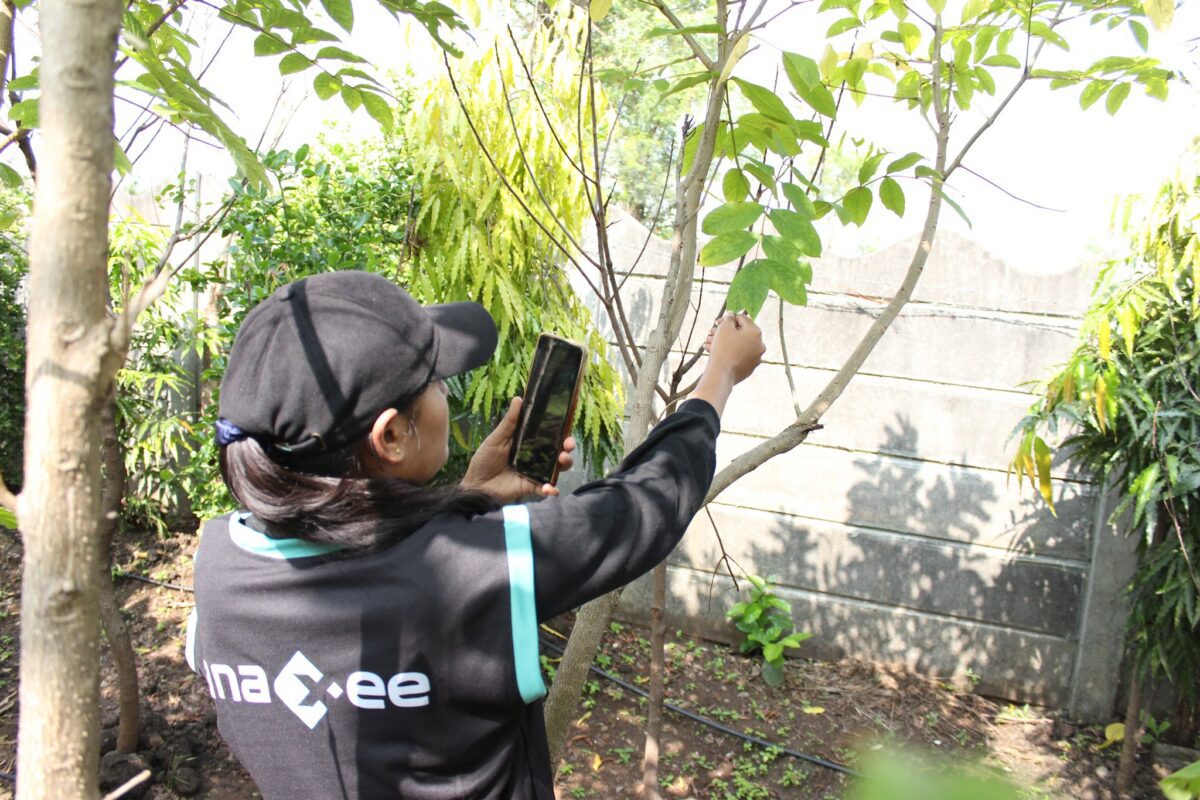
 About Anaxee