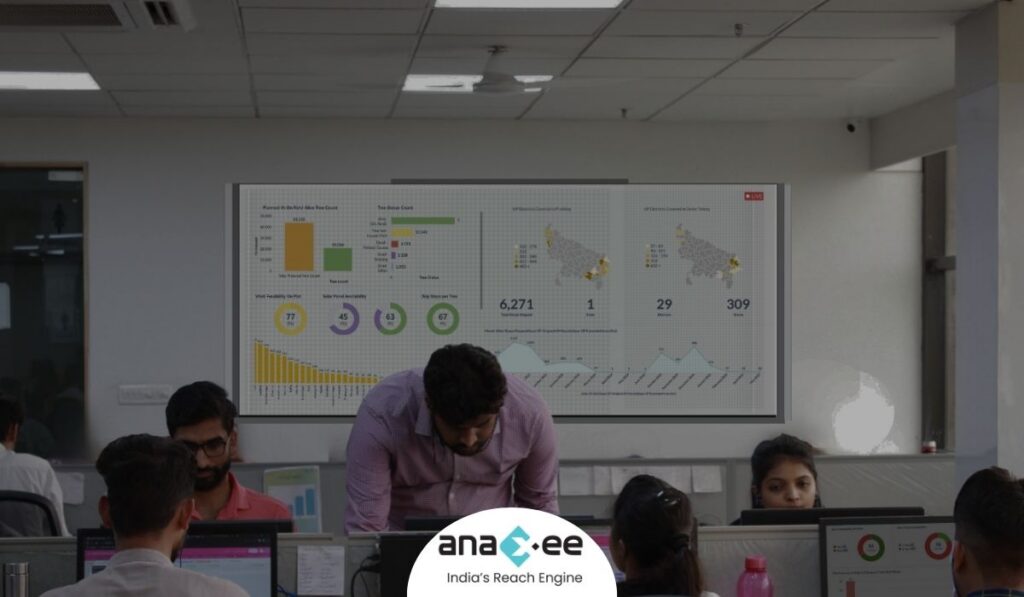
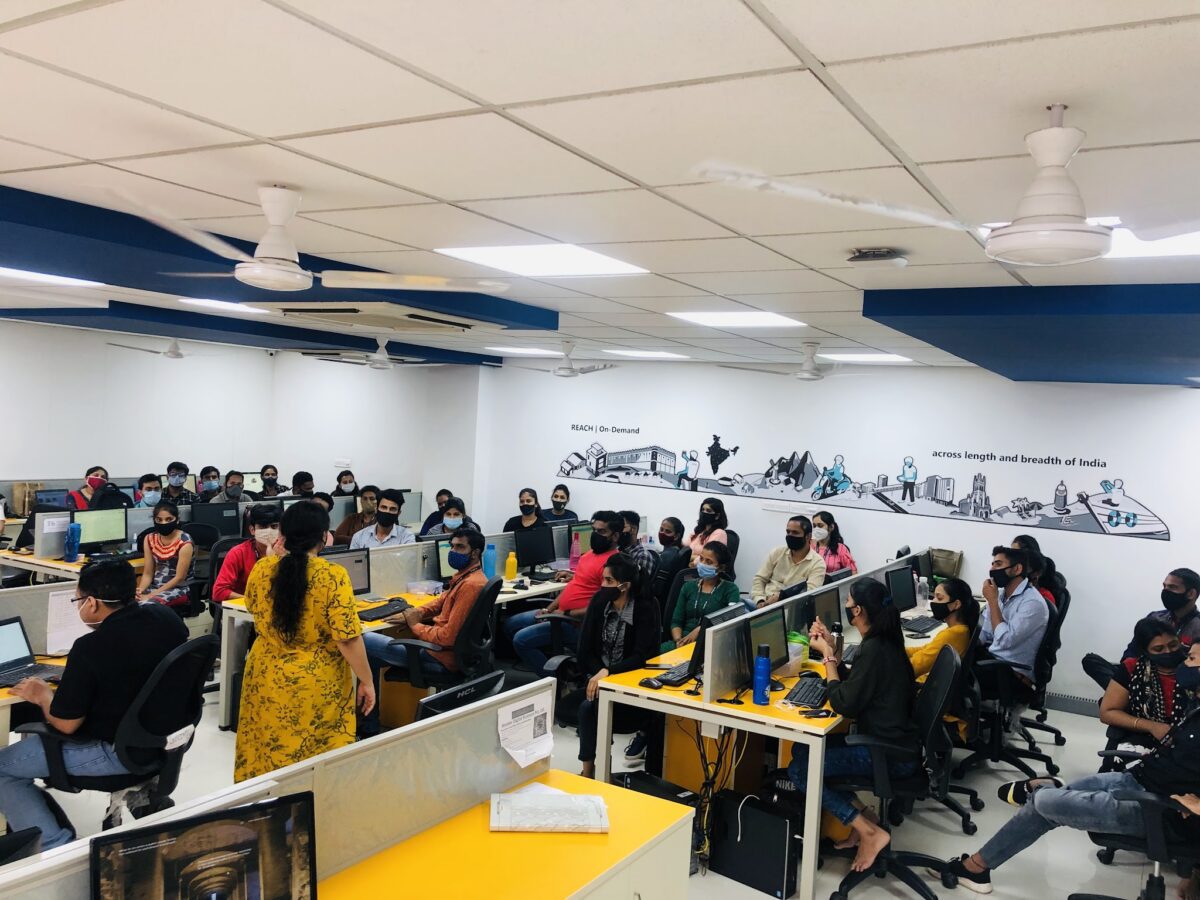
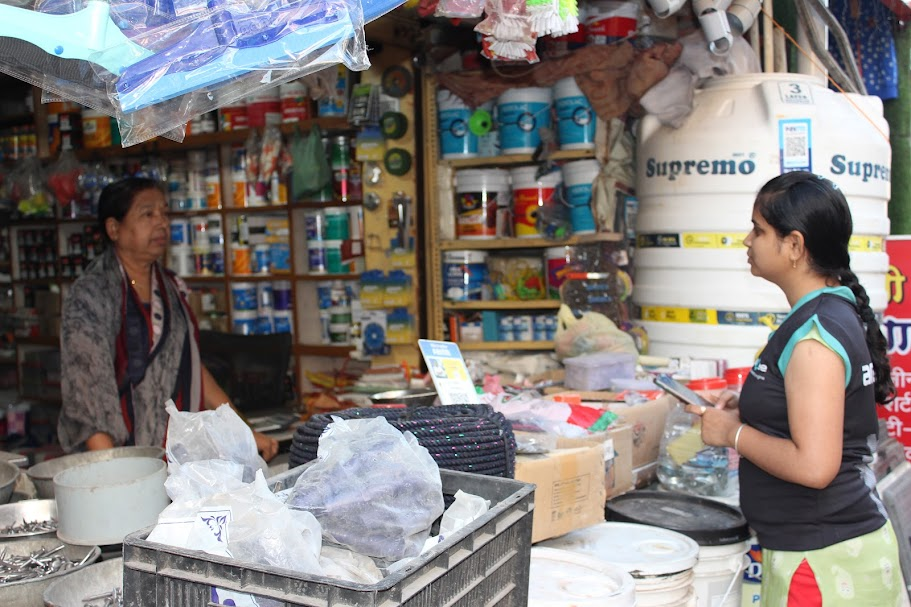
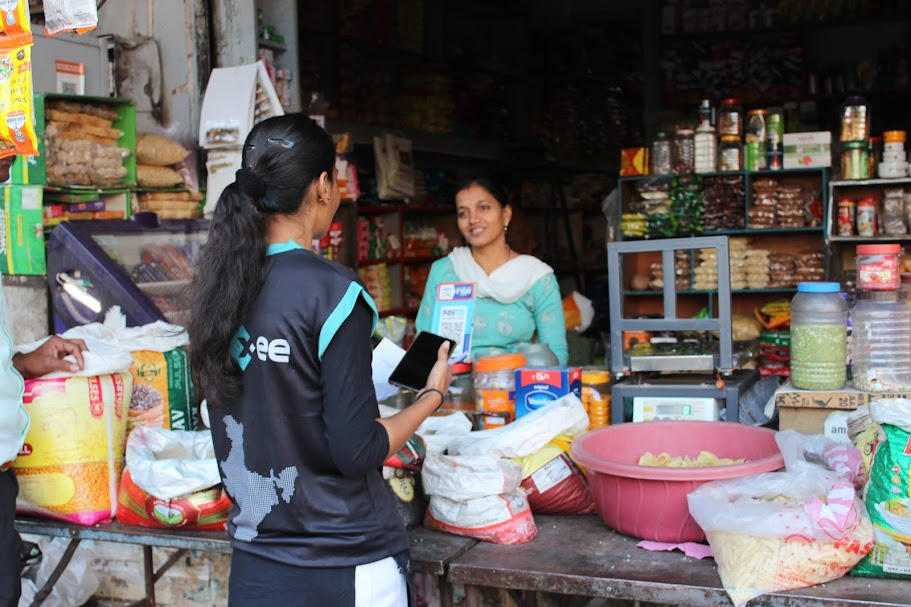
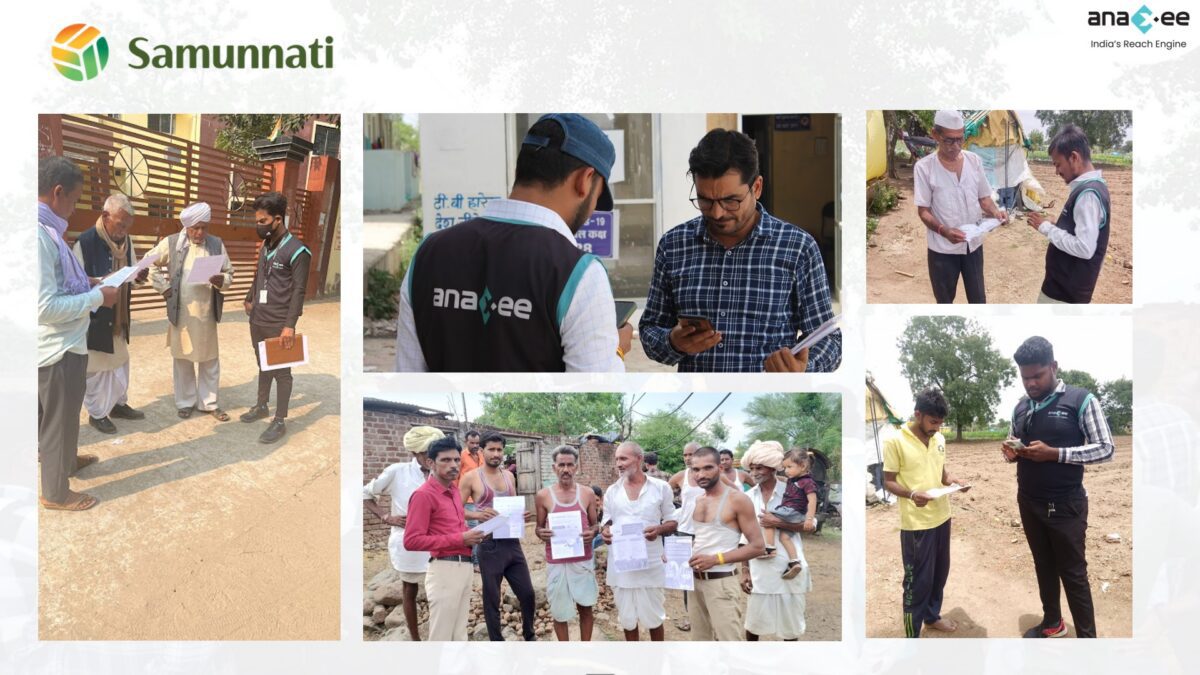
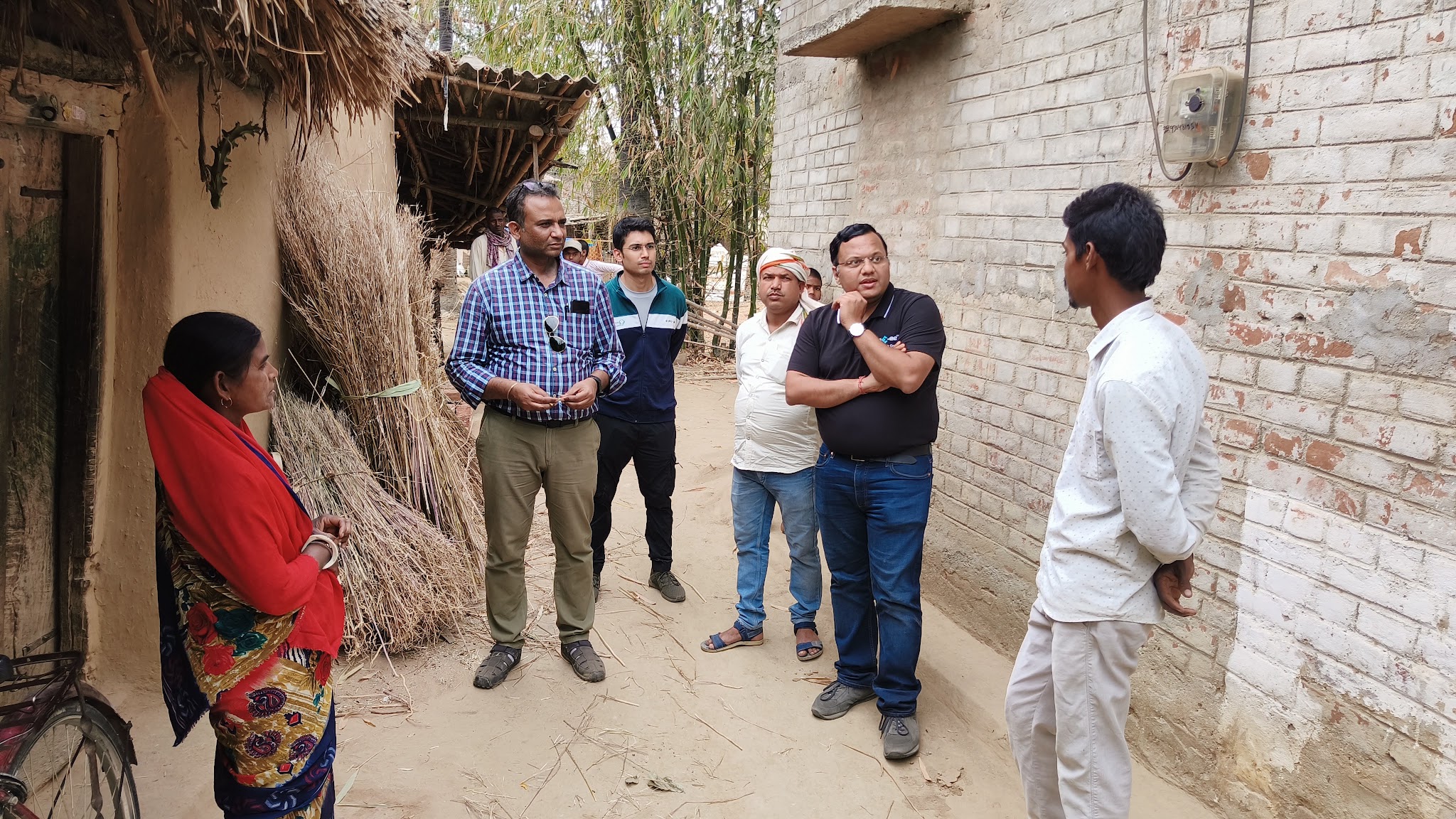
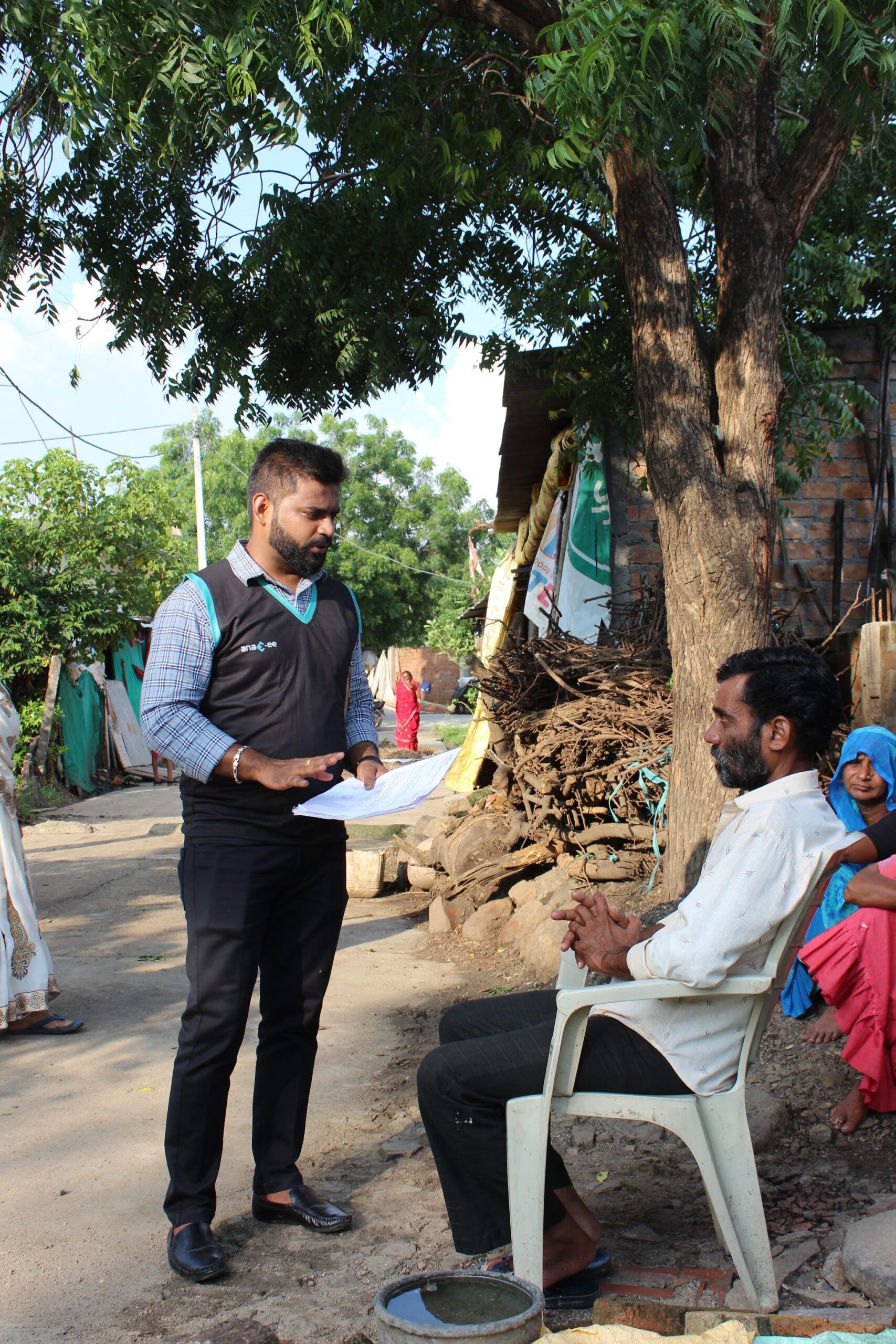
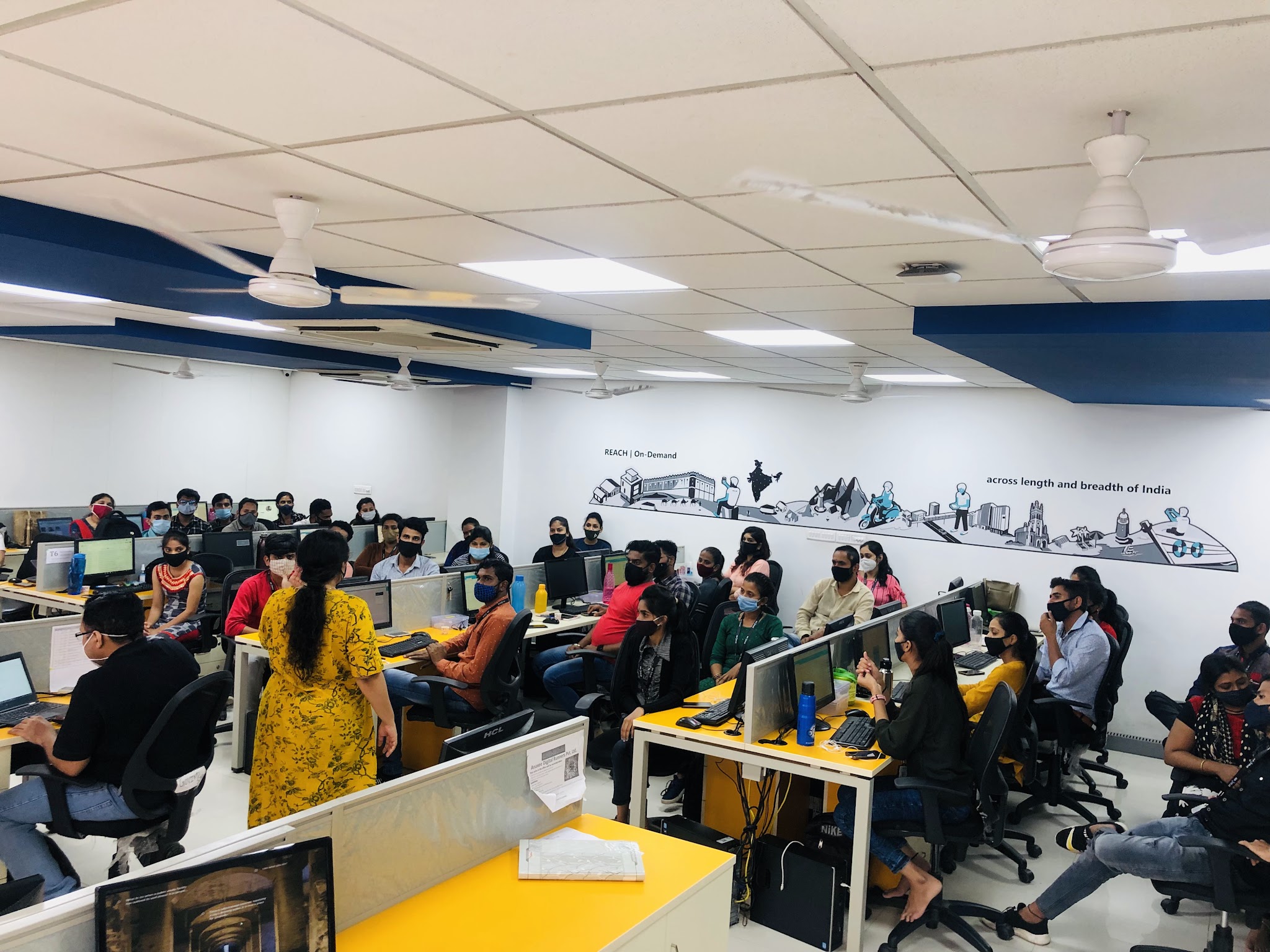
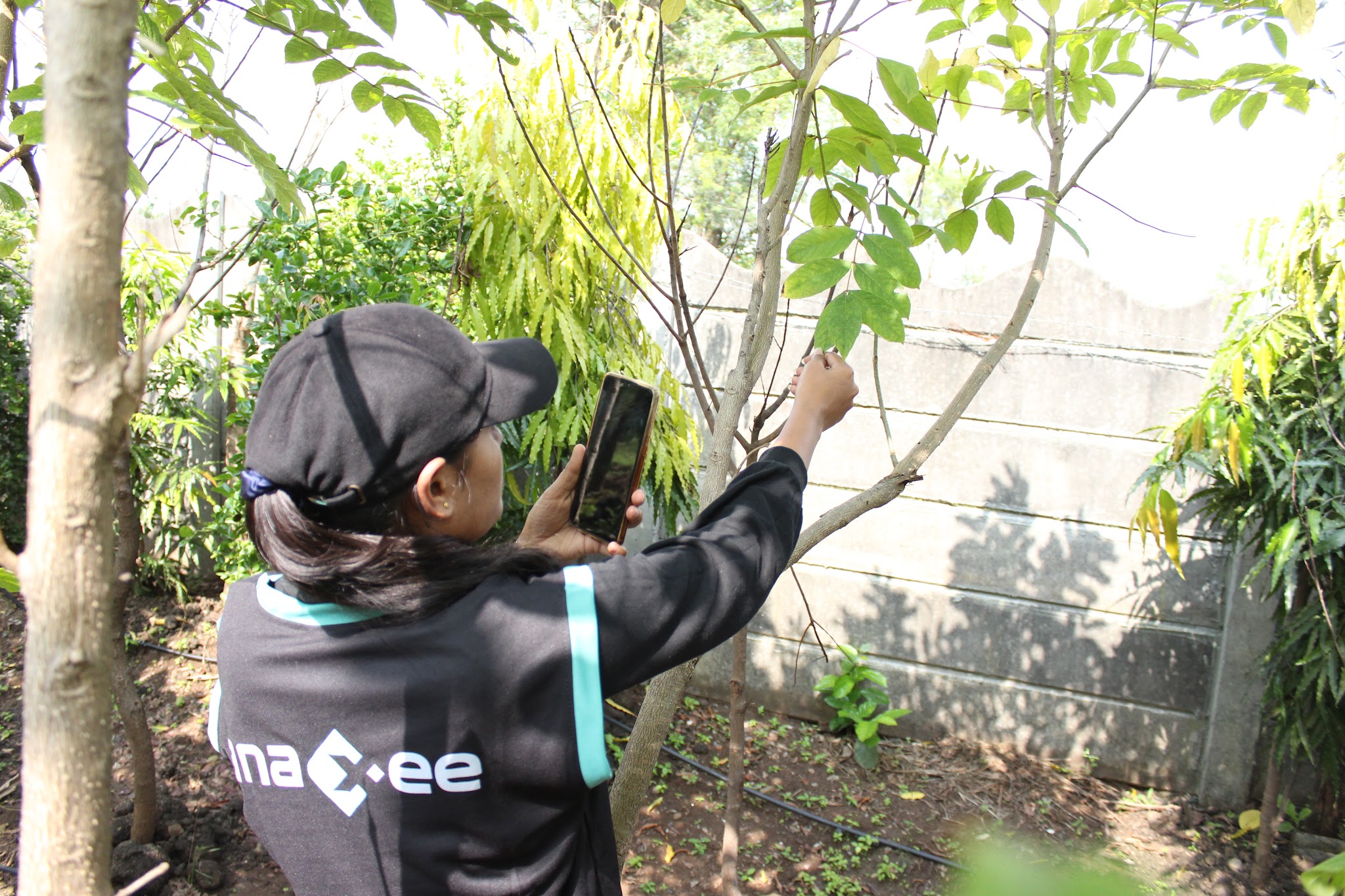
Market expansion means growing a brand into new geographies – a South-India brand moving North or West, a national brand entering states it skipped, a global brand spreading across India. Learn why expansion stalls and how to enter new states with an on-ground partner instead of a payroll.
Quick answer: Market expansion is growing a brand into geographies where it does not yet sell — a South-India brand moving into the North or West, a national brand entering states it skipped, or a global company spreading across India. The blocker is rarely demand; it is feet on the ground — finding and onboarding the right retailers, state by state, without hiring a fixed team in every region. Anaxee is that on-ground expansion partner across 540 districts: one partner, full transparency, and a system you can repeat in every new state.
About Anaxee
40,000+ Digital Runners · 540 districts · 26 states · 11,000+ pincodes of reach
★ Winner, National Startup Award (Govt. of India)Trusted by 350+ brands & institutionsIndia’s Reach Engine since 2016
Most brands hit a ceiling that has nothing to do with their product. They are strong in their home region, and then the map stops — whole states where they are simply not present, because building a sales and distribution operation there from scratch is slow, expensive and risky. That next leg of growth has a name: market expansion, taking the brand into new geographies. And in a country of 28 states, hundreds of districts and dozens of languages, the hard part is never the ambition — it is reaching the new market on the ground.
This guide explains what market expansion means, why it usually stalls, and how brands expand into new states and regions of India with a partner instead of a payroll.
Why expansion is an on-ground problem
~64%
of India’s population is rural — and the markets you have not entered yet are mostly here, beyond the metros
The states a brand has skipped are rarely the easy metros; they are the tier 2-4 towns and rural districts where demand is rising fastest and reach is hardest. Expansion lives or dies on whether you can get there.
Market expansion is a growth strategy: selling an existing product into new markets — new geographies, new regions, or new customer segments — rather than inventing new products. In India it almost always means geographic expansion: moving into states and regions where the brand has little or no presence, and building the reach to actually sell there.
Why expansion into new states stalls
You would have to hire a team in every state. A fixed field force per region is slow to build, expensive to carry, and hard to supervise from head office — a huge bet before you know the market works.
You don’t know the new market. Which towns, which retailers, which distributors — a new state is a blank map, and a distributor’s word is not the same as seeing it.
No visibility once you start. Appointing a distributor in a new state and hoping is how most expansions quietly leak — you cannot see whether the product is actually reaching shops.
Three ways brands expand — and how we help each
A regional brand going national. A South-India brand moving into the North and West, or the reverse. We map the new states, onboard the retailers and build the coverage, so your strong home region becomes a national footprint.
A national brand entering the states it skipped. Even big brands have blank states — present everywhere except, say, Madhya Pradesh or Bihar. We become your partner in that state, so you fill the gap without standing up a whole new operation.
A global company spreading across India. One partner to plan and run the whole distribution system across geographies — full transparency, world-class systems, no need to hire hundreds of people. The same model can be replicated in your other markets.
Your partner in every state, instead of a payroll in every state
The expensive way to expand is to replicate your head-office sales machine in each new region. The faster, lighter way is a single on-ground partner that is already present everywhere: a field network across 540 districts that can switch on in any state, map the market, onboard distributors and retailers, run the beat, and hand you a live, verified view of your new coverage — the same way, with the same quality and the same dashboard, whether the state is Madhya Pradesh, Maharashtra, Bihar or Uttar Pradesh. You get the reach of a thousand-person team without carrying one, and you prove each state with a pilot before you commit.
Fun fact: some of the fastest national expansions in India were built not by hiring region by region, but by plugging into a field network that was already there — turning a six-month, state-by-state hiring slog into a campaign that switches on in weeks.
Expanding to a new state — or going national?
Tell us where you are strong and where you want to grow. Anaxee maps the new market, onboards the channel and proves one state with a pilot before you scale. See the go-to-market playbook for Bharat.
Expanding blind is what makes it risky. On the Anaxee model every target outlet in the new state is mapped on an app; each visit is geo-tagged, time-stamped and photographed to a live dashboard and API, with AI reading the field photos to keep the data real. So from week one you can see your new market being built — shop by shop, district by district — and the exact same system works in the next state, and the next.
How Anaxee helps you expand to new geographies
Anaxee — India’s Reach Engine, a National Startup Award winner — is the on-ground partner that makes expansion a campaign rather than a build-out: 40,000+ Digital Runners across 540 districts and 11,000+ pincodes who map a new state, onboard its distributors and retailers, run the beat and feed it to a live dashboard — so you enter a new geography with reach, transparency and a system you can repeat everywhere. It is the engine behind a route to market and a distribution strategy, and the execution half of any market entry or go-to-market plan. See how we build distributor networks and reach rural retailers, and how brands grow their retail reach.
Helping brands widen their footprint into new cities, districts and states — for consumer, durable, auto and agri categories. (A Chennai-based kitchen-appliance brand expanded into 120 cities and 27 new districts with Anaxee on the ground.) See all case studies →
What happens when you reach out to Anaxee
Tell us the market — the product, the geographies and the channel you want to build — by form, WhatsApp or a call.
A real person calls back — our Indore team, within one working day.
We scope a pilot — one market mapped and activated, so you see the coverage and the data quality before you scale nationally.
A 150+ person team in Indore and 40,000+ Digital Runners on the ground — your enquiry reaches people who run field programmes every day, not an inbox that goes quiet.
Frequently asked questions
What is market expansion?
Market expansion is a growth strategy of selling your existing product into new markets — new geographies, regions or customer segments — rather than developing new products. In India it usually means geographic expansion: entering states and regions where the brand has little or no presence.
How do I expand my brand to a new state in India?
The reliable way is a phased, on-ground rollout: map the new state (its towns, retailers and distributors), onboard the channel, and run a pilot to prove reach and unit economics before you scale — rather than appointing a distributor and hoping. Anaxee runs that build for you with a field network already present in every state.
Do I need to hire a team in every state to expand?
No. Hiring a fixed field force in each region is slow, costly and hard to supervise. With an on-ground partner like Anaxee — already present across 540 districts — you get the reach of a large team in a new state on a pay-per-task basis, and prove the state with a pilot before committing.
Can Anaxee be our expansion partner in just one state?
Yes. Many brands are strong nationally but absent in one or two states — for example present everywhere except Madhya Pradesh or Bihar. Anaxee becomes your on-ground partner in exactly those states, mapping the market and onboarding the channel, so you fill the gap without building a new operation.
Can a foreign or global brand use Anaxee to spread across India?
Yes. For a company entering or scaling in India, Anaxee can plan and run the distribution across geographies as a single partner — full transparency, world-class systems and a live dashboard — so you reach the whole country without hiring hundreds of people. See market entry strategy for the entry side.
How does Anaxee help with market expansion?
Anaxee maps the new geography, onboards its distributors and retailers, runs the field beat and gives you a live, verified view of your new coverage — the same system in every state. It turns a state-by-state hiring build into a campaign you switch on. See the go-to-market playbook for Bharat.
The bottom line
Market expansion is how a brand grows past its home region — into the states and towns where it is not yet present. The demand is usually there; the reach is not. The brands that expand well do not rebuild their sales machine in every state — they plug into one that is already on the ground, prove each market with a pilot, and scale on what works. That on-ground reach, in every state, is exactly what Anaxee provides.
Ready to open a new state or two?
Tell us where you want to grow and we will scope a pilot — one new market mapped, activated and tracked live before you scale.
Route to market (RTM) is the strategy and structure a brand uses to get its product from factory to customer: the channels, partners and field model. Learn the RTM models (direct, indirect, hybrid), RTM vs GTM vs distribution, and what running an RTM takes in India.
Quick answer: Route to market (RTM) is the strategy and structure a company uses to get its product from the factory to the customer — which channels it uses, which partners (distributors, super-stockists, wholesalers, retailers) operate each one, and how the field team covers every outlet. It is the selling-and-delivery engine inside a go-to-market plan. The models are direct, indirect (distributor / wholesaler) and hybrid. In India the design is the easy part; executing the indirect route across a fragmented, multi-state retail base is the hard part — which is where Anaxee comes in.
About Anaxee
40,000+ Digital Runners · 540 districts · 26 states · 11,000+ pincodes of reach
★ Winner, National Startup Award (Govt. of India)Trusted by 350+ brands & institutionsIndia’s Reach Engine since 2016
A brand can have the right product, the right price and the right ad — and still fail because it never reaches the shelf. How it reaches the shelf has a name: route to market, or RTM. It is the term chief sales and marketing officers use for the whole machine that moves a product from the factory to the customer: the channels, the partners who run them, and the feet that cover the outlets. Two brands with the same product can win or lose on RTM alone — because one gets consistent distribution and execution, and the other does not.
This guide explains what route to market is, the common RTM models, how RTM differs from go-to-market and distribution strategy, and what running an RTM takes in India.
Why RTM is the hard part in India
12 million+
retail outlets your route to market has to reach — most of them small, independent general-trade shops
An RTM on a slide is simple. Reaching, servicing and seeing 12 million scattered outlets across a country — with the right frequency and the right data — is the real test of a route to market.
Route to market is the path — and the choices behind it — that a product takes from the producer to the end customer: which channels it sells through, which partners operate each channel, which types of outlet each partner serves, in which territories, and how the field force drives orders and visibility. It is the selling and distribution part of the supply chain, and one of the biggest things deciding a brand’s cost-to-serve and market reach.
The common route-to-market models
Direct route. Your own sales team sells and delivers — own stores, a field force, or direct-to-consumer (D2C). Full control over the brand, pricing and customer data, but you carry all the reach and cost yourself.
Indirect route. Distributors, super-stockists and wholesalers buy from you and serve the outlets. This is how most consumer goods reach India — wide reach and capital-light, but every tier takes a margin and the brand loses sight of the outlet.
Hybrid route. Direct for big accounts and modern trade, distributors for the long tail of small shops, D2C online on top. Most growing brands end up here — the discipline is one clear rule for which route owns which outlet.
Route to market in India: a long, multi-tier chain
Indian RTM is shaped by a vast, fragmented general-trade base — millions of independent retailers reached through a multi-tier chain: CFA → super-stockist → distributor → wholesaler → retailer. Each tier adds margin but extends reach. On top of that, brands tune the field model (a pre-sales beat where a rep takes orders ahead of delivery, versus van sales where stock travels with the rep), and decide which towns to service directly versus through wholesalers. Every one of these choices is really the same trade-off: more reach versus lower cost-to-serve. The brands that win keep tuning that balance with data, not assumption.
Route to market vs go-to-market vs distribution strategy
Go-to-market
Route to market
Distribution strategy
What it is
The whole plan to launch and sell a product
The sell-and-deliver path within it
The channel & coverage plan
Answers
Who to target, positioning, pricing — and the route
Which channels & partners sell and deliver, and how the field covers each outlet
Direct / indirect / hybrid, and how widely to sell
Think of it as
The strategy
The operating engine
The channel map
In short: RTM is a component of GTM — the part that actually moves the product — and it is wider than distribution strategy, because it decides not just the channels but who sells to each outlet, on what terms, and how the field team covers it. See our full guides to the go-to-market strategy and the distribution strategy.
Every new geography needs its own route to market
An RTM that works in the South may not work in the North. Trade structures, distributor strength, languages and buying habits differ state to state, so a brand expanding into new regions of India effectively has to design and build a fresh route to market in each one — find the right partners, map the outlets, and put feet on the ground — before it can scale. That build is exactly the work most brands have no team for.
Fun fact: a good route to market is invisible when it works — the product is just there, in the right shops, at the right price. It only becomes visible when it breaks: stockouts in some towns, dead weight in others, and a brand that cannot say which outlets it actually reaches.
Need to build or run your route to market in India?
Anaxee is the on-ground execution layer for an RTM — mapping outlets, onboarding the channel, running the beat and feeding it to a live dashboard, in any geography. See the go-to-market playbook for Bharat, or talk to our team.
A route to market is invisible without data — and that is where most RTMs fail. Field teams map every outlet on an app; each visit (order taken, shelf photographed, outlet profiled) is geo-tagged and time-stamped to a live dashboard and API, and AI reads the field photos to keep the data honest. For the first time a brand can see its RTM the way it sees its billing — coverage gaps, overlaps, cost-to-serve by geography — and redesign the route around what the data actually shows.
How Anaxee helps you run your route to market
An RTM on a slide earns nothing until someone reaches the outlets. Anaxee — India’s Reach Engine, a National Startup Award winner — is that execution layer: 40,000+ Digital Runners across 540 districts and 11,000+ pincodes who map the market, onboard distributors and retailers, run a regular beat and feed it all to a live dashboard — so the indirect route that reaches India’s long tail is one you can finally see and steer. It is the execution half of a distribution strategy and the go-to-market playbook, and the engine behind any market expansion. See how we strengthen distributor networks, reach rural retailers and run field sales.
Market mapping, channel onboarding and field execution run across India — the on-ground route to market for consumer, durable, auto and agri brands. See all case studies →
What happens when you reach out to Anaxee
Tell us the market — the product, the geographies and the channel you want to build — by form, WhatsApp or a call.
A real person calls back — our Indore team, within one working day.
We scope a pilot — one market mapped and activated, so you see the coverage and the data quality before you scale nationally.
A 150+ person team in Indore and 40,000+ Digital Runners on the ground — your enquiry reaches people who run field programmes every day, not an inbox that goes quiet.
Frequently asked questions
What is the full form of RTM?
RTM stands for route to market — the strategy and structure a brand uses to move its product from the factory to the end customer, including the channels, the distribution tiers (CFA, super-stockist, distributor, wholesaler, retailer) and the field-sales model that covers each outlet.
What is route to market?
Route to market is the path a product takes from the producer to the customer, and the choices behind it: which channels it sells through, which partners run each channel, which outlets each partner serves, and how the field team drives orders and visibility. It is the selling-and-distribution engine of a go-to-market plan.
What is the difference between RTM and GTM?
Go-to-market (GTM) is the broader plan — target customers, positioning, pricing and the route. Route to market (RTM) is the part of GTM that actually moves the product: the channels, partners, territories and field work that get it to the shelf. RTM is a component of GTM.
Is route to market the same as a distribution strategy?
Not quite. A distribution strategy is mostly about the channels and coverage a product moves through. Route to market is wider — it also decides who sells to each outlet, on what terms, and how the field team covers it. Distribution strategy is part of the RTM.
What are the route-to-market models?
Three broad models: direct (your own team sells and delivers, including D2C), indirect (distributors, super-stockists and wholesalers serve the outlets), and hybrid (direct for big accounts, distributors for the long tail). Most growing brands run a hybrid route, with a clear rule for which route owns which outlet.
How does Anaxee help with route to market in India?
Anaxee is the on-ground execution layer for an RTM — mapping outlets, onboarding distributors and retailers, running the beat and feeding it to a live dashboard across 540 districts. It makes the indirect route that reaches India’s long tail visible and measurable. See the go-to-market playbook for Bharat.
The bottom line
Route to market is how your product actually reaches its customers — the channels, the partners and the feet behind the plan. The design is the easy half; executing and seeing it, across India’s millions of scattered outlets, is where brands win or lose. That on-ground execution and visibility is exactly what Anaxee was built for.
Ready to make your route to market real?
Tell us the product and the geography and we will scope a pilot — one territory where your RTM is mapped, activated and tracked live.
Channel sales is selling through third-party partners – distributors, dealers, resellers – instead of directly. Learn channel sales vs direct sales, partner types, channel conflict, and what running a sales channel takes in India.
Quick answer: Channel sales (also called indirect sales or partner sales) is selling your product through third-party partners — distributors, dealers, resellers, retailers — rather than directly to the end customer with your own team. It trades some control and margin for far wider reach. The opposite is direct sales. Channel sales win on reach; they are hard because a partner only sells what is worth their time, and because the brand loses sight of what happens past the partner — which is the gap Anaxee closes on the ground in India.
About Anaxee
40,000+ Digital Runners · 540 districts · 26 states · 11,000+ pincodes of reach
★ Winner, National Startup Award (Govt. of India)Trusted by 350+ brands & institutionsIndia’s Reach Engine since 2016
No brand can put its own salespeople in every town. So most sell through other people’s — distributors, dealers, retailers, resellers — and that model has a name: channel sales. Done well, it turns a network of partners into an extended salesforce and multiplies a brand’s reach. Done badly, it becomes a set of partners the brand can neither see nor steer. The difference is almost never the strategy on paper; it is whether the brand can actually enable and track the channel.
This guide explains what channel sales is, how it differs from direct sales, the types of channel partner, the pitfalls like channel conflict, and what running a channel takes in India.
Why channel sales is unavoidable in India
~90%
of India’s retail is traditional (general) trade — a channel no brand can sell to directly
With the vast majority of sales flowing through independent shops reached by distributors and wholesalers, selling in India is selling through a channel. The only question is how well you run it.
Channel sales is a sales model in which a company sells its product through partner organisations — distributors, dealers, wholesalers, retailers, resellers or agents — who sell on to the end customer. Because the brand does not sell directly, it is also called indirect sales. It is the opposite of direct sales, where the brand’s own team owns every deal.
Channel sales vs direct sales
Direct sales
Channel sales
Who sells
The brand’s own team
Third-party partners
Reach
Limited by your headcount
As wide as the partner network
Control & margin
High — you own the customer and the full margin
Lower — partners take a margin and own the relationship
Cost & speed to scale
Slow and expensive to expand
Fast and capital-light
Visibility
Full — every deal is yours
Low — the brand is blind past the partner
Most brands run both motions: direct for the accounts they must own, channel for the markets and segments a direct team could never cover economically. In India, the channel motion carries the bulk of the volume.
Types of channel partner
Distributors & super-stockists. Buy in volume and supply the next layer — wholesalers, dealers and retailers — across a territory. The backbone of the channel in India.
Dealers & retailers. The outlets that actually sell to the shopper — kirana, category shops, dealerships — the last link before the customer.
Resellers & VARs. Resell the product, often adding services or integration — common in technology and equipment channels.
Agents, affiliates & alliances. Generate leads or refer customers for a commission, or sell complementary products alongside their own.
How channel sales works — and where it breaks
Running a channel is really the discipline of treating partners as customers in their own right: recruit the right ones, enable them (product, pricing, selling know-how), and motivate them so they choose to sell your product over the alternatives on their shelf. Where channel programmes break is usually one of three places:
No partner data. The brand cannot see what partners actually sell, stock or push — so it cannot support, reward or fix the relationship.
Channel conflict. Direct and channel teams — or two partners — competing for the same customer sours partner trust. Clear rules on who sells what, where, prevent it.
Weak enablement. If selling your product is not worth a partner’s time — thin margin, no training, no support — it loses to whatever else they carry.
Fun fact: a channel partner will always sell what is easiest and most rewarding to sell. Brands that win the channel are not the ones with the best product on paper — they are the ones that show up, support the partner, and make selling their product the path of least resistance.
Channel sales in India: the reach is the point, the visibility is the problem
In India, channel sales is not a choice between direct and indirect — with roughly nine in ten retail rupees flowing through traditional trade, selling means selling through a channel. The strength is reach: a distributor-dealer-retailer network can put a product in towns a direct team would never reach. The weakness is the same as everywhere, only bigger — the brand is blind beyond its distributor, across thousands of outlets, and has no way to know which partners are actually selling and which are coasting. Closing that visibility gap is what separates a channel that grows from one that quietly leaks.
Running a channel you can’t fully see?
Anaxee is the on-ground layer for a channel — onboarding and profiling partners, taking orders, auditing outlets and feeding it to a live dashboard, so you can see and steer the channel past the distributor. See how we manage distributor networks.
Every partner and outlet is mapped on an app; each field visit — order taken, shelf photographed, partner profiled — is geo-tagged and time-stamped to a live dashboard and API, with AI reading the photos to keep the data honest. For the first time a brand can see channel performance partner by partner, town by town — and act on it while it still matters.
How Anaxee helps you run your channel
A channel strategy only earns revenue when someone works the partners on the ground. Anaxee — India’s Reach Engine, a National Startup Award winner — is that execution layer: 40,000+ Digital Runners across 540 districts and 11,000+ pincodes who onboard and profile channel partners, take orders and build a regular beat, and audit outlets, feeding it all to a live dashboard — so the channel you sell through is one you can actually see and manage. It is the execution half of a distribution strategy and the go-to-market playbook. See how we reach rural retailers and run field sales.
Channel-partner onboarding, order-taking and outlet audits run across India for consumer, durable, auto, electronics and agri brands. See all case studies →
What happens when you reach out to Anaxee
Tell us the market — the product, the geographies and the channel you want to build — by form, WhatsApp or a call.
A real person calls back — our Indore team, within one working day.
We scope a pilot — one market mapped and activated, so you see the coverage and the data quality before you scale nationally.
A 150+ person team in Indore and 40,000+ Digital Runners on the ground — your enquiry reaches people who run field programmes every day, not an inbox that goes quiet.
Frequently asked questions
What is channel sales?
Channel sales is selling your product through third-party partners — distributors, dealers, resellers, retailers or agents — rather than directly to the end customer with your own team. Because the sale goes through a partner, it is also called indirect sales.
What is the difference between channel sales and direct sales?
Direct sales means your own team sells straight to the end customer, giving full control and margin but limited reach. Channel sales uses partners to sell on your behalf, giving far wider reach for less cost — at the price of some control, margin and visibility into the end customer.
What are the types of channel partner?
The main types are distributors and super-stockists (buy in volume and supply the next layer), dealers and retailers (sell to the shopper), resellers and VARs (resell, often adding services), and agents, affiliates and alliances (refer or sell alongside their own products).
What is channel conflict?
Channel conflict is when a brand’s direct and channel teams — or two partners — compete for the same customer, souring partner trust. It is prevented with clear rules on which products, segments or territories are sold direct versus through the channel, and consistent pricing across both.
How is channel sales different from a distribution strategy?
Channel sales is the sales model — the decision to sell through partners and how to enable them. A distribution strategy is the broader plan for the channels and coverage a product moves through to reach customers. Channel sales is one motion inside a distribution strategy; both need on-ground execution to work.
How does Anaxee help with channel sales in India?
Anaxee is the on-ground execution layer — onboarding and profiling channel partners, taking orders, auditing outlets and building a beat across 540 districts, all on a live dashboard. It gives a brand reach and visibility beyond its distributor. See distributor management.
The bottom line
Channel sales is how most brands reach most customers — selling through partners instead of a direct team. The reach is the whole point; the risk is losing sight of the channel you depend on. The brands that win the channel are the ones that enable their partners and can actually see what is happening on the ground, partner by partner. That on-ground execution and visibility is exactly what Anaxee provides.
Want a channel you can see and steer?
Tell us the market and we will scope a pilot — one territory where your partners are onboarded, worked and tracked live.
Secondary sales are sales from distributor to retailer – the stock that actually moves into the market. Learn primary vs secondary vs tertiary sales (sell-in, sell-out, offtake), why secondary is the blind spot, and how brands capture it in India.
Quick answer: Secondary sales are the sales a distributor makes to retailers — the stock that actually moves out of the distributor’s warehouse into the market. It sits between primary sales (brand to distributor, the invoiced revenue) and tertiary sales (retailer to shopper, the true demand). Secondary sales are the number most brands cannot see, because the data belongs to the distributor — and that blind spot is where stock piles up and competitors win counters. Capturing it takes someone at the shop: a field force taking orders on an app, which is what Anaxee runs.
About Anaxee
40,000+ Digital Runners · 540 districts · 26 states · 11,000+ pincodes of reach
★ Winner, National Startup Award (Govt. of India)Trusted by 350+ brands & institutionsIndia’s Reach Engine since 2016
Ask a brand what it sold last month and it can answer to the unit. Ask where those units are now — which shops stock them, what is still sitting in the distributor’s godown — and the answer is usually a guess. That gap has a name: secondary sales, the layer of the channel most brands fly blind through. It is also the layer that tells you whether your business is actually healthy or just looks that way on the primary invoice.
This guide explains what primary, secondary and tertiary sales are, why secondary sales are so hard to see, and how brands capture them on the ground in India.
The market you are selling into
12 million+
retail outlets in India — where your secondary sales actually land, and where you usually cannot see
Secondary sales means stock moving into millions of small, independent shops. Without someone at the counter, a brand only ever sees the first hop — the invoice to the distributor.
In any distribution channel, a product changes hands a few times on its way from the factory to the shopper. Each handoff is a different level of sales:
Primary sales (sell-in). Brand to distributor. The distributor is billed, so this is the brand’s invoiced revenue — clean, instant, and sitting in the brand’s own ERP.
Secondary sales (sell-out). Distributor to retailer. The stock that has genuinely moved into the market — the best read of real demand a brand can get regularly.
Tertiary sales (offtake). Retailer to shopper. The truest measure of demand — and the hardest to capture, because in general trade the counter is a notebook, not a till.
Primary (sell-in)
Secondary (sell-out)
Tertiary (offtake)
From → to
Brand → distributor
Distributor → retailer
Retailer → shopper
Who records it
The brand
The distributor
Often nobody
How easy to see
Easy — own ERP
Medium — needs distributor / field data
Hard — audits, scans, surveys
What it tells you
What you shipped
What the market asked for
What the shopper bought
Why secondary sales are the number brands can’t see
Primary sales are easy to measure — every dispatch triggers an invoice. That is exactly why brands over-rely on them, and why a healthy-looking primary number can lie. A distributor can be pushed to take more stock than the market can absorb (“channel stuffing”); revenue looks great this quarter, and the problem — stock stuck in the godown, nothing moving at retail — only surfaces later. The real health of the business is in the secondary number, and that is the one brands struggle to get:
The data belongs to someone else. Distributors record their own sales in their own systems and share what they choose — usually late, and incomplete.
Reports arrive weeks late. A monthly secondary report, compiled from spreadsheets, is already stale by the time anyone reads it — too late to act on a stockout or a slump.
The pipeline illusion. Strong primary with weak secondary means stock is sitting in the warehouse, not selling — and next month’s primary orders will dry up.
Fun fact: top FMCG companies run their whole field machine on secondary, not primary — they judge every scheme and every territory on what actually moved out to retailers, because they learned long ago that a distributor’s purchase order is a promise, and a retailer’s order is a fact.
How brands capture secondary sales in India
In India’s general trade — the 12 million-plus small independent shops that move most of the volume — there is no till exporting clean data. Secondary sales get captured one way that actually works at scale: a person at the counter. A field rep walks the beat, and as they take each retailer’s order on an app, that order is the secondary-sales record — SKU, quantity, named outlet, geo-tag, timestamp — instead of a monthly Excel file from the distributor. Pair that with periodic retail audits (what is on the shelf, what the competitor holds) and a brand finally sees past its distributor.
Can’t see what moves past your distributor?
Anaxee puts a field force at the counter — taking orders, auditing shelves and capturing secondary and tertiary sales on a live dashboard, shop by shop. See how we keep distribution networks honest and productive.
Every counter visit — order taken, shelf photographed, stock counted — is geo-tagged and time-stamped on the Anaxee Partner app and flows to a live dashboard and API. AI reads the field photos and flags visits that do not add up, so the secondary-sales data is real rather than filled in from a tea shop. The brand sees sell-out the way it sees sell-in — live, by outlet, by territory, by SKU.
How Anaxee helps you see your secondary sales
Anaxee — India’s Reach Engine, a National Startup Award winner — is the on-ground layer that captures what happens past the distributor: 40,000+ Digital Runners across 540 districts and 11,000+ pincodes who take retailer orders, audit shelves and stock, and onboard and profile outlets, feeding secondary and tertiary data to a live dashboard. It is the missing half of a distribution strategy — the part that tells you whether the strategy is actually working. See how we run field sales, reach rural retailers and audit retail for consumer, durable, auto and agri brands.
Retailer order-taking, shelf audits and outlet onboarding run across India — the field layer that turns secondary sales from a guess into data. See all case studies →
What happens when you reach out to Anaxee
Tell us the market — the product, the geographies and the channel you want to build — by form, WhatsApp or a call.
A real person calls back — our Indore team, within one working day.
We scope a pilot — one market mapped and activated, so you see the coverage and the data quality before you scale nationally.
A 150+ person team in Indore and 40,000+ Digital Runners on the ground — your enquiry reaches people who run field programmes every day, not an inbox that goes quiet.
Frequently asked questions
What are secondary sales?
Secondary sales are the sales a distributor makes to retailers — the stock that moves out of the distributor’s warehouse into the market. They sit between primary sales (brand to distributor) and tertiary sales (retailer to shopper), and are the best regular read of real demand a brand can get.
What is the difference between primary, secondary and tertiary sales?
Primary sales are sell-in, from brand to distributor, and book the brand’s revenue. Secondary sales are sell-out, from distributor to retailer. Tertiary sales are offtake, from retailer to shopper, and confirm true demand. The further the product travels from the factory, the less the brand can see.
What do sell-in and sell-out mean?
Sell-in is another name for primary sales — the stock a distributor buys from the brand. Sell-out is secondary sales — the stock the distributor moves on to retailers. Healthy sell-in with weak sell-out means the stock is stuck in the warehouse, not selling.
Why are secondary sales hard to track?
Because the data belongs to the distributor, not the brand — recorded in the distributor’s own system and shared late and incompletely. In India’s general trade there is no till at the counter, so the reliable way to capture secondary sales is a field rep taking each retailer’s order on an app.
Can primary sales grow while secondary sales stay flat?
Yes — and it is a warning sign. If a distributor is loaded with more stock than the market absorbs (channel stuffing), primary revenue rises while secondary stays flat and stock piles up in the godown. Sooner or later primary orders collapse to clear it. That is why brands judge health on secondary, not primary.
How does Anaxee help track secondary sales?
Anaxee puts a field force at the counter across 540 districts — taking retailer orders on an app (each order is a secondary-sales record), auditing shelves and stock, and feeding it all to a live dashboard with AI photo checks. It gives a brand sell-out visibility beyond its distributor. See distributor management.
The bottom line
Primary sales tell you what you shipped; secondary sales tell you what the market actually asked for. The brands that grow are the ones that stop managing on the invoice and start seeing the sell-out — shop by shop, past the distributor. In India’s general trade that takes a person at the counter, and that on-ground capture is what Anaxee does.
Want to see your sales past the distributor?
Tell us the market and we will scope a pilot — one territory where you see secondary and tertiary sales live, by outlet.
A market entry strategy is a company’s plan for entering a new market: the modes of entry (exporting, licensing, joint venture, acquisition, greenfield), the factors that decide which fits, and what entering the India market actually takes on the ground.
Quick answer: A market entry strategy is a company’s plan for taking a product or service into a new market — a new country, or a new region or customer segment at home. It sets which market to enter first, what to offer, at what price, and through which mode of entry — exporting, licensing or franchising, a joint venture, an acquisition, or building your own operation. For India, choosing the mode is the easy part; the hard part is physically reaching and activating a market of 1.4 billion people spread across 650,000 villages and thousands of towns — which is where Anaxee comes in.
About Anaxee
40,000+ Digital Runners · 540 districts · 26 states · 11,000+ pincodes of reach
★ Winner, National Startup Award (Govt. of India)Trusted by 350+ brands & institutionsIndia’s Reach Engine since 2016
Every new market looks like an opportunity on a slide. The ones that work are the ones with a plan behind them. A market entry strategy is that plan: how a company will take its product into a market it does not yet sell in, and win there rather than burn cash learning the hard way. Get the entry mode, the pricing and the on-ground execution right and you build a real position; get them wrong and a good product stalls at the border of the market.
This guide explains what a market entry strategy is, the main modes of entry, the factors that decide which one fits, and what entering a market actually takes in India.
Why India is an execution problem, not just a strategy one
~64%
of India’s population is rural — the market most entry plans underestimate
Entering India is rarely about the metros. The real market sits across 650,000 villages and thousands of small towns, and reaching it on the ground is what most entry strategies never budget for.
A market entry strategy is a structured plan for delivering a product or service into a new market and establishing a position there. It brings together a few decisions: which market (or segment) to enter and in what order, the value proposition and pricing for that market, the barriers to entry, and — the decision everything else hangs on — the mode of entry: how you actually operate in the market.
The main modes of market entry
Entry modes trade off speed, control and cost. The common ones, from lowest commitment to highest:
Exporting. Sell into the market directly or through an importer/distributor. Fast and low-risk, but you have little control over how the product is sold on the ground.
Licensing & franchising. Let a local partner make or sell under your brand and system for a fee or royalty. Quick reach with low capital, but you hand over day-to-day control and some brand risk.
Joint venture / partnership. Team up with a local company — sometimes a legal requirement — sharing cost, risk and local know-how. More control than licensing; you depend on the partner.
Acquisition. Buy an existing local company to get instant reach, team and distribution. Fast and high-control, but the most expensive and the hardest to integrate.
Wholly owned / greenfield. Build your own operation from scratch — maximum control and upside, highest cost, and the slowest to generate revenue.
Grouped simply, most entry plans come down to four choices: export into the market, license or franchise the offer, partner through a joint venture, or build or buy a local operation. Each is a different balance of speed, control and cost — and the right one depends on how concentrated the market is, how much control you need over the brand, and how much you can invest.
What decides the right entry strategy
Market research. Real demand, what buyers already pay for the category, and who holds the shelf — counted in the market itself, not assumed from the home market.
Pricing & positioning. A price carried over from the home market usually lands wrong. Price and proposition have to fit what the new market recognises.
Barriers to entry. Regulation, local licensing, foreign-ownership rules, tariffs, and incumbents who already own the counter.
Reach & localisation. How far the market is physically spread, how many languages it speaks, and whether you can actually get your product and message to it.
Entering the India market: the real barrier is the last mile
For most brands entering India — whether a foreign company coming in, or an Indian brand pushing into a new state or into Bharat beyond the metros — the entry-mode decision gets most of the attention, and it is the easy part. The hard part shows up after: a brand picks a distributor, lists the product, runs some advertising, and then discovers the market is far larger and far more scattered than the plan assumed. Demand exists in thousands of towns the distributor never reaches; the brand has no feet on the ground to find out what is actually happening; and the entry quietly stalls at the top 50 districts.
Research & size the market
Pilot in one region
prove reach & unit economics first
Activate the channel
Scale across India
The brands that enter India well treat it as a phased, evidence-led rollout: map and size the market, pilot in one region to prove reach and unit economics before committing nationally, then scale on what actually worked. That only works if someone can physically reach the market, town by town, and feed back the truth.
Fun fact: plenty of global brands have entered India through a textbook joint venture or a big-bang launch and still struggled — not because the entry mode was wrong, but because nobody had built the reach to actually get the product in front of Bharat. The mode gets you in the door; execution decides whether you stay.
Entering India, or a new market within it?
Anaxee runs the on-ground half of a market entry — mapping the market, onboarding the channel and proving reach with a pilot before you scale. See the go-to-market playbook for Bharat, or talk to our team.
A market you have just entered is the one you know least about. Field teams map every target outlet and prospect on an app; each visit is geo-tagged, time-stamped and photographed, flowing to a live dashboard and API, and AI reads the field photos to flag visits that do not add up. So instead of guessing how the entry is going from a distributor’s monthly report, a brand can see its new market shop by shop, town by town, from week one.
How Anaxee helps you enter the India market
Deciding the entry mode is a boardroom call; executing it is a last-mile one. Anaxee — India’s Reach Engine, a National Startup Award winner — is the execution layer for a market entry: 40,000+ Digital Runners across 540 districts and 11,000+ pincodes who map and size the market, onboard distributors and retailers, run a pilot region so you prove reach before scaling, and feed it all to a live dashboard. It is how a brand turns an entry plan into real presence on the ground. See the go-to-market playbook for Bharat, the Bharat market opportunity, how we build and manage distribution, run field sales, and the wider distribution strategy behind it.
Market mapping, channel onboarding and pilot-to-scale rollouts run across India for consumer, durable, auto and agri brands entering new markets. See all case studies →
What happens when you reach out to Anaxee
Tell us the market — the product, the geographies and the channel you want to build — by form, WhatsApp or a call.
A real person calls back — our Indore team, within one working day.
We scope a pilot — one market mapped and activated, so you see the coverage and the data quality before you scale nationally.
A 150+ person team in Indore and 40,000+ Digital Runners on the ground — your enquiry reaches people who run field programmes every day, not an inbox that goes quiet.
Frequently asked questions
What is a market entry strategy?
A market entry strategy is a company’s plan for introducing its product or service into a new market — a new country, or a new region or customer segment. It covers which market to enter, the value proposition and pricing, the barriers, and the mode of entry (how the company will operate in the market).
What are the main modes of market entry?
The common modes are exporting, licensing and franchising, joint ventures or partnerships, acquisitions, and building a wholly owned (greenfield) operation. Each trades off speed, control and cost — exporting is fastest and lowest-risk, a wholly owned operation gives the most control at the highest cost.
What are the four market entry strategies?
Grouped into four, they are: export into the market; license or franchise the offer; partner through a joint venture; and build or buy a local operation. The right one depends on how concentrated the market is, how much brand control you need, and how much you can invest.
What is the difference between a market entry strategy and a go-to-market strategy?
A market entry strategy is the decision about whether and how to enter a new market — the mode, the sequencing, the investment. A go-to-market strategy is how you sell and win once you have decided to be there — channels, pricing, messaging and execution. Entry comes first; GTM is what makes the entry pay off.
How should a foreign brand enter the India market?
Usually as a phased, evidence-led rollout rather than a national big bang: research and size the real market (including rural and tier 2-4), pick an entry mode, pilot in one region to prove reach and unit economics, then scale on what worked. The recurring failure point is not the mode — it is underestimating how spread out the market is and having no way to reach it on the ground.
How does Anaxee help with market entry in India?
Anaxee is the on-ground execution layer — mapping and sizing the market, onboarding distributors and retailers, and running a pilot region across its 540-district network before you scale nationally, all on a live dashboard. It turns an entry plan into measurable reach. See the go-to-market playbook for Bharat.
The bottom line
A market entry strategy is the plan for taking your product into a new market and winning there — the mode of entry, the pricing, the barriers and the reach. In India especially, the strategy on paper is the easy half; the hard half is physically reaching a vast, scattered market and seeing what is actually happening. That execution is exactly what Anaxee was built for.
Ready to turn a market entry plan into real presence?
Tell us the market and we will scope a pilot — one region mapped and activated, so you see the reach before you scale.
A distribution strategy is the plan for how a product reaches customers: the channels (direct, indirect, hybrid) and the coverage intensity (intensive, selective, exclusive). The types, how channels work, and what it takes to run distribution across India’s 12 million+ shops.
Quick answer: A distribution channel is the path a product takes from the producer to the customer; a distribution strategy is the plan for which channels to use and how widely to sell. Channels are direct (you sell straight to the customer), indirect (through intermediaries like distributors, wholesalers and retailers), or hybrid. The strategy is then set by coverage intensity — intensive (everywhere), selective (chosen outlets) or exclusive (a few). In India, the chain is long and the retail base is huge and scattered, so the strategy only works if someone actually reaches the shops — which is what Anaxee does on the ground.
About Anaxee
40,000+ Digital Runners · 540 districts · 26 states · 11,000+ pincodes of reach
★ Winner, National Startup Award (Govt. of India)Trusted by 350+ brands & institutionsIndia’s Reach Engine since 2016
Making a product is the easy part. Getting it onto the right shelves, in the right towns, at the right price — that is distribution, and it is where most brands quietly lose. A distribution strategy is the plan for how your product reaches its customers: which distribution channels you use, how many intermediaries sit in between, and how widely you sell. Get it right and you are everywhere your buyer looks; get it wrong and a great product never makes it to the counter.
This guide explains what a distribution channel and a distribution strategy are, the types and intensities of distribution, and what it actually takes to run one in a market as large and fragmented as India.
Why distribution is the hard part in India
12 million+
retail outlets in India — the vast majority small, independent general-trade stores
A distribution strategy on a slide is simple. Reaching 12 million scattered shops across 650,000 villages and thousands of towns — and knowing what is actually happening at each one — is the real challenge.
A distribution channel (also called a marketing channel) is the chain of people and organisations a product passes through to get from the producer to the end customer. It can be as short as a brand selling directly from its own website, or as long as manufacturer → distributor → wholesaler → retailer → shopper. A distribution strategy is the decision about which of these channels to use, and how aggressively to sell through them.
The types of distribution channels
By how many intermediaries sit between you and the customer, channels fall into three types:
Direct channel. The producer sells straight to the customer — own stores, a website or direct-to-consumer (D2C). Full control, but you carry all the reach yourself.
Indirect channel. The product moves through intermediaries — distributors, wholesalers and retailers. More reach, less control, and every layer takes a margin. This is how most consumer goods reach India.
Hybrid channel. A mix — for example a brand that sells D2C online and also pushes through distributors into retail. Most growing brands end up here.
Indirect channels are described by their number of levels: a zero-level channel is direct; a one-level channel adds a retailer; a two-level channel adds a wholesaler and a retailer; a three-level channel adds an agent too. The more levels, the wider the reach — and the further the brand sits from what is actually happening at the shop.
Manufacturer
Distributor
the brand’s blind spot starts here
Wholesaler → Retailer
Shopper
Distribution strategy by coverage: intensive, selective, exclusive
Once you know your channels, the strategy sets how widely you sell. There are three classic approaches:
Considered purchases — electronics, appliances, apparel, agri-inputs
Exclusive
One or a few outlets per territory
Premium or specialist goods — autos, luxury, high-end equipment
Most consumer and durable brands run a selective-to-intensive strategy: they want to be in as many of the right shops as possible. The question is never really which strategy on paper — it is whether you can actually get into those shops, and keep them stocked, across a whole country.
Have a distribution strategy — but need it executed across India?
Anaxee maps the market, onboards retailers and runs the beat so your distribution strategy becomes real shelf presence. See the go-to-market playbook for Bharat, or talk to our team.
Distribution in India: a long chain and a last-mile problem
India’s distribution is overwhelmingly indirect and general-trade. A brand typically sells to a distributor, who sells to wholesalers and a chosen set of retailers — the small, independent kirana and category shops that make up the vast majority of the 12 million-plus outlets. Modern trade (large-format and organised retail) and e-commerce are growing fast, but general trade still moves most of the volume, especially outside the metros.
That long chain creates one recurring problem: the brand is blind beyond its distributor. It does not know which shops actually stock the product, what price they charge, whether the competitor owns the shelf, or which towns the distributor never bothers to cover. A distribution strategy that looks complete in a plan can be badly under-executed on the ground — and nobody at head office can see it.
Unmapped markets. The distributor serves the shops it knows; whole towns and talukas never get covered.
No visibility. Billing tells you what shipped to the distributor — not what sits on the shelf (the real secondary sale).
Competitor blind spots. You cannot see where a rival owns the counter until the numbers have already slipped.
Fun fact: top FMCG companies did not win India with cleverer distribution strategies — they won it with reach and support, showing up in every district and backing their distributors month after month. The playbook that works for consumer, durable, auto and agri brands is the same: learn how FMCG reaches the shelf, and bring that discipline to categories that never built the muscle.
Where technology and AI change the game
A distribution strategy used to be invisible below the distributor. Now it does not have to be. Field teams map every target shop on an app; each visit — outlet mapped, retailer profiled, order taken, shelf photographed — is geo-tagged and time-stamped, flowing to a live dashboard and API. AI reads the field photos and flags visits that do not add up, so the coverage data is real. For the first time a brand can see its distribution the way it sees its billing — shop by shop, town by town.
How Anaxee helps you execute your distribution strategy
A distribution strategy only earns revenue when someone reaches the shops. Anaxee — India’s Reach Engine, a National Startup Award winner — is the execution layer: 40,000+ Digital Runners across 540 districts and 11,000+ pincodes who map the market down to the shop, onboard and profile retailers, take orders and build a regular beat, and feed it all to a live dashboard — so your distribution reaches the outlets your distributor never did. See how it works in the go-to-market playbook for Bharat, how we strengthen distributor networks, reach rural retailers, and run field sales — the route to market — for consumer, durable, auto, electronics and agri brands.
Market mapping, retailer onboarding and order-taking run across India for consumer, durable, auto and agri brands. See all case studies →
What happens when you reach out to Anaxee
Tell us the market — the product, the geographies and the channel you want to build — by form, WhatsApp or a call.
A real person calls back — our Indore team, within one working day.
We scope a pilot — one market mapped and activated, so you see the coverage and the data quality before you scale nationally.
A 150+ person team in Indore and 40,000+ Digital Runners on the ground — your enquiry reaches people who run distribution every day, not an inbox that goes quiet.
Frequently asked questions
What is a distribution channel?
A distribution channel is the network of people and organisations a product passes through to get from the producer to the customer — for example manufacturer → distributor → wholesaler → retailer → shopper. It is also called a marketing channel.
What is the difference between a distribution channel and a distribution strategy?
A distribution channel is the path itself. A distribution strategy is the plan — which channels you use, how many intermediaries, and how widely you sell (intensive, selective or exclusive). The channel is the road; the strategy is the route you choose.
What are the types of distribution channels?
Three: direct (producer sells straight to the customer), indirect (through intermediaries like distributors, wholesalers and retailers), and hybrid (a mix). Indirect channels are further described by their number of levels — one-level, two-level or three-level — depending on how many intermediaries are involved.
What is intensive, selective and exclusive distribution?
They are the three coverage intensities. Intensive = sell through as many outlets as possible (impulse goods). Selective = a chosen set of outlets per area (electronics, appliances, agri-inputs). Exclusive = one or a few outlets per territory (premium, auto, luxury).
What is the difference between a distribution channel and a supply chain?
A supply chain is the whole end-to-end network, from raw-material sourcing through production to delivery. A distribution channel is the downstream part of it — just the intermediaries that move the finished product to the end customer.
What is general trade vs modern trade in India?
General trade is the traditional, independent retail — kirana and category shops — which still makes up the large majority of India’s 12 million-plus outlets. Modern trade is organised, large-format and chain retail. Most brands need a distribution strategy that wins in general trade, because that is where most of the volume still is, especially beyond the metros.
How does Anaxee help with distribution in India?
Anaxee is the on-ground execution layer for a distribution strategy — mapping the market shop by shop, onboarding and profiling retailers, taking orders and building a beat across 540 districts, all on a live dashboard. It gives a brand visibility and reach beyond the distributor. See the go-to-market playbook for Bharat.
The bottom line
A distribution strategy is the plan for how your product reaches its customers — the channels you choose and how widely you sell. The theory is simple; the execution, especially across India’s 12 million scattered shops, is not. The brands that win are the ones that can actually reach the outlets, keep them stocked, and see what is happening on the ground. That last-mile execution is exactly what Anaxee was built for.
Ready to turn your distribution strategy into shelf presence?
A go-to-market (GTM) strategy is the step-by-step plan for launching a product, entering a market or repositioning an offering. The definition, the 6 core components, GTM vs marketing strategy, how to build one, and how Anaxee helps brands execute GTM across India.
Quick answer: A go-to-market (GTM) strategy is a step-by-step plan a business uses to launch a product, enter a new market, or reposition an existing offering — defining who the customer is, the value proposition, pricing, the channels and sales motion, the messaging, and the metrics that will prove it worked. It is different from a marketing strategy: a GTM strategy is a focused, time-bound plan for a specific launch, while a marketing strategy is the ongoing engine for brand and demand. The hard part is rarely writing the plan — it is executing it in the real market, which is what Anaxee does on the ground across India.
About Anaxee
40,000+ Digital Runners · 540 districts · 26 states · 11,000+ pincodes of reach
★ Winner, National Startup Award (Govt. of India)Trusted by 350+ brands & institutionsIndia’s Reach Engine since 2016
Every business that launches a product asks the same question: how do we actually get this to the right customers and win? The answer is a go-to-market strategy — the plan that connects a product to the market it is meant to serve. It is one of the most searched and least agreed-upon terms in business, partly because a good GTM plan looks different for a software startup, a consumer-durables brand and an agri-input company.
This guide gives the plain definition, the core components every GTM strategy contains, how it differs from a marketing strategy, and how to actually build and run one — especially in a market as large and layered as India.
Why GTM is the thing that decides launches
No. 1 reason
new products fail is “no market need” — ahead of running out of cash or being out-competed
A product does not fail because the deck was wrong — it fails because the market was never really understood. That is a go-to-market problem, and it is solved with real ground data, not a boardroom guess.
A go-to-market strategy is a step-by-step plan for how a business will take a product or service to its customers and generate revenue. It is used whenever something changes in how you meet the market — most commonly to launch a new product, enter a new market or geography, or reposition or relaunch an existing offering. It can also drive a new feature release, a rebrand, or expansion after an acquisition.
What makes it a go-to-market plan rather than a general business plan is that it ties everything — product, pricing, sales, marketing, distribution — to one outcome: getting the right product in front of the right customer, through the right channel, at the right time, and being able to prove it worked.
The core components of a GTM strategy
Almost every go-to-market strategy, in any industry, is built from the same six building blocks:
Target audience. The ideal customer profile (ICP) and buyer personas — who exactly you are selling to, where they are, and what they need.
Value proposition. The specific problem you solve and why your offering beats the alternatives — the reason a customer should switch to you.
Pricing & packaging. How the product is priced, monetised and bundled — subscription, tiered, freemium, per-unit or trade margin.
Channels & sales motion. How you reach buyers — sales-led, product-led or partner/distribution-led, and direct vs. through retailers and dealers.
Promotion & messaging. The pitch, the content and the launch campaigns that build awareness and demand with the target audience.
Metrics & KPIs. How success is measured — customer acquisition cost, conversion, activation, coverage and revenue — so the plan can be corrected mid-flight.
GTM strategy vs marketing strategy
The two are often confused. A marketing strategy is the always-on engine for brand building and demand generation. A go-to-market strategy is a focused, cross-functional plan for a specific launch or market entry — marketing is one part of it, alongside product, sales and distribution.
Every GTM plan is unique, but the sequence is consistent. A workable go-to-market strategy moves through these stages:
1. Understand the market and the customer
Define the ICP and buyer personas, size the real opportunity, and — critically — validate that the need actually exists. This is where launches are won or lost; the No. 1 failure cause is building for a market that was never really there.
2. Sharpen the value proposition and positioning
Nail the single problem you solve and why you win against the alternative, then shape the messaging for each audience.
3. Decide pricing, packaging and the sales motion
Choose how you monetise and how you sell — direct, partner-led, product-led, or through distributors and retailers — and set the channel mix.
4. Map the market and the distribution
Know where your customers and outlets actually are. In India this means mapping the market down to the district, town and shop — the step most plans skip and most launches regret. Anaxee’s playbook calls this Map, Profile, Sell.
5. Launch, measure and correct
Run the launch against clear KPIs, watch the numbers in real time, and reroute effort where the market responds — rather than waiting for a quarterly post-mortem.
Fun fact: “go-to-market” is really a question of reach, not cleverness. Top FMCG companies win India not because their strategy decks are better, but because they support their distributors and show up in every district, every month. The lesson that works for consumer, durable, auto and agri brands alike: learn from how FMCG reaches the market, and apply it to categories that never built that muscle.
Where technology and AI change the game
A GTM plan used to live in a slide deck and a monthly PDF. Today the market-facing part of it runs on an app and a live dashboard. Every field visit — a shop mapped, a retailer profiled, an order taken — is geo-tagged and time-stamped with a photo, flowing to a live dashboard and API. AI reads the field photos and flags visits that do not add up — impossible locations, duplicates, a run of captures logged too fast to be real — so the market data behind the strategy is real, not optimistic. That is the difference between a GTM plan built on ground truth and one built on gut feel.
Strategy is the easy part — execution is where GTM is won
Most go-to-market advice stops at the plan. But a strategy only earns revenue when someone actually walks into the shops, maps the market, onboards the distributors and takes the orders — across hundreds of towns, month after month. That execution layer is exactly where launches stall, and it is what Anaxee — India’s Reach Engine, a National Startup Award winner — provides: 40,000+ Digital Runners across 540 districts and 11,000+ pincodes, with its own app, AI photo quality-check and back office. Anaxee helps brands both build their go-to-market — mapping the market and profiling retailers so the plan sits on real data — and run it on the ground. See the go-to-market playbook for Bharat, the rural marketing approach, and field sales outsourcing for consumer, durable, auto, electronics and agri brands.
Market mapping, retailer onboarding and order-taking run across India for consumer, durable, auto and agri brands. See all case studies →
What happens when you reach out to Anaxee
Tell us the launch — the product, the markets you want to enter and what you need done — by form, WhatsApp or a call.
A real person calls back — our Indore team, within one working day.
We scope a pilot — one market mapped and activated, so you see the method and the data quality before you scale nationally.
A 150+ person team in Indore and 40,000+ Digital Runners on the ground — your enquiry reaches people who run go-to-market every day, not an inbox that goes quiet.
Frequently asked questions
What does GTM mean in marketing?
GTM stands for go-to-market. In marketing it refers to the complete plan for taking a product to its customers — the target audience, value proposition, pricing, channels, messaging and success metrics — usually for a specific launch, market entry or relaunch, rather than ongoing brand marketing.
What is the full form of GTM?
GTM is short for “go-to-market.” A GTM strategy is a go-to-market strategy. (Note: in web analytics, GTM can also mean Google Tag Manager — a different, unrelated tool.)
What is the difference between a GTM strategy and a marketing strategy?
A GTM strategy is a focused, time-bound, cross-functional plan for a specific launch or market entry — spanning product, sales, marketing and distribution. A marketing strategy is the ongoing, long-term engine for brand building and demand generation. Marketing is one component of a go-to-market strategy.
Is a GTM strategy the same as market entry?
Market entry is one use of a go-to-market strategy, not the whole thing. A GTM strategy also covers new-product launches, feature releases, repositioning, rebrands and expansion — any time a business changes how it takes an offering to customers. Entering a new market is simply the most common case.
What are the core components of a go-to-market strategy?
Six: the target audience (ICP and personas), the value proposition, pricing and packaging, the channels and sales motion, promotion and messaging, and the metrics and KPIs that measure success.
Why do go-to-market strategies fail?
The most common reason is a market that was never really there — “no market need” is the single biggest cause of new-product failure. Most of the rest come from weak execution: thin distribution, no real market mapping, and no live visibility into what is happening on the ground. The plan is rarely the problem; the execution is.
Can Anaxee help build and run a go-to-market strategy in India?
Yes. Anaxee helps brands both build the plan — mapping the market and profiling retailers so it sits on real ground data — and execute it, with 40,000+ Digital Runners across 540 districts handling market mapping, retailer onboarding, in-shop activation and order-taking, all on a live dashboard. See the go-to-market playbook for Bharat.
The bottom line
A go-to-market strategy is simply the plan for how a product meets its market — who you sell to, why they switch, how you price, how you reach them, and how you measure it. Getting the plan right matters, but it is only half the job. In a market like India, the strategy is won or lost in the execution: whether someone actually maps the market, reaches the shops and proves it on the ground. That is the part Anaxee was built for.
Ready to build and run your go-to-market in India?
Quick answer: Surveys are classified five ways: by purpose (descriptive, analytical, exploratory), by timing (cross-sectional vs longitudinal), by coverage (census vs sample), by mode (in-person, phone, paper, online), and by subject (market, household, retail, agri, tree, M&E). Most real surveys combine several. Anaxee has run every kind across India – shops, farms, farmland, trees and households.
About Anaxee
40,000+ Digital Runners · 540 districts · 26 states · 11,000+ pincodes of reach
★ Winner, National Startup Award (Govt. of India)Surveys run across all 26 statesIndia’s Reach Engine since 2016
“What type of survey do I need?” is really five questions at once, because surveys are classified on several independent dimensions – and any real survey is a combination of them. A single study might be a descriptive, cross-sectional, sample survey, run in person, on a retail subject. This guide walks through every classification, with real examples, so you can name exactly the survey you need.
1. By purpose – what the survey is for
In research terms, the three core types of survey are exploratory, descriptive and causal (also called explanatory) – the classification by what the study is for:
Descriptive. Measures what is – market size, coverage, awareness, how many shops stock a brand. The most common business survey.
Analytical / explanatory. Looks for why – what drives a behaviour, what is associated with an outcome. Used to test a hypothesis.
Exploratory. Early-stage understanding of a new question or market, before you can frame precise questions – often qualitative.
2. By timing – when it is run
Cross-sectional. A snapshot at one point in time – the vast majority of surveys.
Longitudinal / panel. The same respondents tracked over time, to measure change – as in baseline-endline studies that measure a programme’s impact.
3. By coverage – who is included
Census
Everyone in the population
Every unit is surveyed – every shop in a district, every tree in a ward. Complete, but heavier to run.
Sample survey
A representative subset
A carefully chosen sample stands in for the whole population. Faster and cheaper – most surveys are sample-based.
Hybrid
Census of some, sample of others
A full census of key units (large outlets) and a sample of the long tail – common in retail and asset studies.
Monitoring, evaluation & beneficiary surveys. Independent programme verification and beneficiary checks – see M&E data collection.
Know the type you need? We will run it across India.
Whatever the survey – descriptive or analytical, census or sample, retail, agri, tree or household – Anaxee designs and runs it across 540 districts, every response verified.
Work down the five dimensions. Purpose: are you measuring what is, explaining why, or exploring? Timing: a snapshot, or change over time? Coverage: can you sample, or do you need every unit? Mode: who are the respondents and can you reach them in person, by phone or online? Subject: what and who are you studying? Answer those five and you have specified your survey exactly – and a partner like Anaxee can scope and run it.
Tell us the survey – what you want to learn and about whom – by form, WhatsApp or a call.
A real person calls back – our Indore team, within one working day.
We scope the type and run a pilot – verified data from a region, on a dashboard you can open yourself.
A 150+ person team in Indore and 40,000+ field executives – who have run every kind of survey, from a single shop to 29.8 lakh people.
Tell us about your survey
Share what you want to learn and about whom – our team will get back within one working day.
Frequently asked questions
What are the main types of surveys?
Surveys are classified by purpose (descriptive, analytical, exploratory), timing (cross-sectional or longitudinal/panel), coverage (census or sample), mode (in-person CAPI, telephonic CATI, paper PAPI, online), and subject (market, household, retail, agri, tree, M&E). Most real surveys combine several of these.
What are the 3 types of survey research?
The three core types of survey research are exploratory (early understanding of a new or poorly understood question), descriptive (measuring what is – size, coverage, awareness) and causal or explanatory (testing why something happens). That is the classification by purpose; surveys are also classified by timing, coverage, mode and subject.
What is the difference between a census and a sample survey?
A census covers every unit in the population (every shop, every tree); a sample survey covers a representative subset chosen to stand in for the whole. Samples are faster and cheaper and are used for most surveys; a census is used when you need complete coverage.
What is a cross-sectional vs a longitudinal survey?
A cross-sectional survey is a one-time snapshot; a longitudinal (panel) survey tracks the same respondents over time to measure change, as in baseline-endline impact studies.
What types of surveys does Anaxee run?
All of them – retail and shop surveys, household and socio-economic surveys, farmer/crop/farmland surveys, tree and plantation surveys, market and consumer research, and monitoring, evaluation and beneficiary surveys – in person or by phone, across all 26 states.
How do I choose the right type of survey?
Decide on each dimension: purpose (what/why/explore), timing (snapshot or change), coverage (census or sample), mode (in-person, phone, online), and subject. Those five choices define your survey – and a field partner can then scope and run it.
The bottom line
There is no single “type” of survey – there are five dimensions, and your survey is a point on each. Name the purpose, timing, coverage, mode and subject, and you have specified exactly what you need. Anaxee has run every combination across India, so whatever type yours is, it is one we have done before.
Quick answer: A good survey question is one the respondent can answer (it is clear and they know the answer) and will answer (it is not so sensitive they refuse or lie). The real skill is the sensitive stuff: you rarely ask “what is your income?” – you infer it from age, years of experience, job title and employer. Designing questions that people actually answer honestly is one of Anaxee’s core strengths – built over surveys of shops, farms, trees and households across India.
About Anaxee
40,000+ Digital Runners · 540 districts · 26 states · 11,000+ pincodes of reach
★ Winner, National Startup Award (Govt. of India)Surveys designed for shops, farms, trees & homesIndia’s Reach Engine since 2016
Every survey lives or dies on its questions. You can have the best field team in the country, but if the questionnaire asks the wrong thing the wrong way, you collect confident, useless data. And the hardest questions are not the complicated ones – they are the sensitive ones, the ones people quietly refuse to answer truthfully.
This is a practical guide to designing survey questions people can and will answer – including the technique Anaxee uses every day to get sensitive information without ever asking for it directly.
The two questions behind every question
Before you write a single question, ask two things about it:
Can they answer it? Do they know the answer, remember it, and understand the question the way you meant it? A question about “monthly spend on groceries” assumes a precision most people do not track.
Will they answer it honestly? Is it private, embarrassing or risky to answer? Income, caste, debt, health, personal opinions – ask these directly and you get refusals or polite fiction.
Questions that fail the first test produce noise. Questions that fail the second produce lies. Both ruin the dataset – and both are fixable in the design.
The technique: ask it indirectly
Here is the move that separates a good questionnaire from a naive one. You almost never ask a sensitive question directly. You ask a few easy, non-threatening questions that triangulate the answer.
Take income – the classic example. “What is your salary?” gets refused, rounded, or inflated. So you do not ask it. Instead you ask:
What is your age?
How many years of work experience do you have?
Which company do you work at?
What is your role or designation?
None of those feels invasive, and together they place the person in a clear income band – often more reliably than a direct answer would. The respondent stays comfortable, and you still get what you needed. That is survey design as a craft, and it applies far beyond income:
Sensitive topic
Don’t ask directly
Ask instead (proxies)
Income / salary
✕ “What do you earn?”
✓ Age, years of experience, employer, designation
Household wealth
✕ “How rich is your family?”
✓ Type of house, assets owned (fridge, TV, two-wheeler, car), cooking fuel, land – the standard “wealth index” approach
Spending power
✕ “What is your monthly budget?”
✓ Which brands/categories they buy, how often, pack sizes
Exact age
✕ “How old are you?” (sometimes refused)
✓ Year of birth, or a life-stage band (18-24, 25-34…)
A touchy opinion
✕ “Do you do X?”
✓ “Some people do X, others don’t – what about you?” (third-person framing lowers the stakes)
A note on the genuinely sensitive attributes – caste, religion, health. Collect these only when the study truly requires them, always with the respondent’s consent, as optional, and handle the data responsibly. Often a proxy or a broad band is enough; an exact, personal answer is rarely worth the discomfort or the refusal.
Designing a survey? Let us design the questions with you.
Anaxee builds questionnaires that respondents actually answer – closed where it counts, indirect where it is sensitive, in the local language – then runs them across 540 districts, verified.
One idea per question. “Was the service fast and polite?” is two questions – split it, or you will not know which part they answered.
Plain, local language. No jargon, no English where the respondent thinks in Hindi or Marathi. The question must mean the same thing to everyone.
Concrete timeframes. “In the last 7 days” beats “usually” – people cannot average their own behaviour accurately.
Closed over open. Give clear, balanced options wherever possible – faster for the respondent, cleaner for you. Save open text for the few things worth it.
Mistakes that quietly wreck a questionnaire
Leading questions. “How much did you love the product?” assumes the answer. Ask neutrally.
Double-barrelled questions. Two things in one – impossible to interpret.
Unbalanced scales. Four positive options and one negative pushes the result. Keep scales symmetric.
Too many open-ended questions. They tire respondents and are a nightmare to analyse at scale.
Structure, order and length
The order of questions matters as much as their wording. Start with easy, non-threatening questions to build comfort; put sensitive questions late, once trust is established; use skip-logic so people only see what applies to them; and keep it short – every extra question lowers completion and quality. Then, always, pilot the questionnaire with a handful of real respondents before the full survey. You will discover a “clear” question that everyone reads differently – and fix it before it costs you thousands of records.
How Anaxee helps
Anaxee – India’s Reach Engine, a National Startup Award winner – does not just collect data; it helps design the instrument that collects it well. Over surveys of shops, farms and farmland, trees and households across India, we have learned exactly which questions people answer honestly and which they dodge – and how to phrase the hard ones so they do not. Then we run the survey across 540 districts, in the local language, every response verified on a live dashboard. See large-scale field surveys.
Tell us what you want to learn – the questions behind your survey – by form, WhatsApp or a call.
A real person calls back – our Indore team, within one working day.
We design & pilot the questionnaire – then run it, verified, on a dashboard you can open yourself.
A 150+ person team in Indore and 40,000+ field executives – who have asked millions of questions and know which ones work.
Tell us about your survey
Share what you want to learn – our team will help design the questions and get back within one working day.
Frequently asked questions
How do you ask about income in a survey without asking directly?
You use proxy questions that are easy to answer and together place the person in an income band – typically age, years of work experience, employer and job title/designation, and for consumers, assets owned and type of home. People answer these comfortably, and the combination estimates income more reliably than a direct question, which often gets refused or misstated.
What makes a good survey question?
It asks one idea, in plain local language, about a concrete timeframe, with balanced closed options where possible – and the respondent both knows the answer and is willing to give it honestly. Sensitive topics are asked indirectly.
What is a leading question and why avoid it?
A leading question hints at the answer you want (“how much did you love it?”), biasing responses. Ask neutrally so the data reflects what people actually think, not what you nudged them toward.
Should survey questions be open or closed?
Mostly closed (fixed options) – they are faster for the respondent and far cleaner to analyse at scale. Reserve a few open-ended questions for the things genuinely worth free text.
Where should sensitive questions go in a survey?
Late, after easier questions have built comfort and trust – and framed indirectly, kept optional, and with consent. Opening with a sensitive question raises refusals for the whole survey.
The bottom line
Designing a survey is not about writing down what you want to know – it is about writing questions people can and will answer. Keep them clear and one-at-a-time, closed where you can, neutral always – and for anything sensitive, ask it sideways, through easy proxies, rather than head-on. Get the questions right and the data almost takes care of itself. That craft, applied across India, is what Anaxee brings.
Quick answer: A survey is a structured method of gathering information from a group or sample of people – usually by asking a set of questions – to measure their opinions, behaviour or circumstances. It is one of the most common ways to collect primary data. (The word also means land measurement, as in the Survey of India – this page is about research and data-collection surveys.) Below: the types, the methods, how to run one, and how Anaxee runs surveys across India.
About Anaxee
40,000+ Digital Runners · 540 districts · 26 states · 11,000+ pincodes of reach
★ Winner, National Startup Award (Govt. of India)Surveys run across all 26 statesIndia’s Reach Engine since 2016
A survey turns a question you cannot answer from a desk – what do people think, do, or have? – into data you can act on. Businesses use surveys to understand customers and markets; governments and NGOs use them to measure programmes and reach; researchers use them to test ideas. Whatever the purpose, a survey is only as good as the way it is designed and the way the data is actually collected.
This guide explains what a survey is, the main types and methods, how to run one well, and – the part that decides everything in a country like India – how to collect survey data you can trust at scale.
Surveys are a big business in India
₹29,008 crore
India’s research & insights industry, FY2025 – growing about 10.9% a year, and almost all of it rests on survey data
From opinion polls to programme evaluations, decisions worth crores rest on whether the survey behind them was done right.
Source: Market Research Society of India, via Research Live.
What is a survey?
A survey is a systematic way of collecting information from people by asking them questions, in a consistent format, so the answers can be compared and analysed. The group you ask is usually a sample chosen to represent a larger population, and the questions make up the questionnaire. Done well, a survey lets you learn about thousands or millions of people by carefully asking a representative few.
Types of surveys
Surveys are classified a few different ways – and most real surveys are a combination. For the full breakdown with real examples, see the guide to the types of surveys.
By purpose.Descriptive (what is happening – market size, coverage), analytical / explanatory (why – what drives a behaviour), or exploratory (early understanding of a new question).
By timing.Cross-sectional (a snapshot at one point in time) or longitudinal / panel (the same respondents tracked over time, as in baseline-endline studies).
By coverage. A census (everyone in the population) or a sample survey (a representative subset) – most surveys are sample-based.
Define the objective. The one decision the survey must inform – this sets every question.
Design the questionnaire. Clear, unbiased questions, mostly closed-ended, with skip-logic and validation – see how to design survey questions.
Choose the sample. Who to ask and how many, with quotas so the sample represents the population.
Collect the data. Run the fieldwork or calls, geo-tagged and time-stamped so every response is traceable.
Quality-check. Back-check a sample, flag anomalies, re-verify what does not add up.
Analyse. Clean, weight and turn the responses into findings and decisions.
Survey vs questionnaire – what is the difference?
They are often confused. A questionnaire is the set of questions; a survey is the whole exercise – defining the objective, sampling, collecting, verifying and analysing. The questionnaire is one part of the survey, not the survey itself.
Where surveys get hard in India
Designing a good survey is the easy half. The hard half is collecting the data – reaching a representative sample across a country of 650,000+ villages and 20+ languages, mostly offline, and making sure every response was genuinely collected in the field rather than invented at a desk. That is a last-mile and verification problem before it is a research one, and it is exactly where large surveys quietly break.
Need a survey run across India – and proof it was actually done?
Anaxee collects survey data across 540 districts – in person or by phone – every response geo-tagged, verified and on a live dashboard. Fully managed, or on our app for your own team.
A survey used to be only as honest as its least-supervised enumerator. Technology changes that. Anaxee runs surveys on an app: every response is geo-tagged, time-stamped and photo-backed, flowing to a live dashboard you can watch fill in by district and quota. AI flags responses collected too fast to be real, duplicates, and locations off the assigned beat – so fabricated or weak data is caught during the survey, not after the report ships. That is the difference between a survey you hope is right and one you can prove is.
Tell us the survey – the question, the sample and the markets – by form, WhatsApp or a call.
A real person calls back – our Indore team, within one working day.
We run a pilot – verified survey data from a region, on a dashboard you can open yourself, before you scale.
A 150+ person team in Indore, a telecalling command centre and 40,000+ field executives – a team that runs surveys every day, not an inbox that goes quiet.
Tell us about your survey
Share the question, the sample and the markets – our team will get back within one working day.
Frequently asked questions
What do you mean by a survey?
A survey is a systematic method of collecting information from a group or sample of people by asking them a consistent set of questions, so the answers can be compared and analysed. It is used to measure opinions, behaviour, or facts about a population. (The word also means land measurement, but in research it means this.)
What is the main objective of a survey?
To gather reliable, representative information that answers a specific question or informs a decision – for example, what customers think, how a programme is performing, or the size of a market – by asking a carefully chosen sample rather than everyone.
What are the types of surveys?
Surveys are classified by purpose (descriptive, analytical, exploratory), timing (cross-sectional or longitudinal/panel), coverage (census or sample), mode (in-person CAPI, telephonic CATI, paper PAPI, online), and subject (market, household, retail, agri, M&E). Most surveys combine several of these.
How do surveys work?
You define the objective, design a questionnaire, choose a representative sample, collect the responses (in person, by phone, on paper or online), quality-check the data, and analyse it. The reliability of a survey depends above all on a representative sample and verified field collection.
What is the difference between a survey and a questionnaire?
A questionnaire is the set of questions. A survey is the whole process around it – objective, sampling, data collection, verification and analysis. The questionnaire is one component of a survey.
Who conducts surveys in India?
Market research agencies, evaluators, and field-data partners like Anaxee, which runs large-scale field surveys across all 26 states – in person and by phone, every response verified on a live dashboard.
The bottom line
A survey is how you turn a question about many people into data you can trust – but only if the sample represents the population and the data was genuinely collected, not invented. Know the types, follow the process, and for surveys at scale in India, use a field network that verifies every response. Define the question; we will bring the answers.
To provide the best experiences, we use technologies like cookies to store and/or access device information. Consenting to these technologies will allow us to process data such as browsing behaviour or unique IDs on this site. Not consenting or withdrawing consent, may adversely affect certain features and functions.
Functional
Always active
The technical storage or access is strictly necessary for the legitimate purpose of enabling the use of a specific service explicitly requested by the subscriber or user, or for the sole purpose of carrying out the transmission of a communication over an electronic communications network.
Preferences
The technical storage or access is necessary for the legitimate purpose of storing preferences that are not requested by the subscriber or user.
Statistics
The technical storage or access that is used exclusively for statistical purposes.The technical storage or access that is used exclusively for anonymous statistical purposes. Without a subpoena, voluntary compliance on the part of your Internet Service Provider, or additional records from a third party, information stored or retrieved for this purpose alone cannot usually be used to identify you.
Marketing
The technical storage or access is required to create user profiles to send advertising, or to track the user on a website or across several websites for similar marketing purposes.

 About Anaxee